[pageLogInLogOut]

#Weaving

Automated solutions for quality satisfaction
© 2020 Uster
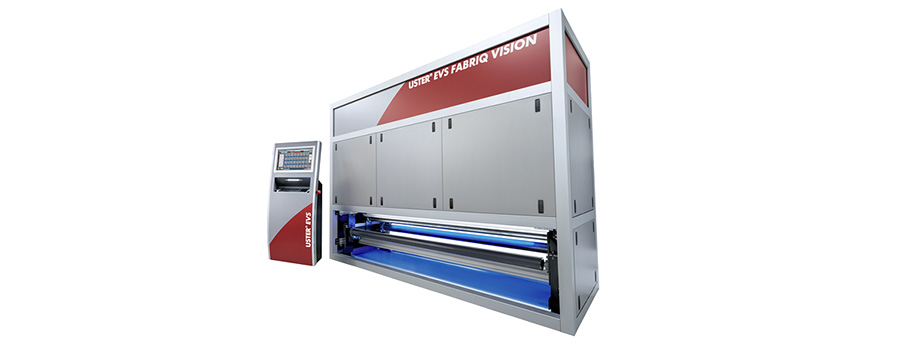
USTER® fabric inspection solutions cover the value chain from weaving to finishing. The ingenious design of USTER® Q-BAR 2 and USTER® EVS FABRIQ VISION fits every production line – delivering the right quality, while reducing waste and optimizing fabric yield.

USTER® fabric inspection systems also reduce waste and improve yield

USTER’s Think Quality approach now takes in automatic fabric inspection, bringing much-needed precision and security to demanding technical textiles applications – and to all weaving mills where quality matters. Quality standards everywhere are increasing all the time: in sectors such as the automotive industry, zero-defect levels are already mandatory. Applications such as airbags, headliners, upholstery and tire cords require flawless quality, continuously. But there are also many other textile industry segments which must fulfill the expectations of demanding customers. In today’s production environments, automated quality solutions are essential.
© 2020 Uster
© 2020 Uster


Automation: for trust and profitability

USTER offers two systems, ensuring that fabrics meet the quality standards required to protect fabric makers and finishers from costly claims and damaged reputations.

Both systems also add valuable extra benefits. The USTER® Q-BAR 2 fabric quality monitoring system prevents waste, while the USTER® EVS FABRIQ VISION fabric quality assurance system significantly improves first-quality yield for all applications. USTER® Q-BAR 2 and USTER® EVS FABRIQ VISION make a real impact on the business success of users – a fact confirmed in numerous installations worldwide. Across a range of different applications and businesses, these users share a common verdict: automated solutions for fabric inspection have earned their trust.

Quality and minimum waste

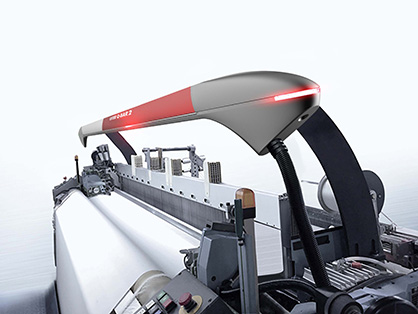
USTER® Q-BAR 2 is attracting attention through its elegant and slim design, developed for simple installation on existing weaving machines. It represents the latest generation of on-loom monitoring and inspection systems, offering operational improvements for weavers. Positioned directly above the reed on each machine, USTER® Q-BAR 2 is ideally located for earliest detection of fabric defects. This allows the operator to respond quickly to alarms and stop signals. Correcting problems immediately prevents quality issues from continuing, minimizing material waste.

USTER® Q-BAR 2 categorizes and saves fabric faults, creating a ‘defect map’ for each roll, which can be recalled and reviewed later via the intuitive touchscreen. The system offers different classification possibilities and allows rolls to be categorized according to number, size and position of defects, as well as customer criteria. It also grades rolls automatically. In summary, USTER® Q-BAR 2 reduces the need for post-weaving inspection for most applications.


Quality and maximum fabric yield

Fabric producers require a consistently high rate of defect detection and optimized efficiency in grading. USTER® EVS FABRIQ VISION achieves this by using automated control during intermediate and final inspection – and by creating roll inspection charts. This removes the need for slow, costly and unreliable manual inspection, freeing operators to focus on higher-skilled jobs. The system’s ability to capture any visible defects allows users to optimize fabric yield.

Best results are achieved by the cut optimization software module of USTER® EVS FABRIQ VISION. This optimizes fabric yield per class, according to the settings. During the inspection process, infrared ink is applied on the fabric. Defect positions are then synchronized with the cut optimization software module. Using the infrared ink marks, the inspection table stops at exactly the right position for each defect, minimizing the risk of errors.

Quality is crucial – and data essential

The increasing demand for assured quality is a significant trend, and achieving it clearly requires automation. A major benefit of automation in fabric inspection is continuity in collecting objective data. This comes with the bonus of automatic data analysis by the USTER® FABRIQ EXPERT quality system, with its fully-customizable reports displayed at the on-screen dashboard. For textile mills, online monitoring of the systems, with comprehensive statistics on inspected fabrics, and machine performance, serves to optimize production and facilitate automation.

USTER® FABRIQ EXPERT provides an overview of all connected USTER® Q-BAR 2 systems in the mill. The main focus is to show quality information – for example the number of defects over a given time – within the relevant context, such as running status or production speed. Technical alarms are highlighted to trigger early reactions, so that problems can be solved as soon as they occur.

Furthermore, smooth interfaces allow users to connect fabric inspection data with existing ERP systems, for true data flow and advanced production automation.

Controlling fabric faults, boosting business

Together, USTER® Q-BAR 2 and USTER® EVS FABRIQ VISION offer effective control over fabric defects and deliveries. “Well-known producers in various industries have already secured their businesses by installing USTER® solutions in their production lines,” says Ingo Kiefer, Product Manager Fabric Inspection at Uster Technologies.

Defects can’t be totally avoided, so it’s vital to locate them precisely. Automated inspection solutions, from weaving up to the end of the production process, allow producers to make correct quality decisions and secure profits.

More News from Uster Technologies AG

#ITM 2026

Uster’s new Recycling Opening Index guides spinners to the perfect blend

Uster AFIS 6 now offers the key data for better decisions when blending recycled fibers. Process control is decisive in determining the quality and economic outcome. The new R Recycling Module of AFIS 6 introduces the Recycling Opening Index (ROI), so spinners can optimize their circularity credentials. It was officially launched at ITM 2026 in Istanbul, Türkiye.

#Spinning

Measure and control the fiber – optimize yarn quality

Producing consistent yarn quality is an everyday challenge – and a very difficult one. Detailed knowledge and understanding of the fiber raw material is absolutely critical to achieving the best possible quality in the yarn. To help spinners, Uster experts have put together guidelines for avoiding yarn irregularity claims, in a special edition of the Uster News Bulletin.

#ITMA Asia + CITME Singapore 2025

Uster presents novelties at ITMA Asia + CITME 2025

There’s news from Uster Technologies to be announced for the industry’s upcoming event in Singapore. The Uster 360Q universe is growing with new products, solutions and services. Innovation developments can also be recorded in the fields of man-made fiber testing and fabric inspection. Uster innovations address the industry’s trending topics as mill management and process control, optimization of delivered fabric quality and yield.

#Spinning

Uster Technologies marks 150 years of empowering quality excellence

Uster Technologies marks 150 years of excellence – a milestone that reflects continuous adaptation to customer needs and industry change. Over the decades, Uster has evolved from manufacturing quality testing instruments into a trusted partner shaping the future of textile production.

More News on Weaving

#Knitting & Hosiery

Groz-Beckert at Igatex 2026

From October 15 to 18, 2026, Groz-Beckert will present its latest innovations and solutions across the product areas of Knitting, Weaving, Sewing and Spinning at Igatex in Pakistan (Hall 1, Booth A-1-08).

#Composites

Fewer pores, greater impact tolerance: Peter Dornier Foundation Prize 2026 honours material research on fibre-reinforced composite components for aerospace industry

Microscopically small pores that form during manufacture, or barely visible impact damage, can severely impair the load-bearing capacity and service life of fibre-reinforced composite components. Two young researchers have presented groundbreaking work in this field and will both be awarded the 2026 Peter Dornier Foundation Prize: Dr.-Ing. Benedikt Neitzel from the Technical University of Ilmenau for his doctoral thesis on pore minimisation in the RTM process, and Johanna Buschmann, M.Sc., for her master’s thesis, completed at the German Aerospace Centre, on the improved impact tolerance of 3D fabrics compared to 2D laminates.

#Weaving

Itema reaffirms its commitment to the Syrian textile industry at NasTex 2026

From July 18th to 21st, Itema will exhibit at NasTex at the Damascus Fairground (Hall 11 – Stand C02), marking its return to one of the Middle East’s historically significant textile markets. Itema will showcase advanced weaving technology designed to support the competitiveness and technological evolution of Syrian manufacturers and announces a new partnership with Growfast Agency as the sole agent of Itema in Syria.

#Weaving

Itema manufactures the first Projectile Weaving Machines “Made in Italy” at its Colzate Headquarters.

Itema proudly announces an important industrial milestone: in early May, the first Itema projectile weaving machines manufactured in Italy were successfully produced at the Group’s headquarters in Colzate.

Latest News

#Spinning

Rieter sees Barmag integration on track as orders and sales rise

The first half of 2026 was shaped by the successful completion of the largest acquisition in Rieter’s history. The Man-Made Fiber Division enables entry into the growth segment of man-made fibers and sustainably strengthens Rieter’s market position in the Asia region. The expanded Group is now the world’s leading system supplier for the processing of natural and man-made fibers. In the first half of the year, initial cost savings in material costs and operating expenses have already been realized. The targeted synergies are expected to amount to at least CHF 20 million by the end of the 2028 financial year. Due to the completion of the acquisition on February 2, 2026, the first half of the year for the Man-Made Fiber Division only amounts to five months.

#Natural Fibers

Better Cotton Initiative multistakeholder event in US unpacks regenerative agriculture potential

The Better Cotton Initiative (BCI), in collaboration with Texas-based partner, Quarterway Cotton Growers, will expand upon its annual US field event to relay the vast potential of regenerative agriculture through an immersive experience of tours and demonstrations.

#Sustainability

bluesign appoints Hanane Taidi as CEO to lead next phase of global impact

bluesign, which partners with the textile industry to reduce adverse impact across the value chain, appoints Hanane Taidi as Chief Executive Officer, marking a pivotal moment as the company builds on its leadership amid rapid industry change.

#Textiles & Apparel / Garment

C&S strengthens its governance to support its evolution

C&S announces the appointment of Marco Lucietti to its Board of Directors. With extensive international experience across the textile and denim industries, Lucietti will work alongside CEO Federico Corneli, contributing to the company’s managerial development, organizational structure and long-term strategic direction.

TOP