[pageLogInLogOut]

#Weaving

Automated fabric inspection with the USTER brand

In many areas of primary textiles, USTER is a watchword for quality. From fiber to yarn, producers worldwide trust the USTER brand to help them deliver the quality their customers demand and optimize their operations. Now, USTER has expanded its technology to cover fabric production, with world-class systems for automated fabric inspection which guarantee consistent and measurable quality.

Taking the successful EVS fabric inspection systems into its portfolio, USTER will seek to expand the scope for automated fabric quality assurance. Its filament yarn tester has already made an impact in technical textiles markets, and this sector will also see USTER explore further applications for its fabric inspection systems, starting with the forthcoming Techtextil North America exhibition.

In filament yarn production, the USTER® evenness tester is now almost as well-established as in cotton spinning. The distinctive grey and red livery of the instrument today is a familiar sight in the laboratories of technical textile yarn manufacturers, acknowledged as essential equipment over the past six decades. In its latest version, the USTER® TESTER 6 C-800 drives global standards – and its new capacitive sensor gives filament yarn producers the power to guarantee right-first-time quality. 

Automated fabric inspection

USTER’s product portfolio in laboratory testing is well known, not so the competences in other areas of technical textile processing. At Techtextil North America 2019 USTER introduces its newly-integrated systems for automated fabric inspection. Although the USTER name may not yet have the impact in fabric manufacturing as in other sectors, its range of inspection technology now being presented is class-leading, backed by 28 years’ experience.
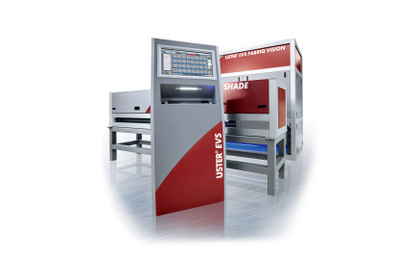
USTER® EVS Q-BAR, USTER® EVS FABRIQ VISION and USTER® EVS FABRIQ SHADE (c) 2019 USTER


This new offer is based on USTER’s acquisition last year of Elbit Vision Systems (EVS), the Israel-based pioneer in automated optical inspection equipment. Now incorporated within USTER, the EVS products are part of a comprehensive textile quality monitoring and control offering, from fiber to fabric.

Multiple technical textiles applications

EVS technology is applicable to wide-ranging fabric types and end-uses, including numerous specific and diverse segments of technical textiles. Visitors to previous Techtextil North America shows have already been able to view EVS monitoring and fabric quality assurance systems since 2006. The latest developments to be featured at the upcoming show (Booth 1429) in Raleigh, North Carolina display the classic USTER design and carry the new product designations: USTER® EVS Q-BAR, USTER® EVS FABRIQ VISION and USTER® EVS FABRIQ SHADE. 
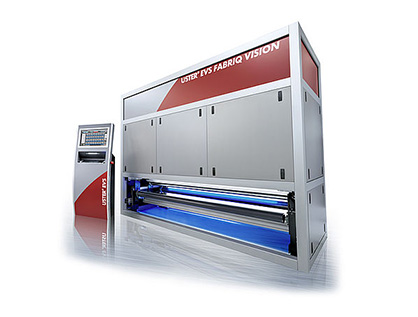
USTER® EVS FABRIQ VISION – The fabric quality assurance system  (c) 2019 USTER
USTER® EVS FABRIQ VISION – The fabric quality assurance system (c) 2019 USTER


In North America, it is common for leading brands to employ fabric inspection processes to increase yields and – primarily – to ensure the quality their customers require. This is especially important in critical product areas such as vehicle seating, airbags, seat belts, tire cord, and vinyl in the automotive industry; as well in high-tech apparel, technical, medical, and composite markets.

In these demanding and often sensitive applications, materials must generally be lightweight, durable and sustainable, with secured and consistent quality as the absolute prerequisite. Says John Belew, Vice-President Sales at Uster Technologies Inc., USA: “Among international experts from architecture, the automotive industry, medicine, the fashion industry or personal protection we want to continue to spread the word about on-loom inspection. Together with the suppliers to these industries, we aim to find new applications for our finishing systems.”

Developing unique customer experiences

Some EVS customers have been enjoying the advantages of automated fabric inspection for more than 20 years. Over that period, ongoing development of the systems has kept pace with their needs. The commitment to strict quality control – eradicating fabric defects and even the slightest deviations in color shade – has created and developed unique customer experiences. Mills installed fabric inspection systems on equipment such as tenter frames, coating lines and sanforizers. Customer satisfaction with EVS was enhanced by measurable benefits across KPIs: production efficiency, increasing yield, and lower labor costs – adding up to higher profitability.

“Long-term customer relationships show that the systems we offer continuously develop in parallel with the need of the users. We want them to produce a better product for their market – and no less,” says Belew. “At Techtextil, we will show that trusting USTER means no compromises in quality with automated fabric inspection installed.”
More News from Uster Technologies AG

#ITMA Asia + CITME Singapore 2025

Uster presents novelties at ITMA Asia + CITME 2025

There’s news from Uster Technologies to be announced for the industry’s upcoming event in Singapore. The Uster 360Q universe is growing with new products, solutions and services. Innovation developments can also be recorded in the fields of man-made fiber testing and fabric inspection. Uster innovations address the industry’s trending topics as mill management and process control, optimization of delivered fabric quality and yield.

#Spinning

Uster Technologies marks 150 years of empowering quality excellence

Uster Technologies marks 150 years of excellence – a milestone that reflects continuous adaptation to customer needs and industry change. Over the decades, Uster has evolved from manufacturing quality testing instruments into a trusted partner shaping the future of textile production.

#Recycling / Circular Economy

Challenges of making yarn from recycled fibers

What does it take to spin quality yarn from recycled fibers? Uster Technologies brought textile industry leaders together to discuss the role of technology, data and automation – as well as the current challenges in using recycled raw material. Experts from Rieter, Säntis Textiles, Otto Yarns, and TVU commented on the current situation and looked into the future of spinning in a panel discussion organized at Uster headquarters.

#Spinning

Uster Technologies wins another infringement lawsuit

In a ‘victory for innovation in China’ Uster Technologies has secured a decisive judgment in a patent infringement lawsuit against a competitor. The final ruling by the Supreme People’s Court of PR China confirms that the competitor’s actions in copying the patented yarn feeder of the Uster Tester 6 constitute unlawful infringement.

More News on Weaving

#Weaving

Lindauer Dornier announces leadership transition in weaving machine business

After more than ten successful years at Lindauer DORNIER GmbH, Mr Wolfgang Schöffl will leave the family-owned company at the end of the year to enter well-deserved retirement.

#Research & Development

More safety and comfort for protective clothing thanks to auxetic fabrics

When everyday materials are pulled, they stretch or elongate in the direction of the pull and become narrower in cross-section. We can also observe this property in two-dimensional textiles. Auxetic structures behave differently here. They have the striking property of not changing under tensile stress or even increasing their width or thickness. These properties are advantageous, for example, in protective textiles or textile filter media. The DITF are researching auxetic fabrics for various applications.

#Weaving

Itema announces strategic partnership with Ivy Decarb to accelerate decarbonization in weaving process

Itema is pleased to announce the strategic partnership with Ivy Decarb, the digital platform helping textile companies measure and reduce their carbon footprint.

#Exhibitions & Events

Groz-Beckert showcases textile innovation at ShanghaiTex 2025

From December 16 to 19, 2025, the global textile industry will gather at ShanghaiTex at the Shanghai New International Expo Center (SNIEC), where Groz-Beckert will present its latest highlights and innovations across its five product areas – Knitting, Weaving, Nonwovens, Sewing, and Spinning – at Hall N3, Booth A05.

Latest News

#People

Happy Holidays!

Dear reader, the year 2025 is drawing to a close. We are entering what we hope will be a peaceful holiday season, spending time with our families and taking a moment to pause and reflect. We hope we have been able to support you once again this year with relevant news and articles, and we look forward to surprising you with many innovations in the coming year. Enjoy the festive season, stay healthy, and we wish you a happy and joyful holiday season.

#Heimtextil 2026

Texpertise Focus AI: Messe Frankfurt puts Artificial Intelligence centre stage at its international textile and apparel trade fairs

Under the banner 'Texpertise Focus AI, Messe Frankfurt will place a strong emphasis on Artificial Intelligence (AI) across its international textile and apparel trade fairs from 2026 onwards, setting a future-shaping signal for the industry. The initiative highlights the responsible use of AI along the entire textile value chain, from fibre production to the point of sale. The programme will launch at Heimtextil in Frankfurt in January 2026.

#Technical Textiles

Autoneum and Polestar set new benchmarks for passenger experience and sustainability

As the global market leader in sustainable acoustic and thermal management, Autoneum is a key supplier of interior and exterior components for the highly anticipated Polestar 5 model. The successful collaboration between Autoneum and Polestar marks a significant milestone in sustainable automotive engineering: the electric grand tourer sports car features several innovations in lightweight, fully recyclable polyester-based components that ensure a superior driving experience. Polestar 5 was revealed at the IAA Mobility 2025 in Munich and is available in 24 markets.

#Natural Fibers

Cashmere producers stress the importance of The Good Cashmere Standard®

At the invitation of the Aid by Trade Foundation (AbTF), over 70 experts from the cashmere production and supply chain, as well as other specialists, met at the GCS Unit Meeting in Shanghai, China to discuss the progress and new objectives of The Good Cashmere Standard (GCS). The meeting focused on implementation and verification of the standard, important aspects of animal welfare and the importance of the standard in the global textile market.

TOP