[pageLogInLogOut]

#Textiles & Apparel / Garment

Maroc in Mode & Maroc Sourcing start next week in Marrakech
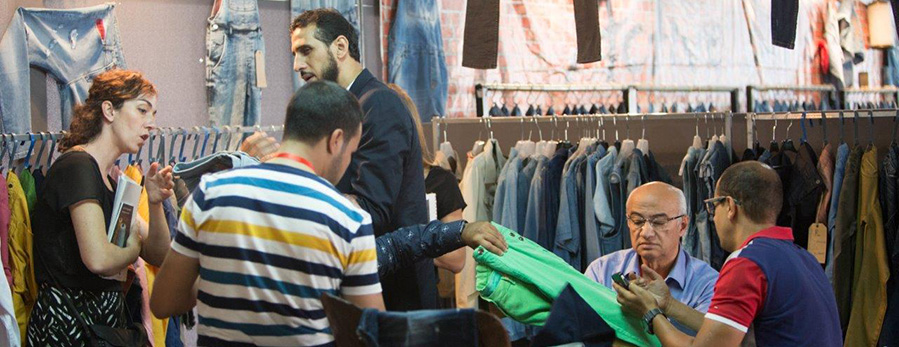
(c) 2018 Maroc in Mode
Morocco is the exceptional economic region of the Euromed area. Stable macroeconomic factors, a favorable investment climate and high government investment make Morocco the most interesting and innovative production and sourcing location for the Mediterranean and North Africa. Morocco ranks 8th among textile exporting countries in the EU (+ 5% yoy), with economic growth of 4.1% and an increase in exports of 9.4% in 2017.

Morocco's textile industry on the rise: Sourcing all-rounder in the Mediterranean

The GDP is expected to increase further by 3.1%. The most important trading partner is the EU with 70% of exports. The clothing and textile industry is Morocco's export champion: it accounts for 24% of Morocco's total exports (EUR 3 billion in 2016).
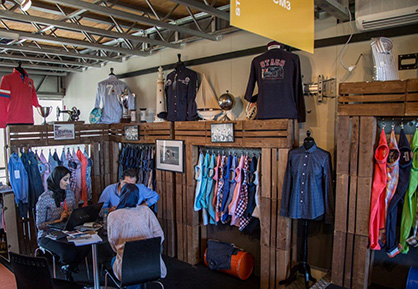
(c) 2018 Maroc in Mode / Jandali


The textile industry serves the entire range of demand, from large vertical suppliers to exclusive collections. The Moroccan producers are considered fast fashion champions.

  • Morocco's competitive advantages
  • Stable economic growth of 4% on average
  • Low inflation rate of approx. 1.6%
  • Average foreign direct investment growth of 15% in recent years, amounting to US $ 2.66 billion in 2017
  • Favorable geostrategic location at the crossroads of three continents
  • Duty-free for exports to the EU
  • International hub Tangier Med: Morocco has Africa's leading container port, the central logistics hub between Europe, North Africa and the Mediterranean
  • There is a huge investment in training employees, with detailed annual training plans broken down by profile and region.


Objectives of the textile industry:

  • Create 100,000 new jobs,
  • Increase export volume by € 500 million to € 4 billion and sales to € 8 billion,
  • Establishment of 77 so-called "locomotives" as draft horses for the companies supporting them with their infrastructure
  • Identification of six ecosystems including fast fashion, denim, knit, technical textiles, knitwear

Morocco's competence: fast fashion

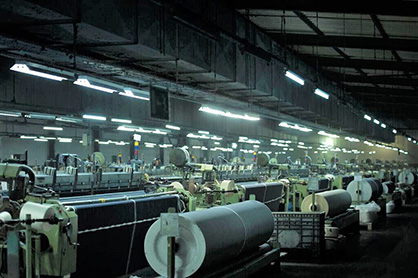
A striking advantage of Moroccan production is the proximity to Europe and the many years of experience in production for the world's largest fashion brands and retailers: Moroccan producers can react quickly to new trends, implement and deliver them. The digital developments and Industry 4.0 show how important sourcing in Morocco is to optimize the value chain with its expertise in fast fashion production. Overproductions become more calculable and trend peaks can be reproduced quickly. Fast fashion remains a strategic challenge for retailers and brands to increase competitiveness. Moroccan production offers the appropriate solutions.
(c) 2018 Maroc in Mode / Jandali


(c) 2018 Maroc in Mode / Jandali


Sustainability: Morocco's initiatives and investments

Sustainability is high on the agenda in Morocco. By 2030, 52% of the country's energy needs are to be covered by renewable energies. Several GIZ-supported vocational training centers for renewable energy and energy efficiency are currently being set up in the country. The first of three planned centers in Oujda in northeastern Morocco is the largest VET center in Africa.

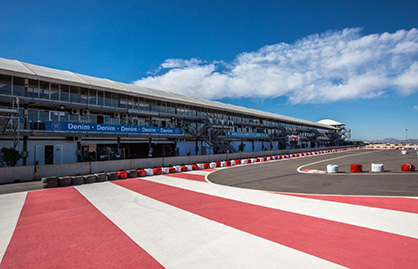
At the coming Maroc in Mode - Maroc Sourcing from October 11 to 12, 2018, around 200 exhibitors will present themselves at the Moulay Hassan race track in Marrakech in the segments Fast Fashion, Denim, Knitting, Tailoring, Lingerie, Workwear, Leather Goods, Shoes and Accessories.

At this year's event, presented among others is the Circular Textile Cluster. A project for the development of sustainable production in which high sums are invested in Morocco. The companies Hallotex from Tangier, Textil Santanderina and Vich Industrial from Barcelona and the Austrian Lenzing Group are involved in the project. Planned are inter alia the construction of a spinning mill that processes recycled fibers and a recycling plant in Tangier that is expected to recycle over one million kilograms of textile waste per year. The entire production chain is worked sustainably until the recycling of textile waste. Morocco is breaking new ground and pioneering sustainability. 
(c) 2018 Maroc in Mode / Jandali


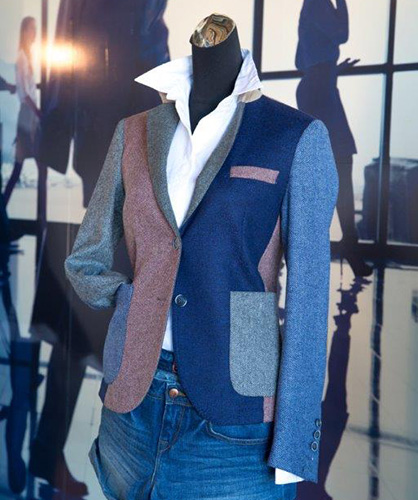
The Moroccan Denim Cluster also represented at the Maroc in Mode - Maroc Sourcing, together with its partners, is implementing a support program for DENIM companies, enabling them to make the necessary changes so that the Moroccan denim industry is recognized as a "sustainable industry" and one to ensure a sustainable economy for future generations. Thirty exhibitors at the fair are members of the MDC, which is currently presenting itself in Paris at the trade fairs.

As an international exhibitor at Maroc in Mode - Maroc Sourcing for the first time is Kilim Denim from Istanbul, a company that makes major investments in sustainable denim production and has developed, among other things, the RAW FOR THE OCEANS collection in collaboration with G-Star, for a new generation of denim and clothing recycled plastic waste from the sea is used in an innovative way.

Trade fair location Marrakech - It City and source of inspiration

The fashion scene is enthusiastic about Marrakech. France's prodigy Jacquemus, with Princess Lalla Salma as Morocco's testimonial, is inspired by Marrakech's souks and brings Morocco on the catwalk with his 2018 fall collection. International influencers like Camille Charrière enchant their Instagram followers with looks presented in the dreamy streets of Marrakech. The "ochre city" captivates with its charm, a breathtaking mix of impressive historical architecture and authentic beauty.


More News from TEXDATA International

#Recycling / Circular Economy

textile.4U publishes special edition “Top 100 Textile Recycling Companies 2025”

With a comprehensive 176-page special edition, textile.4U is dedicating its latest issue entirely to one of the most dynamic and influential topics in today’s textile industry: textile recycling. The new issue, published exclusively in high-quality print, presents the Top 100 textile recycling companies researched and selected by TexData – organizations that already play a key role in the transition to circular textiles or are expected to have a significant impact in the near future.

#Recycling / Circular Economy

Responsible Textile Recovery Act of 2024 signed by Governor

Senator Josh Newman (D-Fullerton) is proud to announce that Senate Bill 707 (SB 707), the Responsible Textile Recovery Act of 2024, has been signed into law by the Governor of California, Gavin Newsom. This groundbreaking legislation establishes the country’s first Extended Producer Responsibility (EPR) textile recycling program, marking a significant step forward in the state’s efforts to combat waste and promote sustainability.

#Textiles & Apparel / Garment

Modtissimo promotes sustainability with 28 coordinates in the Green Circle

Modtissimo is proving more and more to be a textile and clothing show that delivers the latest innovations in the area of sustainability, with the iTechStyle Green Circle being the main showcase for companies' creations. In this 60+4 edition, taking place on 12 and 13 September, 28 coordinates will be exhibited in a section organised by CITEVE and curated by Paulo Gomes.

#Europe

The EU and Egypt team up to mobilise private sector investments at Investment Conference and sign a Memorandum of Understanding underpinning €1 billion in macro-financial assistance for Egypt

At the EU-Egypt Investment Conference, co-organised by the EU and the Government of Egypt on 29-30 June, the EU and Egypt are teaming up to intensify private sector investments in Egypt. They are also signing a Memorandum of Understanding (MoU) for the disbursement to Egypt of up to €1 billion in Macro-Financial Assistance.

More News on Textiles & Apparel / Garment

#Sustainability

Ying McGuire becomes new CEO of Cascale

Cascale today announced the appointment of Ying McGuire as Chief Executive Officer, effective June 1, 2026.

#Europe

Antwerp Declaration community urges EU leaders to deliver emergency measures as Europe’s competitiveness crisis deepens

EURATEX, representing the European textile and fashion industry, joins the Antwerp Declaration Community’s call on EU Heads of State and Government to adopt emergency measures that restore industrial competitiveness and deliver tangible results for Europe’s manufacturing base in 2026.

#Textiles & Apparel / Garment

Pets in fashion: functional and sustainable textiles find new market at Intertextile Apparel

China’s pet economy is booming, especially amongst younger generations, and pet apparel – from designer outfits to functional garments – was a RMB 3.5 billion (over USD 500 million) market in 2024, growing more than 20% annually¹. To help exhibitors harness this trend, Intertextile Shanghai Apparel Fabrics – Spring Edition 2026 will launch the Pet Boutique, presenting a range of innovative, sustainable materials that prioritise both functionality and comfort for pets.

#Sustainability

VAUDE eliminates PFAS from all products

PFAS (per- and polyfluoroalkyl substances) are now detectable worldwide – in drinking water, soil and the human body. These so-called “forever chemicals” are considered hazardous to health and potentially carcinogenic, as they do not break down and remain in the environment permanently. Despite these risks, PFAS are still used in a wide range of products. More than 15 years ago, VAUDE made a strategic decision to gradually eliminate PFAS from all product categories.

Latest News

#Technical Textiles

Sustainable, lightweight, and sound absorbing: Polyester-based front trunk solution for BEVs

As car manufacturers look to further reduce their carbon footprint, Autoneum has developed an innovative front trunk solution for battery electric vehicles (BEVs), made entirely from polyester-based textile. The Ultra-Silent Frunk offers significant weight reduction, improved acoustic and thermal insulation, and uses up to 70 percent recycled material, supporting sustainable and efficient vehicle design. Autoneum, global technology leader in acoustic and thermal management for vehicles, has already received orders for the new frunk from three major OEMs in Asia and Europe to be built in three BEV models. Series production for two BEVs has been underway in China and Germany since last year.

#Raw Materials

Modern testing methods for raw cotton

The 38th International Cotton Conference Bremen will take place from 25 to 27 March 2026 at the Bremen Parliament. This conference has traditionally stood for in-depth expertise and international exchange. The program will focus on technical innovations, market trends, and regulatory frameworks across the entire value chain – from agriculture to the circular economy. With high-profile speakers, the conference is regarded as the key meeting point for the global cotton industry. Today’s focus: Cotton quality and testing methods.

#Spinning

Rieter responds to higher raw material prices

Global political and economic developments have been leading to rising raw material and energy costs for some time. The textile machinery industry is also affected by this trend. Rieter machines and components consist to a large extent of steel, copper, aluminum and electronics. These materials in particular have seen higher demand and higher prices in recent months.

#Weaving

Stäubli demonstrates how innovation translates into real benefits for weaving mills at SITEX 2026

One of India’s most prominent textile industry events, SITEX 2026, is held from February 21 to 23 in Surat. Committed to empowering Indian weaving mills with state‑of‑the‑art solutions tailored to regional needs, Stäubli will present a selection of solutions designed for performance, reliability, and power efficiency. Through its weaving preparation, cam and dobby shedding solutions and Jacquard technologies, Stäubli highlights its global expertise tailored to the specific needs of the local market.

TOP