[pageLogInLogOut]

#Textile processing

Jeanologia calls for shared responsability on World Water Day

Coinciding with World Water Day celebrations and under the slogan "Water, a shared responsibility," the eco-efficient textile technology company, Jeanologia, calls on this productive sector, appealing for a real change, away from greenwashing and towards concrete and collective action.
Three decades ago, Jeanologia began its journey swimming against the current in an ocean of skepticism within one of the world's most polluting productive sectors: the textile industry. It became a pioneer and revolutionized the industry by demonstrating that fashion could be produced by significantly reducing its environmental impact and without compromising quality or profitability, relying on technology to achieve this.

Since its foundation, Jeanologia has led sustainable change in the textile industry, thanks to its innovative technologies, which have drastically reduced water consumption and returned the minimal amount of water used to nature in perfect condition, as well as minimizing the use of chemicals and energy and eliminating harmful emissions and discharges.

New environmental record

In 2023, Jeanologia set a record in its environmental P&L statement, measuring in cubic meters the contaminated water that is no longer discharged into rivers and seas, as well as the reduction of toxic emissions, thanks to its technological advances and services.

The technologies developed by Jeanologia have saved the planet 20,265,581 cubic meters of contaminated water in 2003, equivalent to the consumption of a city the size of Brussels or more than 1,200,000 Olympic pools. Additionally, 97,895,304 kilograms of CO2 emissions were reduced, equivalent to the carbon absorbed by a forest of 9,800,000 trees.

The key to success lies in the integration of eco-efficient technologies in all stages of production, from fabric to garment finishing. In this way, water consumption in the garment finishing process has been drastically reduced, from 70 liters to just 1 liter per garment. These technologies have also significantly reduced the use of chemicals and energy, as well as emissions and harmful discharges derived from textile production. All this without compromising quality or design.

Furthermore, Jeanologia's eco-efficient technologies include the H2 ZERO effluent recycling plant, a key component of their Mission Zero initiative. This innovative system is able to recover 95% of water used in the production process. It plays a vital role in creating a closed-loop system, ensuring minimal water wastage and contributing to a sustainable ecosystem for brands and their suppliers. Thanks to H2 ZERO, water is treated without chemicals, maintaining optimal conditions for reuse, aligning with Jeanologia's commitment to environmental responsibility and resource conservation.

Additionally, Jeanologia’s Air Fiber Washer project focuses on removing microfibers from the garment finishing process, thereby contributing to the preservation of the seas and preventing these microfibers from contaminating marine ecosystems.

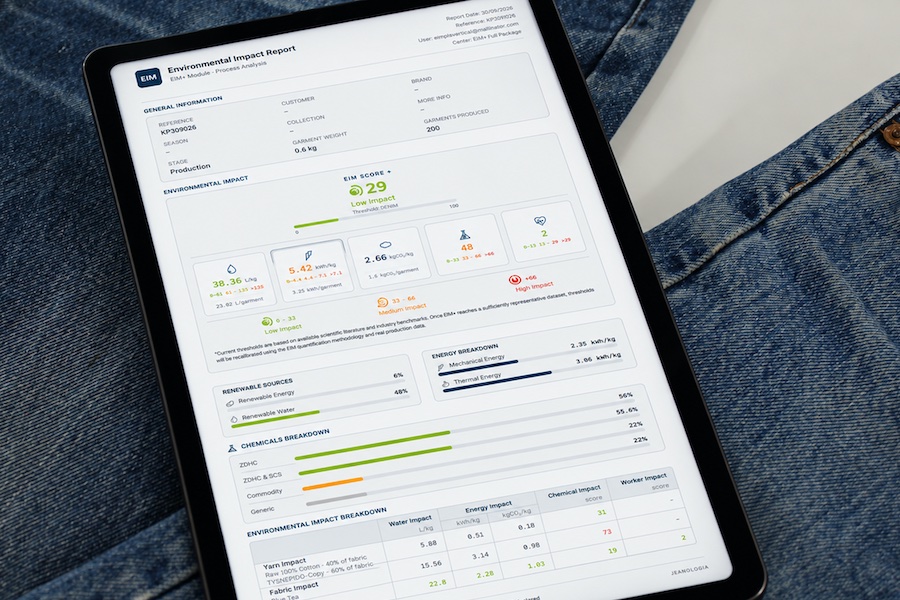
Jeanologia also recognizes the importance of measurement and transparency in environmental impact. For this reason, over 10 years ago, it made available to the industry the Environmental Impact Measurement (EIM) software, which today more than 100 brands and 400 laundries worldwide use to measure and improve their collections, avoiding greenwashing and being completely transparent.


  • The Spanish company leads sustainable change in the textile industry, demonstrating that it is possible to produce fashion responsibly and profitably.
  • Its technologies have saved the planet more than 20 million cubic meters of contaminated water in 2023.


An invitation towards a more sustainable water management

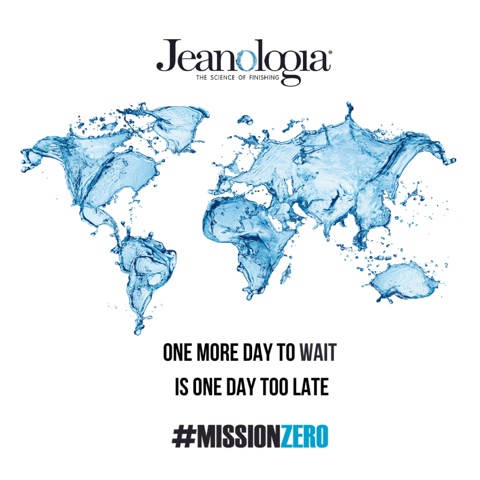
On World Water Day, Jeanologia reiterates its commitment to continue leading its Mission Zero: achieving total dehydration and detoxification of the textile industry. A challenge turned into an urgency following UNESCO's warning that we face an imminent global water crisis, with between 2,000 and 3,000 million people suffering from water scarcity worldwide, water demand far exceeding supply capacity in many parts of the world, and the environmental impacts of its overexploitation becoming increasingly evident.

In this context, the Spanish technology company urges adopting a collective commitment. As Jeanologia's CEO and founder Enrique Silla states, "we are an impact company focusing on water." Thus, its goal is to reduce the consumption of this resource throughout the textile process to the bare minimum, eliminate 100% of the waste generated in the manufacturing and finishing of garments, and preserve the seas, eliminating any possible microfiber from the production process to prevent it from ending up in the oceans.

Jeanologia has managed to transform the global textile industry, and today its involvement goes further. Although acknowledging that the world has awakened to the urgency of sustainability, Jeanologia claims that there is still a long way to go. Individual awareness and isolated actions are not enough. Water scarcity is a global challenge that requires comprehensive and collaborative solutions involving governments, institutions, companies, and individuals. "The global context urges us to unite and accelerate action, and on a date as significant as World Water Day, we want to offer our example as inspiration and invite other companies to join our Mission Zero," claims Enrique Silla.

Jeanologia: over 25 years transofming the textile industry

Since 1994, Jeanologia's mission has been to create an ethical, sustainable, and eco-efficient textile industry. The company collaborates closely with brands, retailers, and their suppliers on their transformative journey, offering disruptive technologies, innovative software, and a new operating model.

In 2024, Jeanologia celebrates the 25th anniversary of its pioneering laser technology, launched in 1999, which revolutionized denim finishing, replacing harmful practices and eliminating the use of hazardous substances. With the same purpose, Jeanologia now faces the challenge of reducing the environmental impact of the garment dyeing process—one of the most polluting in the industry—through its revolutionary ColorBox technology.

More News from JEANOLOGIA S.L.

#Textile processing

Jeanologia showcases the future of product development

Jeanologia is showcasing how software is transforming product development in the fashion industry at PI Apparel Europe: The Fashion Technology Show, taking place on March 30–31 in London.

#Denim

Jeanologia launches Billy

The new AI extracts precise laser designs from a garment image in minutes, transforming how vintage denim is recreated for production. If Jeanologia’s laser changed the way jeans were made at the end of the last century, its AI now takes the next step: moving from reproducing wear to designing it. / archive photo © 2026 Jeanologia

#Textile chemistry

Jeanologia urges industry to accelerate PP Spray phase-out following ZDHC Watchlist update

Potassium permanganate has officially entered the Chemical Watchlist of the ZDHC Foundation, signaling increased scrutiny and potential phase-out of one of the most hazardous chemicals still used in denim finishing. The inclusion confirms an industry shift that Jeanologia anticipated more than a decade ago.

#Denim

Jeanologia celebrates its 30th anniversary transforming how jeans are produced worldwide

Jeanologia celebrates its 30th anniversary reaffirming the mission it was born with in 1994, to transform the textile industry into a more sustainable, efficient, and human-centered sector. Three decades later, that vision has become a global reality. Today, more than 40 percent of all jeans produced worldwide are made using technologies developed by the Valencia-based company.

More News on Textile processing

#Textile processing

trinamiX mobile NIR spectroscopy: New applications for the footwear and textile industry

trinamiX GmbH expands its solution portfolio for the circular economy, now enabling the identification of materials used in the footwear and textile industries. With its mobile near-infrared (NIR) spectroscopy solutions, trinamiX supports manufacturers, sorters, recyclers, and brand owners in reliably identifying materials and improving transparency across increasingly complex value chains.

#Texprocess 2026

Texprocess 2026: Style3D | ASSYST showcases AI, 3D, 2D and automation and meets strong industry response

Four days, countless discussions and a clear signal from the industry: the future of fashion is digital and AI-driven. At Texprocess 2026, Style3D | ASSYST demonstrated how AI, 3D and automation are already fundamentally transforming processes from design to production.

#Techtextil 2026

Speed and connectivity: Techtextil and Texprocess provided market-ready solutions for industries under pressure

With more than 36,000 visitors and 1,700 exhibitors from a total of 112 countries, Techtextil and Texprocess 2026 demonstrated how innovation comes into industrial use. The convergence of research, industry and application proved to be a breeding ground for new material solutions, manufacturing and processing technologies. Natural fibres, performance apparel, connected systems and AI-driven processing technologies emerged as key growth and future markets.

#Textile processing

Vivien Altmann-Morelli new Director of Texcare

As of May 1, 2026, Vivien Altmann-Morelli will take over as Director of Texcare International and the associated brand Textile Care & Cleaning Technologies. In addition, the Food Technologies brand will also fall under her responsibility.

Latest News

#Sustainability

Number of GOTS-certified facilities grow 15% globally as demand for credible sustainability standards continues to strengthen

Global Organic Textile Standard (GOTS) certification continued to grow in 2025, with nearly 18,000 certified facilities worldwide, despite ongoing geopolitical uncertainty and rapidly evolving regulatory requirements across global textile supply chains.

#Raw Materials

ECCO introduces first shoe featuring innovative protein-based fibre

ECCO, in partnership with Spinnova, announces the launch of the limited edition ECCO BIOM® 720, a first-of-its-kind shoe utilising an often overlooked leather by-product, transformed into a protein-based fibre. The fibres are produced using patented technology that advances material innovation while reducing waste and supporting full resource use across the leather and textile industry.

#Man-Made Fibers

The LYCRA Company strengthens sustainability leadership, appoints Alistair Williamson as VP of Product Sustainability

The LYCRA Company has appointed longtime executive Alistair Williamson as vice president of product sustainability, reaffirming its commitment to developing sustainable solutions for apparel and personal care products. In this role, he will guide the company’s next chapter of sustainability strategy and oversee all initiatives aimed at reducing environmental impact across products, operations, and innovation platforms.

#Raw Materials

Kraig Biocraft Laboratories reports major progress converting record-setting spider silk cocoon production into reeled silk

Kraig Biocraft Laboratories, Inc. (OTCQB: KBLB) (“the Company”, “Kraig Labs”, or “Kraig’s”), a world leader in spider silk technology*, today announced significant progress in the processing of its recently produced recombinant spider silk cocoons into reeled silk.

TOP