[pageLogInLogOut]

#Research & Development

Toray establishing a new research facility

Toray Industries, Inc., announced that it will set up a new research facility at its Nagoya Plant in Aichi Prefecture to accelerate R&D for a green transformation and advanced mobility.

The facility will leverage the concept of fusing green and nano-based technologies to develop materials by integrating diverse elemental technologies from within and outside the Toray Group. It will also incorporate chemical engineering perspectives from the research stage and reinforce the company’s ability to propose digital solutions in creating a framework to bring together materials development, process design, and customer proposals in a drive to cut greenhouse gas emissions across the economy.

The Group has always endeavored to provide innovative technological and advanced materials solutions to the world’s challenges in balancing development and sustainability. Its high-performance resins, carbon fiber composite materials, and other innovative offerings have helped cut greenhouse gas emissions amid the world’s mounting environmental challenges. The company recognizes the need to focus on eco-friendly materials while pursuing functionality for the economy to become sustainable.

It is also vital to respond rapidly to the numerous technological mobility advances that the world has witnessed in recent years. They have included electrification and weight savings to cut green house gas emissions. Other noteworthy contributors have been automated driving, urban air mobility, and drone technologies.

The new research facility will be a hub for customer and academia collaboration and global R&D to accelerate Toray’s green transformation and explore advanced materials for myriad advanced mobility applications.

This facility will bolster materials development that helps achieve economic sustainability. It will do so by bringing together polymer, chemicals, and carbon fiber composite materials researchers, as well as digital transformation professionals and developers with chemical engineering expertise to drive nanotechnology advances. Such progress would incorporate materials informatics and computational chemistry in such areas as polymer design, nanostructure control, and composite material design. The facility would integrate nanotechnology with recycling, biorefining, and other green technology and reduce environmental impact from process perspectives.

The facility will be adjacent to the Environment and Mobility Development Center and the Advanced Composites Center, both of which engage in mobility-related development and evaluations. The goal is to generate synergies by integrating R&D and digital solutions proposals. Toray will reinforce open innovation internally and externally by creating an open laboratory for cocreation with customers and academia while deploying a framework to deepen communication among researchers and encourage ideas to emerge.


Since its foundation, Toray has pursued R&D into advanced materials by bolstering basic research and elemental technologies while integrating technologies and pushing their boundaries in the conviction that R&D paves the way to the company’s future. Toray will keep helping to materialize a sustainable economy by innovating advanced materials from long-term perspectives in line with its corporate philosophy of contributing to social progress by delivering new value.


Overview of new research facility

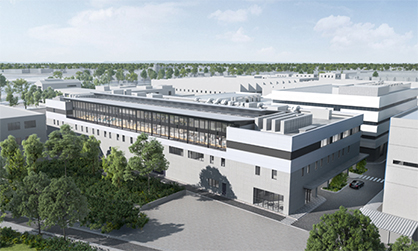
1. Three floors with a total floor area of around 8,600 square meters

2. Located at Nagoya Plant in Aichi Prefecture

3. Scheduled completion in first quarter of FY2026

4. Key features

(1) Technological fusion and open innovation facilities

• Chemical laboratory for wide-ranging of basic and applied research

• Prototyping and processing area to demonstrate technologies

• Open laboratory

(2) Close communication between researchers to foster innovative ideas

• Housing 140 people in office and experimental area on one floor

• Open meeting space

(3) Energy-efficient facilities


Exterior of new research building
© 2023 Toray
© 2023 Toray


More News from Toray Engineering Co. Ltd.

#Man-Made Fibers

Toray develops AURLIST™ polyester filament fiber with luxurious luster and ultra-fine structure

Toray Industries has developed AURLIST™, a new polyester filament fiber designed to combine luxurious luster, soft loft and a subtle fibrillated surface texture. The company primarily targets applications in women’s apparel such as tops, bottoms and dresses.

#Recycling / Circular Economy

Toray develops recycling technology that retains carbon fiber strength and surface quality

Toray Industries, Inc., announced today that it has developed a recycling technology that can decompose diverse carbon fiber reinforced plastics (CFRP) made from thermosetting resins while retaining the strength and surface quality of those fibers. The company drew on this technology to create a nonwoven fabric employing recycled carbon fibers.

#Composites

HEAD launches more sustainable(1) BOOM RAW racquet on Earth Day by using Toray’s bio-circular carbon fibers

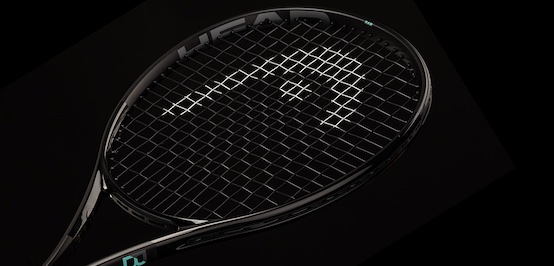
HEAD continues to innovate with the launch of the BOOM RAW tennis racquet, an encouraging development in the search for a more sustainable future for racquet sports. All of the carbon fibers are bio-circular carbon fibers in the limited-edition and highly innovative BOOM RAW racquet, which offers the same explosive power - along with the same fun, feel and easy playability - as the regular, in-line BOOM racquet. The bio-circular carbon fibers are manufactured by Toray and its subsidiary Toray Carbon Fibers Europe.

#Recycling / Circular Economy

Companies in Japan initiate demonstration to expand the automotive recycling process

DENSO CORPORATION and other partners have been chosen by an industry-government-academia collaborative project aiming to expand the recycle content for automobile in the fiscal year 2023 supported by Ministry of the Environment, Japan.

More News on Research & Development

#Research & Development

Textile cascade filter for removing microplastics from wastewater

Microplastics are now found almost everywhere, even in remote regions of Antarctica. They enter the human body through the food chain. Studies indicate that microplastics may have negative effects on the human health.

#Research & Development

Fraunhofer IAP paves the way for "Green" carbon fibers

A new pilot plant in Guben is set to enable the production of bio-based carbon fibers. The plant is part of the Carbon Lab Factory Lausitz and will make an important contribution to the transformation of the Lausitz region—from a traditionally raw material- and basic industry-oriented region to a hub for innovative high-performance materials. The German federal government and the state of Brandenburg are providing the Fraunhofer Institute for Applied Polymer Research IAP with 53.3 million euros for this purpose.

#Research & Development

Hof University develops sustainable textile coating for the fashion of tomorrow from mushrooms

Clothing is often treated as disposable: T-shirts for events, general merchandise, or short-term campaigns frequently end up in the trash after only a few uses. This is particularly problematic given that their production still largely relies on fossil-based materials. This is precisely where a new research project at Hof University of Applied Sciences comes in.

#Research & Development

Textilfabrik 7.0 launched: Mönchengladbach becomes a real-world lab for sustainable textile production

With the official kick-off event of the Textilfabrik 7.0 (T7), a major transformation project for the German textile and apparel industry has been launched in the Monforts Quarter in Mönchengladbach. At the “Textile Roundtable,” an event format organized by the Zukunftsagentur Rheinisches Revier, representatives from industry, research, politics, and the regional economy came together to jointly lay the foundation for CO₂-neutral, circular, and economically viable textile production in Germany.

Latest News

#Raw Materials

New study shows low environmental impact by Cotton made in Africa Organic Cotton from Tanzania

Today, the Aid by Trade Foundation (AbTF) is announcing the results of a comprehensive life-cycle analysis (LCA) for cotton produced in Tanzania under the Cotton made in Africa Organic (CmiA Organic) standard. The study emphasises the small ecological footprint of CmiA Organic verified cotton. This can largely be traced back to the absence of synthetic pesticides, artificial fertilisers, and artificial irrigation. Consequently, CmiA Organic cotton can help the textile industry meet regulatory requirements as well as science-based targets. The results also show that the consequences of climate change threaten the livelihoods of these cotton farmers, even though the type of agriculture they practise barely contributes to climate change.

#Raw Materials

Better Cotton Initiative strengthens regenerative focus in standard update

The Better Cotton Initiative (BCI) has strengthened the regenerative focus of its field-level standard with the launch of a new version of its Principles & Criteria (P&C), which marks the next step in the organisation’s journey to becoming a regenerative standards system.

#Man-Made Fibers

Selenis and Kintra Fibers partner to scale 100% bio-based synthetic fiber technology

Selenis, a leading global specialty polyester manufacturer, today announced a strategic manufacturing partnership with materials science company Kintra Fibers to scale Kintra’s patented fiber-grade PBS resin - a 100% bio-based and biodegradable material designed for textile applications.

#Functional Fabrics

PERFORMANCE DAYS proves its relevance as the industry’s key meeting point

Held on March 18–19, 2026, PERFORMANCE DAYS once again confirmed its position as a leading international platform for functional textiles. A total of 3.366 trade visitors and around 560 exhibitors gathered in Munich, with the event already kicking off successfully on DAY 0, which received highly positive feedback for its interactive format. Despite challenging conditions caused by the public transport strike in Munich, the event saw strong attendance and a consistently high level of activity across both exhibition days.

TOP