[pageLogInLogOut]

#Textile chemistry

Toray launches Toraypearl™PA6 Polymer delivering exceptional 3D printing strength, thermal resistance, and quality
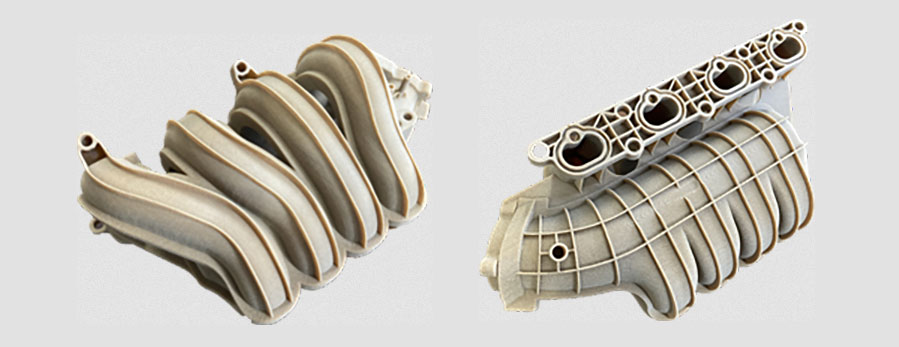
Intake manifold (Size: 185mm×105mm×85mm) © 2022 Toray
Toray Industries, Inc., announced today that it has completed a mass production system and initiated sales of Toraypearl™PA6. This truly spherical polyamide 6 particle offers outstanding high strength, heat resistance, and surface smoothness for powder bed fusion 3D printers (see note 1). The production facility for this offering should be fully operational by the fiscal year ending March 2026, and further expanding this business and lifting capacity will be insighted.

Powder bed fusion 3D printers use metal or resin particles and offer the 3Dprinted parts with excellent dimensional accuracy and efficiency. Metals are for applications requiring exceptional strength. Polymers are commonly for industrial applications because of lightness and affordable costs. However, polymer particles containing mainly used polyamide 12 and others are irregular shapes. Printed surfaces thus require polishing and other post-processing to use them in prototypes or end-use parts, increasing costs and lead times being the issue.

This situation prompted Toray to apply its proprietary polyamide particle technology (see note 2) to polyamide 6, which has a high melting point and good mechanical properties. This effort led it to create Toraypearl™PA6, the first product in the world with true spherical polyamide 6 particles. This offering caters to customer demand for printed parts with smoother surfaces (see note 3), greater strength and heat resistance under tougher conditions.

© 2022 Toray
© 2022 Toray


The outstanding performance characteristics of Toraypearl™PA6 enable 3D printing of complex and precise shapes as well as smooth surface, this can reduce the need for polishing and other post-processing stages.

Furthermore, spherical particles ensure the fluidity needed for 3D printing, even when blended with reinforcing glass fibers, for modeling that combines excellent rigidity with the attributes mentioned above.

© 2022 Toray
© 2022 Toray


Toray will leverage these features in initially proposing prototypes for automotive parts, power tools, and other equipment requiring a lot of strength, heat resistance, and precision. It ultimately looks to expand into the 3D printer market for end-use parts.

Tokyo-based 3D printer company Aspect Inc. has already obtained conformity certification for Toraypearl™PA6 for its AM-E3 300HT and 550HT additive manufacturing printers.

This new product will augment Toraymill™PPS, a polyphenylene sulfide resin milled powder launched in 2017, as part of Toray’s drive to expand its lineup of resin materials for 3D printers. Toray will also provide new value in the growing 3D printer field by applying its proprietary particle and particle size control technologies with Toray-developed polyamides.

3D printed parts using Toraypearl™PA6 made by Aspect Inc.


Notes:

1. Powder bed fusion 3D printers

These platforms are commonly employed in industrial applications. They lay down metal and resin particles. Lasers serve as heat sources to repeatedly melt and solidify modeled parts.

2. Proprietary polyamide particle technology

A fruit of research into polyamide polymerization, this new technology creates spherical particles when polyamide is polymerized from monomers, and can be applied with PA 6, 66, 12, and other polyamides.

3. Surface roughness

The surfaces of molded objects comprise have microscopic peaks and troughs with a range height, depths, and spacing. These minute details are called "surface roughness/ surface roughness." Surface roughness affects molding precision, surface feels, sealing, and coating performance.


References

- Aspect Inc. website

https://aspect.jpn.com/

- Toraypearl™PA6 website

https://www.toray.jp/chemical/en/polymer/pol_004n.html

- Toraymill™PPS website

https://www.toray.jp/chemical/en/polymer/pol_004h.html

- January 27, 2020, news release, titled,

Toray Creates True Spherical Polyamide Particles that Could Revolutionize 3D Printing


More News from Toray Engineering Co. Ltd.

#Man-Made Fibers

Toray develops AURLIST™ polyester filament fiber with luxurious luster and ultra-fine structure

Toray Industries has developed AURLIST™, a new polyester filament fiber designed to combine luxurious luster, soft loft and a subtle fibrillated surface texture. The company primarily targets applications in women’s apparel such as tops, bottoms and dresses.

#Recycling / Circular Economy

Toray develops recycling technology that retains carbon fiber strength and surface quality

Toray Industries, Inc., announced today that it has developed a recycling technology that can decompose diverse carbon fiber reinforced plastics (CFRP) made from thermosetting resins while retaining the strength and surface quality of those fibers. The company drew on this technology to create a nonwoven fabric employing recycled carbon fibers.

#Composites

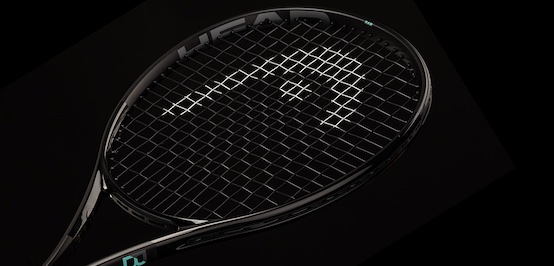
HEAD launches more sustainable(1) BOOM RAW racquet on Earth Day by using Toray’s bio-circular carbon fibers

HEAD continues to innovate with the launch of the BOOM RAW tennis racquet, an encouraging development in the search for a more sustainable future for racquet sports. All of the carbon fibers are bio-circular carbon fibers in the limited-edition and highly innovative BOOM RAW racquet, which offers the same explosive power - along with the same fun, feel and easy playability - as the regular, in-line BOOM racquet. The bio-circular carbon fibers are manufactured by Toray and its subsidiary Toray Carbon Fibers Europe.

#Recycling / Circular Economy

Companies in Japan initiate demonstration to expand the automotive recycling process

DENSO CORPORATION and other partners have been chosen by an industry-government-academia collaborative project aiming to expand the recycle content for automobile in the fiscal year 2023 supported by Ministry of the Environment, Japan.

More News on Textile chemistry

Latest News

#ITM 2026

SHIMA SEIKI to show complete knitting and cutting workflow at ITM 2026

Leading computerized flat knitting technology provider SHIMA SEIKI MFG., LTD. of Wakayama, Japan, together with its Turkish representative TETAS IC VE DIS TICARET A.S., will participate in the ITM 2026 International Textile Machinery Exhibition in Istanbul, Türkiye this month with a full product lineup. In addition to flat knitting machines and design software, visitors will also have the opportunity to experience the full range of SHIMA SEIKI textile machinery with its automatic cutting machine exhibit, all geared toward the fashion apparel market as well as non-apparel related businesses.

#Raw Materials

Global Cotton area and production are projected to decline in the 2026/27 Season

The June 2026 issue of Cotton This Month projects a modest contraction in global cotton area, production, and trade during the 2026/27 season, reflecting weaker demand sentiment, rising production costs, and shifting environmental factors across major producing nations.

#Natural Fibers

European Flax-Linen & Hemp step into advanced manufacturing: Enabling filament winding, 3D printing and high-performance composite processes

The Alliance for European Flax-Linen & Hemp announces a new wave of technological advancements demonstrating how flax-linen and hemp fibres are now being successfully integrated into advanced composite manufacturing processes. These developments mark a transition beyond traditional hand lay-up techniques, positioning natural fibres as credible, scalable solutions for high-performance industrial applications.

#ITM 2026

SETEX turns dyeing and finishing data into daily production control

At ITM 2026, SETEX will show how textile mills can use machine, recipe, quality and energy data for more reliable daily production decisions — not as another reporting layer, but as part of the running dyeing and finishing process. With OrgaTEX X3 MES, E390x/C390x controllers, CamCOUNT and FabricInspector Portable, SETEX connects planning, machine execution and fabric-related quality insight within existing mill structures.

TOP