#Techtextil 2026
STFI presents concepts for the textile circular economy and solutions for a healthy and safe life at Techtextil
The Sächsisches Textilforschungsinstitut e.V. (STFI) positions itself as a key European research partner for resource-efficient, safe and high-performance textile solutions. The institute focuses on developing scientifically based innovations that improve processes, conserve resources and enhance user protection across a wide range of applications.
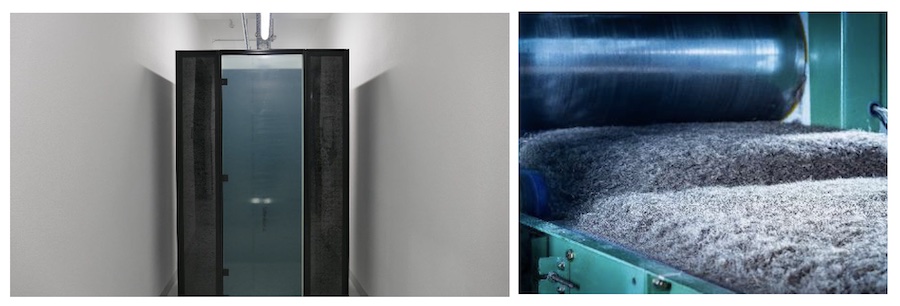
A central theme of STFI’s work is the holistic advancement of the textile circular economy. The institute addresses the entire value chain – from raw material selection and production to use, collection and recycling – with the aim of establishing viable alternatives to linear systems. At Techtextil 2026, STFI will showcase a sound booth made from recycled textile waste, demonstrating the acoustic performance of nonwovens derived from previously thermally recycled materials.
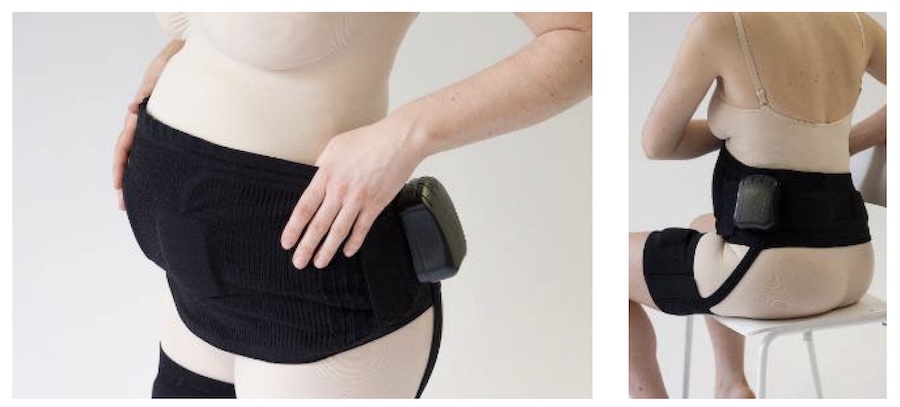
In the field of health-related textiles, STFI combines textile engineering with medical expertise and sustainable material concepts. This approach results in products designed to promote health, hygiene and comfort while supporting environmental goals. One highlight at the trade fair is a textile belt system for postnatal muscle strengthening. The system integrates washable electrodes for muscle stimulation and adapts to changing body shapes through its knitted construction.
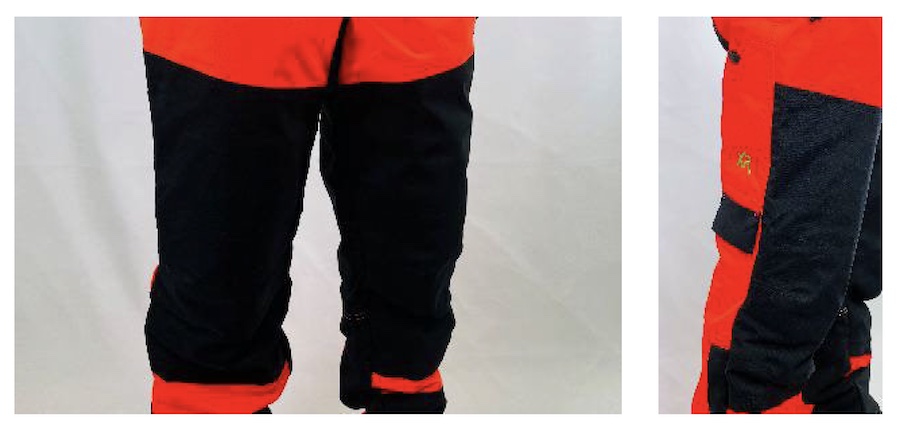
STFI is also active in the development of advanced personal protective equipment. At Techtextil, the institute will present a textile concept that extends conventional cut and stab protection to include impact resistance. The development is aimed at improving safety in demanding working environments, such as forestry and hunting.
Environmental applications represent another key research area. STFI is working on textile-based solutions for urban greening, designed to reduce environmental impact, protect buildings and contribute to improved living conditions in urban spaces.
In addition, the institute develops functional technical textiles and nonwovens tailored to specific industrial requirements, including filtration and safety-critical applications. These materials contribute to efficiency and sustainability in sectors such as construction, transport, mechanical engineering and environmental technology.
During the exhibition, STFI will host two mini-symposia at its stand. On 21 April 2026, the focus will be on sustainable textile concepts, knowledge transfer through the STFI Academy and innovations for healthy living. On 22 April 2026, the session “More Than Machines – Engineering Expertise for Advanced Textile Development” will provide insights into areas such as auxetics and functionalisation.
Selected highlights at Techtextil 2026
Sound booth – an oasis of calm amid the hustle and bustle of the trade fair
Chemical recycling of mixed textile fractions produces textile residues that are currently not used as raw materials but are thermally recycled or disposed of. To enable further recycling, STFI is working with Refresh Global to investigate efficient treatment and processing methods for reusing these textile resi- dues. These can be used in sound-absorbing design products, such as acoustic walls or furniture. Non- woven forming processes are particularly suitable for processing these textile residues. At STFI, the re- cyclates are mechanically processed on pilot plants on a laboratory or semi-industrial scale before being laid into a non-woven fabric and consolidated. Through appropriate finishing, a visually matching top layer can also be integrated directly onto the nonwoven fabric. The finished nonwoven fabrics are pro- cessed into sound-absorbing design products by the project's industrial partner. At Techtextil, STFI is exhibiting a sound booth that demonstrates the performance of these acoustically effective nonwoven fabrics.
A team of companies and research institutions has developed a novel smart textile for stimulating and strengthening the deep abdominal and pelvic floor muscles using modulated medium frequencies (EMA), specifically for mobile use during and after childbirth. To this end, a textile belt was designed using knit- ting technology that covers the abdomen, thighs and buttocks and integrates electrodes at the relevant muscle zones. The electrodes are washable and fixed in the belt system, and the belt adapts to the user's decreasing body circumference thanks to its textile construction. The miniaturised, battery-powered con- trol unit is attached to the belt and can be operated via a removable remote control. The system is easy to put on, comfortable, intuitive to use and does not restrict freedom of movement. This makes it particularly suitable for home use and everyday postnatal recovery.
In forestry and hunting in particular, workers are exposed to high risks of impact injuries resulting from attacks by wild boar. Conventional protective clothing often only offers protection against stab or cut injuries. The STFI has therefore developed a textile concept that adds impact protection to the existing level of protection, thus increasing the overall protection of users in practical working environments. In tests, the impact of a blow was reduced by up to 20 per cent. STFI presents an example of trousers in which the special impact protection fabric has been incorporated. Depending on requirements, the impact pro-tection elements can also be designed to be recyclable. Specially woven hinges also increase the comfort of the work trousers.
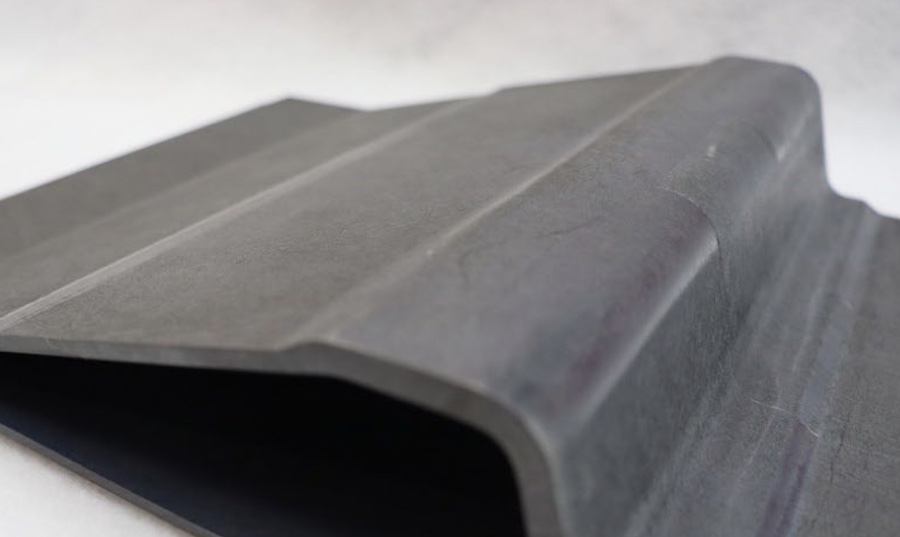
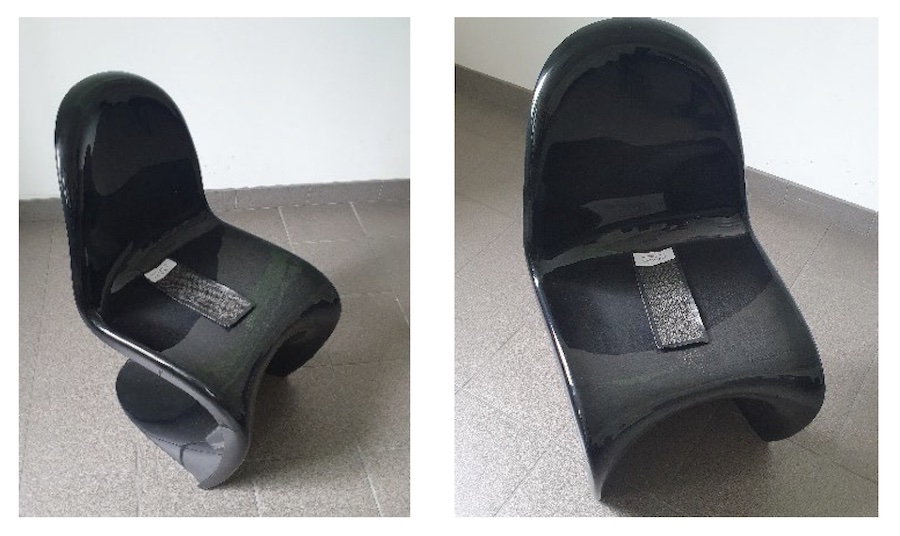
High-performance fibre materials made of carbon and glass have a significant ecological footprint, and not just because of their energy-intensive production. High waste volumes in the manufacturing process and the reuse of raw materials at the end of the product life cycle offer enormous recycling potential for the future. MC4 (Multi-level Circular Process Chain for Carbon and Glass Fibre Composites) is a European project to promote circular approaches for carbon and glass fibre composites. These materials are in-dispensable in many technical applications due to their light weight and high mechanical properties. The project consortium is working until March 2025 to make the European value chains for carbon and glass fibres more ecologically and economically efficient and will present the development work carried out at the STFI stand as well as at its own stand and show what is technically feasible using selected demon-strators.
Visit STFI from 21 to 24 April 2026 in Frankfurt am Main in Hall 12.1, Stand E57.