[pageLogInLogOut]

#Sustainability

Lindauer DORNIER continues to rely on solar power
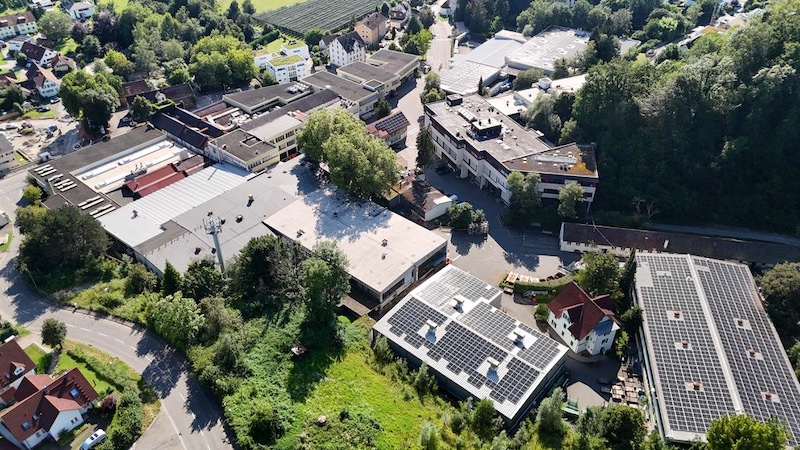
Lindauer DORNIER has put a new photovoltaic system into operation at its main plant in Lindau. Following the system at the Esseratsweiler plant, which was connected to the grid at the end of 2022, this is the machine and plant manufacturer's second photovoltaic system. In future, it will not only supply the company's own production, but also the public power grid with environmentally friendly solar energy. The family-owned company's aim is to cover its electricity needs entirely from renewables in the long term.
The aim of the family-owned company DORNIER is to cover its energy needs entirely from renewables in the long term and to reduce its CO2 footprint © Lindauer DORNIER


With a maximum output of up to 880 kWp (kilowatt peak), the new photovoltaic system can generate up to 880,000 kWh of solar power per year under optimal conditions. This amount could supply around 220 average four-person households with electricity for a year. Spread over six roofs and with a total area of around 4,000 m², the new system is the largest rooftop system in the district of Lindau, according to Energie-Atlas Bayern. ‘The project was a bit tricky because the feed-in points are spread across the entire factory premises, some of which are listed buildings – but the high planning effort paid off,’ says Franz-Peter Matheis, CFO at DORNIER. DORNIER uses the majority of the solar power generated for the production of its air-jet and rapier weaving machines. The surplus electricity is fed into the public power grid and thus also supplies private households in the region with environmentally friendly solar energy. ‘Our thanks go above all to Stadtwerke Lindau, who have supported us at all times, especially with the fast processing and certification of the system,’ says Matheis. If the company's own electricity supply is not sufficient, it obtains 100% green electricity from hydropower by cooperating with Stadtwerke Lindau as a regional electricity provider.

Aim: to cover energy needs entirely from renewables

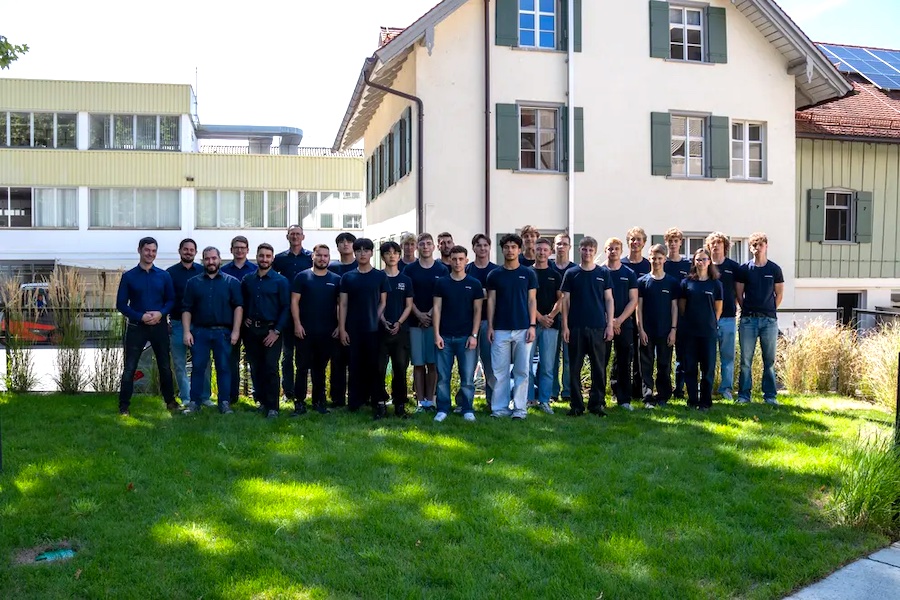
The new photovoltaic system is part of large investments that DORNIER has recently made to strengthen sustainability and secure the future of its two production sites in Lindau and Esseratsweiler. In addition to the photovoltaic system on the roof of the film stretching system production hall in Esseratsweiler, which was commissioned in 2022, this also includes investments in the modernisation of the machinery, the expansion of digitisation, the self-supply of nitrogen (which eliminates CO2-intensive transport) and the construction of a new training centre for up to 75 trainees and dual students in Lindau.


More News from Lindauer DORNIER GmbH

#Techtextil 2026

From carbon to canvas: DORNIER presents flexible and reliable weaving technologies for 3D weaving and dynamic markets at Techtextil

At Techtextil from 21 to 24 April 2026 in Frankfurt am Main (Hall 12.0, Stand D95), Lindauer DORNIER will be showcasing reliable and flexible weaving technologies for ever-changing market requirements. The machine and plant manufacturer will present retrofits for existing machines, the new TRITOS® FLEX 3D weaving technology, intuitive automation concepts and software solutions for data-sovereign networking of the weaving machine fleet.

#Weaving

Lindauer Dornier announces leadership transition in weaving machine business

After more than ten successful years at Lindauer DORNIER GmbH, Mr Wolfgang Schöffl will leave the family-owned company at the end of the year to enter well-deserved retirement.

#ITMA Asia + CITME Singapore 2025

DORNIER celebrates its anniversary at ITMA Asia + CITME

To mark its 75th anniversary, machine and plant manufacturer Lindauer DORNIER will be presenting the latest developments in its rapier and air-jet weaving machines at ITMA Asia + CITME in Singapore (Hall 2, Stand B401) from 28 to 31 October 2025. The focus will be on energy-efficient weaving technologies, new IoT solutions for networked textile production and systems for the series production of modern fibre composite components.

#Weaving

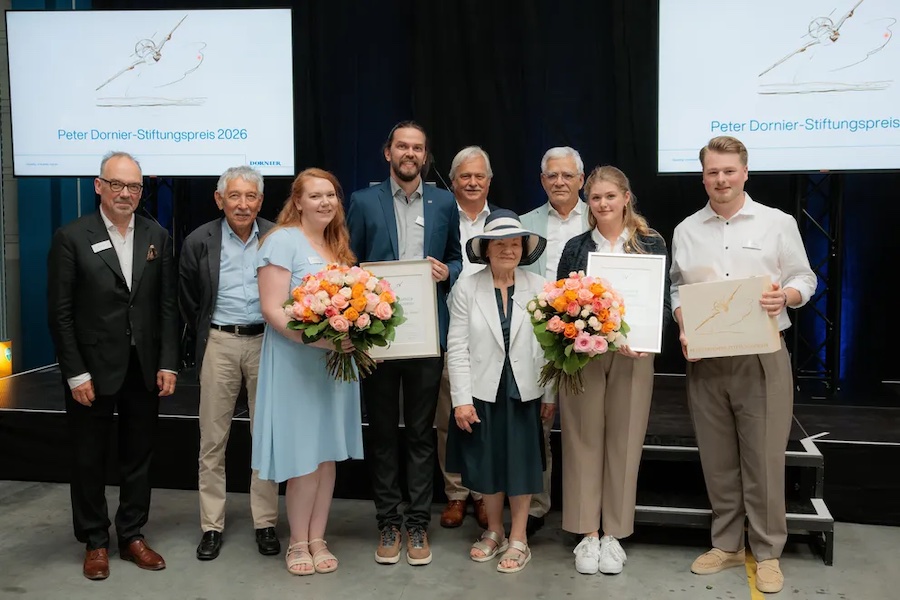
From the Venus flytrap to foldable aircraft wings: Peter Dornier Foundation Prize 2025 honours bionic research on 3D weaving technology

Long wings with foldable tips have the potential to reduce aircraft fuel consumption and make aviation more sustainable. An interdisciplinary research team has now developed a new solution based on the Venus flytrap: Freely movable wingtips made of fibre composites which are produced using innovative 3D weaving technology. For this pioneering combination of textile technology, aviation and bionics, researchers Patrick Meyer (TU Braunschweig) and Michael Vorhof (TU Dresden) were awarded the Peter Dornier Foundation Prize 2025 in mid-July.

More News on Sustainability

#Sustainability

Number of GOTS-certified facilities grow 15% globally as demand for credible sustainability standards continues to strengthen

Global Organic Textile Standard (GOTS) certification continued to grow in 2025, with nearly 18,000 certified facilities worldwide, despite ongoing geopolitical uncertainty and rapidly evolving regulatory requirements across global textile supply chains.

#Sustainability

bluesign technologies introduces bluepass

bluesign technologies ag (www.bluesign.com) today announces the launch of bluepass, a new certification mark and product labeling system created to deliver clear, substantiated, and verifiable sustainability claims at scale.

#Research & Development

Hohenstein publishes 2025 Sustainability Report

The testing and research service provider Hohenstein has published its latest sustainability report, outlining key progress and strategic initiatives. The report focuses on ambitious CO₂ reduction targets, the company’s new mission statement and the systematic expansion of sustainable services for customers worldwide.

#Natural Fibers

Global Standard gGmbH launches second public consultation for GRTS Draft 2 for the textile industry (1–30 April 2026)

Global Standard gGmbH is pleased to announce the release of Draft 2 of the Global Responsible Textile Standard (GRTS) for its second public consultation. The consultation will be open from 1 April 2026 to 30 April 2026, inviting stakeholders across the textile and apparel value chain to provide input and contribute to the further development of this new Standard.

Latest News

#Associations

BTMA backs global growth while investing in future UK leaders

As one of a number of new initiatives launched this year, the British Textile Machinery Association (BTMA) is launching the UK-India Textile Machinery Coalition. The UK-India Free Trade Agreement, signed in July 2025, has implications that extend across sourcing, competitiveness and long-term trade dynamics, believes BTMA CEO Jason Kent.

#Raw Materials

China projected to increase cotton production, yields, and imports in 2026/27

World cotton production in the 2026/27 season is projected at 25.9 million tonnes, exceeding global consumption of 25.2 million tonnes, according to the May 2026 issue of Cotton This Month. That means both production and consumption are expected to remain close to current season levels, while global cotton trade is projected to decline by 2.7% to approximately 9.6-9.7 million tonnes.

#Raw Materials

ICAC launches Carbon Credits Initiative to deliver new income streams to cotton farmers

The International Cotton Advisory Committee (ICAC) has announced a new initiative designed to unlock additional income streams for cotton farmers through participation in carbon credit markets, linking sustainable production practices directly to financial returns.

#Raw Materials

ECCO introduces first shoe featuring innovative protein-based fibre

ECCO, in partnership with Spinnova, announces the launch of the limited edition ECCO BIOM® 720, a first-of-its-kind shoe utilising an often overlooked leather by-product, transformed into a protein-based fibre. The fibres are produced using patented technology that advances material innovation while reducing waste and supporting full resource use across the leather and textile industry.

TOP