[pageLogInLogOut]

#Sustainability

Naia from Eastman partners with ESDI for sustainable fashion educational project
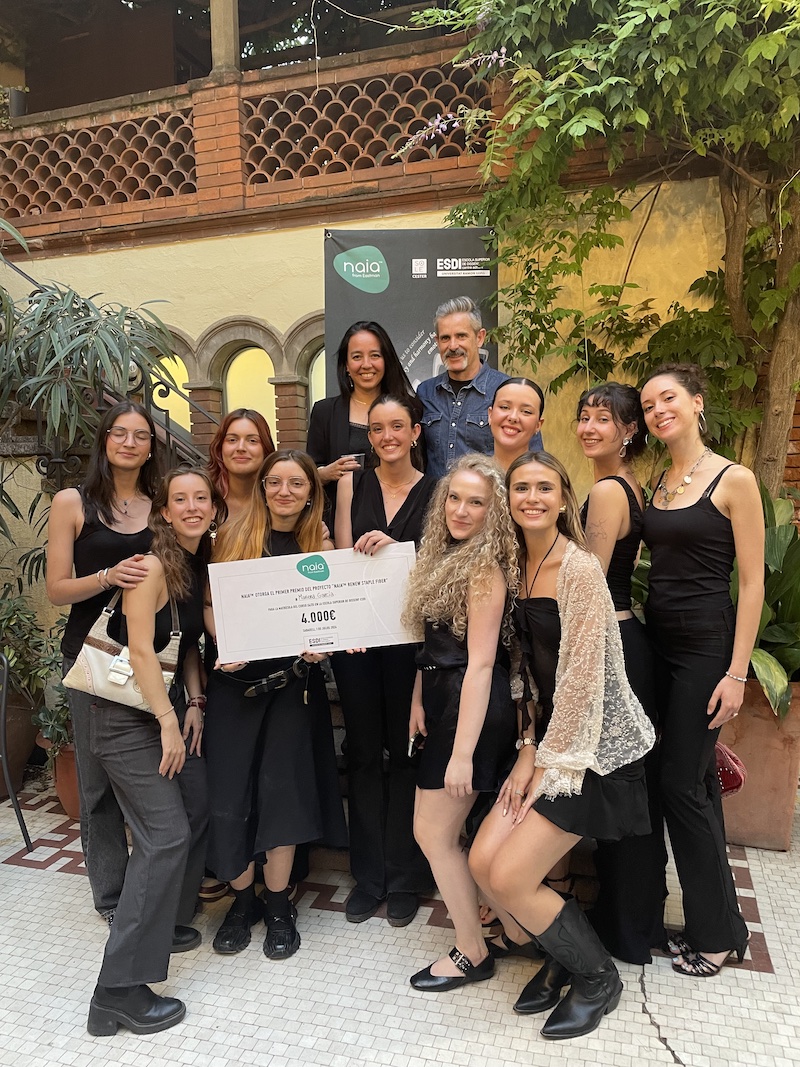
In a significant step towards promoting a culture of ecoconsciousness, Naia™ from Eastman partnered for an educational project with ESDI Escola Superior de Disseny in Sabadell (Barcelona). This collaboration underscores a commitment to integrating sustainable practices with academic excellence, providing ESDI students with the opportunity to design and produce garments using Naia™ fibers to participate in a fashion competition that celebrates the eternal tale of heaven and hell, Dante Alighieri's “The Divine Comedy.”
EKOS, was created and curated by a group of ten third-year ESDI fashion students © 2024 Eastman


The talents of the Escola Superior de Disseny ESDI in Barcelona challenged each other in a fashion competition in the name of sustainability and style

The event took place on July 1, 2024, at the Alliance Francaise in Sabadell, Barcelona, and was judged by a select jury of internationally renowned leaders within the fashion and textile industries. Including Abel Ortiz, owner of Naia™ partner mill, Textiles Ortiz; Montserrat Figueras, owner of the Sita Murt brand; the Italian-born and Barcelona-based designer Claudia Ligari, owner of the eponymous brand; and Carolina Wilches, Senior Application Development Representative at Eastman.

Naia™, in collaboration with ESDI, developed the project to create a seamless production process that prepares students for the dynamics and challenges that lie ahead in their future as industry players. The aim is to create and to enhance supply chain relationships, involving weavers, garment manufacturers and schools, as well as recognizing and rewarding the most innovative young designers during a special event. As part of this initiative, Eastman provided students with fabrics made from its Naia™ Renew fiber, in partnership with two esteemed textile manufacturers, Hallotex from Spain and Riopele from Portugal. Naia™ Renew cellulosic fibers are made from 60% sustainably sourced pulp and 40% certified recycled content*. The recycled component is obtained through Eastman’s patented carbon renewal technology to convert hard-to-recycle waste materials into molecular building blocks, which can be used, re-used and recycled time and time again. These building blocks are combined with sustainable wood pulp to produce biodegradable and compostable fibers for use in new textiles.

The fashion collection that derived from the program, named EKOS, was created and curated by a group of ten third-year ESDI fashion students: Mariona Garcia, the winner of the competition, Inés Borrego, Andra Criado, Júlia Escudero, Aurora Gallardo, Clàudia Gómez, Ingrid Sala, Sila Sánchez, Queralt Turull and Aina Vila. EKOS is a proposal that invites us to consider a new order of beauty and harmony based on emotional balance. Made with sustainable fibers that originated from the concept of inner struggle, it is a testament to human anguish, emotional and spiritual purgatory. Through their work, the designers aimed to capture the complexity of existence and the incessant search for clarity and peace.

A dress from the EKOS collection  © 2024 Eastman
A dress from the EKOS collection © 2024 Eastman


This educational collaboration is a reflection of Naia™ from Eastman's commitment to the United Nations’ Sustainable Development Goals (SDGs) and showcases its leadership in reducing environmental impact through advanced molecular recycling technologies. These are pivotal not just for their role in diminishing the carbon footprint of textiles but also for setting a new standard in mainstreaming circularity. Naia™ is at the forefront of promoting a circular economy within the fashion industry, both by converting waste into valuable, sustainable materials and by focusing on education and enabling students to work with them.

“At Eastman, we believe in the power of education to foster a more sustainable future. Partnering with ESDI allows us to support the next generation of designers by providing them with the tools and opportunities to innovate responsibly,” states Carolina Wilches. “Education is a cornerstone of our sustainability strategy, which is why we prioritize initiatives that enhance student learning and development.” "This collaboration has been very beneficial for ESDI students because they have been able to work in a very similar way to the professional one: choosing from a number of predetermined fabrics, visiting suppliers and devising the project as a team, to end up doing individual work that they will have to put together again for the fashion show presentation," says Jorge Zuazo, head of the Fashion Design Department at ESDI.
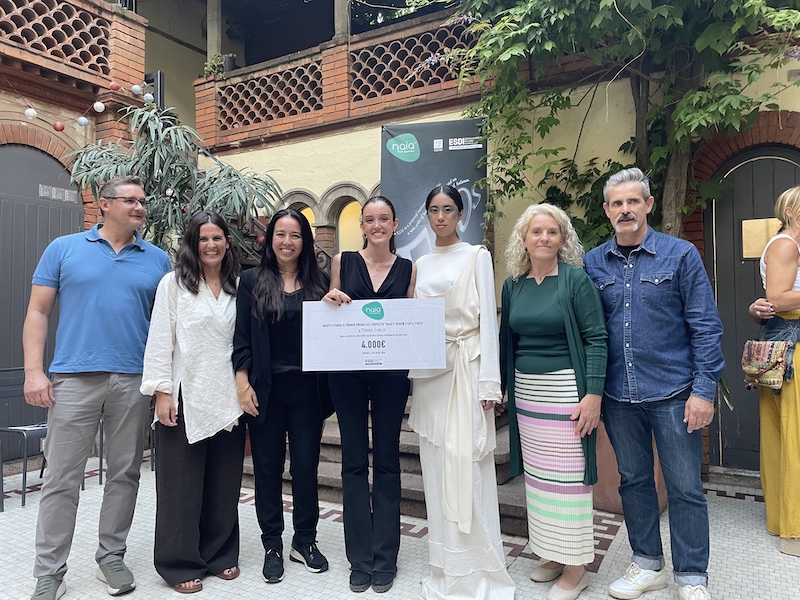
Mariona Garcia receives 'Naia™ Renew Staple Fibre' award from jury and school © 2024 Eastman


*Naia™ Renew recycled content is achieved by allocation of recycled waste material using a GRS-certified mass balance process.

More News from Eastman

#Yarns

Eastman introduces Naia™ Lyte at Première Vision Paris, marking a major breakthrough in fiber tenacity for cellulose acetate filament yarn performance

Eastman unveils Naia™ Lyte, a new cellulose acetate filament yarn that represents an important milestone in performance for lightweight and premium fabrics, at Première Vision Paris. Presented for the first time to the international fashion and textile community, Naia™ Lyte expands the capabilities of acetate yarn by introducing enhanced tenacity, unlocking new creative and technical possibilities for designers, mills and brands.

#Heimtextil 2026

Eastman Naia™ expands All-Night Comfort at Heimtextil 2026

New fill solutions and the debut of sleepwear highlight the versatility and performance of Naia™ Renew, its circular fiber, for home textile applications.

#Sustainability

Eastman Naia™ awarded top Canopy rating at Textile Exchange Conference 2025, advancing its sustainability 2025–2030 goals

At the Textile Exchange Conference in Lisbon, Eastman Naia™ was honored with its fourth consecutive “Dark Green Shirt” in Canopy’s Hot Button Report, an annual ranking of man-made cellulosic fiber producers based on forest conservation, sourcing risk, and supply chain transparency. The recognition confirms Naia™’s ongoing leadership in responsible sourcing and environmental stewardship, distinguishing it as one of the industry’s most trusted fiber platforms.

#Man-Made Fibers

Eastman Naia™ launches Sustainability Progress Report and 2025-2030 Sustainability Goals at Textile Exchange Conference, reaffirming commitment to circular innovation

At the Textile Exchange Conference 2025, Eastman Naia™ released its 2025 Sustainability Progress Report and announced its 2025–2030 Sustainability Goals, presenting a record of genuine progress and outlining a renewed roadmap for the years ahead. This announcement demonstrates Naia™’s long-standing commitment to driving an industry-wide shift toward sustainability through scalable, commercially viable material solutions.

More News on Sustainability

#Natural Fibers

Global Standard gGmbH launches second public consultation for GRTS Draft 2 for the textile industry (1–30 April 2026)

Global Standard gGmbH is pleased to announce the release of Draft 2 of the Global Responsible Textile Standard (GRTS) for its second public consultation. The consultation will be open from 1 April 2026 to 30 April 2026, inviting stakeholders across the textile and apparel value chain to provide input and contribute to the further development of this new Standard.

#Sustainability

Practical toolkit to drive coordinated climate action launched

An open-access workshop toolkit enables brands, suppliers, policymakers and investors across the textile industry to apply the System Map in their own work, identifying leverage points to halve emissions and enable a just transition.

#Raw Materials

Textile Exchange publishes cotton Life Cycle Assessment study to strengthen impact data

Textile Exchange has published the first in a series of seven Life Cycle Assessment (LCA) studies designed to improve the quality and robustness of environmental impact data for raw material production across the fashion, textile, and apparel industry. The first LCA study focuses on cotton and addresses critical data gaps and methodology variability through new high-quality data across key producing countries. The study includes organic, regenerative, recycled, and country averages for conventional cotton production systems, providing a clearer picture of the associated environmental impact.

#Sustainability

Experts publish APAC policy priorities

Cascale today announced the publication of its APAC Policy Priorities Paper, developed by the Asia-Pacific (APAC) Policy Member Expert Team (MET) to identify key regional sustainability challenges and provide practical, aligned recommendations for policymakers and industry stakeholders across Asia-Pacific.

Latest News

#Raw Materials

New study shows low environmental impact by Cotton made in Africa Organic Cotton from Tanzania

Today, the Aid by Trade Foundation (AbTF) is announcing the results of a comprehensive life-cycle analysis (LCA) for cotton produced in Tanzania under the Cotton made in Africa Organic (CmiA Organic) standard. The study emphasises the small ecological footprint of CmiA Organic verified cotton. This can largely be traced back to the absence of synthetic pesticides, artificial fertilisers, and artificial irrigation. Consequently, CmiA Organic cotton can help the textile industry meet regulatory requirements as well as science-based targets. The results also show that the consequences of climate change threaten the livelihoods of these cotton farmers, even though the type of agriculture they practise barely contributes to climate change.

#Raw Materials

Better Cotton Initiative strengthens regenerative focus in standard update

The Better Cotton Initiative (BCI) has strengthened the regenerative focus of its field-level standard with the launch of a new version of its Principles & Criteria (P&C), which marks the next step in the organisation’s journey to becoming a regenerative standards system.

#Man-Made Fibers

Selenis and Kintra Fibers partner to scale 100% bio-based synthetic fiber technology

Selenis, a leading global specialty polyester manufacturer, today announced a strategic manufacturing partnership with materials science company Kintra Fibers to scale Kintra’s patented fiber-grade PBS resin - a 100% bio-based and biodegradable material designed for textile applications.

#Functional Fabrics

PERFORMANCE DAYS proves its relevance as the industry’s key meeting point

Held on March 18–19, 2026, PERFORMANCE DAYS once again confirmed its position as a leading international platform for functional textiles. A total of 3.366 trade visitors and around 560 exhibitors gathered in Munich, with the event already kicking off successfully on DAY 0, which received highly positive feedback for its interactive format. Despite challenging conditions caused by the public transport strike in Munich, the event saw strong attendance and a consistently high level of activity across both exhibition days.

TOP