[pageLogInLogOut]

#Sustainability

Romania provides untapped opportunities for Europe’s bio-based sector and green growth

The Bio-based Industries Consortium (BIC), Europe’s leading industry association putting circularity, innovation and sustainability at the heart of the European bioeconomy, has published an updated version of its Country Report on Romania, “Mapping Romania’s bio-based potential”.

The European bioeconomy represented between 10.9-16% of EU GDP in 2019 (EU JRC report 2023). The bio-based industries contributed 814 billion euros to the EU’s economy in 2019 (The European Bioeconomy in Figures 2008-2019).

BIC’s updated Country Report on Romania builds on the first edition released in 2018. It maps out the potential for bio-based growth in the country, highlighting untapped and under-exploited bio-based resources. The report helps to identify new opportunities for the primary sectors, the food and beverage sector, the blue bioeconomy, bio-based chemicals, etc. to valorise side streams and waste that today have low or no value.

Further developing Europe’s bio-based industries in Romania presents opportunities for domestic and foreign investment at a time when green growth is high on the EU agenda. In addition, the EU continues efforts to increase the participation in innovation and research of the EU-13 Widening Countries, which includes Romania.

BIC is a partner in expanding industrial bio-based activities across Europe. To this end, we are focusing on assisting countries that want to benefit more from their enormous potential for a bioeconomy given their availability of sustainable feedstock and presence of innovation centres. Romania’s strong industries in the primary and chemical sectors, combined with its well-organised innovation support infrastructure will make it possible to accelerate bio-based industrial activities and the bioeconomy in the country and the region in the short term.

“We hope that as this report is disseminated, it will promote the bioeconomy and its potential in Romania; that it will motivate all stakeholders – industry, policymakers and academia – to exploit the opportunities for investment and greening the economy. Romania has a strong agricultural sector, which can be the basis for an innovative and sustainable bio-based industry in the country, creating jobs and growth,” said BIC Executive Director Dirk Carrez.

Detailled information and the latest reports for download are available at: www.biconsortium.eu

More News from TEXDATA International

#ITM 2026

ITM 2026: The new geography of textile production

New production hubs are emerging across North Africa and Central Asia, while Türkiye is accelerating its transformation toward higher-value, technology-driven and more sustainable textile manufacturing.

#Research & Development

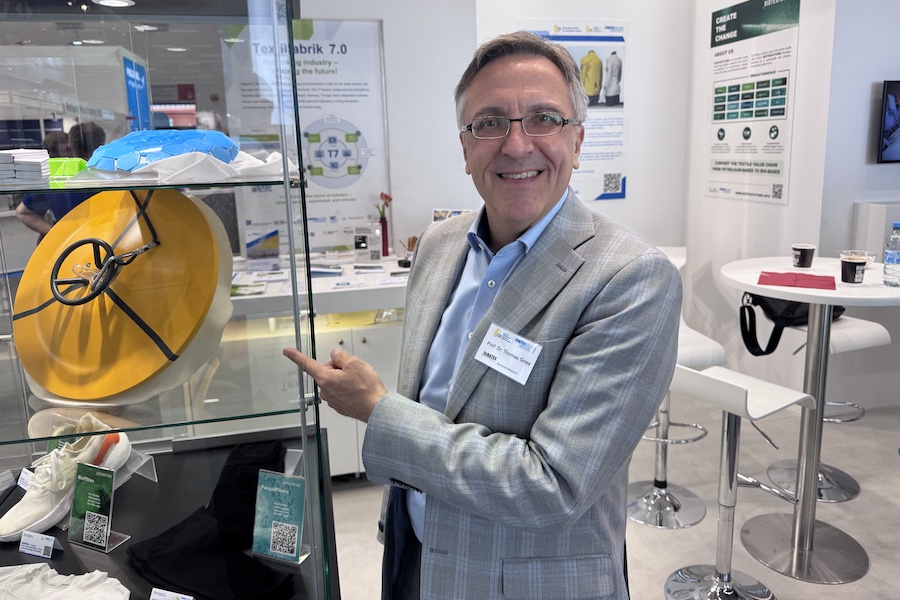
“Production is a product”

From technical textiles and AI-driven robotics to the limitations of textile circularity: Professor Dr Thomas Gries looks back on more than two decades of development at ITA Aachen. In the interview, he explains why production technology remains a decisive success factor, discusses international collaborations and innovation ecosystems, and shares his views on the transformation of production landscapes and the challenges facing an increasingly regulated industry.

#Knitting & Hosiery

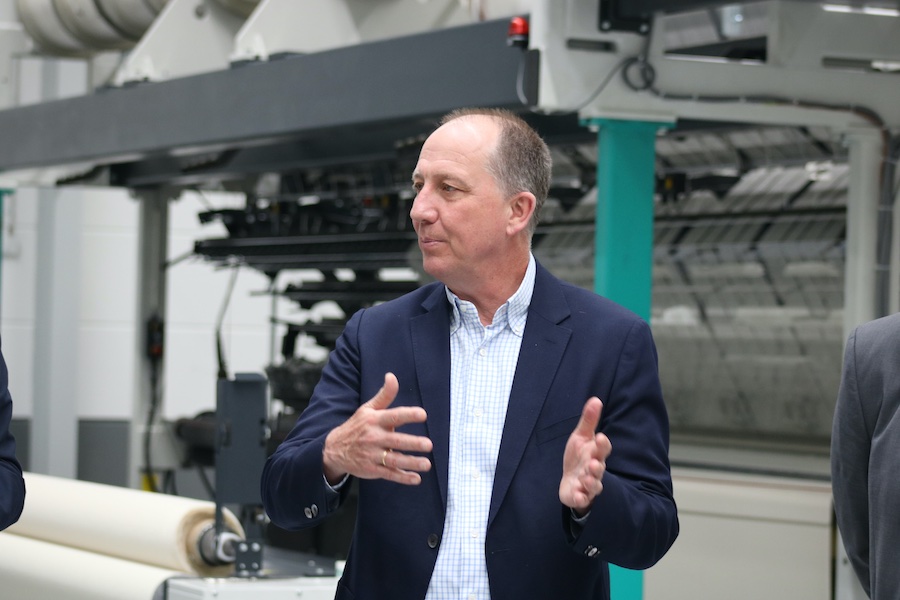
“We need to move away from the price trap and return to a value-driven mindset.”

With its new Textile Innovation Center, KARL MAYER is sending a strong signal for innovation, collaboration, and the future of textile applications. In this interview, Karl Josef Mayer discusses new opportunities in warp knitting, the processing of staple fibres, recycling, the changing role of machinery manufacturers, and why the textile industry must once again focus more strongly on the value of textiles. by Oliver Schmidt

#Associations

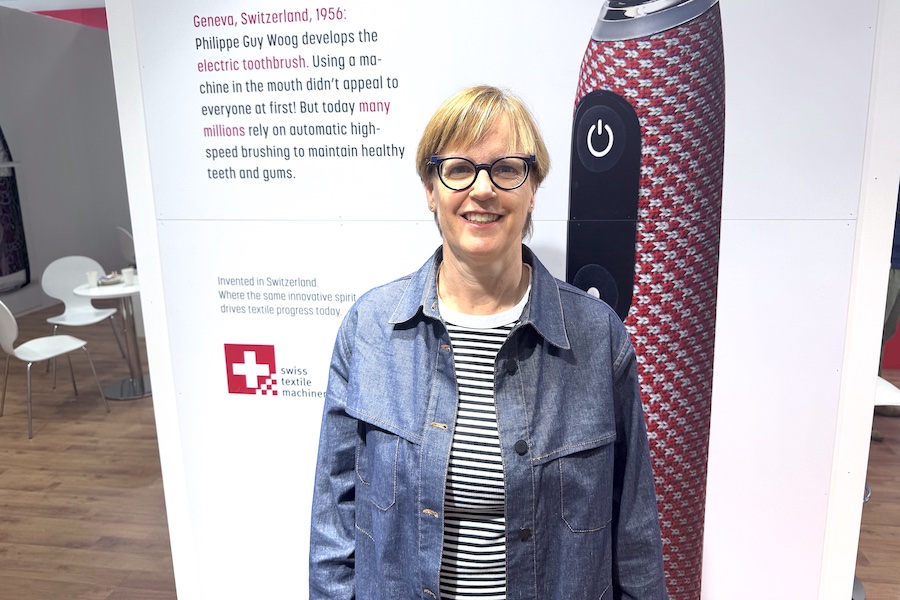
“Innovation, resilience and international experience remain the great strengths of the Swiss textile machinery industry”

Geopolitical uncertainty, growing competitive pressure from China, new free trade agreements and the shift towards a circular economy are currently reshaping the global textile industry. In this interview, Cornelia Buchwalder discusses the current mood within the Swiss textile machinery sector, the industry’s distinctive innovative strength, new market opportunities in India and Asia, and the technological trends that could shape the upcoming trade fair cycle leading up to ITMA 2027.

More News on Sustainability

#Sustainability

bluesign appoints Hanane Taidi as CEO to lead next phase of global impact

bluesign, which partners with the textile industry to reduce adverse impact across the value chain, appoints Hanane Taidi as Chief Executive Officer, marking a pivotal moment as the company builds on its leadership amid rapid industry change.

#Sustainability

Updated supply chain taxonomy advances apparel alignment

The apparel alliance (Apparel Impact Institute, Cascale, Textile Exchange, and ZDHC Foundation) today announced the launch of Version 2 of the Supply Chain Taxonomy, an updated harmonized framework designed to improve consistency, transparency, and collaboration across the textile, clothing, leather, and footwear (TCLF) sectors of the broader apparel industry.

#Sustainability

The first widely accessible Life Cycle Assessment study for cashmere production published by Textile Exchange.

Crucial new data to better understand, measure, and address the impacts of cashmere production has been made available to the fashion, textile, and apparel industry through a new Life Cycle Assessment (LCA) published by Textile Exchange.

#Sustainability

Indovinya advances sustainable solutions with agreement for the supply of renewable Oxygen from Air Liquide

Indovinya, the specialty chemicals and surfactants division of Indorama Ventures, has entered into an agreement with Air Liquide — a world leader in gases, technologies, and services for industry and healthcare — for the supply of renewable oxygen. The agreement represents a strategic advancement in Indovinya’s commitment to sustainability, as it increases the share of renewable raw materials in the production of ethylene oxide, one of its key products.

Latest News

#Knitting & Hosiery

Groz-Beckert at Igatex 2026

From October 15 to 18, 2026, Groz-Beckert will present its latest innovations and solutions across the product areas of Knitting, Weaving, Sewing and Spinning at Igatex in Pakistan (Hall 1, Booth A-1-08).

#Natural Fibers

Better Cotton Initiative multistakeholder event in US unpacks regenerative agriculture potential

The Better Cotton Initiative (BCI), in collaboration with Texas-based partner, Quarterway Cotton Growers, will expand upon its annual US field event to relay the vast potential of regenerative agriculture through an immersive experience of tours and demonstrations.

#Textiles & Apparel / Garment

C&S strengthens its governance to support its evolution

C&S announces the appointment of Marco Lucietti to its Board of Directors. With extensive international experience across the textile and denim industries, Lucietti will work alongside CEO Federico Corneli, contributing to the company’s managerial development, organizational structure and long-term strategic direction.

#Recycling / Circular Economy

Industrial scale meets verified governance: RE&UP is now B Corp™ certified

RE&UP, the circular-tech transforming global textile waste into high-volume Next-Gen materials, has officially become a Certified B Corporation™. The milestone establishes the industrial recycler among a select group of manufacturing infrastructure providers verified as meeting B Lab Standards for social and environmental performance, transparency, and accountability.

TOP