[pageLogInLogOut]

#Sustainability

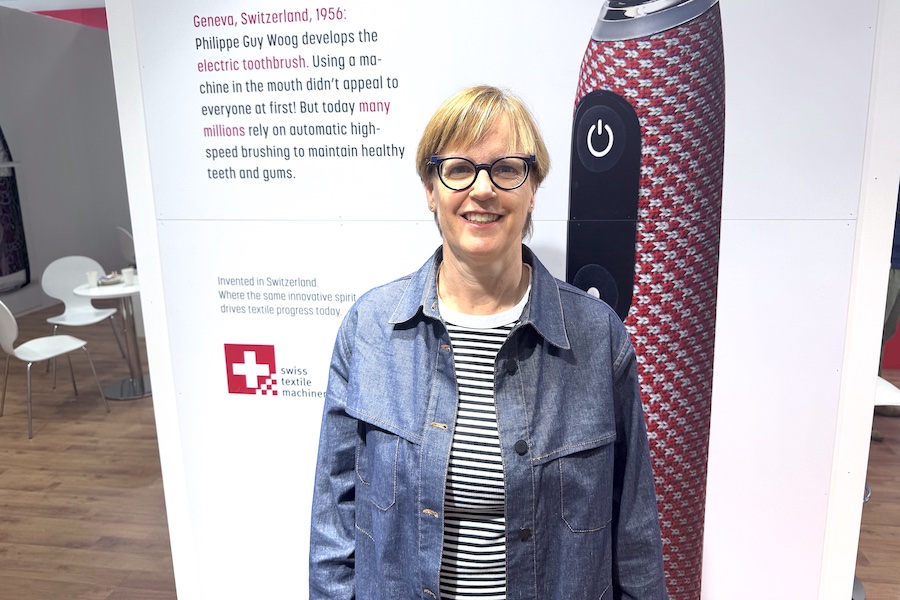
Keeping sustainability sustainable: The ISPO Award will now include an anti-greenwashing check conducted by the expert Louisa Smith
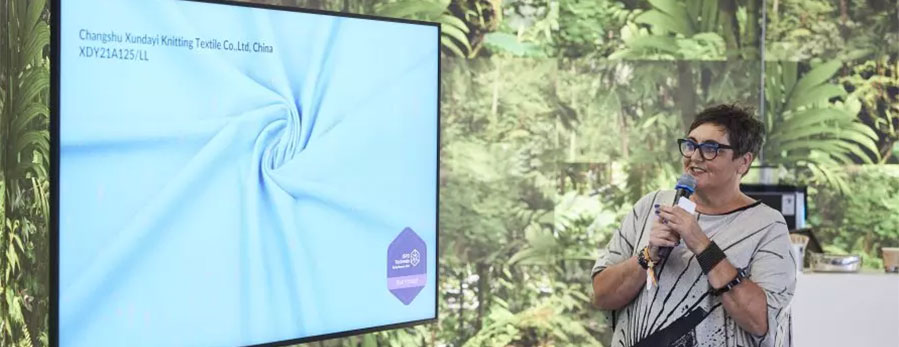
Image credit: Messe München GmbH
The ISPO Award is to receive a new sustainable check: All applications for an ISPO Award will now be subject to an anti-greenwashing evaluation conducted by the highly respected textile and industry expert Louisa Smith. She will check such things as information about sustainability, finishing, manufacturing processes, circularity and recyclability.

The anti-greenwashing evaluation was successfully tested during the first jury meeting this year. “The complexity and requirements related to sustainability are continuously rising,” says Christoph Beaufils, who at ISPO is co-responsible for the ISPO Award with Christina Rabl. “This is why the ISPO Award Team saw a need for improving the jury’s decision-making process by providing its members with an expert’s perspective of the nominations.” The test went so well that a decision was quickly made to include the anti-greenwashing check by Louisa Smith as a permanent part of the evaluation process for the ISPO Award.
Image credit: Messe München GmbH


Louisa Smith: a globally respected industry expert

Louisa Smith is a globally respected textile and fashion expert. Her ingenuity and expertise have turned her into a highly demanded opinion leader in the sports and outdoor area of the textile industry. She is the leading jury member for the ISPO Textrends Awards and presents them at OutDoor by ISPO and ISPO Munich.

Powerful signal for participating brands

All products that clear an initial screening after being nominated for an ISPO Award will be subject to the neutral and expert anti-greenwashing check conducted by Louisa Smith. Since the evaluation takes place before the actual jury meeting, companies submitting applications for the award have an opportunity to provide missing or unclear information. “We give the brands a signal well before the actual jury meeting in case they have outstanding questions,” says Christina Rabl. “They then have the opportunity to provide useful details regarding their products’ sustainability properties that can help the jury make a fact-based decision.”


Opportunity to improve nominations

The stated goal is to enable brands competing for the ISPO Award to submit improved and comprehensible applications—particularly in terms of sustainability. “The trend barometer ISPO Award rewards the real sustainability efforts of the sports and outdoor industry. This seal of quality also serves as a guide for the industry and consumers alike,” says Christoph Beaufils. “Customers want to be certain that the products they buy are really sustainable and that they are not being led astray by some sort of greenwashing.”

ISPO Award 2023: Submit your application by April 14 in order to be part of Outdoor by ISPO

The next jury meeting for the ISPO Award will be in May, in good time before OutDoor by ISPO 2023. Applicants must submit their products and solutions by April 14, 2023 at the latest, if they want to be a part of the jury meeting. Trade fair visitors and journalists can then experience the winning products of the ISPO Award live at OutDoor by ISPO at the MOC in Munich from June 4 to 6, 2023.

More information about the ISPO Award and the current and previous winners of the ISPO Award can be found at ISPO.com.

You will find the ISPO.com report about the first winners for 2023 here:

https://www.ispo.com/en/awards-ispo-award/these-are-new-winners-ispo-awards-2023-glance



More News from TEXDATA International

#Texprocess 2026

Texprocess 2026: Automation, digitalisation and AI redefine textile processing

Making investment decisions in textile processing has become significantly more demanding. Increasing energy costs, a shortage of skilled labour and ongoing geopolitical uncertainties are compelling companies to focus on technologies that deliver clear gains in efficiency and process reliability. This applies equally to apparel manufacturing and to the processing of technical textiles and high-performance materials. As a result, modernisation initiatives are assessed more carefully – even as the need to upgrade production systems continues to intensify.

#Techtextil 2026

Techtextil 2026: Between innovation pressure & market reality

From 21 to 24 April 2026, Techtextil in Frankfurt am Main will once again become the central meeting point for the international technical textiles and nonwovens industry. Running in parallel, Texprocess will focus on the industrial implementation of textile processing technologies as the leading platform in this field. Together, the two trade fairs form a closely integrated presentation and working platform along the entire textile value chain – from material development to finished applications.

#Techtextil 2026

Between geopolitical pressure and industrial resilience

In this interview, Dr. Janpeter Horn (VDMA) discusses the current challenges facing textile machinery manufacturers, shaped by geopolitical tensions, regulatory developments and subdued investment. He also outlines why innovation strength, integrated solutions and strategic positioning remain key to global competitiveness.

#Texprocess 2026

Between investment restraint and modernization pressure

Texprocess 2026 takes place in a complex market environment shaped by uncertainty and innovation pressure. In this interview, Elgar Straub (VDMA) explains why the trade fair is particularly relevant this year and which technologies are driving efficiency and competitiveness.

More News on Sustainability

#Sustainability

A new standard to combat plastic waste in forests

With DIN SPEC 35808 “Tree Shelter for Forestry Applications,” the testing and research service provider Hohenstein, in collaboration with Rottenburg University of Forestry, as well as forestry authorities and industry partners, has established a clear framework for bio-based and fully biodegradable tree shelters. The pre-standard defines requirements and practical testing methods designed to reduce plastic waste in forests and strengthen the long-term protection of soil and the environment.

#Denim

Denim moves towards sustainability

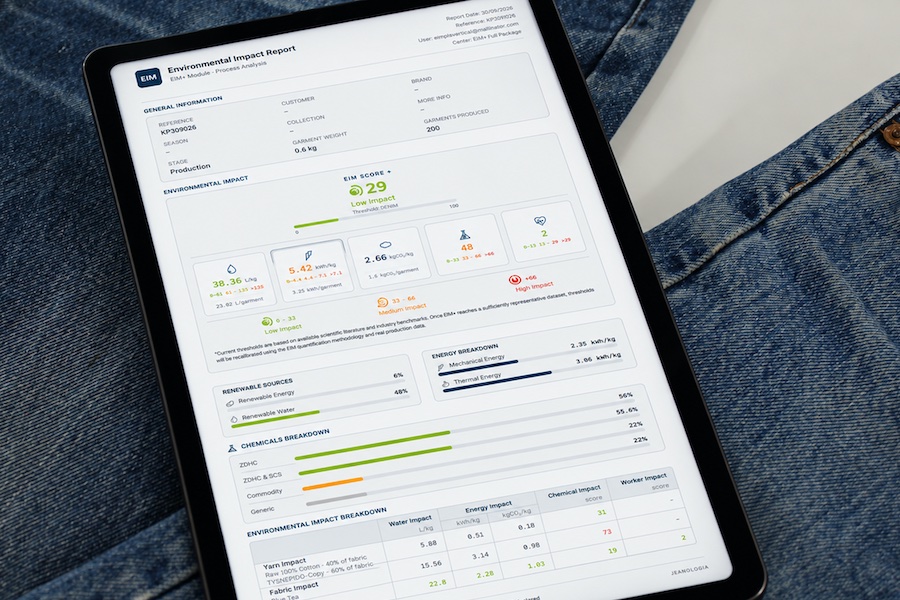
EIM (Environmental Impact Measurement), the global reference platform for measuring the environmental impact of garment finishing, presents the second edition of its annual report Denim Industry Progress & Insights 2025. The study analyses over 100,000 real denim finishing processes, providing an accurate and up-to-date view of the industry’s evolution towards more sustainable models.

#Recycling / Circular Economy

Europe’s textile future at a turning point: New 2030 Circularity Blueprint aims to scale recycling and unlock investment opportunities

The EU textile system is at a critical crossroads. Today, less than 1% of discarded garments are recycled into new garments, despite EU-wide obligations for separate collection. In response, Global Fashion Agenda (GFA) is launching the 2030 Circularity Blueprint, in partnership with ReHubs. This ambitious initiative is designed to support the transformation of the EU textile ecosystem to advance textile-to-textile recycling and drive the transition to a circular economy.

#Sustainability

Number of GOTS-certified facilities grow 15% globally as demand for credible sustainability standards continues to strengthen

Global Organic Textile Standard (GOTS) certification continued to grow in 2025, with nearly 18,000 certified facilities worldwide, despite ongoing geopolitical uncertainty and rapidly evolving regulatory requirements across global textile supply chains.

Latest News

#INDEX 2026

“We clearly see that reliability, flexibility, service and total cost of ownership are becoming increasingly important again.”

The nonwovens industry continues to face a challenging market environment. Nevertheless, AUTEFA Solutions reports successful projects, new line sales and growing demand for energy-efficient and flexible solutions. In this interview, André Imhof of AUTEFA Solutions talks about competitiveness against Chinese suppliers, new service and recycling concepts, the growing importance of application development and the opportunities created by countercyclical investments.

#INDEX 2026

“Needle punching technology is more universal and sustainable than ever!”

Needle punching technology was long regarded as a rather traditional and comparatively slow technology within the nonwovens industry. In this interview, Johann Philipp Dilo explains why needle punching is more relevant than ever today – ranging from energy efficiency and resource conservation to hygiene applications, new machine concepts and design-oriented nonwoven solutions.

#Research & Development

Textile climate control system in workwear – exhibition at the 2026 SME Innovation Day!

Conventional protective workwear often reaches its limits during strenuous physical activity. In particular, the transport of sweat and excess body heat poses a problem. The German Institutes of Textile and Fiber Research (DITF) conducted research on flow-optimized, air-conducting textile structures that enable targeted climate control directly on the body. These structures can be integrated straight into protective work garments. The textile climate control system supports the body’s natural thermoregulation. This contributes to improved workplace safety and comfort.

#Nonwovens

PET spunbond from China – EDANA welcomes imposition of provisional anti-dumping measures

On 13 May 2026, after eight months of investigation, the European Commission imposed provisional anti-dumping duties of 45.6-50.0% on imports of PET spunbond from China. EDANA welcomes this expression of the Commission’s clear determination to protect EU industries from the unfair trade practices of Chinese producers.

TOP