[pageLogInLogOut]

#Raw Materials

Aid by Trade Foundation presents annual report for 2025: Market position and impact of sustainably verified natural fibres strengthened
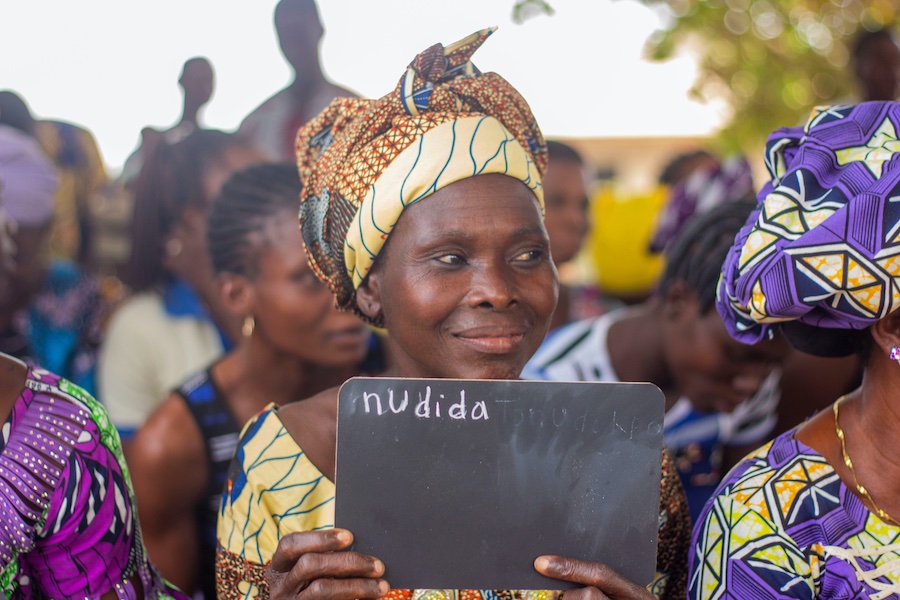
Literacy courses for women in Benin © 2026 AbTF
Despite global supply chain challenges, the Aid by Trade Foundation (AbTF) was able to further expand its international role in promoting sustainably verified natural fibres in 2025. In doing so, the foundation remains true to its fundamental approach of leveraging market forces. Last year, it generated total revenues of EUR 7.8 million; this included EUR 6.7 million collected through the successful marketing of four standards: Cotton made in Africa (CmiA), CmiA Organic, The Good Cashmere Standard (GCS), and the Regenerative Cotton Standard (RCS). AbTF invested the resulting income in projects aiming to protect biodiversity, support women, increase transparency in the textile supply chain, and implement its verification system.

Maintaining credibility and creating fairness in global trade

“Maintaining credibility, standing by our values, and acting out of conviction are touchstones for the work of the Aid by Trade Foundation,” says Prof. Dr Michael Otto, the entrepreneur who founded AbTF, adding, “One such conviction is that our most pressing global challenges can only be overcome if we protect ecosystems and create greater fairness in world trade. It remains true today, despite all claims to the contrary, and we will hold fast to it, even as the world faces major upheaval. It is no longer a question of whether we need to act but of whether we will do so in time.”

Prof. Dr Michael Otto © 2026 AbTF


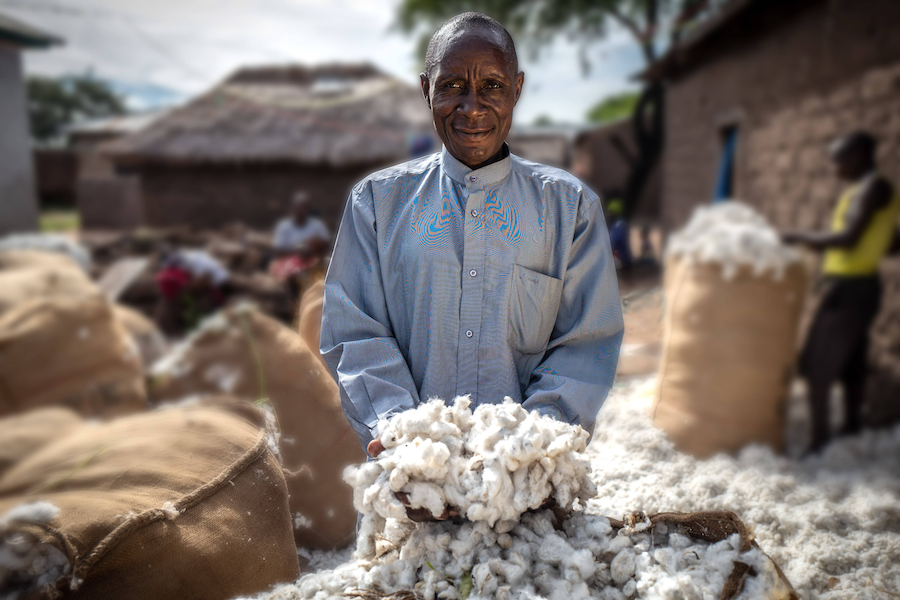
Since 2005, Cotton made in Africa has become a leading standard for sustainable cotton. In 2025, around 715,000 small-scale farmers in ten African countries cultivated cotton in accordance with Cotton made in Africa or Cotton made in Africa Organic. As a result, 36.4 percent of all cotton produced in Africa is now verified under CmiA or CmiA Organic. CmiA Organic combines the ecological advantages of organic cotton cultivation with targeted social and economic support. Some 43,000 smallholders in four African countries now benefit from Cotton made in Africa Organic—32 percent more than in the previous year. The Regenerative Cotton Standard, which was introduced in 2023 to promote soil health and biodiversity, has been successfully expanded in India and Tanzania. In Tanzania, the number of participating farmers applying the RCS criteria rose by a remarkable 87.8 percent in 2025, reaching a total of around 36,600. Additionally, following an increase of 3.7 percent, more than 2,800 partners in 50 textile production markets now process cotton verified according to the various AbTF standards.

The Good Cashmere Standard (GCS) is the world’s first standard for sustainably produced cashmere from Inner Mongolia, which focusses on animal welfare. GCS saw record demand in 2025, with more than 1.2 million garments being awarded the GCS label. In addition, the number of fashion brands and retailers rose to 71 partners in 13 countries, achieving a year-on-year increase of over 20 percent .

Setting new standards for traceability: The AbTF Transparency Standard

To further strengthen the integrity of traceable cotton products, AbTF developed its new Transparency Standard in 2025. It introduces an additional layer of independent third-party verification and supply chain assurance, building on the foundation’s established chain-of-custody model and easy-to-use tracking system. In this way, AbTF effectively supports fashion brands and retailers in meeting their growing environmental, social, and governance (ESG) requirements.

Prioritising people: The CmiA Community Cooperation Programme (CCCP)

Improving the living conditions of local producers is a central concern for AbTF. By the end of 2025, a total of 93 projects had been successfully implemented via the CmiA Community Cooperation Programme (CCCP). Project results include drilling 218 wells, building 144 classrooms, and funding 109 women’s clubs. Hundreds of thousands of people were provided with access to clean drinking water, sanitation facilities, schooling, or basic medical care.

Annual report for 2025


More News from Aid by Trade Foundation (AbTF)

#Natural Fibers

Cashmere specialist joins AbTF Board of Trustees

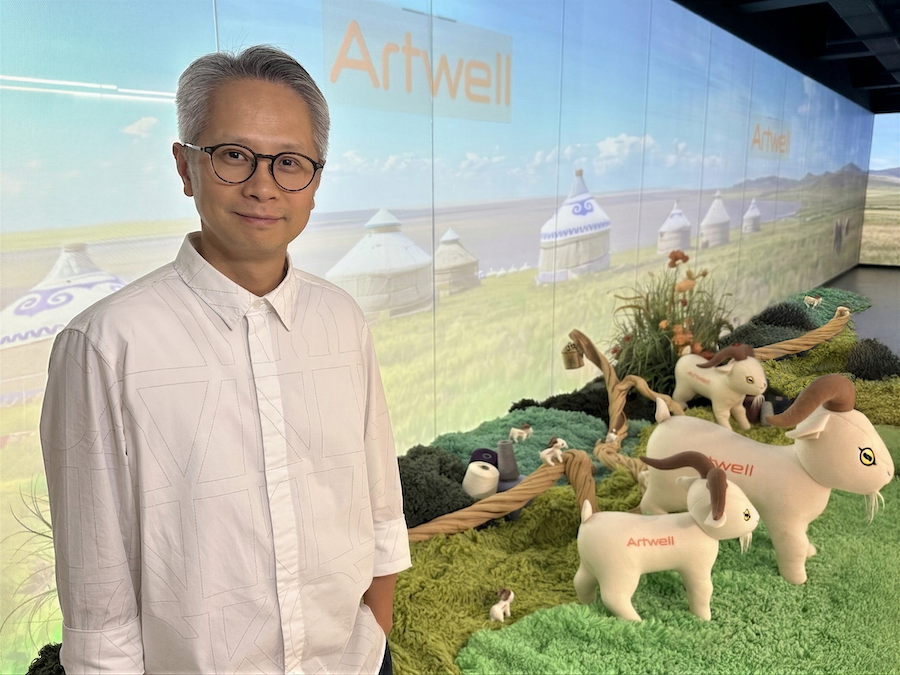
The Aid by Trade Foundation (AbTF) is pleased to welcome Brian Yu, the chief executive officer of the Artwell Group, to its board of trustees. As CEO, Brian Yu developed Artwell into the world’s largest supplier of responsibly produced cashmere knitwear.

#Natural Fibers

The Good Cashmere Standard expands Animal Welfare Assessment on audited farms

With the Animal-related Animal Welfare Assessment (ARAWA), the Aid by Trade Foundation (AbTF) conducts a pioneering project for the second consecutive year in 2025, parallel to the independent verifications of The Good Cashmere Standard® (GCS). ARAWA assessments provide a comprehensive overview of the health status of a herd on an audited farm, going beyond standard verification procedures. They are inherently complex, which still makes them a rarity in the standard sector, but offer support in identifying non-conformities and provide a holistic overview of the herd's well-being. Therefore, the Aid by Trade Foundation will continue this crucial project and even further expand it by 2027.

#Raw Materials

Aid by Trade Foundation reaches new milestones in supply chain transparency

The Aid by Trade Foundation (AbTF) is reaching new milestones as it leads the way towards greater physical traceability for Cotton made in Africa® (CmiA) cotton. With around 700 suppliers and producers in a total of 25 countries, the Aid by Trade Foundation has reached a new record number of partners who can trace CmiA cotton from the product back to its origin. This is more than double the previous year’s figure.

#Natural Fibers

Cashmere producers stress the importance of The Good Cashmere Standard®

At the invitation of the Aid by Trade Foundation (AbTF), over 70 experts from the cashmere production and supply chain, as well as other specialists, met at the GCS Unit Meeting in Shanghai, China to discuss the progress and new objectives of The Good Cashmere Standard (GCS). The meeting focused on implementation and verification of the standard, important aspects of animal welfare and the importance of the standard in the global textile market.

More News on Raw Materials

#Raw Materials

Cotton Brazil Dialogues field trip brings international stakeholders closer to Brazil’s cotton production chain

How do you build trust across the global textile value chain? By opening the farm gates. This is the principle behind the Cotton Brazil Dialogues. At the end of July, the programme welcomed its first group of international participants for a five-day immersion into Brazilian cotton production, combining field visits with technical workshops to showcase the quality, sustainability, innovation and traceability behind one of the world’s leading cotton origins.

#Raw Materials

World Cotton Day 2026 to bring global cotton and textile community to Tashkent on October 7

The Government of Uzbekistan and the International Cotton Advisory Committee (ICAC) will host the official World Cotton Day 2026 Partners Conference at the Hyatt Regency in Tashkent, Uzbekistan, on October 7.

#Raw Materials

Kimberly-Clark develops alternative natural fiber platform for hygiene products

Kimberly-Clark has introduced a proprietary innovation program aimed at developing alternative natural fibers for future hygiene products. The company has created a patented materials platform based on fibers derived from hesperaloe, a drought-tolerant succulent native to the southwestern United States.

#Recycling / Circular Economy

Indorama Ventures advances circularity tthrough PETValue Philippines' “Zero Waste to Landfill Partnership” with Republic Cement

Indorama Ventures Public Company Limited, a global sustainable chemical company, is advancing the circular economy through a new Zero Waste to Landfill initiative at its recycling site PETValue Philippines, further demonstrating how collaboration across industries can maximize resource efficiency and reduce waste.

Latest News

#Textiles & Apparel / Garment

SAITEX reports efficiency gains and greater transparency in 2025 Impact Report

Vietnam-based denim manufacturer SAITEX has published its 2025 Impact Report, documenting progress in resource efficiency, chemical management, digital traceability and knowledge sharing across its manufacturing operations in Vietnam and the United States. Rather than focusing on sustainability ambitions, the report presents operational data, manufacturing developments and lessons learned from the past year.

#Spinning

Barmag presents metering pump solutions at ASE China

From September 15 to 17, 2026, Barmag’s Pumps Division will present its solutions for the precise delivery and metering of adhesives, sealants, and other high-viscosity media at ASE China at the Shanghai New International Expo Centre. The focus of the exhibition will be on high-precision gear metering pumps that help plant managers sustainably optimize material usage, process stability, and product quality. (Booth E4235).

#Weaving

More patterns, less effort: the MULTI-MATIC® at Rohleder

Rohleder is one of Europe’s most modern weaving mills. For over 80 years, the family-owned company has been developing and manufacturing premium fabrics for brands, retailers and private customers – 100% Made in Germany. This success is made possible by a consistent focus on design, quality, and functionality, as well as by continuous investment in state-of-the-art production facilities. Rohleder also relies on innovative technologies in warp preparation and has been collaborating with KARL MAYER for many years. As recently as 2023, a MULTI-MATIC® was delivered to the company’s headquarters in Konradsreuth.

#Nonwovens

BASF opens global diaper and superabsorbents performance lab in Mumbai

BASF has officially inaugurated its new Performance Lab for diapers and superabsorbents (SAP) in Mumbai on August 18, 2026, which will provide technical and application services to superabsorbent customers globally. The new lab of BASF’s Hygiene Solutions business has been established in less than a year and is part of BASF’s Innovation Campus Asia Pacific in Mumbai, BASF’s second largest R&D site in Asia Pacific established in 2017 under BASF Chemicals India Private Limited.

TOP