[pageLogInLogOut]

#Sustainability

OEKO-TEX® new regulations 2023

Photo credit: © OEKO-TEX®
Creating trust within the textile and leather industry and for its customers is the mission of OEKO-TEX®. Since trust is based on consistently high quality, the OEKO-TEX® Association is again publishing updates to the applicable test criteria, limit values and guidelines for its certifications.

The new regulations will finally come into force in Q1 2023, after a transition period. Other introductions include integration of the BHive® app from GoBlu into STeP, which will enable certified production companies to check sustainability requirements and chemical management in global supply chains. The new OEKO-TEX® ORGANIC COTTON certification will verify reliable labelling of organic cotton textiles starting April 2023. In addition, OEKO-TEX® has issued a general ban on the use of perfluorinated and polyfluorinated alkyl substances (PFAS/PFC) in textiles, leather and footwear for the STANDARD 100, LEATHER STANDARD and ECO PASSPORT certifications. Further changes to OEKO-TEX® ECO PASSPORT certification will make the previously voluntary self-assessment mandatory for all production sites from April 2023.

New integration: OEKO-TEX® STeP goes BHive®

Cooperation and exchange with experts from the textile and leather industry are of great importance to the OEKO-TEX® Association. An important partnership was created with sustainability accelerator GoBlu International Ltd.

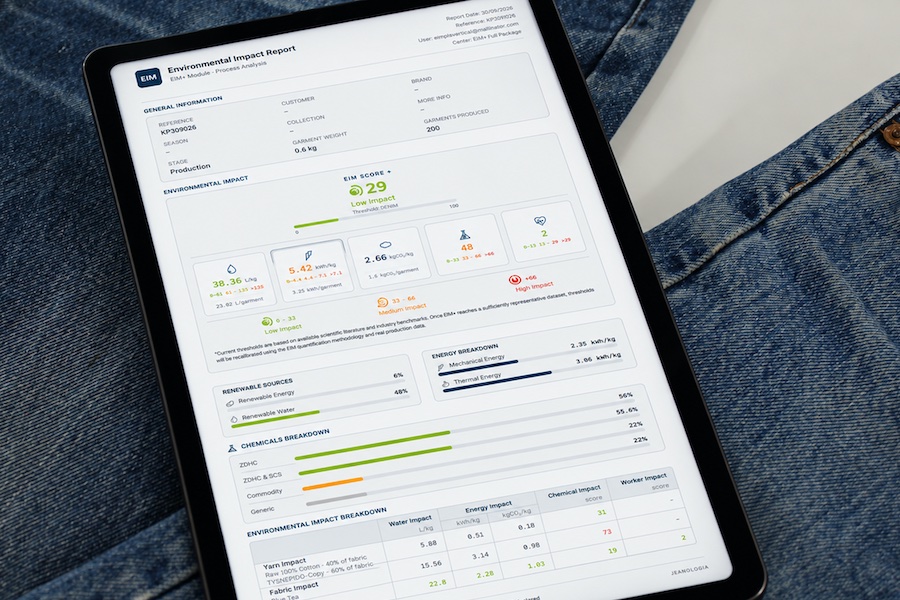
The BHive® app, developed by GoBlu, enables manufacturers to collect information on all chemical products used on site, via smartphone, and determine which products meet the sustainability requirements of different brands and retailers. All information is automatically recorded in a chemical inventory so that brands can directly access transparent and precise data. Starting April 2023, OEKO-TEX® STeP customers can utilize this comprehensive chemical database to reduce labor, time and costs. The intelligent system also aligns compliance with recognized industry standards such as the STeP and ZDHC MRSLs.

New certification: OEKO-TEX® ORGANIC COTTON

Starting April 2023, the new OEKO-TEX® ORGANIC COTTON certification will focus on reliable labelling of organic cotton textiles. "More and more consumers prefer sustainable textiles, and demand for organic cotton is growing rapidly," said OEKO-TEX® Secretary General Georg Dieners, "But how reliable is their labelling?" In addition to the qualitative DNA analysis of the sample material (i.e., Does a product contain genetically modified cotton, yes or no?), a second step involves quantification - determining the proportion of genetically modified cotton in a cotton product. The aim is not only to check production, but to make the raw materials traceable through the supply chain. Georg Dieners explains: "What's new is that we will start checking for genetically modified cotton at the beginning of the supply chain - at the ginning stage when the cotton fibres are separated from the seed. Then we can follow the flow of goods through all stages."


OEKO-TEX® ECO PASSPORT: Self-assessment to be mandatory in future plus adaptation to ZDHC update

OEKO-TEX® ECO PASSPORT certification has consisted of a mandatory CAS number screening and laboratory analysis. The self-assessment and the on-site visit to customers were voluntary. While the on-site visit will remain voluntary until further notice, the self-assessment will become mandatory for all customers' production sites from April 2023. All certifications issued after April 1, 2023, must be accompanied by a valid self-assessment. For existing customers, there is a possible transition period. OEKO-TEX® has issued a general ban on the use of perfluorinated and polyfluorinated alkyl substances (PFAS/PFC) in textiles, leather and footwear for the STANDARD 100, LEATHER STANDARD and ECO PASSPORT certifications. This is in coordination with the ZDHC Manufacturing Restricted Substances List (ZDHC MRSL) version 3.0 and its new Conformance Guidance 2.0. ECO PASSPORT will comply with these requirements in February 2023 to ensure a smooth transition for all customers.

Updates to STANDARD 100, LEATHER STANDARD and ECO PASSPORT limit value catalogues

Additional pesticides have been added to STANDARD 100, LEATHER STANDARD and ECO PASSPORT certifications, such as chlorothalonil in Annex 4 and 6, which were previously under observation. Also, three substances have been reclassified as Substances of Very High Concern (SVHC) that may have serious effects on human health and the environment. In general, having strict requirements for certain substances reduces exposure to the environment, workers and consumers.

New under observation

In 2023, OEKO-TEX® will continue to monitor various substances based on the latest scientific findings and conformity with relevant specifications. This primarily concerns the antioxidant drometrizole and the chemical compound N-ethyl-2-pyrrolidone.

The 2023 new regulations are available in detail for OEKO-TEX® products on the website www.oeko-tex.com/news.

In addition, a webinar with detailed information is available to all interested parties on 16. January 2023. Register at oeko-tex.com.



More News from Hohenstein Institute

#Research & Development

A smarter way to verified Chemical Compliance

Hohenstein and GoBlu Drive Innovation in Sustainable Supply Chain Management As regulatory demands, customer expectations, and sustainability goals continue to grow, the ability to manage chemical compliance and data across complex supply chains has become critical. Hohenstein and The BHive® by GoBlu are initiating a strategic partnership to enhance chemical management in the textile sector. The collaboration delivers more than just a service – it provides an integrated, future-ready solution for brands, manufacturers and suppliers seeking trusted chemical management and credible sustainability.

#Research & Development

Hohenstein achieves GLP Certification for Medical Device Testing

Since the middle of July, the testing service provider Hohenstein has been certified to conduct medical device testing in accordance with the internationally recognised Good Laboratory Practice (GLP) standard. This certification comprehensively covers chemical, physical and biological safety testing of medical devices.

#Research & Development

Hohenstein supports Global Textile Scheme Initiative

Global testing and research provider Hohenstein has acquired shares in Global Textile Scheme GmbH (GTS). In this way, Hohenstein aims to support GTS in harmonizing and automating data exchange along the entire supply chain. The aim of the GTS initiative is to create an international standard for handling structured product data in the textile and apparel industry.

#Research & Development

Hohenstein releases 2024 sustainability report

Responsible action is a defining value for Hohenstein, a global testing and research provider. Their 2024 Sustainability Report provides transparency through documented progress and detailed insights into how sustainability is embedded. It covers both the existing sustainability measures at the German headquarters and the company's goals for 2025 and beyond. The direct and indirect greenhouse gas emissions (Scope 1, 2 and 3) of all its locations worldwide were recorded for the first time.

More News on Sustainability

#Nonwovens

ENDURANCE Program: Driving operational sustainability at Magnera

As Magnera enters a new year, the company is reflecting on a key sustainability milestone from 2025: the launch of ENDURANCE, its global, employee-led initiative focused on waste reduction and sustainable innovation. Launched on Earth Day 2025, this initiative has generated more than 250 improvement submissions from team members across Magnera’s global operations, demonstrating strong engagement and shared accountability for sustainability across the organization.

#Sustainability

Cascale Forum: Colombo convenes 500+ manufacturers brands, and stakeholders to advance capacity building and collaboration across the consumer goods industry

Cascale today announced program details for Cascale Forum: Colombo, taking place March 30–April 1, 2026 in Sri Lanka. Building on the success of the 2025 Forum in Ho Chi Minh, Vietnam, this gathering will convene manufacturers, brands, retailers, NGOs, policymakers, and solution providers under the theme “Action by Design: Accelerating a Fairer, More Resilient Value Chain.”

#Business

Canopy introduces a first-of-its-kind $2 billion USD investment blueprint to decarbonize global materials supply chains

Today, the global, solutions-driven not-for-profit Canopy joined partners at Davos to introduce a new finance model designed to accelerate the growth of low-carbon materials and transform the paper, packaging, and textile supply chains. The event was anchored by a keynote speech from Sri A Revanth Reddy, Hon’ble Chief Minister of Telangana, with India set to host the first iteration of the new investment blueprint.

#Sustainability

Storm Creek achieves bluesign® PRODUCT status

Storm Creek (ASI#/PPAI#) is proud to announce a meaningful sustainability milestone: the company has achieved bluesign® PRODUCT status: becoming the first US-based supplier in the promotional products industry to earn this globally respected certification. While this marks an industry first, for Storm Creek, it represents something far more important: a continuation of doing what they believe is right.

Latest News

#Knitting & Hosiery

SHIMA SEIKI to exhibit at GMMSA Expo India

Leading Japanese computerized flat knitting technologist SHIMA SEIKI MFG., LTD. of Wakayama, Japan, together with its Indian sales representative Universal MEP Projects & Engineering Services, Ltd., will participate in the upcoming Garments Machinery Manufacturers & Suppliers Association (GMMSA) Expo India 2026 exhibition to be held in Ludhiana, India next month. Through its lineup at GMMSA, SHIMA SEIKI aims to further strengthen its presence within the Indian market with an exhibit that caters to diverse needs, consisting of seam-free WHOLEGARMENT® knitting technology as well as a brand-new shaping machine with high productivity and excellent cost performance.

#Research & Development

Bio-based fibers with good flame retardancy

Fibers made from bio-based plastics reduce dependence on fossil raw materials and promote the circular economy. The covalent bonding of flame-retardant additives can open the way for these fibers to enter the mass market.

#Digital Printing

Maximising print efficiency exploring ink saving features for modern print production

In today’s print industry, balancing quality, efficiency, and environmental responsibility is a growing priority. With increasing pressure on margins and sustainability, solutions that streamline production without sacrificing results are more relevant than ever.

#Knitting & Hosiery

KARL MAYER opens a new TEXTILE INNOVATION CENTRE – a new era of textile innovation begins

KARL MAYER is opening its new TEXTILE INNOVATION CENTRE (TIC), sending a strong signal that it is driving textile innovation forward and opening up new perspectives for the textile industry. The TIC brings together the latest developments in Warp Knitting, Technical Textiles and Warp Preparation – KARL MAYER’s core areas of expertise.

TOP