[pageLogInLogOut]

#Sustainability

Into the comfort zone

Another advantage of OEKO-TEX® MADE IN GREEN is that products made of mixed fabrics can also be certified, regardless of the material. © OEKO-TEX®
Sustainability is the key: More and more consumers prefer consciously and socially responsible manufactured bedding, bed linen and towels. Many manufacturers of home textiles are orienting themselves to this demand and are increasingly relying on relevant labels such as OEKO-TEX® MADE IN GREEN, as are more and more brands and retailers. Visitors to the Heimtextil international trade fair in Frankfurt from 10 to 13 January 2023 will also be able to see how much the topic of sustainability is now shaping the global home textiles industry.

With MADE IN GREEN, OEKO-TEX® offers a consumer label with a clear commitment to high product safety and ecological and social production conditions. The label scores with a high degree of transparency: each label has a unique product ID or a QR code. With one scan, the individual supply chain of each labelled textile product is revealed - ideal starting conditions to create sustainable trust. Manufacturers who are considering the gradual and targeted implementation of individual sustainability aspects can benefit from the OEKO-TEX® modular system. In addition to quality assurance at every stage of the textile value chain, it enables a simplified selection of ingredients and suppliers with OEKO-TEX® certification. Michael Möller, Head of the Audits & Certification Department at the testing service provider Hohenstein, adds: "The use of pre-certificates results in substantial cost savings for our customers.

For manufacturers of home textiles, the
For manufacturers of home textiles, the "upgrade" from OEKO-TEX® STANDARD 100 to MADE IN GREEN is much less complicated than for manufacturers with complexly structured products made up of numerous individual components. © OEKO-TEX®


What's more: for manufacturers of home textiles, the "upgrade" from STANDARD 100 to MADE IN GREEN is much less complicated than for manufacturers with complexly constructed products made up of numerous individual components. So if they have home textiles tested for harmful substances according to OEKO-TEX® STANDARD 100 and prove through STeP certification that the manufacturing conditions in their production sites are environmentally friendly and socially responsible, then they are eligible to label their home textiles with the OEKO-TEX® MADE IN GREEN label." Another major advantage of OEKO-TEX® MADE IN GREEN is that products made of mixed fabrics, such as terry towelling made of 50% cotton and 50% PES microfiber, can also be certified, regardless of the material.


Trade fair visitors can discuss open questions and more details about the OEKO-TEX® services and the OEKO-TEX® modular system with the Hohenstein experts in person during the Heimtextil trade fair from 10 January to 13 January 2023 at the OEKO-TEX® trade fair stand in Hall 12.0, Stand D48. They are also welcome to make an appointment in advance at customerservice@hohenstein.com.
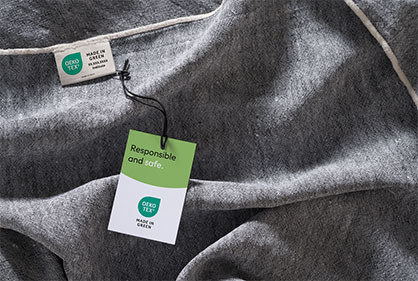

Many manufacturers of home textiles, brands and retailers are increasingly relying on relevant labels such as OEKO-TEX® MADE IN GREEN. © OEKO-TEX®


More News from Hohenstein Institute

#Research & Development

New DIN SPEC assesses environmental impact of textile fragments in soil

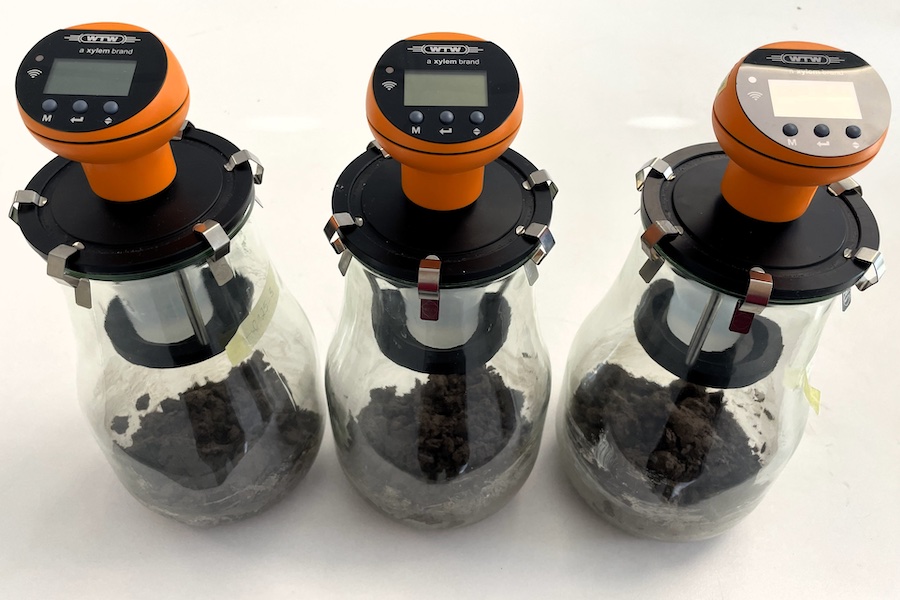
Textile products made from synthetic fibres, finished fabrics or dyed materials release fibre fragments into the environment at every stage of their life cycle. With the new DIN SPEC 19296, Hohenstein has developed a standardised testing method to analyse how these fragments behave in soil under natural conditions. Until now, little was known about their environmental behaviour or potential ecological effects once released.

#Research & Development

Testing and research laboratory ensures safe and more sustainable products worldwide

For 80 years, Hohenstein has stood for independent testing, scientific expertise and practical solutions. Today, the testing and research service provider supports manufacturers and brands worldwide in making textiles, hardlines and medical devices safe, more sustainable and market-ready – thereby building trust among consumers. With an international presence and interdisciplinary expertise, Hohenstein supports its customers from production through to market launch, helping them navigate an environment of growing regulatory and societal demands.

#Research & Development

A smarter way to verified Chemical Compliance

Hohenstein and GoBlu Drive Innovation in Sustainable Supply Chain Management As regulatory demands, customer expectations, and sustainability goals continue to grow, the ability to manage chemical compliance and data across complex supply chains has become critical. Hohenstein and The BHive® by GoBlu are initiating a strategic partnership to enhance chemical management in the textile sector. The collaboration delivers more than just a service – it provides an integrated, future-ready solution for brands, manufacturers and suppliers seeking trusted chemical management and credible sustainability.

#Research & Development

Hohenstein achieves GLP Certification for Medical Device Testing

Since the middle of July, the testing service provider Hohenstein has been certified to conduct medical device testing in accordance with the internationally recognised Good Laboratory Practice (GLP) standard. This certification comprehensively covers chemical, physical and biological safety testing of medical devices.

More News on Sustainability

#Sustainability

Ying McGuire becomes new CEO of Cascale

Cascale today announced the appointment of Ying McGuire as Chief Executive Officer, effective June 1, 2026.

#Sustainability

VAUDE eliminates PFAS from all products

PFAS (per- and polyfluoroalkyl substances) are now detectable worldwide – in drinking water, soil and the human body. These so-called “forever chemicals” are considered hazardous to health and potentially carcinogenic, as they do not break down and remain in the environment permanently. Despite these risks, PFAS are still used in a wide range of products. More than 15 years ago, VAUDE made a strategic decision to gradually eliminate PFAS from all product categories.

#Sustainability

OEKO-TEX® chooses TextileGenesis to advance digital traceability for organic cotton

OEKO-TEX® today announced a full collaboration with TextileGenesis, a Lectra company, to digitally trace and authenticate organic cotton, strengthening fraud prevention across the supply chain. This announcement follows a successful pilot and brings together OEKO-TEX®’s certification expertise and closed testing system with TextileGenesis’ digital traceability platform to deliver a secure, end-to-end solution for managing certified organic cotton flows.

#Europe

ICAC to support European Commission on pending PEF legislation

The International Cotton Advisory Committee (ICAC) is proud to announce that it has been included as a member of the European Commission’s Technical Advisory Board (TAB) on the Product Environmental Footprint methodology. The Commission developed the Product Environmental Footprint (PEF) to assess and communicate the life cycle environmental performance of products and organizations.

Latest News

#Recycling / Circular Economy

Circulose restarts commercial-scale production at Ortviken plant in Sundsvall

Circulose today announced the restart of its commercial-scale production plant at Ortviken in Sundsvall, Sweden, marking a significant step in scaling next-generation materials for the global fashion industry. The company plans to resume production of CIRCULOSE®, a recycled pulp made entirely from discarded cotton textiles, in the fourth quarter of 2026.

#Textiles & Apparel / Garment

VIATT 2026 to debut German Pavilion, strengthening European participation alongside key Asian textile hubs

Vietnam’s textile and garment sector continues to be a major contributor to the country’s economic growth, with export revenues expected to reach USD 46 billion in 2025, a 5.6% increase from 2024 . From 26 – 28 February, the Vietnam International Trade Fair for Apparel, Textiles and Textile Technologies (VIATT) is set to contribute to economic growth opportunities by accelerating digital transformation and green transition across the entire textile value chain. The upcoming edition will respond to the rising demand for advanced technologies and sustainable materials with the introduction of the German Pavilion, alongside strong exhibitor participation from key Asian sectors, as well as several high-profile fringe events.

#Technical Textiles

Sustainable, lightweight, and sound absorbing: Polyester-based front trunk solution for BEVs

As car manufacturers look to further reduce their carbon footprint, Autoneum has developed an innovative front trunk solution for battery electric vehicles (BEVs), made entirely from polyester-based textile. The Ultra-Silent Frunk offers significant weight reduction, improved acoustic and thermal insulation, and uses up to 70 percent recycled material, supporting sustainable and efficient vehicle design. Autoneum, global technology leader in acoustic and thermal management for vehicles, has already received orders for the new frunk from three major OEMs in Asia and Europe to be built in three BEV models. Series production for two BEVs has been underway in China and Germany since last year.

#Raw Materials

Modern testing methods for raw cotton

The 38th International Cotton Conference Bremen will take place from 25 to 27 March 2026 at the Bremen Parliament. This conference has traditionally stood for in-depth expertise and international exchange. The program will focus on technical innovations, market trends, and regulatory frameworks across the entire value chain – from agriculture to the circular economy. With high-profile speakers, the conference is regarded as the key meeting point for the global cotton industry. Today’s focus: Cotton quality and testing methods.

TOP