[pageLogInLogOut]

#Sustainability

Hohenstein certifies textiles in the Hamburger Sport Verein (HSV) fan store with OEKO-TEX® MADE IN GREEN
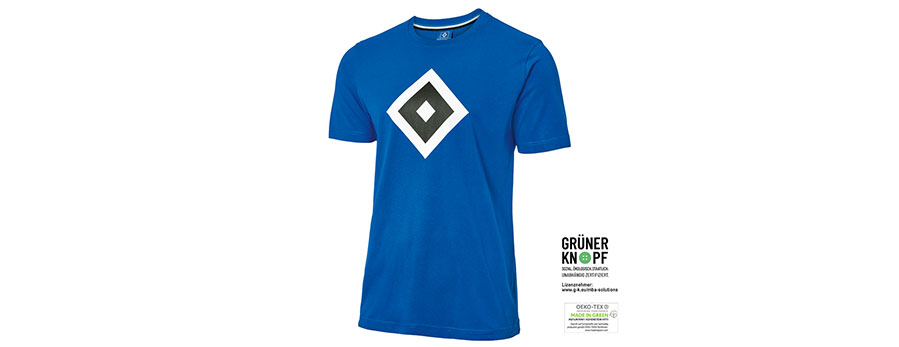
HSV Fan-Shirt ©HSV
The HSV fan store is getting more sustainable: The tradition-rich Hamburg football club is expanding its popular Rothosen collection - the club's fan shirts are now certified with the OEKO-TEX® MADE IN GREEN label.

Commitment to more sustainability in the textile industry

MADE IN GREEN is a traceable product label for textiles tested for harmful substances and produced under sustainable and socially responsible conditions. In this way, this traditional club is once again committing to social responsibility and sustainability. The label is awarded by testing service provider Hohenstein, a family-owned company that has specialized in testing and certifying textile products for more than 75 years. It supports companies along the value chain in successfully launching their products - based on research and independent certifications. In addition to the MADE IN GREEN label, Hohenstein awards numerous other certificates such as the Green Button.

With MADE IN GREEN, the HSV Team, ranks 3rd in terms of merchandising sustainability, according to a recent study by cum ratione gGmbH within the Bundesliga and 2nd Bundesliga. HSV is actively working toward a more sustainable world. For example, the club has its Rothosen collection and its baby and toddler clothing manufactured in a Green Factory in Tiruppur, India. For logistics, they use DHL's GoGreen service. In cooperation with MBA-Solutions GmbH, specialist for sustainable textile merchandise and workwear, some fan textiles have now been awarded with MADE IN GREEN and the Green Button.

The decision in favor of MADE IN GREEN is completely in line with the joint initiative "From the Field to the Fan Shop" of the German Federal Ministry for Economic Cooperation and Development (BMZ) and Clubs of Bundesliga and 2nd Bundesliga. Among other things, it supports the cultivation and use of organic cotton and the promotion of disadvantaged children at production sites.


"Sustainably produced textiles are very important to us. Anyone who buys them can be sure that their trail can be traced back through the entire supply chain and that they meet our standards in every respect. The certification of our fan merchandise with the OEKO-TEX® MADE IN GREEN label by Hohenstein is an important step in further advancing the issue of sustainability. As a traditional club, we in particular can use our reach to bring even more attention to this important issue and give something back to society as a whole," explains Sascha Steinbrück, Head of Merchandising at HSV.

OEKO-TEX MADE IN GREEN Logo ©Hohenstein


More News from Hohenstein Institute

#Textiles & Apparel / Garment

Global size study for brands and retailers to optimize fit and market coverage

Hohenstein Apparel Fit Solutions, a global leader in apparel fit, sizing, and product development, today announces the launch of its Global Size Study, a new initiative designed to equip brands to better understand and serve their target consumers through more accurate, market-relevant sizing.

#Sustainability

A new standard to combat plastic waste in forests

With DIN SPEC 35808 “Tree Shelter for Forestry Applications,” the testing and research service provider Hohenstein, in collaboration with Rottenburg University of Forestry, as well as forestry authorities and industry partners, has established a clear framework for bio-based and fully biodegradable tree shelters. The pre-standard defines requirements and practical testing methods designed to reduce plastic waste in forests and strengthen the long-term protection of soil and the environment.

#Research & Development

Hohenstein publishes 2025 Sustainability Report

The testing and research service provider Hohenstein has published its latest sustainability report, outlining key progress and strategic initiatives. The report focuses on ambitious CO₂ reduction targets, the company’s new mission statement and the systematic expansion of sustainable services for customers worldwide.

#Research & Development

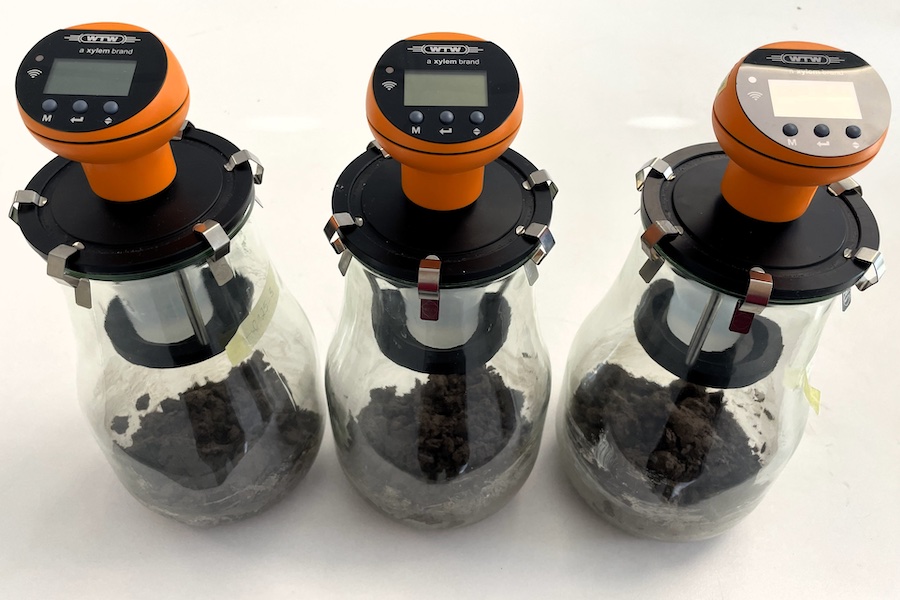
New DIN SPEC assesses environmental impact of textile fragments in soil

Textile products made from synthetic fibres, finished fabrics or dyed materials release fibre fragments into the environment at every stage of their life cycle. With the new DIN SPEC 19296, Hohenstein has developed a standardised testing method to analyse how these fragments behave in soil under natural conditions. Until now, little was known about their environmental behaviour or potential ecological effects once released.

More News on Sustainability

#Associations

Results of the 38th ITMF Global Textile Industry Survey

The global textile industry appears to be turning a corner, but this is more likely a fragile and possibly temporary improvement than the start of a durable recovery. According to the 38th ITMF Global Textile Industry Survey, conducted worldwide during the second half of May 2026, business sentiment, order intake, order backlogs and capacity utilization all improved versus March — yet every indicator remains weak by historical standards, and rising costs cast doubt on how long the upturn can last.

#Sustainability

Closing the Footwear Loop reveals challenges and opportunities for circular footwear

The footwear industry faces one of the most complex circularity challenges in the fashion sector. A new Phase 1 report from the Fashion for Good initiative Closing the Footwear Loop, developed together with Circle Economy, provides new insights into the composition, condition and recycling potential of post-consumer footwear waste.

#Man-Made Fibers

The updated poster on biodegradable Polymers in various environments has been released

As part of the PerPlacsBio project, nova-Institute has updated its popular poster on the biodegradability of polymers in different environments. The updated version reflects current standards, certifications and the latest scientific findings. The poster can be used to assess biodegradable alternatives for use in agriculture and forestry, and it is now available in German for the first time.

#Denim

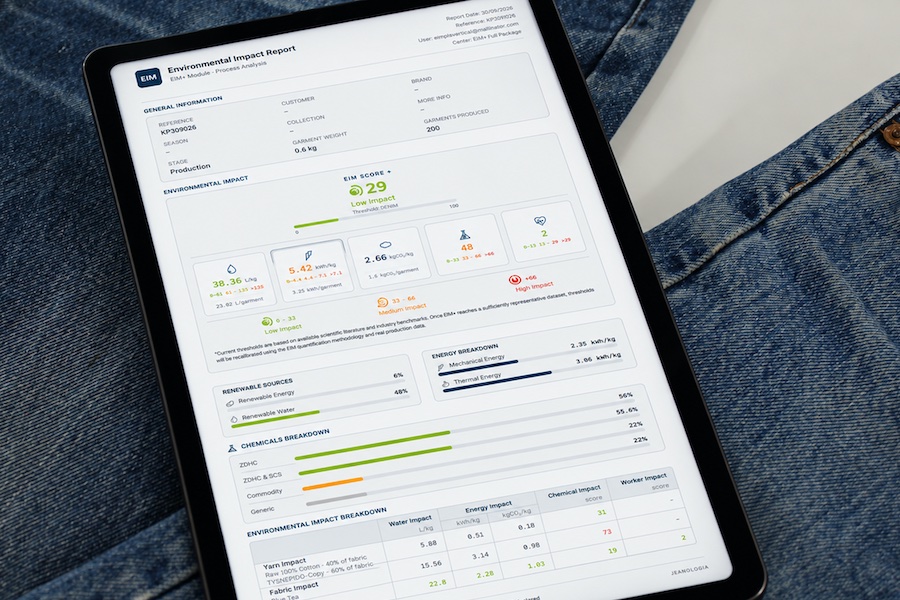
Denim moves towards sustainability

EIM (Environmental Impact Measurement), the global reference platform for measuring the environmental impact of garment finishing, presents the second edition of its annual report Denim Industry Progress & Insights 2025. The study analyses over 100,000 real denim finishing processes, providing an accurate and up-to-date view of the industry’s evolution towards more sustainable models.

Latest News

#Associations

Mario Jorge Machado re-elected President of EURATEX

The EURATEX General Assembly has re-elected Mario Jorge Machado as President of EURATEX, renewing its confidence in his leadership at a crucial moment for the European textile and clothing industry. The sector is facing rising costs, global competitive pressure and an increasingly challenging transition towards sustainability and digitalisation.

#ITM 2026

ITM 2026 makes happy participants with its international and qualified visitor profile

ITM 2026 International Textile Machinery Exhibition, one of the most prestigious meeting points of the textile machinery sector, attracted attention in its first three days, particularly with its diverse international visitor numbers. Industry professionals from all over the world had the opportunity to closely examine the latest technology machines and solutions displayed in operation. Thousands of visitors from approximately 100 countries, primarily Egypt, Pakistan, India, Uzbekistan, Syria, Turkmenistan, Tajikistan, Morocco, Algeria, and Tunisia, met at the Tüyap Fair and Congress Center for new investment and cooperation opportunities.

#ITM 2026

KARL MAYER presents a textile TEXTRONIC® innovation at ITM 2026

With highly efficient machines and continuous textile innovations, KARL MAYER underscores its role as a reliable partner for discerning top-tier customers. Just in time for ITM 2026 in Istanbul, the industry leader is introducing a true innovation: an eyelash lace with its characteristic fringed look – combined with a previously unattainable 4-way stretch. While the established fabric could until now only be produced as rigid version or with one-dimensional stretch, the new elasticity in both dimensions expands the possibilities for cross-band panel fabrics.

#Raw Materials

Better Cotton Initiative welcomes new and returning Council members

The Better Cotton Initiative (BCI) has confirmed a series of appointments and reappointments to its Council, the multistakeholder board responsible for BCI’s strategic direction.

TOP