[pageLogInLogOut]

#Sustainability

ZDHC transitions to Competence Centres structure

As ZDHC continues to drive the growth of its positive impact in the industry they have exciting news to share. Today, they will reveal our 2030 Impact Strategy to ZDHC Contributors at our ZDHC Annual Meeting in Lisbon. In light of this exciting new strategically driven phase of ZDHC, they are also evolving our functional structure to ensure an effective future fit approach for the continued delivery and implementation of our Roadmap to Zero Programme.

One important aim of the new structure is to enhance and improve engagement within their community. As ZDHC’s focus firmly remains on establishing a strong and effective basis for maximising and accelerating ZDHC's impact within the industry, it is then a natural consequence for ZDHC to place greater emphasis on key impact areas of sustainable chemical management in relation to life, land, air and water.

ZDHC will maintain its laser focus on the implementation of the ZDHC MRSL Sustainable Chemical Management (SCM) framework across the value chain of the textile, leather, apparel and footwear industry. However, given that the ZDHC MRSL SCM framework is well established and solidly grounded within the industry, it is also the time to increase awareness and empower other industry sectors to develop sustainability programmes in their own communities. Potential communities include the financial sector, academia, and civil society organisations. In due course, these sectors, amongst others, have great potential to empower other industries (e.g. automotive, cosmetics, home textiles, etc.), and ZDHC will find ways to share their knowledge and expertise with these industries to assist them in developing their own equivalents to the Roadmap to Zero Programme.

© 2022 ZDHC
© 2022 ZDHC


ZDHC's team has grown significantly and every single individual at ZDHC plays a critical role in delivering the Roadmap to Zero Programme. Given ZDHC’s historically successful and strong internal operational foundation, they will now move away from a singular Programme Team and streamline their approach towards programme delivery through four Competence Centres:

1. Sustainable Chemical Management

2. Water Stewardship

3. Air

4. Fibres, Materials and Products.


Adopting this streamlined approach towards delivering, developing and implementing the programme helps them  to drive substantial improvements in generating impact  across the already identified and related key impact areas: Water Stewardship; Greenhouse Gas Emissions; Biodiversity and Circularity. The new ZDHC Competence Centres will be rooted in scientific research, best practices, new innovations and feedback flow from the ZDHC community to continuously improve ZDHC Guidelines, Solutions and Platforms. This approach also enables us to embed significantly enhanced quality management, accountability, and transparency of their work and direct impact on the regional areas, as well as the world at large. Further, in the spirit of the apparel alliance, the ZDHC Competence Centers will drive the content alignment interface to like-minded organisations to jointly work on the harmonisation of their factory-based tools and create a holistic factory journey.  

ZDHC has now initiated this transition towards the Competence Centres. During the initial incubation period, members of the ZDHC Management Team will be taking on important convening roles and they will be asking their community for active support as follows:

  • Prasad Pant, ZDHC’s South Asia Regional Director, will coordinate activities around subject matter expertise and delivery management.
  • Elisa Gavazza, ZDHC’s Southern Europe Regional Director, will be in charge of all quality management processes.
  • Nina Bendias, Senior Business and Resource Manager, will establish resources and processes for the new Roadmap to Zero Programme Delivery setup.

ZDHC is wholly committed to creating a sustainable future for fashion because the quality of our shared future and the planet depend on it. They are very excited to build out the structure of our organisation to accommodate the increasing needs in the new impact-focused era of ZDHC with a renewed sense of purpose and drive towards their vision, mission and goals.

ZDHC looks forward to sharing more insights in the coming weeks and will be reaching out with a call to action for the upcoming 2023 tasks. 


More News from TEXDATA International

#Texprocess 2026

Texprocess 2026: Automation, digitalisation and AI redefine textile processing

Making investment decisions in textile processing has become significantly more demanding. Increasing energy costs, a shortage of skilled labour and ongoing geopolitical uncertainties are compelling companies to focus on technologies that deliver clear gains in efficiency and process reliability. This applies equally to apparel manufacturing and to the processing of technical textiles and high-performance materials. As a result, modernisation initiatives are assessed more carefully – even as the need to upgrade production systems continues to intensify.

#Techtextil 2026

Techtextil 2026: Between innovation pressure & market reality

From 21 to 24 April 2026, Techtextil in Frankfurt am Main will once again become the central meeting point for the international technical textiles and nonwovens industry. Running in parallel, Texprocess will focus on the industrial implementation of textile processing technologies as the leading platform in this field. Together, the two trade fairs form a closely integrated presentation and working platform along the entire textile value chain – from material development to finished applications.

#Techtextil 2026

Between geopolitical pressure and industrial resilience

In this interview, Dr. Janpeter Horn (VDMA) discusses the current challenges facing textile machinery manufacturers, shaped by geopolitical tensions, regulatory developments and subdued investment. He also outlines why innovation strength, integrated solutions and strategic positioning remain key to global competitiveness.

#Texprocess 2026

Between investment restraint and modernization pressure

Texprocess 2026 takes place in a complex market environment shaped by uncertainty and innovation pressure. In this interview, Elgar Straub (VDMA) explains why the trade fair is particularly relevant this year and which technologies are driving efficiency and competitiveness.

More News on Sustainability

#Sustainability

A new standard to combat plastic waste in forests

With DIN SPEC 35808 “Tree Shelter for Forestry Applications,” the testing and research service provider Hohenstein, in collaboration with Rottenburg University of Forestry, as well as forestry authorities and industry partners, has established a clear framework for bio-based and fully biodegradable tree shelters. The pre-standard defines requirements and practical testing methods designed to reduce plastic waste in forests and strengthen the long-term protection of soil and the environment.

#Denim

Denim moves towards sustainability

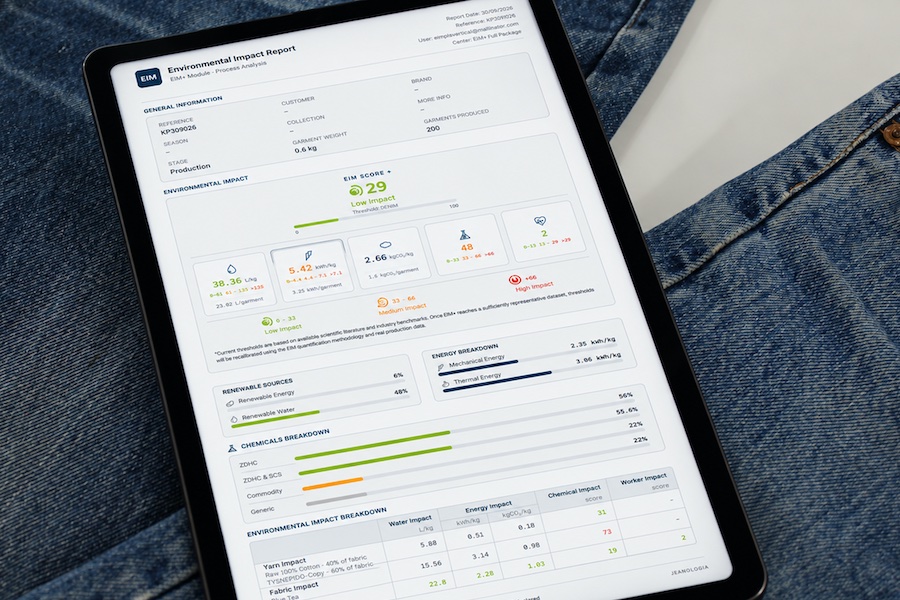
EIM (Environmental Impact Measurement), the global reference platform for measuring the environmental impact of garment finishing, presents the second edition of its annual report Denim Industry Progress & Insights 2025. The study analyses over 100,000 real denim finishing processes, providing an accurate and up-to-date view of the industry’s evolution towards more sustainable models.

#Recycling / Circular Economy

Europe’s textile future at a turning point: New 2030 Circularity Blueprint aims to scale recycling and unlock investment opportunities

The EU textile system is at a critical crossroads. Today, less than 1% of discarded garments are recycled into new garments, despite EU-wide obligations for separate collection. In response, Global Fashion Agenda (GFA) is launching the 2030 Circularity Blueprint, in partnership with ReHubs. This ambitious initiative is designed to support the transformation of the EU textile ecosystem to advance textile-to-textile recycling and drive the transition to a circular economy.

#Sustainability

Number of GOTS-certified facilities grow 15% globally as demand for credible sustainability standards continues to strengthen

Global Organic Textile Standard (GOTS) certification continued to grow in 2025, with nearly 18,000 certified facilities worldwide, despite ongoing geopolitical uncertainty and rapidly evolving regulatory requirements across global textile supply chains.

Latest News

#Nonwovens

Temafa Maschinenfabrik GmbH supplies a complete decortication plant for processing hemp straw to Hanffaser Geiseltal eG

Temafa Maschinenfabrik GmbH, a leading supplier of machinery and plants for fibre processing, has successfully secured an order to supply a complete plant for processing hemp straw to Hanffaser Geiseltal eG, based in Mücheln.

#Techtextil 2026

FET’s revolutionary gel spinning system wins Techtextil Innovation Award

FET has received the prestigious Techtextil Innovation Award 2026 in the New Production Technology category. The Techtextil Innovation Award honours outstanding ideas in textile technology, sustainability, AI and the creation of technical textiles, selected by an international jury of experts. Ranging from new materials to new production technologies, this award recognises progressive ideas that are driving forces for numerous industries, such as automotive, medical and construction.

#ITM 2026

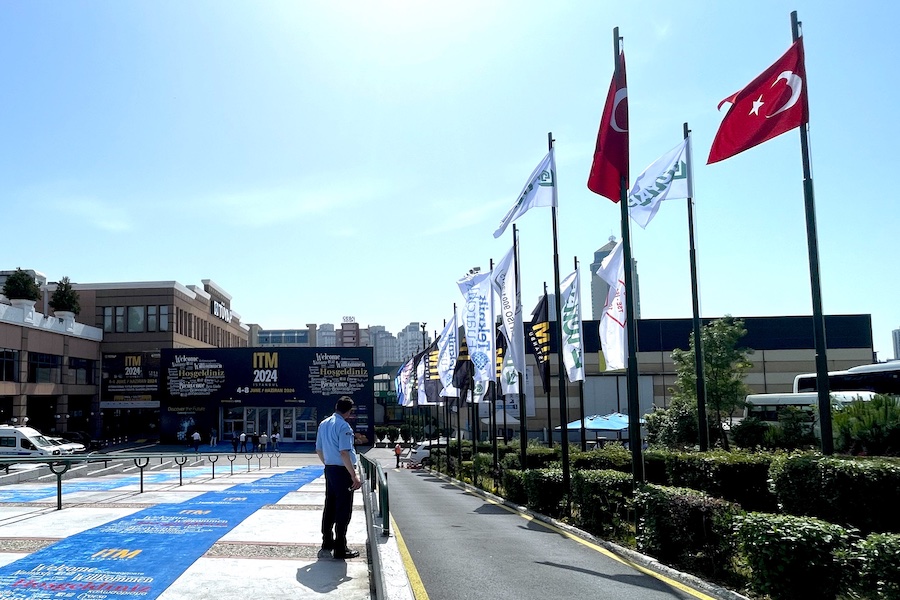
Savio Macchine Tessili will exhibit at ITM Istanbul 2026 presenting its flagship technologies

Savio Macchine Tessili will participate in ITM Istanbul 2026 in a corporate booth of Vandewiele Group, showcasing a selection of its most advanced winding and spinning solutions designed to support textile mills in achieving higher efficiency, flexibility and yarn quality. The company will bring to the show three flagship solutions: Proxima Smartconer®, Lybra Smartspinner® and the Phoenix Assembly Winder.

#ITM 2026

Rieter at ITM 2026: Spinning Redefined with Automation and Intelligence

Spinning mills need solutions that deliver stability, efficiency and future-proof performance. Rieter has put together a powerful portfolio for ITM 2026 in Istanbul, Türkiye. These innovations give customers the tools to enhance cost efficiency, improve responsiveness and actively develop their competitive edge. Step-by-step, Rieter is moving closer to its Vision 2027 – the fully automated spinning mill. With each new technology, Rieter enables spinning mills worldwide to operate with greater precision and reliability, ensuring they remain at the forefront of an increasingly demanding global market.

TOP