[pageLogInLogOut]

#Sustainability

H&M Group lays the foundation for its biodiversity work
© 2020 H&M
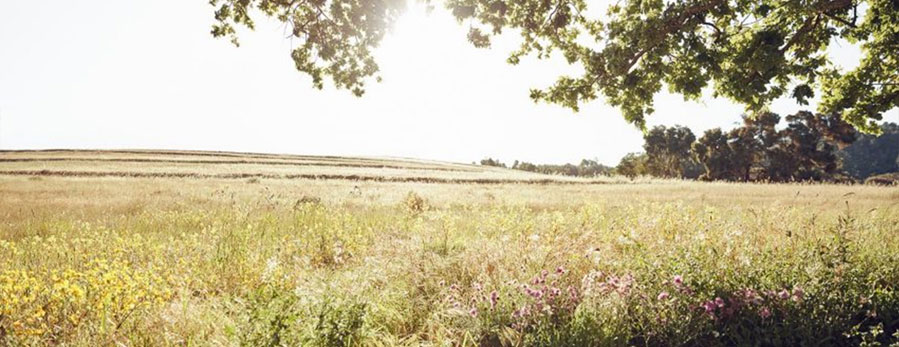
Cecilia Brännsten presents H&M Group's ambition for biodiversity during WWF's presentation of the Living Planet Report 2020.

Today WWF has published its flagship Living Planet Report, a comprehensive study of trends in global biodiversity and the health of the planet. This year's report provides scientific evidence to what nature has been telling us repeatedly: unsustainable human activity - today world citizens live as if we had 1.6 globes at our disposal - is pushing the planet’s natural systems that support life on Earth to the edge. In this context, Environmental Sustainability Manager Cecilia Brännsten presents H&M Group's ambition for biodiversity. 

"A thriving fashion industry is undeniably dependent on healthy ecosystems and climate change kept within safe planetary boundaries."

Cecilia Brännsten, Environmental Sustainability Manager H&M Group

Cecilia adds: "When using the land for cultivating the cotton to make our customers’ favourite garments, regenerative farming is the future. When washing and dyeing the customers favorite jeans the soil and water should be left unharmed. Our ambition for biodiversity, together with our climate strategy, will help us in our work to relieve the planet from critical pressure, creating a more resilient supply chain and business".

“It is extremely important that businesses start taking action to fight biodiversity loss, as they have a powerful role to play in bending the curve and investing in nature. We salute H&M’s holistic approach to manage their impact and dependence on biodiversity and hope that other companies will follow their example.”

Erika Sundell, Head of Corporate Partnerships at WWF Sweden


H&M Group's long-term vision is to have a net positive impact on biodiversity. That means not only avoiding and mitigating harm, but leaving the natural environment in a better state than beforehand through habitat restoration and protection.

In order to achieve this, H&M Group has set two objectives:

  • 1. To prevent and reduce the company's overall impact on biodiversity and natural ecosystems in our value chain.
  • 2. Help to protect and restore biodiversity and natural ecosystems in line with what science requires*.

The base for H&M Group's ambition on biodiversity started with a biodiversity footprint assessment to identify the biggest impact areas of our business. The next step is now to align and formalise goals. Looking ahead, the company will continue to:

  • cooperate with WWF through a specific biodiversity workstream,
  • work on biodiversity traceability strategy to measure progress,
  • participate in forums and cooperating with organisations driving work in the area of biodiversity. 

*Science currently calls for action to ensure that 50% of the Earth’s surface is protected, restored and sustainably managed by 2030, with 30% of the area being fully protected and 20% sustainably managed.



More News from TEXDATA International

#Techtextil 2026

Textile Chemicals & Dyes: Innovation in Textile Chemistry moves into focus at Techtextil 2026

From PFAS-free finishes and water-saving dyeing technologies to advanced coatings and recycling-compatible formulations, innovation in textile chemistry is accelerating across the industry. Reflecting this development, Techtextil 2026 introduces Textile Chemicals & Dyes as a dedicated product segment, highlighting the growing role of chemical solutions in shaping the next generation of technical textiles.

#Recycling / Circular Economy

textile.4U publishes special edition “Top 100 Textile Recycling Companies 2025”

With a comprehensive 176-page special edition, textile.4U is dedicating its latest issue entirely to one of the most dynamic and influential topics in today’s textile industry: textile recycling. The new issue, published exclusively in high-quality print, presents the Top 100 textile recycling companies researched and selected by TexData – organizations that already play a key role in the transition to circular textiles or are expected to have a significant impact in the near future.

#Recycling / Circular Economy

Responsible Textile Recovery Act of 2024 signed by Governor

Senator Josh Newman (D-Fullerton) is proud to announce that Senate Bill 707 (SB 707), the Responsible Textile Recovery Act of 2024, has been signed into law by the Governor of California, Gavin Newsom. This groundbreaking legislation establishes the country’s first Extended Producer Responsibility (EPR) textile recycling program, marking a significant step forward in the state’s efforts to combat waste and promote sustainability.

#Textiles & Apparel / Garment

Modtissimo promotes sustainability with 28 coordinates in the Green Circle

Modtissimo is proving more and more to be a textile and clothing show that delivers the latest innovations in the area of sustainability, with the iTechStyle Green Circle being the main showcase for companies' creations. In this 60+4 edition, taking place on 12 and 13 September, 28 coordinates will be exhibited in a section organised by CITEVE and curated by Paulo Gomes.

More News on Sustainability

#Sustainability

GOTS version 8.0 released: advanced supply chain accountability, from fibre to finished product

Global Standard is pleased to announce the release of GOTS Version 8.0, the latest update to the world's leading processing standard for organic textiles. The updated Standard strengthens requirements for air emissions and waste management, as well as criteria for product safety. It introduces new provisions on circularity, microfibre management and updates in residue testing. Version 8.0 also elevates due diligence obligations and formalises governance requirements, including ESG disclosure, anti-corruption policies and conflict-of-interest safeguards, to support credible, responsible business conduct.

#Sustainability

The nova-Institute establishes new Renewable Feedstock Department to lay the groundwork for industrial defossilisation

The transition from fossil-based to renewable carbon – sourced from biomass, CO₂ utilisation and recycling – is the cornerstone of a climate-neutral chemical industry. The nova-Institute’s new department is dedicated to providing the essential data, analyses and strategic roadmaps required to secure a reliable future feedstock supply and make this transition a commercial and ecological reality.

#Sustainability

Textile Exchange unveils commitment-based pathway for members to accelerate responsible raw material production

Textile Exchange has unveiled further details about its new membership structure, designed to guide the fashion, textile, and apparel industry in a collective course of action toward preferred production systems for raw materials and fibers.

#Textile chemistry

Jeanologia urges industry to accelerate PP Spray phase-out following ZDHC Watchlist update

Potassium permanganate has officially entered the Chemical Watchlist of the ZDHC Foundation, signaling increased scrutiny and potential phase-out of one of the most hazardous chemicals still used in denim finishing. The inclusion confirms an industry shift that Jeanologia anticipated more than a decade ago.

Latest News

#INDEX 2026

EDANA unveils nominees for INDEX™26 Awards: Highlighting the next generation of nonwoven excellence

EDANA is proud to unveil the highly anticipated nominees for the INDEX™26 Awards, the nonwoven industry’s highest accolade for technical and sustainable excellence. Out of a record-breaking field of entries, these finalists represent the cutting edge of material science—from bio-based hygiene fibers and PFAS-free protective textiles to revolutionary water-filtration machinery. Each nominee has been selected by a jury of industry experts for their ability to solve critical global challenges, including the transition to a circular economy and the pursuit of enhanced consumer performance.

#Raw Materials

Lenzing Group positions bio‑based materials as a strategic asset for Europe’s economic security

The Lenzing Group, a leading supplier of regenerated cellulose fibers for the textile and nonwovens industries, hosted a high‑level roundtable in Brussels to discuss how bio‑based materials can strengthen Europe’s economic security and support the shift toward a fossil‑free future. Organized in cooperation with Euractiv, the event brought together representatives of the European Commission, the UK Mission to the EU, academia, civil society, and industry.

#Natural Fibers

Beyond Cotton: Natural Fibres in the Spotlight at the Bremen Cotton Conference - Branded by DNFI

Climate targets, fragile supply chains, and rising regulatory requirements are fundamentally changing the perspective of the textile industry - the focus is increasingly shifting toward the base material. Not only cotton, but natural fibres are gaining significant importance: they stand out not only because of their outstanding functional properties, but also because they make a valuable contribution to the bioeconomy and responsible product development.

#Textiles & Apparel / Garment

Coats to showcase innovative reinforcement and filler materials for leather goods and accessories at APLF 2026

Coats, a world-class Tier 2 manufacturer and trusted partner for the apparel and footwear industries, will be promoting four advanced materials from its ‘Lifestyle Solutions’ portfolio at APLF 2026 in Hong Kong in March. Each innovation has been specifically engineered to help luxury and premium brands elevate the craft, durability, sustainability and creative expression required in the manufacturing of handbags, purses, and other high-end designer accessories.

TOP