[pageLogInLogOut]

#Sustainability

Garmon launches white&green line at the Amsterdam Kingpins Show.

(c) 2019 Garmon Chemicals
Garmon Chemicals confirms itself as a pioneer in chemistry speci cally applied to garment treatment, at the forefront in terms of product research and active promotion on the sustainable issue. The Dutch show is the ideal stage to present a preview of the latest innovation born out of Garmon’s volcanic R&D department. It is Avol Lime, the revolutionary and ecologically- advanced neutralizing agent. Used in combination with Avol Oxy White (the bleaching agent that represents the safe alternative to potassium permanganate), it allows to obtain a fully safe and sustainable bleaching process.

Unveiled the solutions for a completely sustainable bleaching, in full compliance with greenofchange® requirements.

white&green: solutions for eco-bleaching

white&green is the ultimate solution to obtain a safe and sustainable jeans discoloration process. The new line provides two avant-garde solutions: two highly performant products, both representing a safe and conscious alternative.

Two souls presenting unique characteristics:

The “white” soul

  • the hightest level of whiteness
  • superior bright shades
  • stylish vintage looks
  • extraordinary contrasts


The “green” soul

  • safe alternative to dangerous products
  • significant energy savings
  • classified in ZDHC gateway (from level 1)
  • greenofchange® approved

1. Avol Lime: the safe neutralizer

Presented in preview at the Amsterdam Kingpins Show, Avol Lime is the most advanced neutralizer in terms of sustainability. Providing the real alternative to hydroxylamine and sodium metabisul te (typically the most used product in the process of potassium permanganate neutralization), Avol Lime is very safe for workers’ health.

It is also classi ed at level 1 in the ZDHC gateway, and carries a series of crucial advantages compared to a standard neutralization process:

  • removes more effectively permanganate and its residues from garments, up to 40%
  • provides garment with better contrasts and brighter discolorations
  • is active at room temperature

2. Avol Oxy White: the real alternative to potassium permanganate

Among top of the range Garmon’s sustainable solutions, Avol Oxy White represents a challenge to the usage of permanganate in garment discoloration. The innovative bleaching agent designed to obtain localized effects on denim is an ecologically advanced product, featuring numerous benefits:

  • free from manganese compounds, heavy metals or halogenated derivatives stunning 
  • quality and perfect used look on the final product
  • safe to handle
  • easy to apply
  • no tumble drying or curing required

The whole white&green package is perfectly compliant with the requirements of greenofchange® platform.

greenofchange®: the new hangtag to inform consumers in a transparent way

greenofchange® is Garmon platform that offers a solid and innovative approach to the problem of sustainability in the fashion industry. To respect the greenofchange® guidelines, garments must be treated with certified Garmon chemicals, through a finishing process based on the efficient use of resources. One of the latests novelties of the platform presented at the Kingpins Show is the special hangtag including a QR code, that can be featured on all garments whose finishing process complies with greenofchange® requirements. After scanning the code, we are provided precise information on the amount of natural resources that were saved in the finishing of that single garment, along with all information related to the safety of the chemical compound with respect to the environment, workers and end-consumers.
More News from Garmon & Bozzetto Srl

More News on Sustainability

#Natural Fibers

Global Standard gGmbH launches second public consultation for GRTS Draft 2 for the textile industry (1–30 April 2026)

Global Standard gGmbH is pleased to announce the release of Draft 2 of the Global Responsible Textile Standard (GRTS) for its second public consultation. The consultation will be open from 1 April 2026 to 30 April 2026, inviting stakeholders across the textile and apparel value chain to provide input and contribute to the further development of this new Standard.

#Sustainability

Practical toolkit to drive coordinated climate action launched

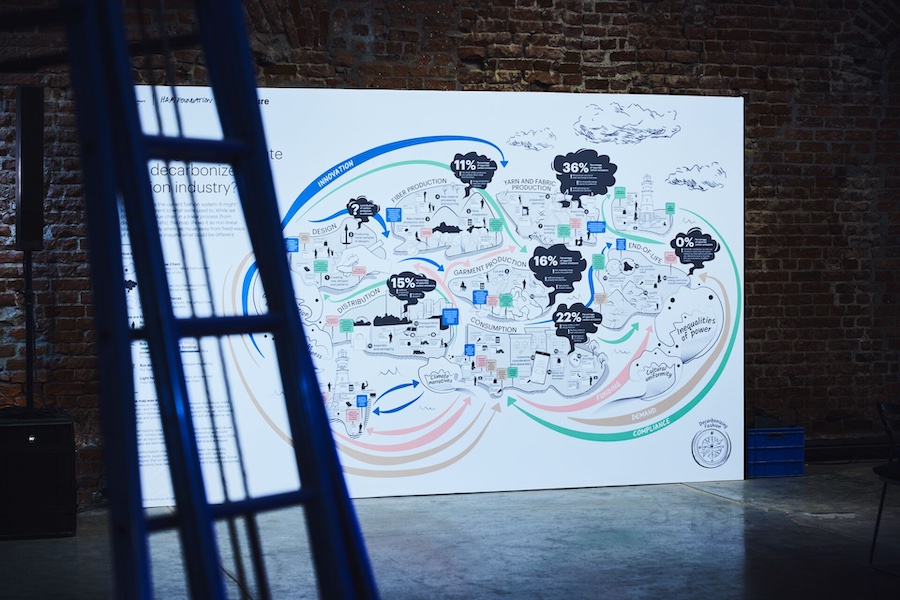
An open-access workshop toolkit enables brands, suppliers, policymakers and investors across the textile industry to apply the System Map in their own work, identifying leverage points to halve emissions and enable a just transition.

#Raw Materials

Textile Exchange publishes cotton Life Cycle Assessment study to strengthen impact data

Textile Exchange has published the first in a series of seven Life Cycle Assessment (LCA) studies designed to improve the quality and robustness of environmental impact data for raw material production across the fashion, textile, and apparel industry. The first LCA study focuses on cotton and addresses critical data gaps and methodology variability through new high-quality data across key producing countries. The study includes organic, regenerative, recycled, and country averages for conventional cotton production systems, providing a clearer picture of the associated environmental impact.

#Sustainability

Experts publish APAC policy priorities

Cascale today announced the publication of its APAC Policy Priorities Paper, developed by the Asia-Pacific (APAC) Policy Member Expert Team (MET) to identify key regional sustainability challenges and provide practical, aligned recommendations for policymakers and industry stakeholders across Asia-Pacific.

Latest News

#Raw Materials

New study shows low environmental impact by Cotton made in Africa Organic Cotton from Tanzania

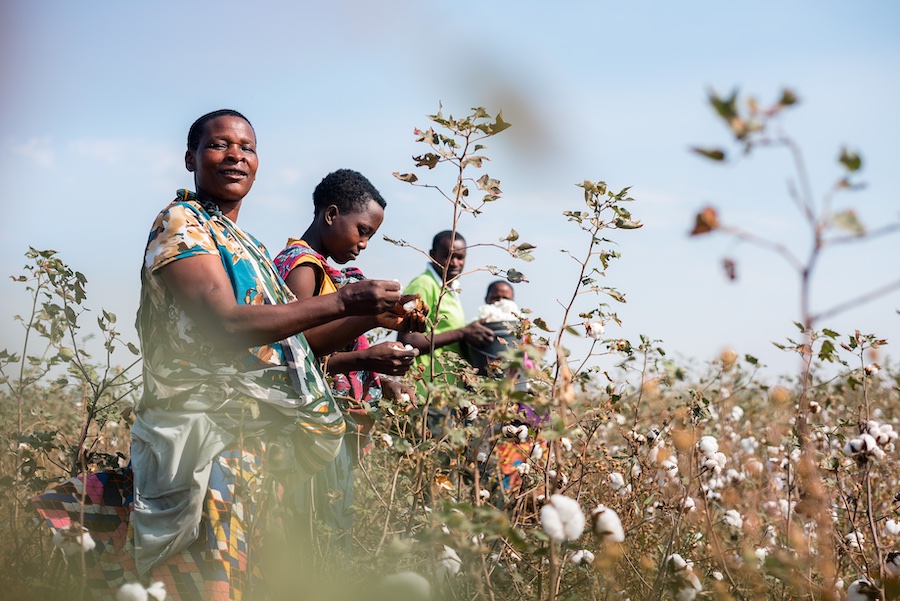
Today, the Aid by Trade Foundation (AbTF) is announcing the results of a comprehensive life-cycle analysis (LCA) for cotton produced in Tanzania under the Cotton made in Africa Organic (CmiA Organic) standard. The study emphasises the small ecological footprint of CmiA Organic verified cotton. This can largely be traced back to the absence of synthetic pesticides, artificial fertilisers, and artificial irrigation. Consequently, CmiA Organic cotton can help the textile industry meet regulatory requirements as well as science-based targets. The results also show that the consequences of climate change threaten the livelihoods of these cotton farmers, even though the type of agriculture they practise barely contributes to climate change.

#Raw Materials

Better Cotton Initiative strengthens regenerative focus in standard update

The Better Cotton Initiative (BCI) has strengthened the regenerative focus of its field-level standard with the launch of a new version of its Principles & Criteria (P&C), which marks the next step in the organisation’s journey to becoming a regenerative standards system.

#Man-Made Fibers

Selenis and Kintra Fibers partner to scale 100% bio-based synthetic fiber technology

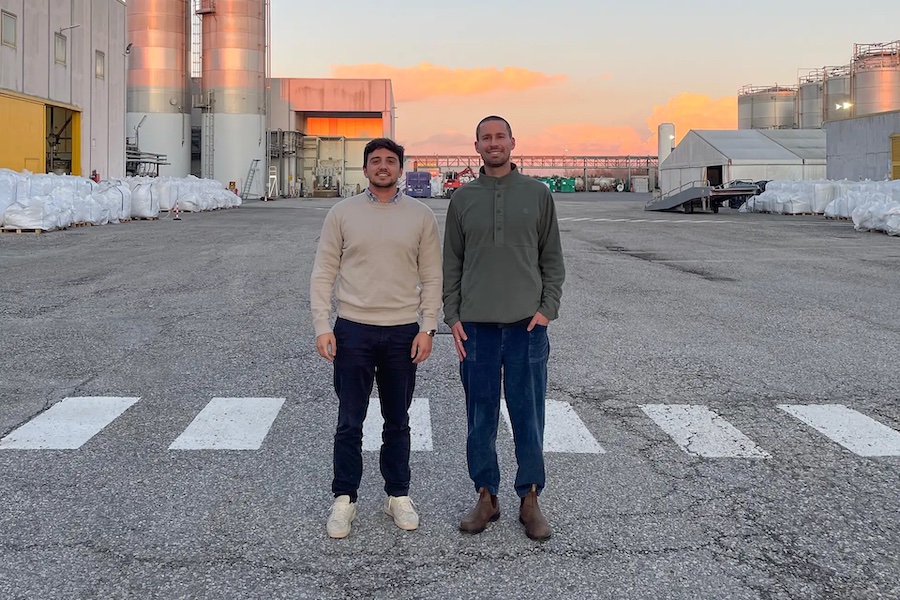
Selenis, a leading global specialty polyester manufacturer, today announced a strategic manufacturing partnership with materials science company Kintra Fibers to scale Kintra’s patented fiber-grade PBS resin - a 100% bio-based and biodegradable material designed for textile applications.

#Functional Fabrics

PERFORMANCE DAYS proves its relevance as the industry’s key meeting point

Held on March 18–19, 2026, PERFORMANCE DAYS once again confirmed its position as a leading international platform for functional textiles. A total of 3.366 trade visitors and around 560 exhibitors gathered in Munich, with the event already kicking off successfully on DAY 0, which received highly positive feedback for its interactive format. Despite challenging conditions caused by the public transport strike in Munich, the event saw strong attendance and a consistently high level of activity across both exhibition days.

TOP