[pageLogInLogOut]

#Spinning

Rieter celebrates 230 years of innovation and technology leadership
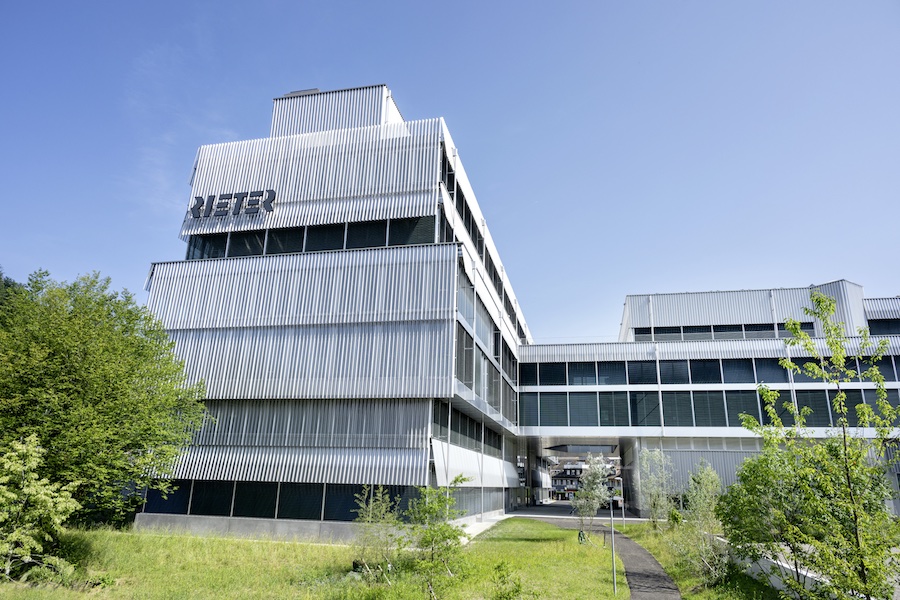
Rieter has stood for pioneering innovation in textile technology for 230 years. Founded in 1795, the company has grown from a trading company to a global technology leader. With a clear focus on automation, digitization and sustainability, Rieter is shaping the future of yarn production and continues to set standards in the industry.
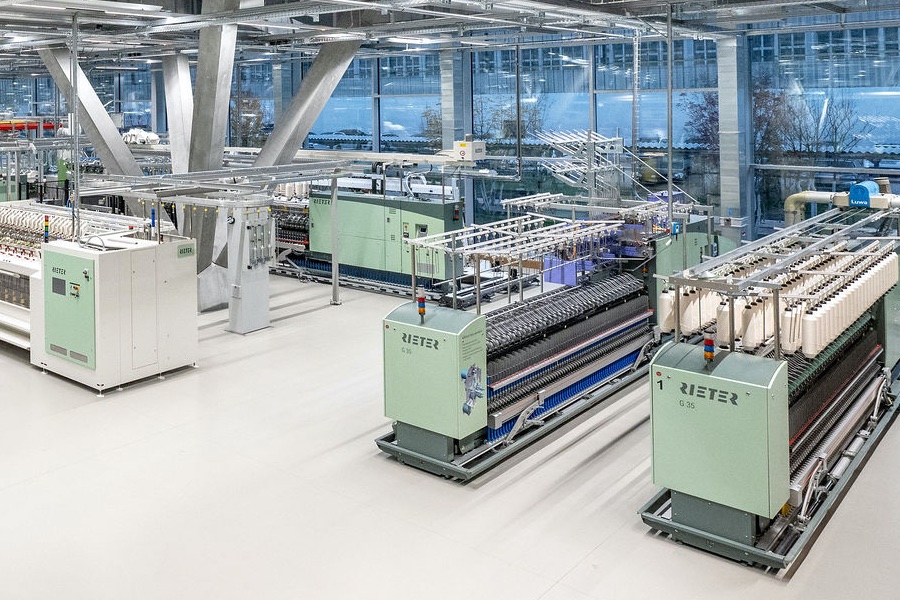
Rieter innovation center © 2025 Rieter


Rieter, the world leader in developing and manufacturing systems for yarn production with staple fibers, is celebrating its 230th anniversary this year – a history characterized by change, innovation and growth.

The Rieter success story began on April 15, 1795, when Johann Jacob Rieter founded the company J.J. Rieter & Cie. in Winterthur, Switzerland. Rieter started as a trading company for exotic spices and cotton, and on April 23, 1795, the first cotton bale had already arrived at the Waaghaus trading house on Marktgasse in Winterthur.

Initially involved in spinning mills and textile manufacturing, Rieter continued to develop over the 19th century and shifted its focus to building industrial machinery. Acquiring the buildings of the former Töss Abbey in Winterthur in 1833 was an important step. In addition to spinning mill machines, the company’s product line also included machines for winding, knitting, and weaving.

In 1891, Rieter converted into a stock company, which was a significant milestone in the company’s history. In the decades that followed, Rieter set new technological standards again and again. For example, the company was the first machine factory in Switzerland with electronic data processing and Rieter set up a modern laboratory for testing materials. It was joined by prototype workshops, a textile laboratory, and a test spinning mill to support further innovation.

Despite economic challenges, Rieter has always used times of crisis as an opportunity to increase its efficiency and hone its strategic focus. Along with its subsidiaries Accotex, Bräcker, Graf, Novibra, Suessen, SSM, and Temco, today Rieter is distinctive and well-known in the market. The company is a leader in spinning mill technology and contributes to sustainability in the textile value chain with state-of-the-art machines, systems, and components. 
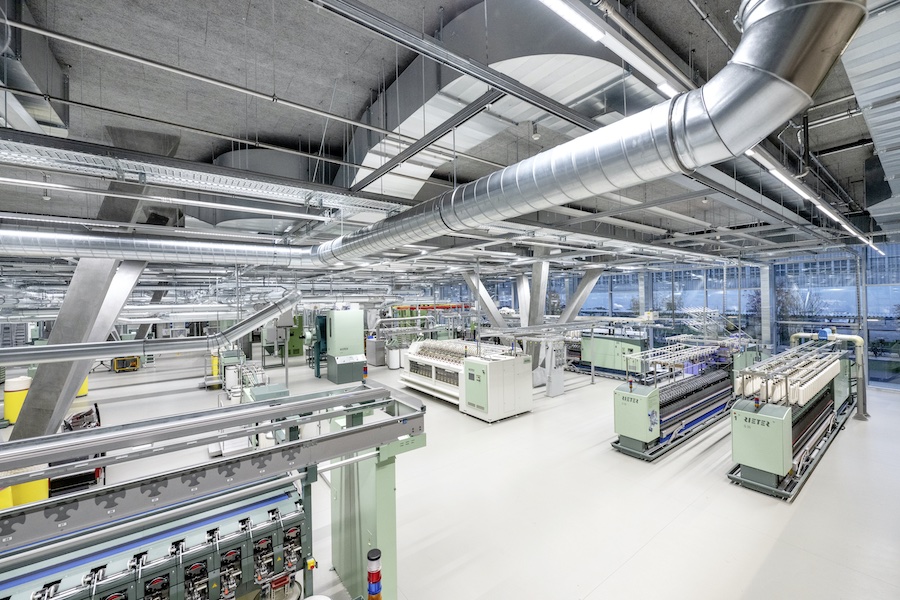
Rieter spin center © 2025 Rieter


Rieter’s success is based not only on technological excellence, but above all on the people who drive the company forward. The approximately 4 800 employees worldwide are the company’s greatest asset. With their expertise, innovative spirit, and passion, they set new standards every day and play an active role in shaping Rieter’s future.

From Rieter’s perspective, the future of spinning mills is automated, digital, and intelligent. Research and development activities are being intensified – in both the areas of autonomous transport systems and collaborative robotics, as well as for ESSENTIAL, Rieter’s digital spinning mill platform. The goal is to fully automate the value creation process of spinning mills by 2027. This will enable spinning mills to reduce their yarn manufacturing costs and maximize their returns. Customers can then concentrate fully on their yarn business and rely on Rieter’s technology and know-how for their operations. 

With 230 years of experience, strong innovative power, sustainable solutions and a global sales and service organization, Rieter is perfectly positioned as the market leader and looks to the future with confidence.

More News from Rieter Textile Systems

#Spinning

Rieter adjusts group structure in preparation for Barmag integration

The planned acquisition of the “Barmag” Division of OC Oerlikon will create the leading system provider worldwide for natural and man-made fibers. Rieter is confident it will receive all regulatory approvals to complete the acquisition in the fourth quarter of 2025. The Rieter Group is therefore adjusting its Group structure as of January 1, 2026, to take this acquisition into account and to be able to provide an even more agile response to market challenges.

#Spinning

Rieter reports stable order backlog and strategic progress – outlook for 2025 adjusted

In its Investor Update 2025, Rieter announced an order intake of CHF 203.9 million in the third quarter and CHF 559.3 million after nine months, reflecting a continued cautious investment climate in the textile machinery sector. Sales totaled CHF 121.5 million in the third quarter and CHF 457.7 million for the first nine months of the year, while the order backlog stood at around CHF 590 million as of September 30, 2025.

#Spinning

Rieter announces successful completion of rights issue

Rieter Holding Ltd. has successfully completed its rights issue: 99.06% of subscription rights were exercised by the end of the subscription period on October 1, 2025. The remaining shares will be placed on the market.

#Spinning

Rieter shareholders approve capital increase to finance Barmag acquisition

Rieter Holding Ltd. has published the final details for today’s Extraordinary General Meeting (EGM) and subsequently received shareholder approval for all proposals put forward by the Board of Directors.

More News on Spinning

#Spinning

Demand for high-performance yarns on the rise

Barmag, a subsidiary of the Swiss Oerlikon Group, will commission three HMLS yarn systems with a total of 30 stations at renowned technical yarn manufacturers in China over the next three months.

#Spinning

FET prepares for final exhibition of 2025

Fibre Extrusion Technology Ltd (FET) of Leeds, UK has completed its second major exhibition of 2025 at ITMA ASIA in Singapore, which is aimed at the textile and garment industry in South and Southeast Asia and the Middle East. Once again, this trade show proved to be a successful one for FET, with considerable interest from several countries surrounding China.

#ITMA Asia + CITME Singapore 2025

T-CAN – Revolutionizing can transport

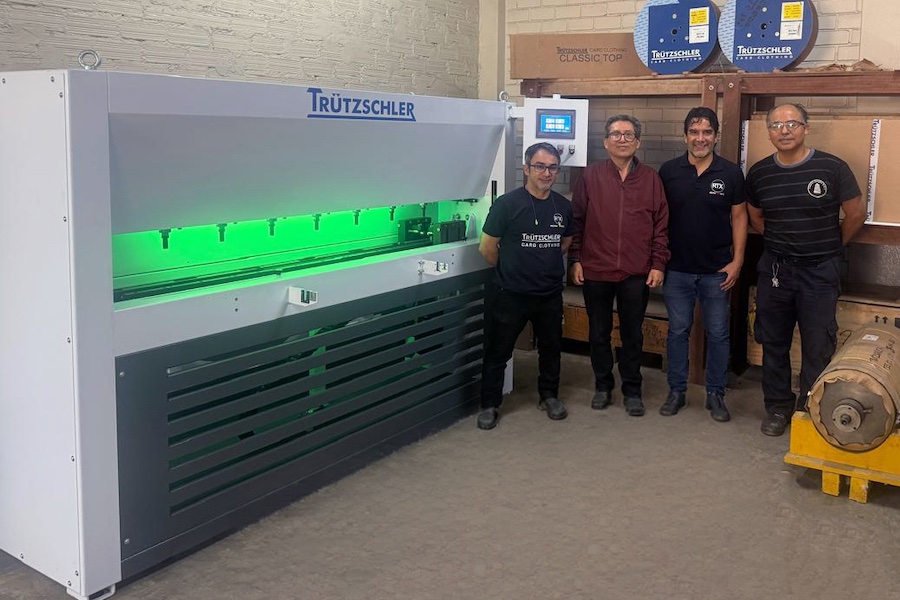
In virtually all spinning mills, transporting sliver cans is still done manually. Rising labor costs, lack of operators and increasing quality requirements make this a growing challenge. With T-CAN, Trützschler introduces a practical solution: a fully automated can transport system that will be presented live at ITMA ASIA 2025 in Singapore.

#Recycling / Circular Economy

textile.4U publishes special edition “Top 100 Textile Recycling Companies 2025”

With a comprehensive 176-page special edition, textile.4U is dedicating its latest issue entirely to one of the most dynamic and influential topics in today’s textile industry: textile recycling. The new issue, published exclusively in high-quality print, presents the Top 100 textile recycling companies researched and selected by TexData – organizations that already play a key role in the transition to circular textiles or are expected to have a significant impact in the near future.

Latest News

#Recycling / Circular Economy

Advanced Recycling Conference 2025 fuels innovation across key waste streams

The Advanced Recycling Conference (ARC) 2025 brought together nearly 220 experts from 28 countries to spotlight pioneering advancements and foster industry collaboration in recycling across diverse waste streams including plastics, textiles, automotive and other materials.

#Dyeing, Drying, Finishing

Navis TubeTex announces U.S. partnership with Icomatex

Navis TubeTex, a global leader in advanced dyeing and finishing machinery solutions, is pleased to announce a new partnership with Icomatex (www.icomatex.com), a respected European manufacturer of high-quality stenters and textile finishing equipment. Under this agreement, Navis TubeTex will exclusively represent the Icomatex stenter line in the United States.

#Recycling / Circular Economy

ADVANSA launches ADVA®tex: A new step toward textile-to-textile recycling

ADVANSA has introduced ADVA®tex, a new filling fibre made entirely from recycled pre-consumer textile waste, positioning the material as a significant step forward in textile-to-textile (T2T) recycling. The fibre is designed for use in duvets, pillows, mattresses, and furniture applications and is available in three versions.

#Knitting & Hosiery

KARL MAYER celebrates 35 years of EL pattern drive

KARL MAYER is celebrating an anniversary this year: on 30 November 1990, the first warp knitting machine with electronic guide bar control, the KS 4 EL, was delivered – another milestone for patterning. As early as 1980, the SU gearbox with the MRS42SU had initiated the transition from mechanical chains to digital data.

TOP