[pageLogInLogOut]
USTER Think Quality

#Spinning

Maintenance as a competitive advantage

Barmag’s automated maintenance processes for quality, safety, and efficiency in spinning plants
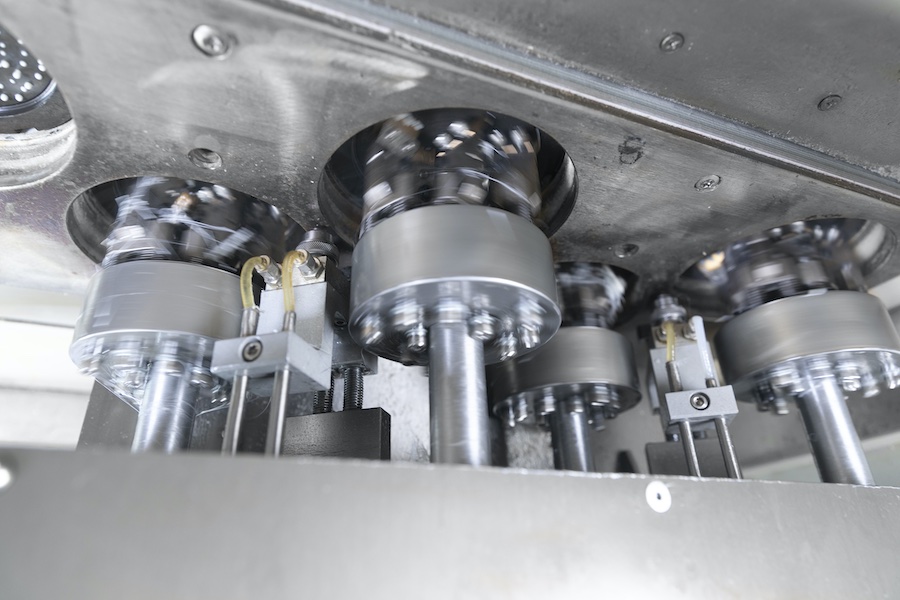
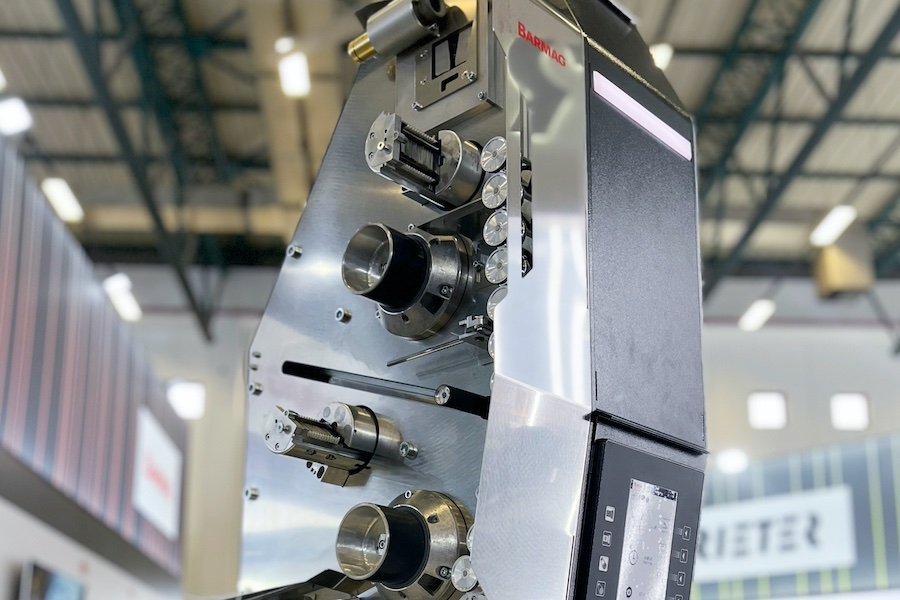
Barmag’s wiping robot contributes to greater process stability with its fully automatic spinneret cleaning. © 2026 Barmag
Maintenance and service processes in chemical fiber spinning plants have a significant impact on product quality, equipment availability, and workplace safety. With three new retrofittable solutions, Barmag helps Producers make manual work processes more efficient, safer, and more reproducible.

The portfolio includes the automatic knife sharpening machine, the wiping robot for automated spinneret cleaning both in filament spinning and in the staple fiber process, and the electric Spinpack changer for motor-assisted replacement of spinning packages. Together, these solutions aim to standardize maintenance processes and sustainably improve the performance of existing production facilities.

Automated cleaning for stable processes

The automatic knife sharpening machine ensures consistently high cleaning quality for spinnerets and helps producers increase the performance of their spinning systems. Standardized grinding results reduce process fluctuations, increase cleaning efficiency, and extend the service life of key components. This leads to reduced maintenance requirements, higher equipment availability, and improved productivity. Customer experience shows increases in the full-bobbin rate of up to 12 percent, in take-up efficiency of up to 28 percent, and an extension of spinneret service life of up to 51 percent. At the same time, cleaning cycles can be reduced by up to 53 percent.
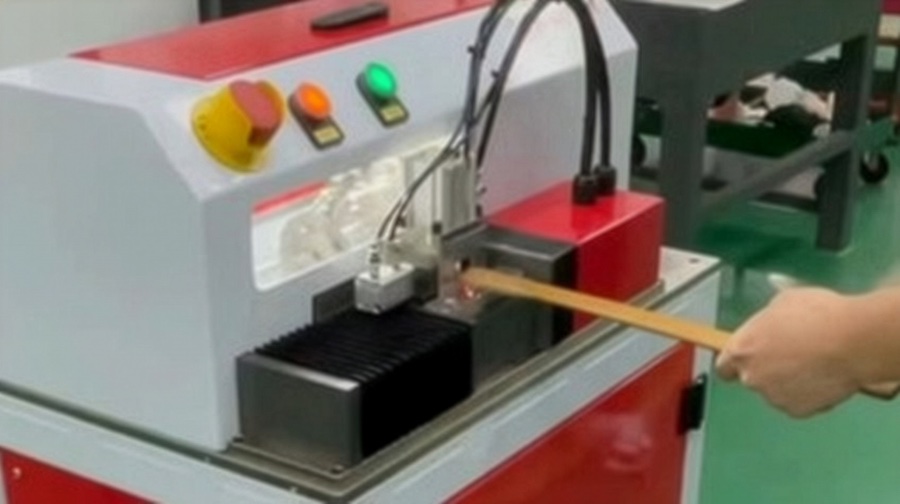
Barmag’s automatic knife sharpening machine ensures consistently high-quality grinding results, thereby helping to reduce process fluctuations. © 2026 Barmag<br />
Barmag’s automatic knife sharpening machine ensures consistently high-quality grinding results, thereby helping to reduce process fluctuations. © 2026 Barmag


The wiping robot performs spinneret cleaning fully automatically both in filament spinning and in the staple fiber process. Its integrated rotating scraper blades are automatically resharpened in the parking station, ensuring consistently high-quality cleaning results over the long term. In addition to greater process stability, automated cleaning also contributes to an improved working environment: Silicon oil consumption is reduced, as is exposure to oil-containing aerosols in the production area.

Greater safety and ergonomics in maintenance

The electric Spinpack changer specifically addresses the issues of workplace safety and ergonomics. The mobile, electrically powered system facilitates the replacement of heavy and hot spinnerets, reduces physical strain, and enables precise installation with a defined torque. This minimizes safety risks and shortens downtime.
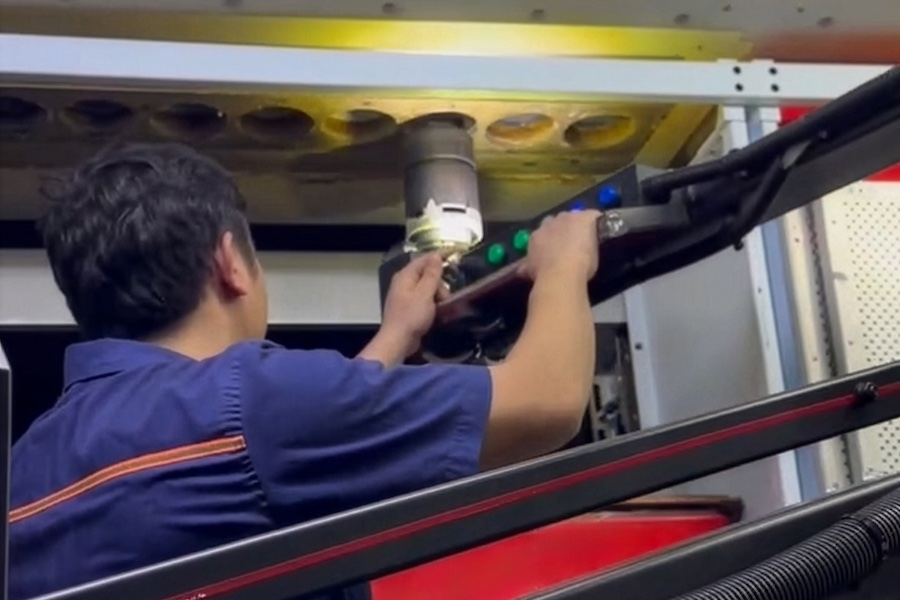
The electric Spinpack changer assists operators in replacing heavy spindle nozzles, improves workplace safety, and reduces downtime for the spinning line.  © 2026 Barmag
The electric Spinpack changer assists operators in replacing heavy spindle nozzles, improves workplace safety, and reduces downtime for the spinning line. © 2026 Barmag


Retrofit automation for existing systems

A common feature of all three solutions is their nearly universal retrofit capability. Operators can modernize their production facilities in a targeted manner without significant modifications to existing lines. This provides a cost-effective entry point into the automation of maintenance and service processes, with measurable benefits for quality, efficiency, and workplace safety.

“There is significant potential for optimization not only in the production process itself, but also in the supporting maintenance and service tasks. Automating these tasks helps make existing plants more productive, safer, and more cost-effective to operate,” explains Stefan Heesen, Senior Manager of Customer Services at Barmag.
More News from Barmag, Zweigniederlassung der Barmag GmbH & Co. KG

#Spinning

Barmag’s single-stage Bi-Shrinkage concept impresses with yarn quality and efficiency

The Indian company Garden Silk Mills Pvt. Ltd. adopts Barmag's new single-stage Bi-Shrinkage Yarn (BSY) spinning concept based on WINGS FDY PLUS eco. The systems, which have been in operation for about a year, deliver excellent yarn quality with very good productivity.

#India ITME 2026

Barmag to showcase next-generation spinning technologies and smart factory solutions at India ITME 2026

The textile industry is entering a groundbreaking era. Manufacturers face rising energy prices, growing sustainability demands, increasing labor shortages, and an unprecedented need for flexibility. For a globally active textile industry, where competitiveness is closely linked to production efficiency and cost leadership, this means that technology is no longer merely a means of improving operational processes – it is increasingly becoming a strategic differentiator. Against this backdrop, Barmag will present a innovation portfolio at India ITME that goes far beyond incremental machine upgrades.

#ITMA Asia + CITME 2026

ITMA Asia 2026: How Barmag is reshaping the future of man-made fiber production

The textile industry is entering a groundbreaking era. Manufacturers face rising energy prices, growing sustainability demands, increasing labor shortages, and an unprecedented need for flexibility. For a globally active textile industry, where competitiveness is closely linked to production efficiency and cost leadership, this means that technology is no longer merely a means of improving operational processes – it is increasingly becoming a strategic differentiator.

#Spinning

Greater efficiency for tomorrow’s textile industry

From September 24 to 27, 2026, Barmag, together with BB Engineering (BBE), will present innovative solutions for the efficient and sustainable production of synthetic yarns at the Egy Stitch & Tex Expo in Cairo, Egypt. Under the motto “A New Era. Powered by Innovation.,” experts from Barmag and BBE will present technologies spanning the entire textile value chain — from melt to yarn — at the ATAG Ltd. booth (Hall 1, Booth C1).

More News on Spinning

#Spinning

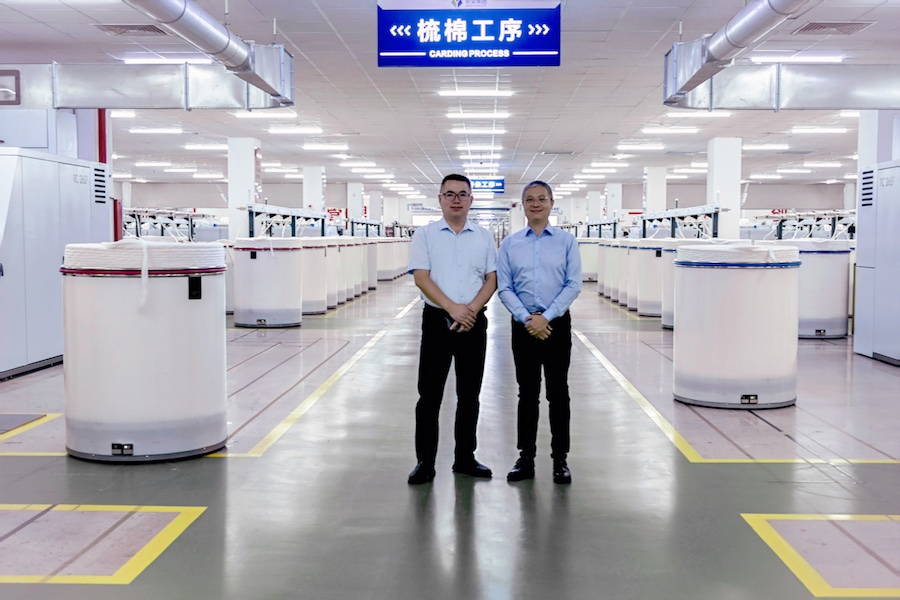
Trützschler's T-CAN reduces labor requirements by over 60% at Chinese spinning mill

Across the textile industry, mills are looking for ways to reduce labor dependency while maintaining full control of their production processes. However, manual can transport between spinning preparation machines often remains labor-intensive and prone to human error. To address this challenge, Trützschler developed T-CAN. The automated can transport system connects carding and drawing processes as well as drawing passages, ensures reliable material flow and reduces the need for manual intervention.

#ITMA Asia + CITME 2026

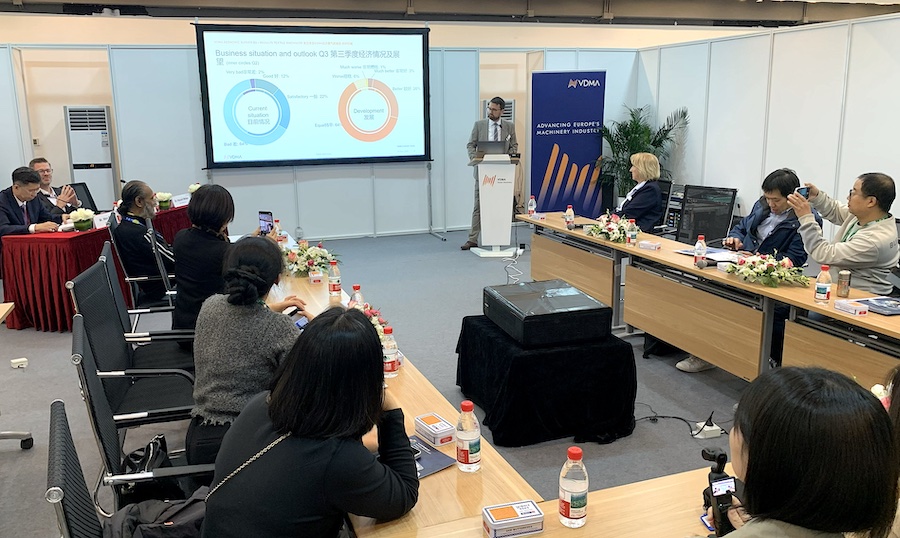
VDMA: German textile machinery manufacturers see signs of recovery as China remains a key market

Strong German participation at ITMA ASIA + CITME 2026 underscores China's importance for the textile machinery industry, while business surveys point to improving prospects for 2027.

#ITMA Asia + CITME 2026

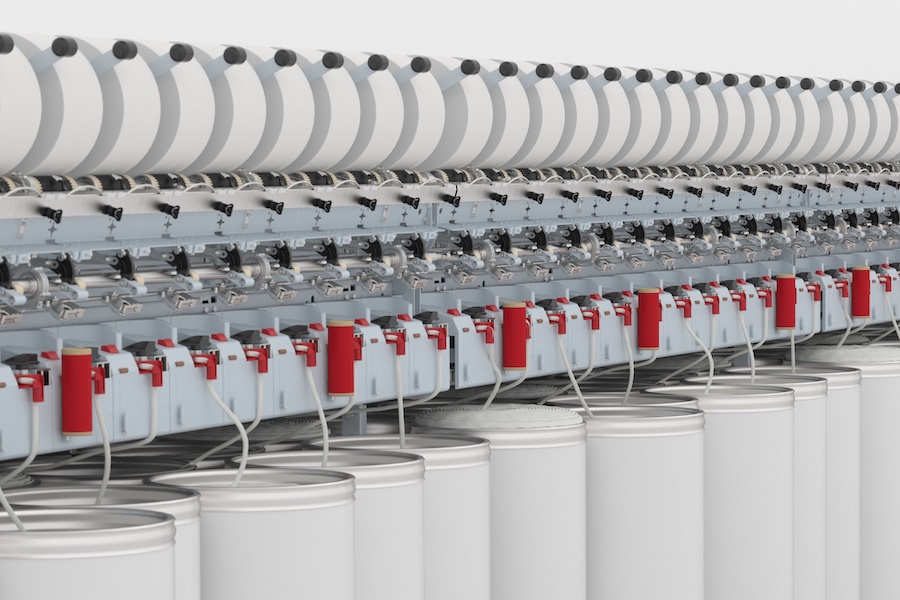
Saurer showcases flexible spinning solutions from bale to yarn at ITMA ASIA + CITME 2026

At ITMA ASIA + CITME 2026 in Shanghai, Saurer will demonstrate how its advanced technologies enable maximum flexibility across the entire spinning process, from bale to yarn and twisting. Visitors to hall 6.1, booth A58, can explore solutions designed to optimise production, improve efficiency and help mills respond quickly to changing market demands. Saurer's experts will be available to discuss individual production challenges and tailored solutions.

Latest News

#Textile processing

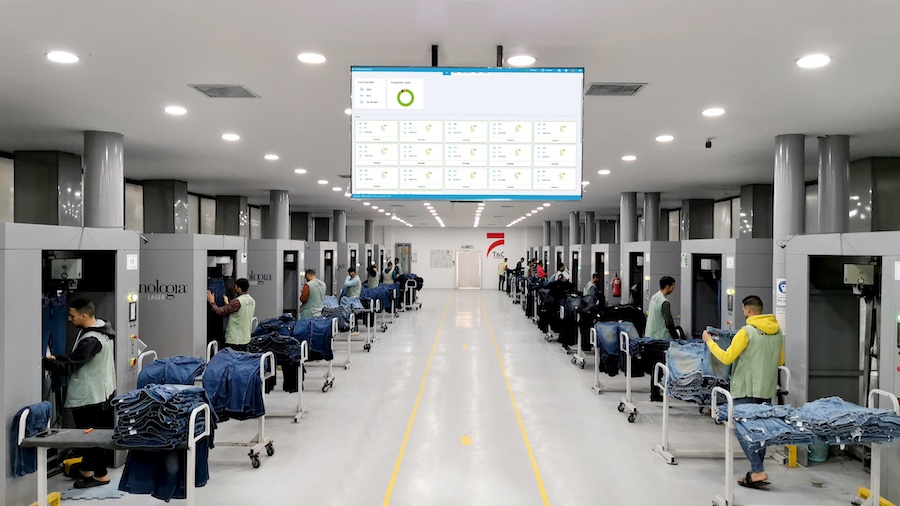
Jeanologia combines digitalisation, laser and ozone technology to strengthen China’s textile competitiveness

At ITMA Asia + CITME 2026 in Shanghai, Jeanologia showcased how the combination of digitalisation, laser technology and G2 Ozone can help China’s textile industry improve productivity, speed, quality and efficiency. With its Compact Super Flash laser system and integrated production concepts, the Spanish technology specialist demonstrated how connecting product development and industrial production can enable faster, more automated and sustainable manufacturing processes.

#Textile chemistry

Flame protection and OEKO-TEX® certification: Gulec Chemicals clears an important hurdle

Three halogen-free flame retardants from German specialist Gulec Chemicals have been included in the OEKO-TEX® list of accepted Active Chemical Products (ACP). The listing opens up additional opportunities for textile finishers, coaters and manufacturers of technical textiles seeking to combine demanding fire protection requirements with certification according to OEKO-TEX® STANDARD 100.

#Dyeing, Drying, Finishing

PLEVA improves dyeing consistency with inline microwave measurement of liquor pick-up

Consistent shades are essential in continuous textile dyeing. Yet variations in fabric absorbency or uneven padder pressure can go unnoticed until the end of the line. By then, hundreds of metres of fabric may already be affected and may become second-choice or rejected.

#Recycling / Circular Economy

DITF establishes CYCLOTEXUM recycling center to advance mechanical and solvent-based textile recycling

As part of the CYCLOTEXUM research project, the German Institutes of Textile and Fiber Research Denkendorf (DITF) established the CYCLOTEXUM recycling center. There, in collaboration with industry partners, the center develops application-oriented solutions for mechanical and solvent-based recycling processes. The technologies developed make a significant contribution along the textile value chain toward the efficient use of textile resources in the future and the transition of production in the German textile sector to a circular economy. The project was funded by the Ministry for the Environment, Climate and Energy Sector of the State of Baden-Württemberg.

TOP