[pageLogInLogOut]

#Spinning

Innovative Textile Recycling: New Partnership to simplify textile processing at the Recycling Atelier
Savio Macchine Tessili S.p.A. from Italy collaborates with the Recycling Atelier of Technical University of Applied Sciences Augsburg and ITA Augsburg since September 2024. Savio will support the Recycling Atelier in the areas of winding and quality control of yarns. This cooperation completes the process chain for mechanical textile recycling and opens up new research possibilities.
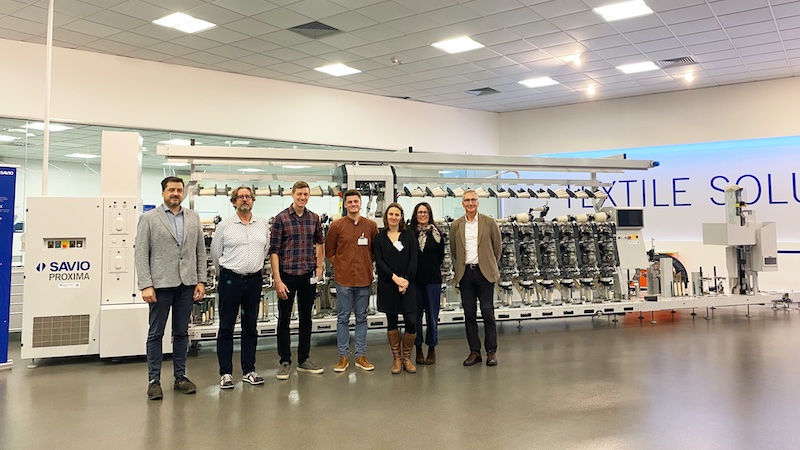
Meeting in Pardenone between Savio and ITA. From left to right: Fabio D’Angolo (Savio), Jürgen Krüger (Savio), Georg Stegschuster (ITA), Justin Kühn (ITA), Nicole Hühn (ITA), Eva Babbo (Savio), Mauro Moro (Savio). Source: ITA Augsburg © 2025


Savio Macchine Tessili S.p.A. specialized in the textile machinery sector for the yarn finishing segment. The Italian company offers a portfolio of winding, twisting, air-jet spinning, shrinking and bulking machines with manufacturing plants in Italy and Asia. It has been operating for more than 110 years. The partnership adds another step to the process chain for mechanical textile recycling, completing it and opening up research possibilities in the areas of winding and quality control of yarns. 

The Recycling Atelier partner network consists of twelve industrial companies that together cover the entire process chain of mechanical textile recycling. The addition of Savio Macchine Tessili S.p.A. is an important component for the high-quality recycling of textiles. Savio contributes not only by sharing their valuable know-how in the winding field. The company also provides Proxima Smartconer® winder to the Recycling Atelier. The winding process is crucial for the quality of the yarn. Winding is the last step of the spinning process where the yarn can be controlled and qualified before it goes to the downstream processes of weaving, knitting, dyeing, and finishing. 

Know-how directly from the manufacturer

Dr.-Ing. Georg Stegschuster, Head of Recycling Atelier, says: “Savio winding machines offer high productivity, low energy consumption, premium yarn quality, automation, and data connectivity. Those criteria are ideal for the setup in the Recycling Atelier. Plus, we receive insightful know-how directly from the manufacturer. We are looking forward to the cooperation and the positive impact that Savio's involvement will bring to our applied research.” 

Mauro Moro, CEO of Savio Macchine Tessili, is delighted about the partnership with the Recycling Atelier Augsburg: “The collaboration with the Recycling Atelier Augsburg is a step forward to advancing research in winding technology and quality control within the recycling context.”

Prof. Mesut Cetin, Institute Director of ITA Augsburg and professor at the Faculty of Mechanical and Process Engineering at Augsburg University of Applied Sciences, explains the impact and work of the Recycling Atelier: “The Recycling Atelier, ITA Augsburg and the Technical University of Applied Sciences Augsburg see themselves as a catalyst for industry towards sustainability. We welcome innovation and progress in any form. Whether application-oriented content or basic research, whether publicly funded projects or direct contract research - we are open to any exchange between industry and research.”
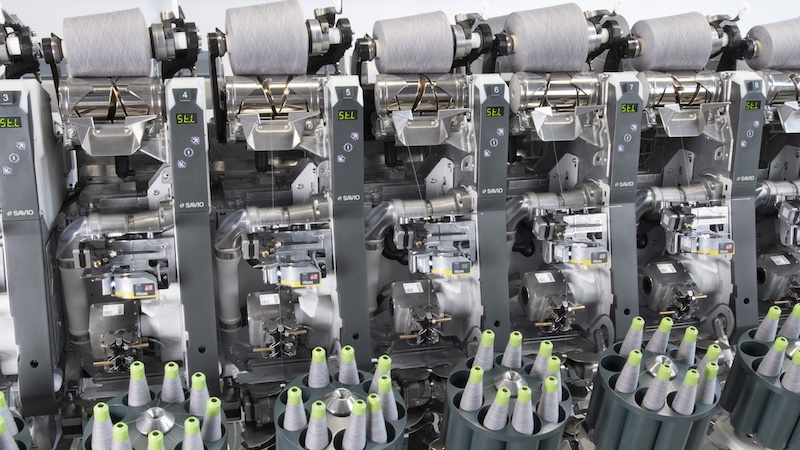
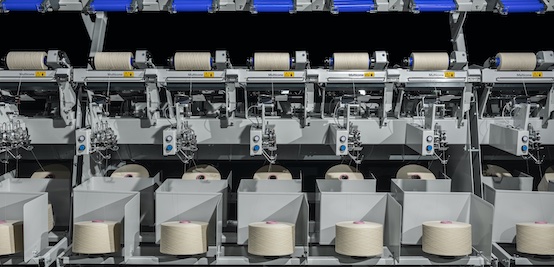
Winder “Proxima” from Savio Macchine Tessili S.p.A. Source: Savio Macchine Tessili S.p.A. © 2025


More News from Savio Macchine Tessili S.p.A.

More News on Spinning

#Spinning

Graf at EXINTEX – Strengthening presence in Latin America

Graf successfully participated in EXINTEX, one of the leading textile exhibitions in Latin America, together with its local agent Eurotecnica. The exhibition provided an excellent platform to engage with customers, partners and industry experts across the region.

#Spinning

Temco launches a new DTY all-in-one solution

Temco introduces the DTY All-in-One Solution – a fully harmonized set of components engineered to give customers a highly stable, low maintenance and reproducible process environment. The solution reduces interruptions, extends component lifetimes and supports consistent yarn quality across all machine positions. All-in-One Solution – a fully harmonized set of components engineered to provide maintenance and reproducible process environment.

#Techtextil 2026

DIENES at Techtextil 2026: Flexible pilot lines for bio-based fiber development

The growing relevance of bio-based materials in technical textiles is accompanied by increasing demands for reproducibility, high-quality data, and scalable process routes. Especially when working with cellulose and its derivatives, chitosan, lignin-based approaches, or bio-based PAN as a carbon-fiber precursor, R&D teams face variable feedstock quality, tighter process windows, and the need for reliable comparability across trials. This calls for flexible, data-driven experimental setups that can be reconfigured efficiently when recipes, solvents, and raw-material batches change.

#Techtextil 2026

RETECH showcases high-precision godets for high-performance fiber processing at Techtextil 2026

RETECH designs and manufactures godets and draw frames for heated, ambient and cooled processes, enabling precise heat treatment and consistently high yarn quality for a wide range of polymers and applications, with process temperatures of up to 400 °C for high-performance fibers. The company’s key competence lies in exact and stable temperature and speed control, individually adapted to the specific material and process requirements.

Latest News

#Techtextil 2026

AI, Start-ups, Research: Techtextil and Texprocess bring together players in the textile industry

From start-ups to universities and research institutes: at Techtextil and Texprocess, the world’s leading innovation trade fairs in Frankfurt am Main, exhibitors present future-oriented concepts for the global textile industry. With the international Campus & Research area, a strong participation from start-ups and the latest AI applications for textile processing, both trade fairs showcase current developments in the textile industry. By bringing together innovation, research and application, they enable new partnerships across the textile value chain.

#Techtextil 2026

IVGT joint stand brings innovation and networking to Techtextil 2026

At Techtextil 2026 and the parallel Texprocess 2026, key transformation topics such as artificial intelligence, digitalisation, sustainability, recycling and the circular economy will be reflected across the show. Against this backdrop, the IVGT, together with 16 member companies, will present its joint stand in Hall 12.1 (Stand D62) as a platform for exchange and networking.

#Man-Made Fibers

Indorama Ventures supports Southeast Asia’s textile customers with reliable regional supply and global innovative portfolio

Indorama Ventures, one of the leading global polyester fiber and filament yarn suppliers globally, will participate in Indo Intertex 2026 in Jakarta this April, making its diverse global portfolio available to apparel, home textile, and hygiene customers across Southeast Asia.

#Raw Materials

New study shows low environmental impact by Cotton made in Africa Organic Cotton from Tanzania

Today, the Aid by Trade Foundation (AbTF) is announcing the results of a comprehensive life-cycle analysis (LCA) for cotton produced in Tanzania under the Cotton made in Africa Organic (CmiA Organic) standard. The study emphasises the small ecological footprint of CmiA Organic verified cotton. This can largely be traced back to the absence of synthetic pesticides, artificial fertilisers, and artificial irrigation. Consequently, CmiA Organic cotton can help the textile industry meet regulatory requirements as well as science-based targets. The results also show that the consequences of climate change threaten the livelihoods of these cotton farmers, even though the type of agriculture they practise barely contributes to climate change.

TOP