[pageLogInLogOut]

#Spinning

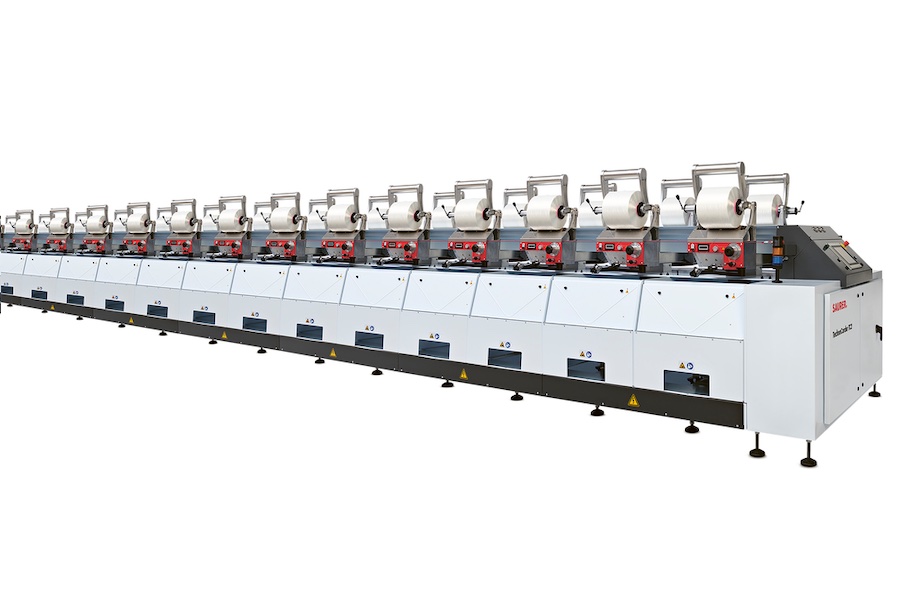
Autocoro 11 – Energy saving made easy
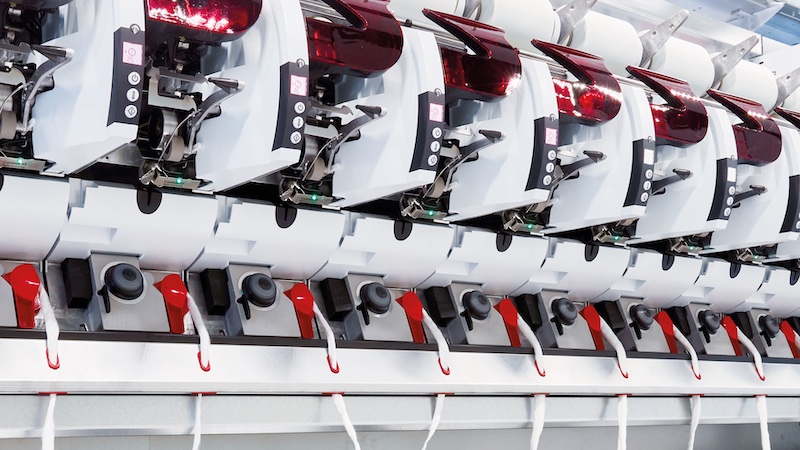
Economic efficiency, sustainability and climate-friendly yarn production - the Autocoro 11 plays in the top class in all areas. It spins sustainable raw materials with ease and is the spinning machine with the lowest energy consumption on the market.
Autocoro 11 © 2024 Saurer


The cost of yarn production is rising worldwide. The spinning mills have only a limited influence on this development, as too many factors play a role: Economic, political and financial, to name but a few. The best strategy for spinning is therefore to avoid costs. When it comes to the energy-saving production of yarns, there is no way around automatic rotor spinning. No spinning method requires less energy in the process to produce a ready-to-sell yarn.

After raw materials, energy is the second largest cost item in the automatic rotor spinning mill. Minimising costs here directly increases the profitability of the spinning mills. The Autocoro 11 automatic rotor spinning machine is a champion in this field which reduces spinning costs simultaneously on several levels. With the Recycling Xtreme equipment, spinning mills can save considerable raw material costs. The advanced full automation reduces the need for personnel and, thanks to comprehensive energy optimisation, each Autocoro 11 uses 10% less energy than its predecessor, and up to 48% less in comparison with older rotor spinning machines.

The key energy-saving factor - the new extraction system of the Autocoro 11

Around 30% of the energy required for spinning is used to provide the negative pressure necessary for the process. For the Autocoro 11, Saurer has designed, practically from scratch, an extraction system with everything needed for vacuum logistics. The result: A completely redesigned extraction system, modified ducts with a capacity increase of up to 85% that is resistant to pressure fluctuations. New air filter systems and a completely revised electronic control of the vacuum supply can now supply each of the different spinning processes individually with the suction air required. For example, the pure spinning process is supplied with suction air just as precisely as the yarn search during the initial spinning phase. Gone are the days of compromises, when simultaneously operated processes were supplied from a single compressed air supply and were therefore not 100% energy-optimised. Energy-saving air technology is the top priority for the new Autocoro 11.

One of the powerful workhorses in the Autocoro is the winding device. It needs energy to move and wind tonnes of yarn reliably throughout the year. The Autocoro 11 winding device is equipped with state-of-the-art, energy-optimised drives, enabling Saurer to reduce the base load. The numerous electronic components of the rotor spinning machine, such as the power supply units, were also checked and optimised with respect to their energy efficiency.

Energy cost savings in the six-figure range with the Autocoro 11

Compared to older generations of rotor spinning machines, many of which are still in use in various spinning mills today, the new Autocoro 11 saves up to 48% in energy costs. (Figure 1)
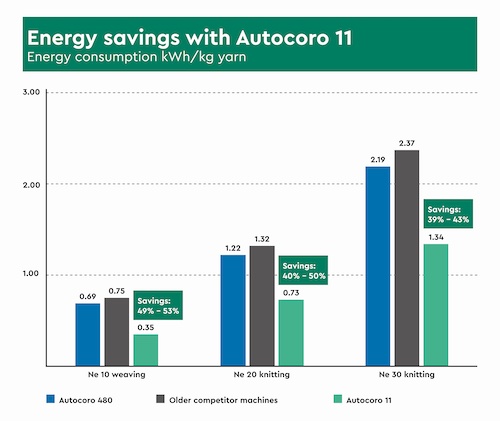
Figure 1: Energy savings with the Autocoro 11 in kWh/kg yarn © 2024 Saurer


Even with moderate energy prices of just €0.10/kWh and relatively short machines with 480 spinning positions, cost savings per year and machine are in the six-figure range (Figure 2).
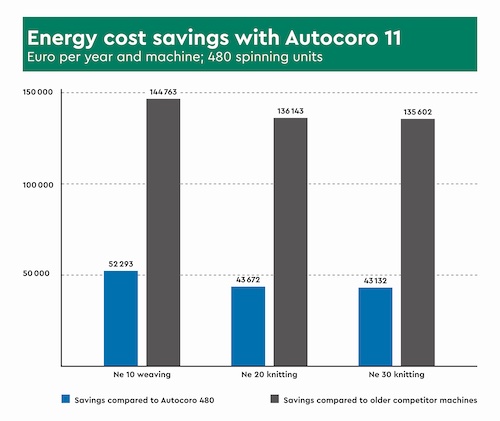
Figure 2: Annual cost savings with 480 spinning positions © 2024 Saurer


With Autocoro 11 customers can explore additional savings potential through a particularly energy-optimised spinning setting. These include measures such as reducing the spinning vacuum and the twist, increasing the rotor speed and using energy-saving small rotors (Figure 3).
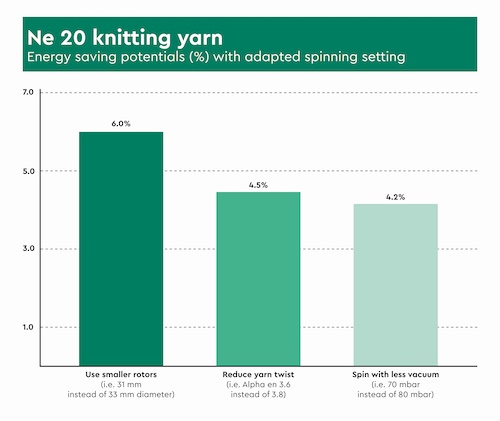
Figure 3: Potential for energy savings with different spinning settings © 2024 Saurer


Energy costs can be reduced by a further double-digit percentage by skilfully combining several measures, based on the respective raw material and the quality requirements of the yarn. 

The cost savings achieved by using the Autocoro 11 are an important aspect. Reducing energy requirements also means contributing to sustainability, an aspect that is becoming increasingly important in terms of achieving global climate targets. There are already spinning mills that use solar panels on their roofs to generate all the electricity required by their Autocoro spinning mills in a climate-neutral way.
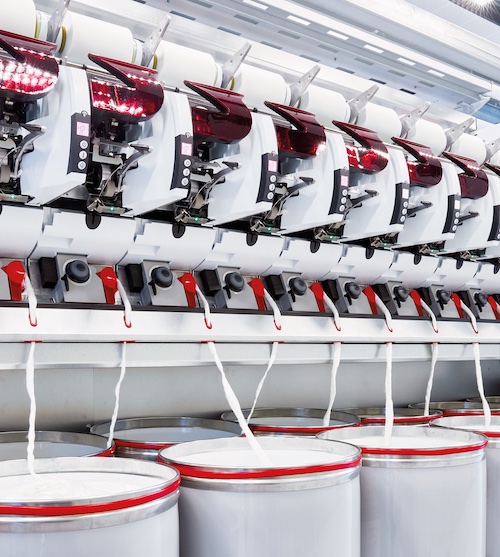
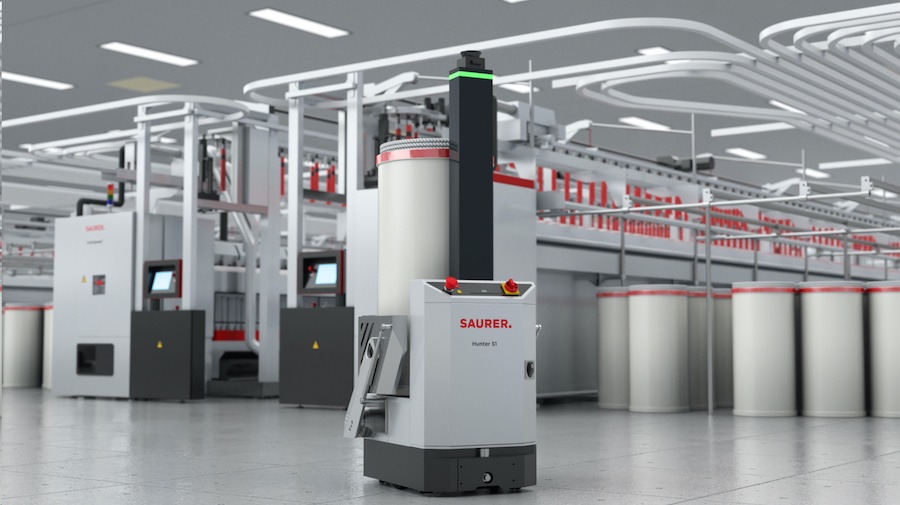
Autocoro 11 © 2024 Saurer


More News from Saurer AG

#ITMA Asia + CITME Singapore 2025

Saurer’s leading technology for the yarns of tomorrow at ITMA Asia 2025

Saurer, is looking forward to presenting the latest innovation highlights at the ITMA Asia + CITME 2025 in Singapore on booth C 301 in hall 3. The spinning, twisting, and automation solutions are underlining the commitment to driving efficiency, sustain-ability, and digitalisation in the textile industry, paving the way for the yarns of tomorrow.

#Spinning

Solutions for the yarns of tomorrow at IGATEX Pakistan 2025

Saurer will be exhibiting at IGATEX Pakistan 2025, taking place from 24-26 April in Karachi. As a global leader in spinning technology, Saurer will present innovative solutions "from bale to yarn" to support the evolving needs of Pakistan's dynamic textile industry.

#Spinning

Trusted by experts and driven by innovation – Autocoro 11

Saurer's Autocoro 11 revolutionises rotor spinning with pioneering innovation and automation. This state-of-the-art, fully automated rotor spinning machine sets new industry benchmarks by significantly reducing energy consumption, maximising efficiency and ensuring unparalleled operational independence. In the Recycling Xtreme edition, the machine is capable of processing the shortest mechanically recycled fibres with an extremely high raw material efficiency. Since its launch in 2023 and first installations in 2024, customers worldwide have experienced the transformative power of the Autocoro 11. Hear directly from industry experts as they share their insights and success with this game-changing technology.

#Spinning

Saurer – the comprehensive solution provider at Egypt Stitch & Tex 2025

Textile professionals will find Saurer at the ATAG booth 1A6 at the Egypt Stitch & Tex 2025 exhibition in Cairo, Egypt, from 20 to 23 February 2025. As a reliable partner for spinning mills, Saurer meets the increasing demand for innovative, energy-saving and high-performance textile solutions. Saurer offers spinning preparation and all five end-spinning systems for staple yarns, as well as advanced digitalisation and automation capabilities for complete spinning mills. With its retrofit and upgrade solutions, Saurer helps customers to extend the lifetime of existing machines.

More News on Spinning

#Spinning

Rieter adjusts group structure in preparation for Barmag integration

The planned acquisition of the “Barmag” Division of OC Oerlikon will create the leading system provider worldwide for natural and man-made fibers. Rieter is confident it will receive all regulatory approvals to complete the acquisition in the fourth quarter of 2025. The Rieter Group is therefore adjusting its Group structure as of January 1, 2026, to take this acquisition into account and to be able to provide an even more agile response to market challenges.

#Spinning

Demand for high-performance yarns on the rise

Barmag, a subsidiary of the Swiss Oerlikon Group, will commission three HMLS yarn systems with a total of 30 stations at renowned technical yarn manufacturers in China over the next three months.

#Spinning

FET prepares for final exhibition of 2025

Fibre Extrusion Technology Ltd (FET) of Leeds, UK has completed its second major exhibition of 2025 at ITMA ASIA in Singapore, which is aimed at the textile and garment industry in South and Southeast Asia and the Middle East. Once again, this trade show proved to be a successful one for FET, with considerable interest from several countries surrounding China.

#ITMA Asia + CITME Singapore 2025

T-CAN – Revolutionizing can transport

In virtually all spinning mills, transporting sliver cans is still done manually. Rising labor costs, lack of operators and increasing quality requirements make this a growing challenge. With T-CAN, Trützschler introduces a practical solution: a fully automated can transport system that will be presented live at ITMA ASIA 2025 in Singapore.

Latest News

#Recycling / Circular Economy

Advanced Recycling Conference 2025 fuels innovation across key waste streams

The Advanced Recycling Conference (ARC) 2025 brought together nearly 220 experts from 28 countries to spotlight pioneering advancements and foster industry collaboration in recycling across diverse waste streams including plastics, textiles, automotive and other materials.

#Dyeing, Drying, Finishing

Navis TubeTex announces U.S. partnership with Icomatex

Navis TubeTex, a global leader in advanced dyeing and finishing machinery solutions, is pleased to announce a new partnership with Icomatex (www.icomatex.com), a respected European manufacturer of high-quality stenters and textile finishing equipment. Under this agreement, Navis TubeTex will exclusively represent the Icomatex stenter line in the United States.

#Recycling / Circular Economy

ADVANSA launches ADVA®tex: A new step toward textile-to-textile recycling

ADVANSA has introduced ADVA®tex, a new filling fibre made entirely from recycled pre-consumer textile waste, positioning the material as a significant step forward in textile-to-textile (T2T) recycling. The fibre is designed for use in duvets, pillows, mattresses, and furniture applications and is available in three versions.

#Knitting & Hosiery

KARL MAYER celebrates 35 years of EL pattern drive

KARL MAYER is celebrating an anniversary this year: on 30 November 1990, the first warp knitting machine with electronic guide bar control, the KS 4 EL, was delivered – another milestone for patterning. As early as 1980, the SU gearbox with the MRS42SU had initiated the transition from mechanical chains to digital data.

TOP