[pageLogInLogOut]

#Spinning

Automotive supplier Sailuda integrates backwards in BCF yarn production

Chinese automotive supplier Sailuda is expanding its process chain with the commissioning of a Oerlikon Neumag BCF plant. In future, the specialist for automotive interiors will produce its own BCF yarns. The company is thus integrating the entire process from the yarn to the finished carpet and can therefore better influence production and quality of its car carpets.

Oerlikon Neumag commissions BCF plant in China

Sailuda is one of the major suppliers for international car brands such as BMW, Volvo, VW and Ford, but also for well-known Chinese e-car manufacturers such as NIO, Lixiang and SERES. "The quality of our products is our recipe for success," says CEO John Zhu, explaining the strategy. The company has been reporting a constant increase in turnover for years. With its own in-house carpet yarn production, Sailuda wants to diversify its product range and create outstanding and exceptional end products. In this way, the visionary trendsetter is creating a competitive advantage in the highly competitive automotive sector.

Capacity expansion already being planned

John Zhu is certain that this will not be the only investment in yarn production. "The delivery and commissioning of the 2 positions BCF S+ plant for the production of PA6 and PET monocolor BCF yarns went so smoothly and quickly; this has encouraged us to invest in another system at the end of the year." John Zhu explains his decision for the proven S+ technology of the market leader for BCF yarn systems with the expected excellent quality of yarns produced on Oerlikon Neumag systems. "The yarns have a very uniform crimp with a high degree of coverage in the carpet." Sailuda is thereby securing its competitiveness in the demanding market for automotive carpets.

Automotive sector boosts Asian BCF market

While the focus of carpet yarn production has so far been in the USA and Turkey, the up-and-coming automotive industry in China is giving the Asian carpet market a significant boost, among other effects. "We are registering increased demand for our BCF technologies," agree the responsible Sales Directors in China and Neumünster, Sun Peng and Arnd Luppold. "We attribute this to the rising production figures in the Chinese automotive industry; China is ahead in terms of figures, especially in the electric car sector. This is boosting demand for automotive carpets."
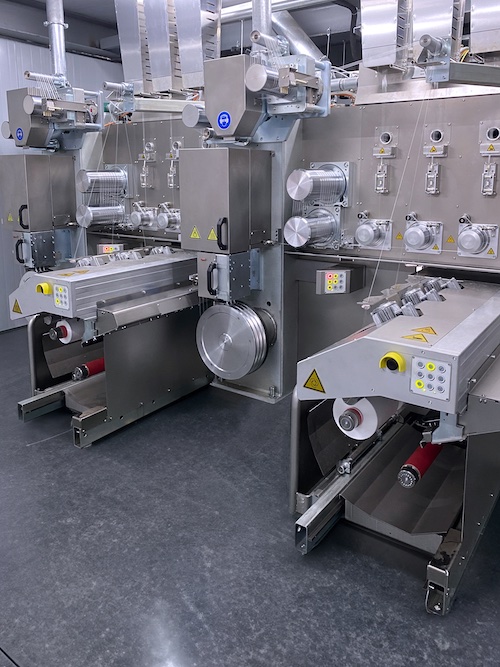
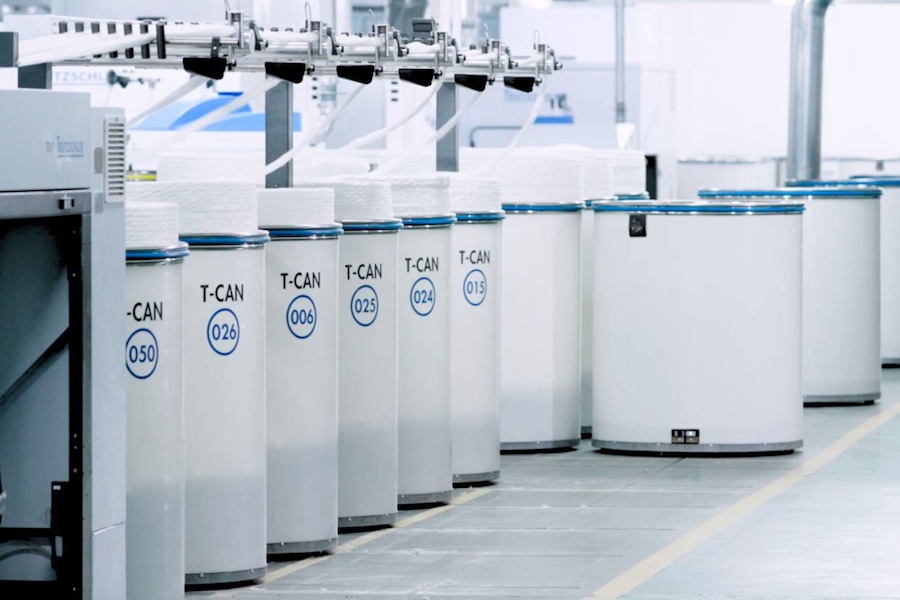
Caption: The three-end BCF S+ system impresses with its cost-effectiveness: high production speed and capacity and reliable components combined with the highest yarn quality make this model particularly attractive for carpet yarn manufacturers © 2024 Oerlikon


More News from Barmag GmbH & Co. KG

#Spinning

Barmag presents metering pump solutions at ASE China

From September 15 to 17, 2026, Barmag’s Pumps Division will present its solutions for the precise delivery and metering of adhesives, sealants, and other high-viscosity media at ASE China at the Shanghai New International Expo Centre. The focus of the exhibition will be on high-precision gear metering pumps that help plant managers sustainably optimize material usage, process stability, and product quality. (Booth E4235).

#Spinning

Barmag expands its portfolio for PA6/PA6.6 applications — also available as a retrofit solution

With the new type 6020 ceramic oiler, Barmag is introducing a powerful addition to its product portfolio for processing PA6 and PA6.6 yarns. The solution is specifically designed for low-titer applications in the range of 5 to 100 denier.

#Nonwovens / Technical Textiles

Crimper repair workshop begins operations

Since the beginning of the year, Oerlikon Textile Inc. has been offering a crimper repair service, making it the company's first location worldwide to do so. The workshop in Charlotte specializes primarily in Fleissner and Neumag crimpers.

#Spinning

Oerlikon Manmade Fibers Solutions hosted successful Technology Day 2025 in India

Oerlikon Manmade Fibers Solutions recently hosted its highly anticipated Innovation and Technology Day at the Deltin Hotel in Daman by end of January 2025. The event attracted over 300 participants, including industry experts, partners, and stakeholders, who gathered to explore the latest advancements and trends in the manmade fibers industry in India.

More News on Spinning

#ITMA Asia + CITME 2026

ITMA Asia 2026: How Barmag is reshaping the future of man-made fiber production

The textile industry is entering a groundbreaking era. Manufacturers face rising energy prices, growing sustainability demands, increasing labor shortages, and an unprecedented need for flexibility. For a globally active textile industry, where competitiveness is closely linked to production efficiency and cost leadership, this means that technology is no longer merely a means of improving operational processes – it is increasingly becoming a strategic differentiator.

#Spinning

Eltex takes the tension out of heat-setting

The ACT-MULTI system developed by Eltex – a member of TMAS, the Swedish textile machinery association – is bringing individual yarn tension monitoring and automatic control to the heat-setting process, helping manufacturers maintain consistent processing conditions across every yarn position.

#Spinning

Heberlein reinforces its commitment to the Chinese market

Heberlein, globally recognised as a leading provider of air interlacing and air texturing jets for synthetic filament yarns, is consolidating its success in the Chinese market with its APh- and APe-series for DTY applications. Particularly in the field of Air Covering, Heberlein technologies combine excellent quality with significant savings in compressed-air consumption. A new service hub in Shengze City underlines the company’s long-term commitment in the Chinese market.

#Recycled Fibers

Driving circularity with Uster Recycled Fiber Matrix

The textile industry’s commitment to circularity continues to accelerate, and mechanical recycling is viewed as a targeted approach to cutting textile waste and its environmental impact. At the forefront of this drive, Uster has developed the Recycled Fiber Matrix, a two-dimensional assessment of mechanically recycled fibers to guide optimum processing and end-uses.

Latest News

#Industry 4.0 / Digitalization

Coats Digital launches AI-powered GSD RealMotion for motion analysis

Coats Digital has launched GSD RealMotion, an AI-powered solution designed to provide apparel manufacturers with greater visibility into factory-floor operations. By analysing shop-floor video and applying Coats Digital’s GSD methodology, the solution turns video recordings into structured, motion-by-motion method studies.

#Textile chemistry

Archroma and Lameirinho partner in pioneering deployment of InOneGO single-step dyeing

Archroma, a global leader in specialty chemicals, and Lameirinho, a leading home textiles manufacturer based in Portugal, are collaborating to bring InOneGO by Archroma, a new single-step dyeing process, into commercial production. Lameirinho’s first InOneGo bedlinens collection is now available worldwide.

#Knitting & Hosiery

KARL MAYER launches extra-wide HKS 3-M EL for increased productivity

KARL MAYER has launched a new extra-wide version of its HKS 3-M EL tricot machine, designed to increase productivity particularly in the manufacture of textiles for sports, activewear and athleisure applications.

#Research & Development

Reducing development times for technical textiles by accelerated thermo-oxidative aging in a high-pressure autoclave

Synthetic polymers used in technical textiles can be effectively protected against degradation caused by heat, oxygen, and water through the use of stabilizer systems. This enables service lives of several decades, extending to more than 50 years. As the use of durable technical textiles continues to grow, so does the demand for reliable methods to predict their service life within economically feasible testing periods. For the first time the German Institutes of Textile and Fiber Research Denkendorf (DITF) developed methods for robust service life prediction for textiles in an IGF research project.

TOP