[pageLogInLogOut]
TRÜTZSCHLER SPINNING - FROM WASTE TO VALUE

#Spinning

The secrets behind the science of winding

Every yarn manufacturer’s dream is to achieve a perfectly wound package so that the yarn can be processed easily in downstream processes, like dyeing or weaving. What does it take to achieve a perfectly wound package and what makes this an amazing engineering feat that helps save energy and resources?

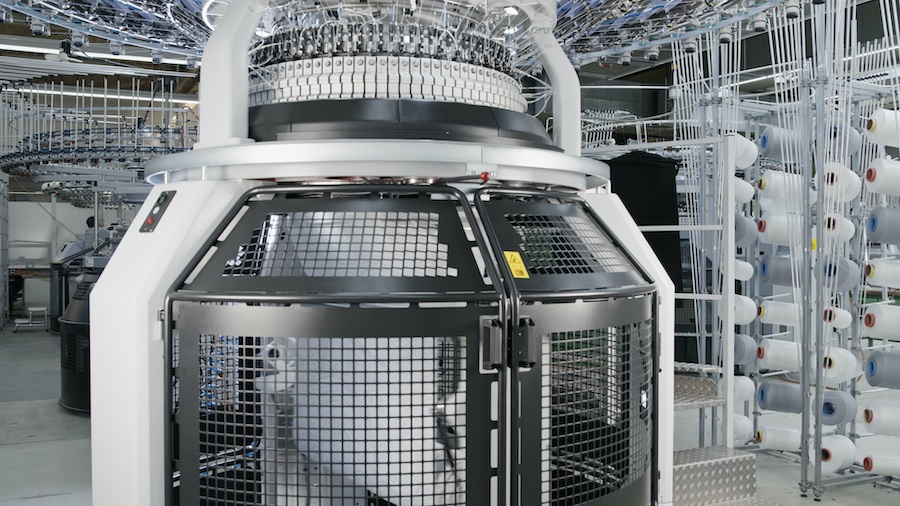
Winding is a small but crucial step in the textile value chain. This is when yarns are wound tightly onto a bobbin to prepare them for the next manufacturing stage. Every yarn manufacturer’s dream is to achieve a perfectly wound package so that the yarn can be processed easily in downstream processes, like dyeing or weaving.

preciforce sets new standards?The secret behind getting a perfectly wound package is achieving regular density across the entire package which is especially important for dyeing. But what looks easy on the surface is nothing less than a carefully designed engineering feat built on decades of expertise.

Until now, winding systems were limited to merely monitoring density without the ability to adjust pressure levels. SSM’s preciforce changes all this with the ability to regulate backpressure so that each and every bobbin reaches the same density. The perfectly even package densities make the dyeing process easier, thus optimizing results. Even better, dye houses save energy and water as they no longer need to repeat the dyeing process which is necessary when packages are wound unevenly.

A winning team: preciforce and DIGICONE 2 ?Perfect density is great, but costs also play a role. At SSM, the company’s mission is to help customers manufacture at the lowest possible cost and with the least amount of waste. Winding is a repetitive action so SSM engineers found that what was working for Google searches and algorithmic trading – which are based on recurring, sequential actions – was good for winding, too. They developed an algorithm that ensures the winding machines apply a step-by-step procedure to achieve a tightly wound package in the most economical way. DIGICONE 2 was developed with this advanced winding algorithm that ensures optimal accuracy in yarn laying. Together preciforce and DIGICONE 2 make an unbeatable team to manufacture a superior package in the most economical way.


In addition, preciforce helps to save roughly 20% energy compared to standard automatic backpressure systems.
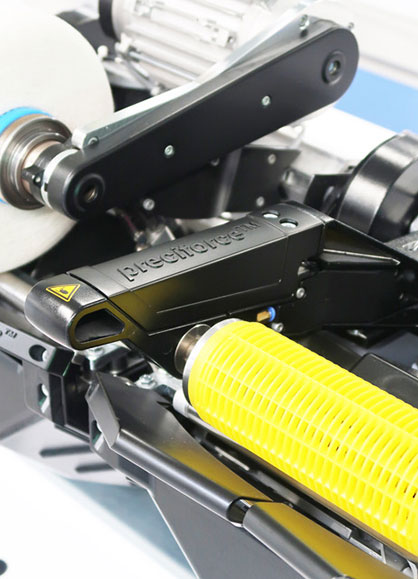
© 2022 SSM
© 2022 SSM


To round it off, the reliability of SSM machines is unmatched, with the longest lifetime for machines and spare parts. SSM also provides a world-class service network with over 10 local service stations and 80 agencies worldwide. This translates into short journeys and fast response times for customers.

More News from SSM Schärer Schweiter Mettler AG

More News on Spinning

#Spinning

New spinning package with two-step filtration for recycled yarns and more

At the ITM in Istanbul, BB Engineering unveiled its new, patented ValuePack spinning package for the first time, which features a two-stage filtration system. This is particularly beneficial for re-cycling processes. Until now, spinning packs have used either metal powder (“sand”) or filter candles as filter media. Both options are suitable for differ-ent applications, and each has its own specific advantages and dis-advantages.

#Research & Development

GenuTrace client advisory: Is your cotton supply chain UFLPA ready?

U.S. Customs and Border Protection has released updated operational guidance (CBP Publication No. 5560-0526) expanding its forced labor enforcement framework. The guidance supersedes the original 2022 UFLPA Operational Guidance and now covers all forced labor enforcement authorities — UFLPA, CAATSA, and WROs/Findings — in a single unified document. For cotton importers, the enforcement posture has not softened. It has become more structured, more documented, and more demanding. Learn more about UFLPA.

#Spinning

"We will become a recycling powerhouse"

The textile industry is now in its fourth consecutive year of crisis, while automation, artificial intelligence and recycling are reshaping the rules of the game. In this interview, Rieter CEO Thomas Oetterli discusses the first signs of a market recovery, reflects on his first three years at the helm of the company, explains the integration of Barmag, outlines Rieter’s vision of the fully automated spinning mill and highlights the strategic importance of recycling. In doing so, he explains why the new Rieter Group aims to play a leading role in transforming the textile value chain into a circular economy.

#Spinning

Barmag and Hitech Automation enter into partnership for an auto-doff system for texturing machines

Barmag (Suzhou) Technology Co., Ltd. and Hitech Automation Solutions PVT LTD. of Surat, India, have agreed to an exclusive partnership to jointly market Hitech’s Doffmatic automation solution for Barmag’s proven manual eFK texturing machines. In many texturing facilities, manual doffing processes remain heavily operator-dependent – resulting in issues such as increased scrap, inconsistent quality, and limited productivity.

Latest News

#ITMA 2027

ITMA 2027 gains strong momentum

In line with the theme "Co-creating the future of textiles", ITMA continues to strengthen its support for start-ups, recognising their role in driving innovation and shaping the future of textile and garment manufacturing. Through the Start-Up Valley, emerging companies gain access to a global marketplace where they can connect with industry leaders, potential partners, investors and customers.

#ITM 2026

Positive market signals for KARL MAYER at ITM 2026

KARL MAYER is pleased with its participation as an exhibitor at ITM 2026. Faced with the challenges of rising domestic costs and fierce competition from low-priced Asian markets, the industry leader had traveled to Istanbul with mixed feelings – yet still draws a really positive conclusion.

#Associations

Mongolia: Workshop on Italian textile technologies kicks off in Ulaanbaatar

The workshop dedicated to Italian textile technologies will kick off in Ulaanbaatar from 21 to 23 June 2026. Focused on the most advanced innovative solutions for the textile industry, the initiative will bring together 13 Italian textile machinery manufacturers, confirming the growing interest in strengthening industrial cooperation between the two countries and highlighting Mongolia’s strategic importance for Italian textile machinery producers.

#Recycling / Circular Economy

The textile industry in transition

Recycling, traceability, eco-design and digitalisation are among the key future challenges facing the European textile industry. The Erasmus+ project Skills4Circularity, involving 21 partners from twelve countries, is investigating the skills required to address these challenges. As the German industry partner, the Industry Association for Finishing – Yarns – Fabrics – Technical Textiles (IVGT) is bringing the industry’s perspective to the project.

TOP