[pageLogInLogOut]

#Research & Development

Environmentally friendly and sustainable: shopping and production digitally optimized
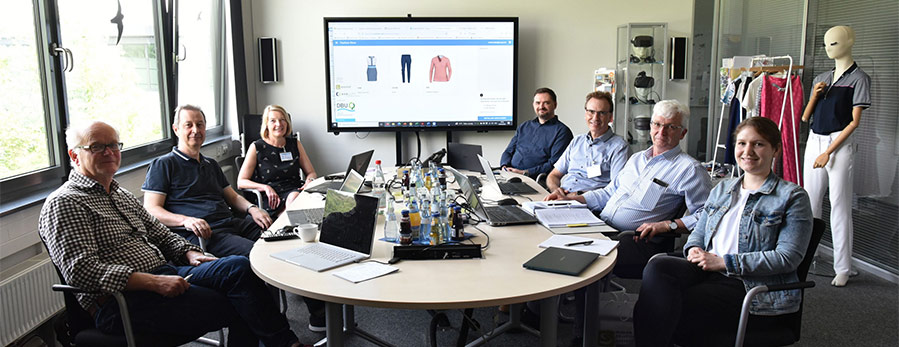
Kick-off event of the project partners at the end of June in Denkendorf (from the left: Alexander Artschwager (DITF), Dr. Jürgen Seibold (DITF), Jeanette Nordmann (Assyst GmbH), Alexander Mirosnicenko (DITF), Dr. Rainer Trieb (Human Solutions), Dr. Martin Lades (Assyst GmbH), Stefanie Hiss (DITF) Photo. DITF
The designer has an idea, the customer, consumer or retailer, checks it out and changes one or two details to suit his or her taste. Then garments are produced in small batches or tailored to the body thanks to modern body measurement. Digital technology ensures that the wishes are met, everything fits and everything looks as expected. Returns? That was yesterday.

Digitized processes not only satisfy the customer, but also protect the environment. That's why the Deutsche Bundesstiftung Umwelt (German Federal Environmental Foundation) is funding the research cooperation between the German Institutes of Textile and Fiber Research Denkendorf (DITF) and Assyst GmbH. The keyword here is the shifting back of value-added processes. Result: no mass-produced goods for the garbage, no child labor, high ecological standards and low transport costs.


"Every body is individual" emphasizes Dr. Martin Lades, Assyst GmbH. The ECO-Shoring project takes this into account. The creation of an avatar, i.e. the model of one's own body, is the basis. There are also serial measurements in different regions of the world. In the project, processes and the database of Avalution GmbH allow that the customer only has to enter a few body parameters to get an accurate fit. With the body height, weight and age, the program can create a true-to-life body double - the trying-on on the computer can begin. The model is primarily suitable for online shopping, but in principle the customer can also be measured and advised directly in the store.
More News from TEXDATA International

#ITM 2026

ITM 2026: The new geography of textile production

New production hubs are emerging across North Africa and Central Asia, while Türkiye is accelerating its transformation toward higher-value, technology-driven and more sustainable textile manufacturing.

#Research & Development

“Production is a product”

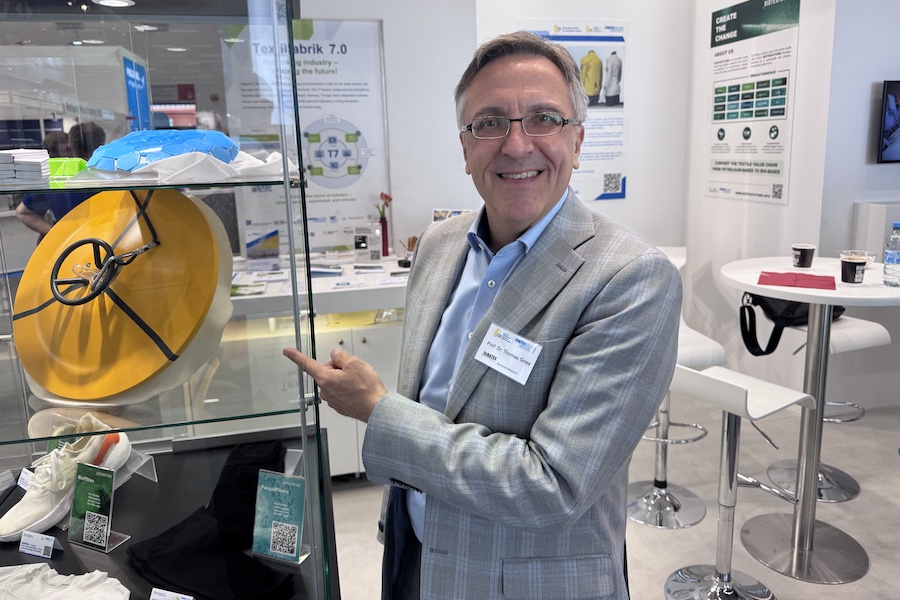
From technical textiles and AI-driven robotics to the limitations of textile circularity: Professor Dr Thomas Gries looks back on more than two decades of development at ITA Aachen. In the interview, he explains why production technology remains a decisive success factor, discusses international collaborations and innovation ecosystems, and shares his views on the transformation of production landscapes and the challenges facing an increasingly regulated industry.

#Knitting & Hosiery

“We need to move away from the price trap and return to a value-driven mindset.”

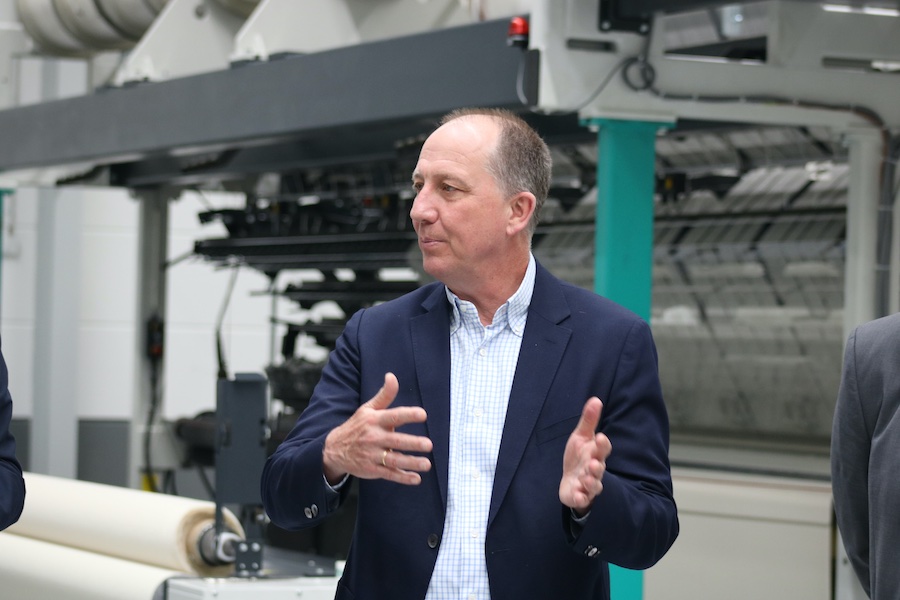
With its new Textile Innovation Center, KARL MAYER is sending a strong signal for innovation, collaboration, and the future of textile applications. In this interview, Karl Josef Mayer discusses new opportunities in warp knitting, the processing of staple fibres, recycling, the changing role of machinery manufacturers, and why the textile industry must once again focus more strongly on the value of textiles. by Oliver Schmidt

#Associations

“Innovation, resilience and international experience remain the great strengths of the Swiss textile machinery industry”

Geopolitical uncertainty, growing competitive pressure from China, new free trade agreements and the shift towards a circular economy are currently reshaping the global textile industry. In this interview, Cornelia Buchwalder discusses the current mood within the Swiss textile machinery sector, the industry’s distinctive innovative strength, new market opportunities in India and Asia, and the technological trends that could shape the upcoming trade fair cycle leading up to ITMA 2027.

More News on Research & Development

#Research & Development

Geotextiles made from recycled materials: GREEN leads the way into the industry

For the industry, recycled materials are creating new opportunities in geotextile production. In the GREEN project, the Fraunhofer Cluster of Excellence Circular Plastics Economy CCPE demonstrates that recycled polypro-pylene (PP), polyethylene terephthalate (PET), and high-density polyeth-ylene (HDPE) can be processed into nonwovens, fibers, and membranes that meet industrial requirements. This creates opportunities for use in existing production lines and new value chains in the geotextile market.

#Research & Development

2026 general meeting of the Friends and Supporters of RWTH Aachen at ITA

The Friends and Supporters of RWTH Aachen e. V. (proRWTH) looked back on a successful year of support at their 2026 general meeting. The meeting took place at Institut für Textiltechnik (ITA) of RWTH Aachen and was combined with a joint session of the Executive Board and the Administrative Board. Before the general meeting began, participants were given a guided tour of ITA, providing them with fascinating insights into current research and development topics in textile engineering.

#Research & Development

GenuTrace client advisory: Is your cotton supply chain UFLPA ready?

U.S. Customs and Border Protection has released updated operational guidance (CBP Publication No. 5560-0526) expanding its forced labor enforcement framework. The guidance supersedes the original 2022 UFLPA Operational Guidance and now covers all forced labor enforcement authorities — UFLPA, CAATSA, and WROs/Findings — in a single unified document. For cotton importers, the enforcement posture has not softened. It has become more structured, more documented, and more demanding. Learn more about UFLPA.

#Research & Development

TERNAfil wins first place at PitchMiUp Night 2026 in Minden

The RWTH spin-off TERNAfil has developed MAXCarbon, a new high-performance hybrid fibre that combines the mechanical performance of carbon with the temperature and corrosion resistance of ceramic materials. For this development, TERNAfil was awarded first prize at the PitchMiUp Night in Minden on 21 May 2026.

Latest News

#Textile processing

Pathfinder expands into Mexico to support growth across Latin America

Pathfinder Australia Pty Ltd, a global manufacturer of advanced cutting room technology for the textile and related industries, today announced the launch of Tecnología de Corte Pathfinder, S. de R.L. de C.V., its new Mexico-based subsidiary.

#Yarn & Fiber

R-Evenge chooses Q-NOVA® yarn by Fulgar for its line of technical socks dedicated to wellness

Q-NOVA®, Fulgar’s sustainable polyamide 6.6 yarn, has been selected by R-Evenge for the development of its collection of technical socks dedicated to wellness, fitness, and water-based activities.

#Technical Textiles

FILTREX™ India 2026 to bring global filtration leaders together in New Delhi

EDANA, the voice of nonwovens, in partnership with the Business Coordination House (BCH), will welcome filtration professionals from across the world to FILTREX™ India 2026, taking place on 7–8 October 2026 at the Eros Hotel, New Delhi.

#Spinning

Ibrahim Fibres and Trützschler: A strong partnership enters its next phase with the TC 30Si

For more than two decades, Ibrahim Fibres and Trützschler have grown side by side, driven by a shared ambition to continuously improve spinning performance, strengthen technology leadership and set new benchmarks in the textile industry. Today, Ibrahim Fibres is a leading yarn and polyester staple fiber manufacturer in Pakistan. The company operates the largest number of Trützschler cards in the country, with more than 200 machines running across its mills in Faisalabad, and plays an important role in one of Asia’s largest textile industries.

TOP