[pageLogInLogOut]

#Software

Bespoke Manufacturing Company (BMC) chooses Lectra’s solutions to automate its on-demand production

A major global player in the fashion, automotive and furniture markets, Lectra designs industrial intelligence solutions – software, equipment, data and services – for brands, manufacturers and retailers. Lectra is equipping Bespoke Manufacturing Company (BMC) with its Gerber AccuMark® range of solutions and Gerber Z1 cutting machine for its manufacturing site in Phoenix, Arizona.

Lectra helps sustainable onshore manufacturer BMC go from design to print to cut and sew in a matter of hours

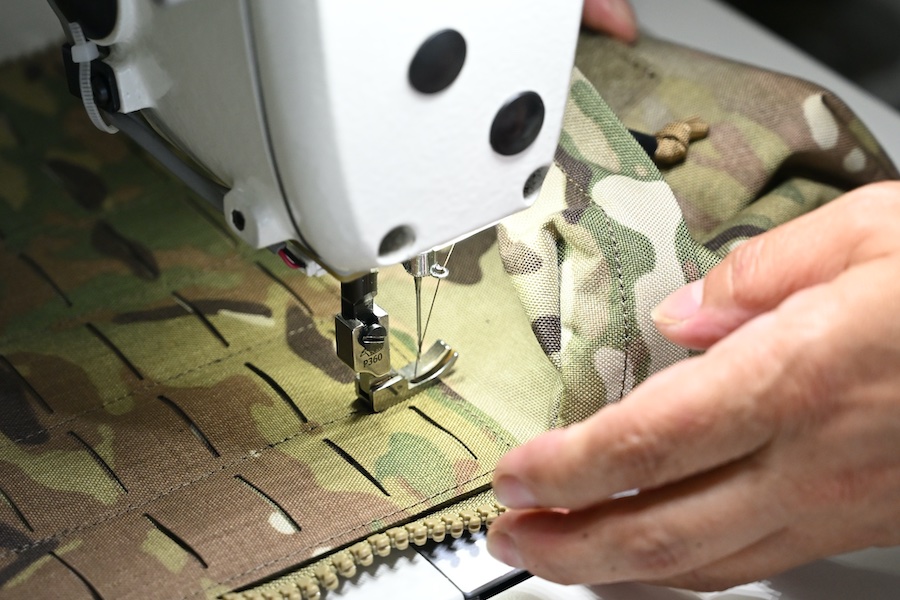
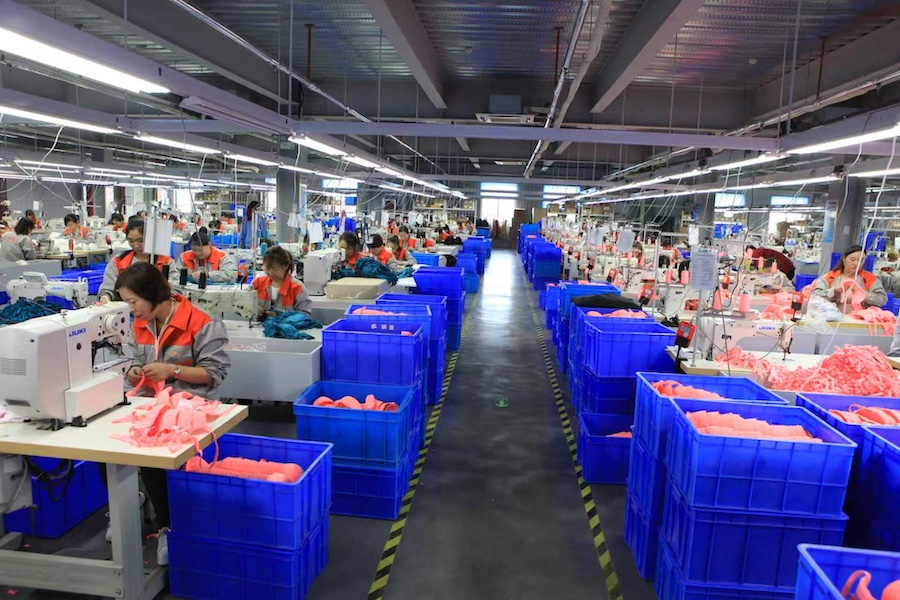
A made-to-measure womenswear manufacturer, BMC is known for its revolutionary on-demand business model, providing customized garments through onshore production to improve sustainability and profitability. All products are sold prior to manufacturing, minimizing fabric waste and excess inventory, which greatly reduces costs. By adopting this model, BMC also gains agility in helping its customers respond to sudden changes in consumer demand, tastes, and preferences. “Our aim is to provide a viable alternative to the traditional supply chain by reducing manufacturing time from months to minutes,” says J. Kirby Best, Chief Executive Officer, Bespoke Manufacturing Company.

BMC has selected Lectra’s Gerber Z1 cutter and Gerber AccuMark CAD system to power its iCreate.Fashion platform, which serves as the backbone of its on-demand factory. This technological ecosystem incorporates a digital printing solution, the Kornit Presto, and Lectra’s AccuMark 2D, AccuMark Made-to-Measure solutions, as well as the GERBERcutter® Z1 allowing BMC to go from designing to printing and cutting and sewing within minutes, without facing the risk of errors. With Lectra’s solutions, BMC can streamline and automate the on- demand production process, without having to handle complex logistical issues and long lead times. As a result, they can achieve high throughput using less resources and labor, ensure consistent profitability, and expand their business to other regions with the same production model.


“Compared to mass production, the on-demand model is well adapted to fashion’s new normal, as it digitalizes the supply chain, creates minimal waste, and is more agile to meet consumers’ needs. Traditionally, it is a complicated and tedious process, with long lead times. Our Industry 4.0 technology connects the dots to enable more and more trailblazing companies like BMC to adopt this way of manufacturing without any of its inconveniences, thanks to automation. By helping BMC, we are promoting a flexible, responsible manufacturing mindset, which is a step toward the future of the fashion industry. At the same time, we are bridging the gap between profitability and environmental sustainability,” says Lenny Marano, President, Americas, Lectra.

More News from Lectra Deutschland GmbH

#Industry 4.0 / Digitalization

Lectra launches Apogy with agentic AI for fashion product development

Lectra has launched Apogy, a new cloud-based solution for fashion product development that combines product data, collaborative workflows and agentic artificial intelligence. The platform is designed to connect the different stakeholders and processes between initial design and production while using AI agents to automate tasks and support decision-making throughout the development cycle.

#Textile processing

Lectra strengthens its partnership with Caron Technology

Lectra announces the strengthening of its industrial alliance with Caron Technology, an Italian company founded in 1993 and specializing in preparation systems operating before the cutting process. This new milestone reflects the strength of a trusted relationship that has grown between the two companies over nearly two decades.

#Industry 4.0 / Digitalization

Mango joins TextileGenesis pioneering traceability solution, a Lectra company, for a transparent value chain

Mango, one of the leading international fashion groups, has joined TextileGenesis, the pioneering traceability solution for the fashion and textile industries, to trace their natural and animal fibers, synthetics, man-made cellulosic fibers and leather. TextileGenesis, a Lectra company, offers a complete and secure cutting-edge technology with its six-dimensional (6D) offering and unique “fiber forwards” approach. Mango, has long been committed to maintaining a fully transparent supply chain, and TextileGenesis will reinforce this commitment.

#Textiles & Apparel / Garment

New Retviews study by Lectra: the luxury market in 2025, between margin protection strategies and new iconic pieces

After more than a decade of uninterrupted growth, the luxury fashion market is now experiencing a more pronounced slowdown. Global luxury goods sales have fallen from €369 billion in 2023 to €364 billion in 2024 (according to Bain & Co.), exposing the vulnerabilities of a model long supported by aggressive price increases.

More News on Software

#Industry 4.0 / Digitalization

Coats Digital wins SaaS award for AI in apparel manufacturing

Coats Digital has been named Best Company in AI-Powered Fashion Technology at the 2026 Best in SaaS Awards. The company’s AI applications cover garment costing, the analysis of operational data and the use of computer vision to study how tasks are performed on the factory floor.

#Industry 4.0 / Digitalization

White House reduces production planning time by up to 80% with Coats Digital’s FastReactPlan

Indian garment manufacturer White House has reduced its production planning cycle by 60–80% following the implementation of Coats Digital’s FastReactPlan software. The integrated planning solution provides greater visibility across production, capacity and material requirements while supporting faster decision-making and improved delivery performance.

#Software

UNIFEQ Europe adopts Coats Digital’s GSDCost and AI-powered GSDQuest to support rapid growth

Coats Digital is pleased to announce that rapidly growing Polish defence and uniform manufacturer UNIFEQ Europe Sp. z o.o. has invested in its award-winning GSDCost solution together with its AI-powered GSDQuest platform to establish a consistent approach to garment costing, improve sewing-floor productivity and accelerate labour costing for tenders and new products.

#Industry 4.0 / Digitalization

Orient Rongheng connects production planning across China and Bangladesh with FastReactPlan

Chinese apparel manufacturer Orient Rongheng is implementing Coats Digital’s FastReactPlan to digitalize production planning across its manufacturing operations in China and Bangladesh. The project aims to connect capacity, materials and order planning across multiple factories while integrating these processes with the company’s existing ERP and Manufacturing Execution System (MES).

Latest News

#Textile processing

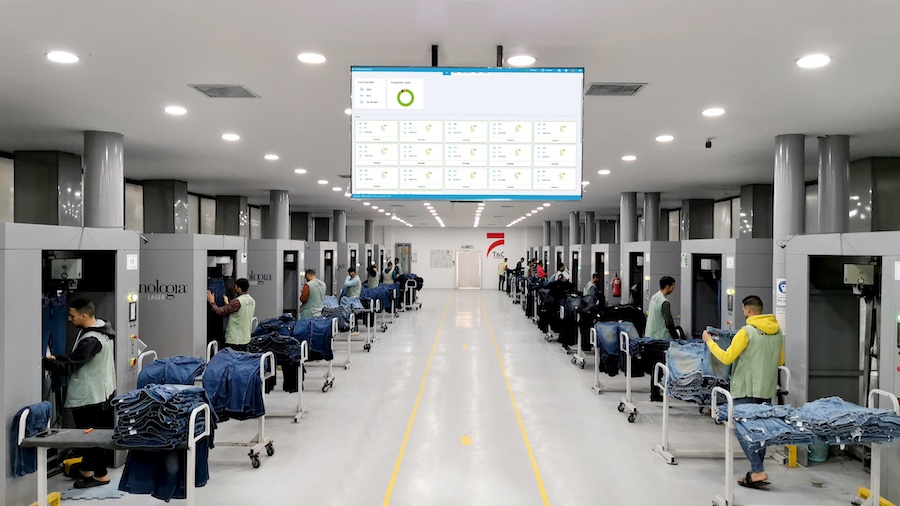
Jeanologia combines digitalisation, laser and ozone technology to strengthen China’s textile competitiveness

At ITMA Asia + CITME 2026 in Shanghai, Jeanologia showcased how the combination of digitalisation, laser technology and G2 Ozone can help China’s textile industry improve productivity, speed, quality and efficiency. With its Compact Super Flash laser system and integrated production concepts, the Spanish technology specialist demonstrated how connecting product development and industrial production can enable faster, more automated and sustainable manufacturing processes.

#Textile chemistry

Flame protection and OEKO-TEX® certification: Gulec Chemicals clears an important hurdle

Three halogen-free flame retardants from German specialist Gulec Chemicals have been included in the OEKO-TEX® list of accepted Active Chemical Products (ACP). The listing opens up additional opportunities for textile finishers, coaters and manufacturers of technical textiles seeking to combine demanding fire protection requirements with certification according to OEKO-TEX® STANDARD 100.

#Dyeing, Drying, Finishing

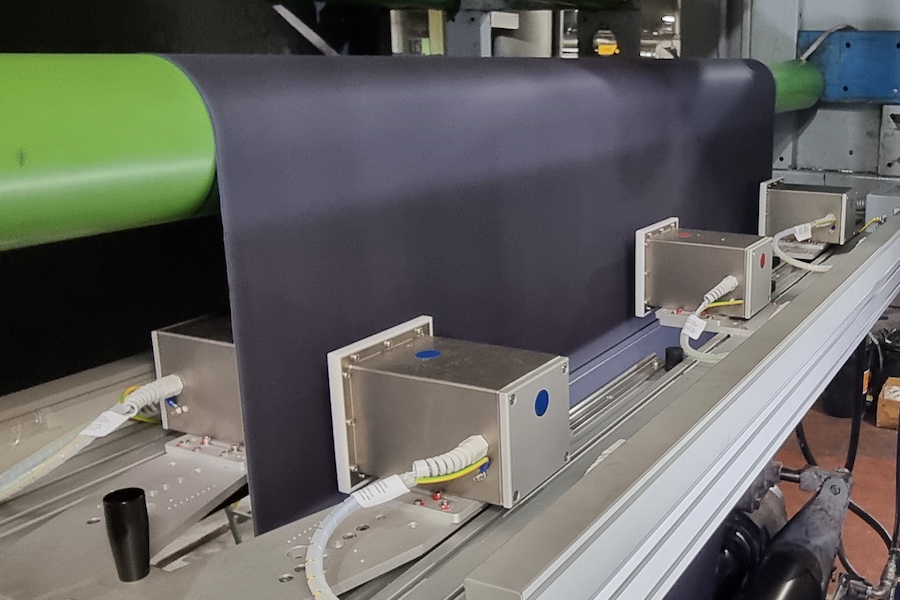
PLEVA improves dyeing consistency with inline microwave measurement of liquor pick-up

Consistent shades are essential in continuous textile dyeing. Yet variations in fabric absorbency or uneven padder pressure can go unnoticed until the end of the line. By then, hundreds of metres of fabric may already be affected and may become second-choice or rejected.

#Recycling / Circular Economy

DITF establishes CYCLOTEXUM recycling center to advance mechanical and solvent-based textile recycling

As part of the CYCLOTEXUM research project, the German Institutes of Textile and Fiber Research Denkendorf (DITF) established the CYCLOTEXUM recycling center. There, in collaboration with industry partners, the center develops application-oriented solutions for mechanical and solvent-based recycling processes. The technologies developed make a significant contribution along the textile value chain toward the efficient use of textile resources in the future and the transition of production in the German textile sector to a circular economy. The project was funded by the Ministry for the Environment, Climate and Energy Sector of the State of Baden-Württemberg.

TOP