[pageLogInLogOut]

#Research & Development

Next-generation sustainable carbon fibers: versatile, high-performance and economical
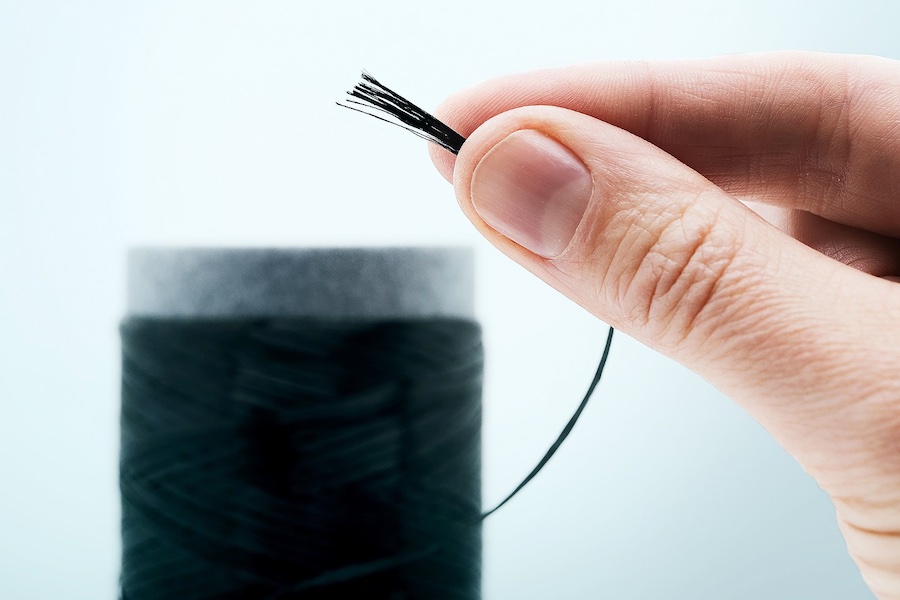
Whether in hydrogen tanks, batteries, fuel cells or for shielding sensitive electronics – carbon fibers are used in a wide range of advanced applications. At the Potsdam Science Park, the Fraunhofer Institute for Applied Polymer Research IAP, in collaboration with Brandenburg University of Technology Cottbus-Senftenberg, is developing novel carbon fibers based on cellulose.
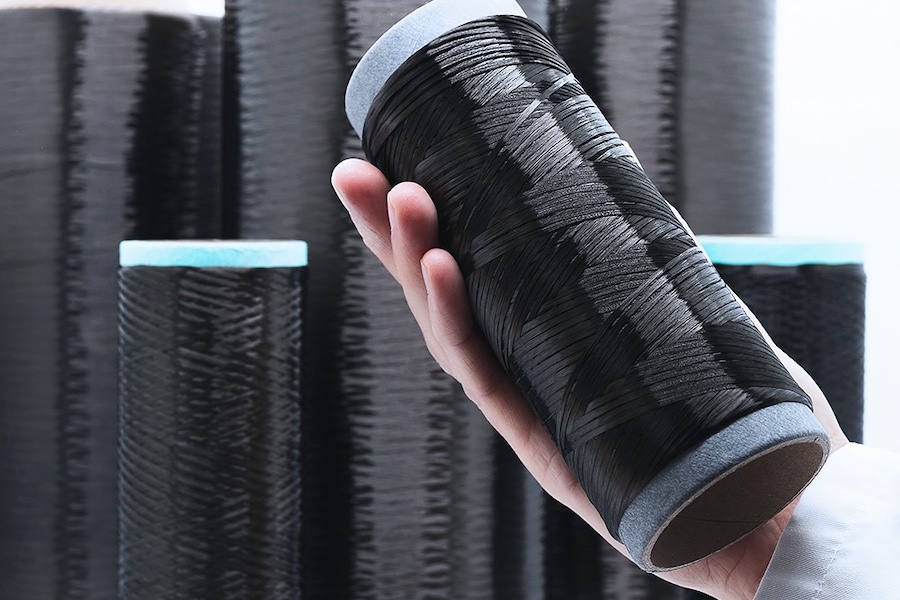
Ultra-thin and high-performance: The bio-based carbon fibers developed at the Fraunhofer IAP can reach diameters well below four micrometers. Their mechanical, electrical and thermal performance matches that of conventional petroleum-based carbon fibers. © 2025 Fraunhofer IAP / Kristin Stein

These fibers combine structural diversity, high electrical, thermal and mechanical performance with sustainability. The project is part of the Carbon Lab Factory Lausitz and is funded by the German Federal Ministry for Economic Affairs and Energy. It is intensively supported by the Wirtschaftsregion Lausitz GmbH.

More than lightweight construction: carbon fibers for alternative high-tech applications

Traditional carbon fibers, such as those used in lightweight construction, are usually made from the petroleum-based polymer polyacrylonitrile (PAN). Their production is complex, energy- and resource-intensive, and generates large quantities of toxic by-products. Pitch-based carbon fibers, another petroleum-derived type with excellent electrical and thermal properties, are highly technically demanding and costly to produce.

The Fraunhofer IAP is addressing these challenges with a new generation of high-performance carbon fibers – bio-based and sustainable. They combine structural variability with customizable properties and an attractive environmental and economic profile. Their applications go far beyond lightweight construction for aerospace, defense, wind energy or medicine: as a component in batteries and fuel cells, they can serve as electrical and thermal conductive, chemically stable fabrics. They are also ideally suited for shielding sensitive electronics.

High variability through spinning processes and additives

The innovative approach of the Fraunhofer IAP uses cellulose as a renewable raw material for precursors – the starting material for carbon fibers. Precursor fibers can be spun into continuous filaments using established industrial spinning technologies such as the viscose or Lyocell processes, as well as alternative shaping methods. Additives such as lignin, which like cellulose is derived from wood, can be incorporated directly into the spinning solution, significantly boosting the carbon yield during subsequent conversion to carbon fibers.

A key advantage of cellulose is that the structure of the precursor fibers – and thus the resulting carbon fibers – can be precisely controlled through the selected spinning process and parameters. This results in various degrees of orientation and crystallinity, as well as fiber cross-sections – for example, round, oval or lobulated. The latter one offers a particularly high specific surface area and is therefore suitable for use in conductive, porous structures for permeable electrodes in redox flow batteries or gas diffusion layers in fuel cells.
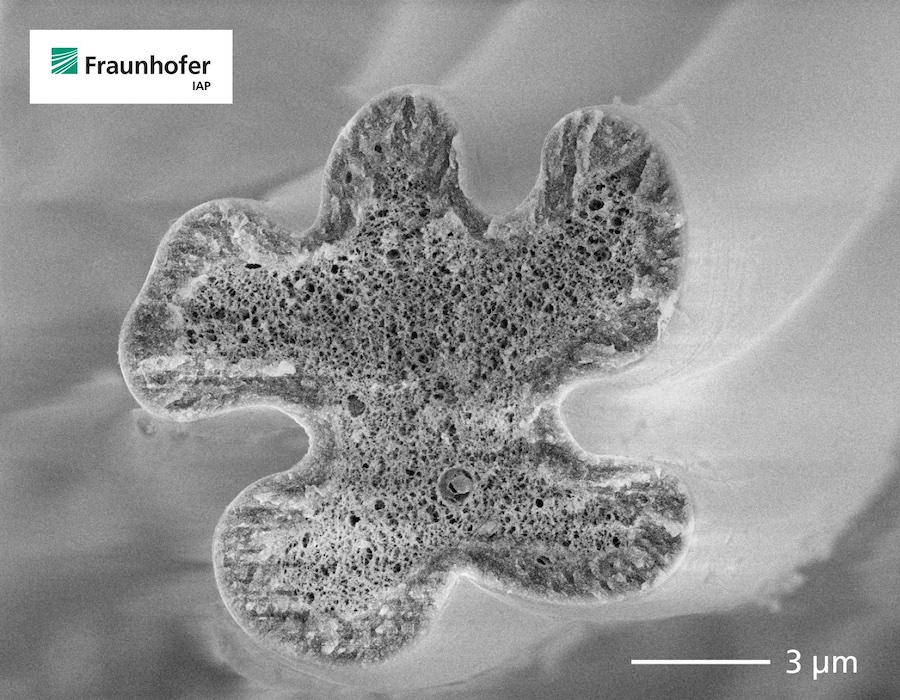
Freshly spun cellulose fiber with a lobulated cross-section under the scanning electron microscope (cryo-transfer SEM). The porous structure becomes denser during drying, the shape is retained during carbonization. © 2025 Fraunhofer IAP


Catalysis makes bio-based carbon fibers competitive

The endless spun cellulose fibers then pass through an aqueous bath containing functional additives or catalysts. This step activates the material for the subsequent thermal conversion into carbon fibers. Here, the cellulose fiber has a special advantage: it behaves like a sponge, efficiently absorbing the additives from the bath. The system of catalysts and additives developed by Fraunhofer IAP lowers the carbonization temperature by more than 1,000 °C, accelerates the process, and increases the yield from 15 to 45 percent by weight.

By specifically optimizing process parameters – such as temperature, residence time or mechanical stretching – during carbonization, fiber diameters well below four micrometers can be achieved. This is particularly relevant for fuel cells. By comparison: commercial fibers typically measure around seven micrometers in diameter.

Customized high performance – mechanical, electrical, thermal

The combination of spinning, activation and carbonization technologies allows the development of customized fiber types for a wide range of applications. Dr. Jens Erdmann, expert for bio-based carbon fibers at the Fraunhofer IAP, emphasizes: "Our carbon fibers combine high technical performance with sustainability: their mechanical properties are comparable to those of petroleum-based high-modulus PAN carbon fibers – in other words, to those of high-performance carbon fibers. They also show electrical and thermal properties similar to pitch-based fibers."

Carbon Lab Factory Lausitz: a bridge to industrial scaling

Pilot-scale trials at the Fraunhofer IAP demonstrate the great potential of this technology – which is now to be scaled up as part of the "Carbon Lab Factory Lausitz" initiative. The new infrastructure will cover the entire value chain – from raw material via carbon fiber to technical components – in Germany. The initiative was launched jointly with TU Chemnitz and Institute of Lightweight Design and Value-added Management of the BTU Cottbus-Senftenberg and is a cross-federal state project between Saxony and Brandenburg. It supports the development of a globally unique research infrastructure for carbon fibers and thus the structural transformation of the Lausitz region.

Sustainability meets high performance – a growing demand

"We clearly see that interest in sustainable materials is steadily increasing," says Erdmann. "But ecological advantages alone are not enough to succeed on the market – economic performance is also crucial. That’s exactly where we come in: we’ve succeeded in combining ecological responsibility with technical performance and cost-efficiency. The ability to tailor and flexibly adapt the properties of our fibers opens up new fields of application and clear competitive advantages – a decisive step toward economic viability."

More News from Fraunhofer Institute for Applied Polymer Research (IAP)

#Research & Development

Fraunhofer IAP paves the way for "Green" carbon fibers

A new pilot plant in Guben is set to enable the production of bio-based carbon fibers. The plant is part of the Carbon Lab Factory Lausitz and will make an important contribution to the transformation of the Lausitz region—from a traditionally raw material- and basic industry-oriented region to a hub for innovative high-performance materials. The German federal government and the state of Brandenburg are providing the Fraunhofer Institute for Applied Polymer Research IAP with 53.3 million euros for this purpose.

#Research & Development

Sustainable design of Geosynthetics and roof underlayments made from recyclates

Is it possible to recover plastic recyclates from previously unused waste streams in order to produce high-quality fibers and films? How can bio-based polymer fibers be manufactured so as to allow adjustable biodegradability? These are the questions being addressed by researchers from the Fraunhofer Cluster of Excellence Circular Plastics Economy CCPE in the Zirk-Tex project.

#Research & Development

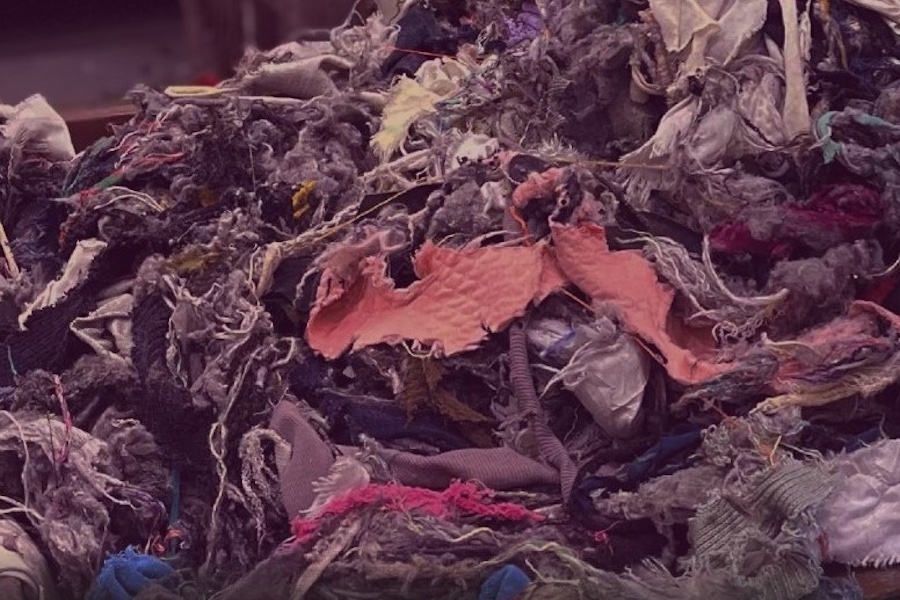
Feasibility study shows potential to convert textile waste into PHB bioplastic

Textile waste could serve as a valuable source of raw materials for sustainable plastics in the future, according to the joint TexPHB feasibility study conducted by the Fraunhofer Institute for Applied Polymer Research IAP, Beneficial Design Institute GmbH and matterr GmbH. The study will be presented to the public for the first time at a network meeting on 25 November 2025 at the State Chancellery in Potsdam.

#Recycling / Circular Economy

Closing the Loop in the Textile Industry: Value Creation in the State of Brandenburg

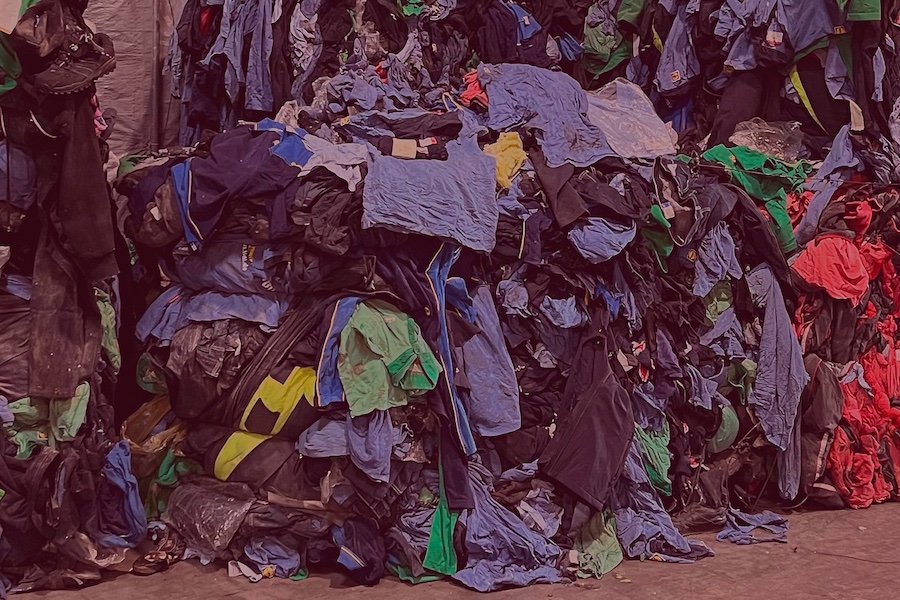
How can the state of Brandenburg benefit from a circular textile industry? This question is addressed in the new policy paper "Closing the loop in the textile industry: Value creation in the state of Brandenburg." Based on the „TexPHB“ feasibility study funded by the Brandenburg Ministry of Climate Protection, it shows how textile waste can be integrated into new value chains.

More News on Research & Development

#Research & Development

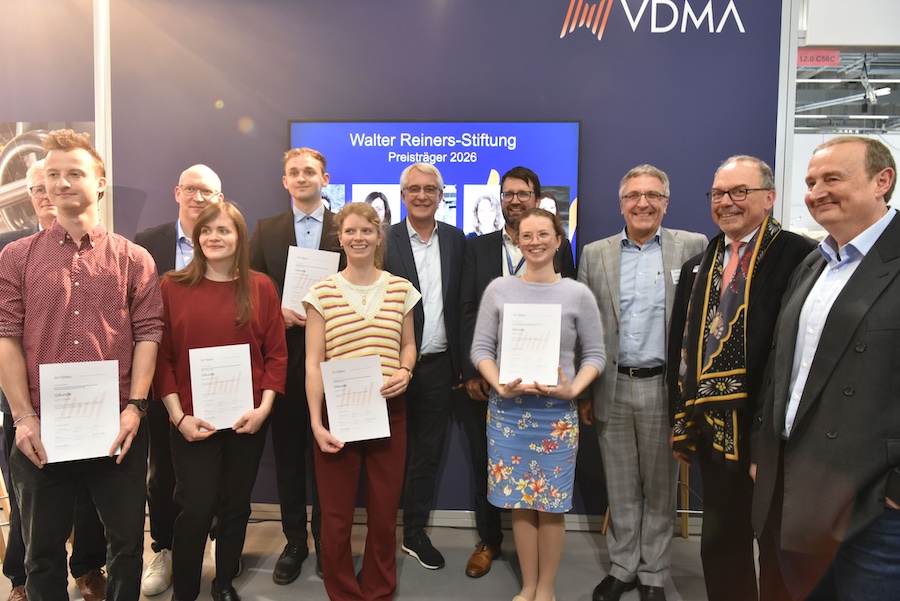
Walter Reiners Foundation Prize awarded to three ITA graduates

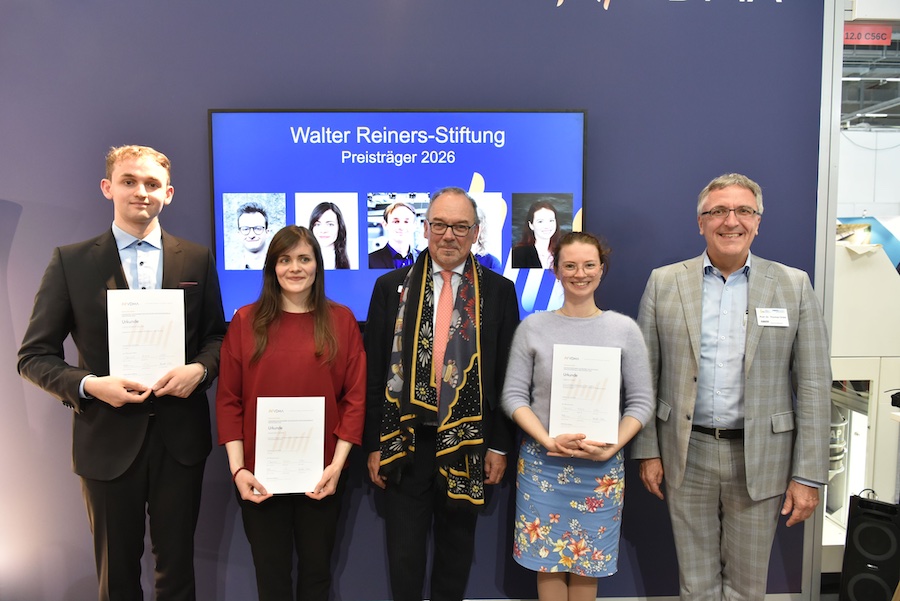
Sabina Dann, Lukas Balon and Annegret Storm from the Institut für Textiltechnik (ITA) of RWTH Aachen University were awarded the Walter Reiners Foundation Prize by the German Engineering Federation (VDMA) for their master’s and bachelor’s theses. Peter Dornier, Chairman of the Walter Reiners Foundation, presented the awards during Techtextil at the VDMA stand in Frankfurt am Main, Germany.

#Techtextil 2026

Young talents honoured – 60 years Walter Reiners Foundation

At the Techtextil trade fair in Frankfurt at the end of April, Peter D. Dornier, chairman of the VDMA’s Walter Reiners Foundation, presented awards to five successful young engineers. Promotion and sustainability awards were presented in the categories of bachelor’s/project theses and diploma/master’s theses. Academic theses are eligible for the sustainability awards if, for example, they develop solutions for resource-efficient products and technologies.

#Research & Development

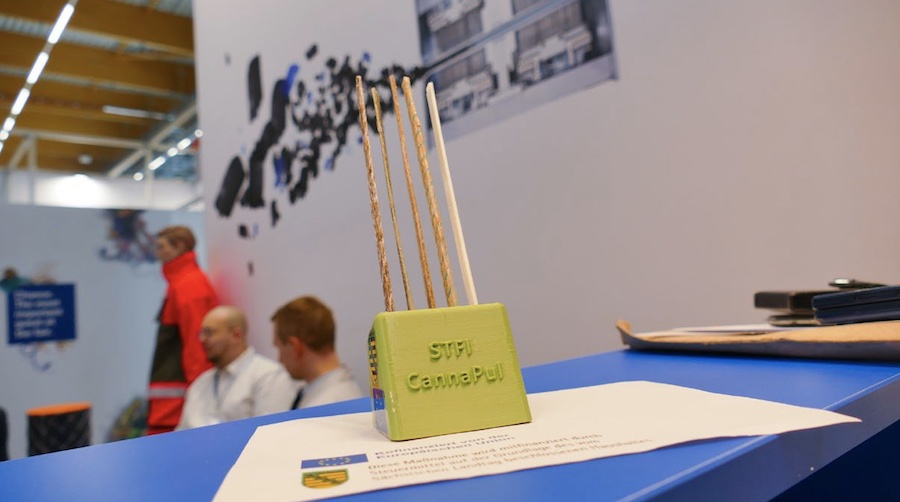
Regional hemp bast for lightweight construction profiles

The cultivation of fibre hemp for the production of ropes and clothing has a long tradition in Saxony. Due to its excellent fibre properties, it is also suitable as a renewable raw material for reinforcement in fibre composites. At the STFI and IWU in Chemnitz, the CannaPul project is cur- rently investigating how a regional value chain for hemp-based lightweight construction profiles can be established. To this end, the technical processing of hemp fibres into continuous fibre strands and their embedding in a suitable bio-based matrix are being investigated.

#ITMA 2027

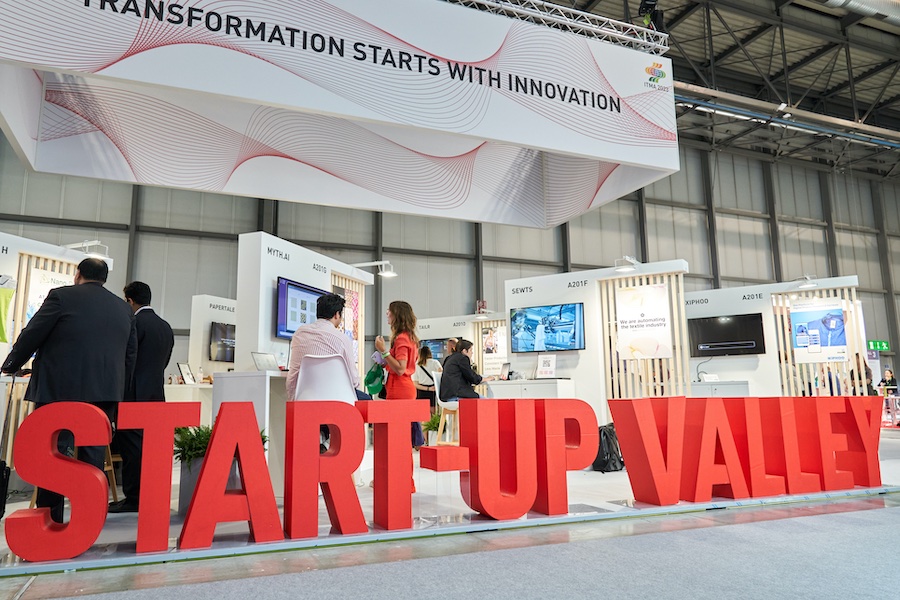
ITMA 2027 opens Start-Up Valley applications following success stories from 2023

Following several high-profile success stories emerging from the Start-Up Valley at ITMA 2023, applications are now open for young companies wishing to participate in the initiative at ITMA 2027.

Latest News

#ITM 2026

ITM 2026: KARL MAYER presents new perspectives

KARL MAYER will once again showcase itself as a strong partner to the Turkish textile industry at ITM in Istanbul from June 9 to 13. At Booth 303 A in Hall 3 of the Tüyap Fair Convention and Congress Center, the industry leader will exhibit solutions for warp knitting, warp preparation, and technical textiles – tailored to a challenging economic environment.

#Spinning

Specialist in fine counts: New type 2777 ceramic oiler

With the new Type 2777 ceramic oiler, Barmag has added a solution for fine titers and microfilaments to its portfolio of original parts.

#INDEX 2026

STFI highlights textile circular economy and alternative fibres at INDEX™ 2026

From 19 to 22 May 2026, INDEX will invite visitors to Lake Geneva for the world's leading nonwovens trade fair. The Centre of Excellence in Nonwovens at the Sächsisches Textilforschung- sinstitut e.V. (STFI) will be in attendance to present the latest developments in nonwovens research. In the field of the textile circular economy, the STFI will present acoustically effective nonwovens made from chemical recycling residues. The range also includes innovations aimed at replacing conventional raw materials, such as the biobased and biodegradable polymer polybutylene succinate (PBS) and Kendyr as an alternative to cotton.

#Associations

Italian textile machinery sector faces weak start to 2026 despite domestic growth

In the first quarter of 2026, order intake for Italian textile machinery manufacturers recorded a decrease of 5% compared to the same period in 2025, reflecting a still challenging start to the year. The decline affected foreign markets (-7%), while the domestic market showed growth (+21%).

TOP