[pageLogInLogOut]

#Research & Development

HSNR students show their own collections at Neo.Fashion Berlin

Nine graduates from the Faculty of Textile and Clothing Technology present their collections at Neo.Fashion in Berlin.

Nine graduates from the Faculty of Textile and Clothing Technology at Hochschule Niederrhein (HSNR) present their collections at Berlin Fashion Week. Every year at Neo.Fashion, graduates have the chance to give an insight into their creative work. This year, Neo.Fashion runs from July 2 to 3.

The HSNR graduates attach great importance to innovation and sustainability. During their studies, the diverse practical work in the technical centers and laboratories enables them to design fashion and textiles along the entire textile value chain.

In keeping with the title of her collection "skinsitive - pure cotton", Anna Reintges (Bachelor Design Engineer Fashion) focused on particularly skin-friendly lingerie loungewear made from pure organic cotton. Even components such as the strap adjusters and elastic bands are made from organic cotton or natural rubber, making the entire collection biodegradable and vegan.

Florian Schilder's (Bachelor Design Engineer Fashion) collection "Form Follows Flora" aims to raise awareness for endangered plant species. In doing so, he focuses on man's fascination with nature and reflects on the effects of its exploitation. His cuts, patterns and materials are inspired by endangered plants. Monochrome pieces imitate eucalyptus leaves, drapes embody iris flowers and folds mimic leaf structures.

Kerstin Greul's (Bachelor Design Engineer Fashion) collection is called "Reworked Radiance" and is primarily designed for menswear. She has breathed new life into used items of clothing through upcycling, combining old material with new elements. Lacing and cut-outs create an avant-garde look with designs that are sustainable and trend-conscious.

Leonie Bachstädter (Master Textile Products - Design) has created six outfits for her "PHYGITAL WEAVE" line. She expresses the interweaving of two realities: physical trade and virtual design processes. Renderings of textile surface textures, reflections and drapery are printed on organza or woven on jacquard. Leonie Bachstädter also worked exclusively with flawed leather, creating suits, dresses and a coat with 3D-printed buttons and ear protection accessories.

Tatjana Reider (Master Management of Textile and Trade Technology) used a color that alternates between blue and purple for her garments to match the title "BAD MOON RISING". The gender-neutral collection combines classic silhouettes with futuristic accents such as design elements made of transparent fabrics.

Nora Abdel Hadi (Bachelor Design Engineer Fashion) fuses different styles within the black scene - inspired by fashion, music and philosophy of life. Under the title "In the Realm of Shadows", she has designed a line for everyday wear and one for special occasions for the spring/summer season. The result is seven outfits, each consisting of at least three individual pieces, which can be combined as desired.

In Naahal Sanatigar's (Bachelor Design Engineer Fashion) collection "knock knock. who's there? its'you! who's you?", psychology meets fashion. She reflected on different phases of her life. In the fashionable realization of emotions such as security or fear, six outfits were created, each representing a stage of her personality development and including silhouettes ranging from flowing to body-hugging. She worked with water-based digital printing on cotton and "cameo printing".

In "I'll be your mirror", Lisa Opitz (Bachelor Design Engineer Fashion) contrasts the grandparent and grandchild generation. Using family photos as a foundation course, she worked out the stylistic means of the baby boomer generation. Elements of clothing from the past were emphasized and reinterpreted by incorporating current Generation Z trends.

Sophie Plöttner (Bachelor Textile and Clothing Technology - Product Development) and Lisa-Marie Brodka (Bachelor Design Engineer Textile) are competing as a team in Berlin. With their collection "DEAR JANUS" - named after the Roman god Janus, who looks to the future and the past - they present contrasts in cut, color, shape and style. The two graduates combine traditional trade with state-of-the-art AI technology. Codes become brushstrokes, prompts become images. The cut design is based on an experimental approach and free draping. The duo will also be taking part in the Best Graduates Show at this year's Neo.Fashion.
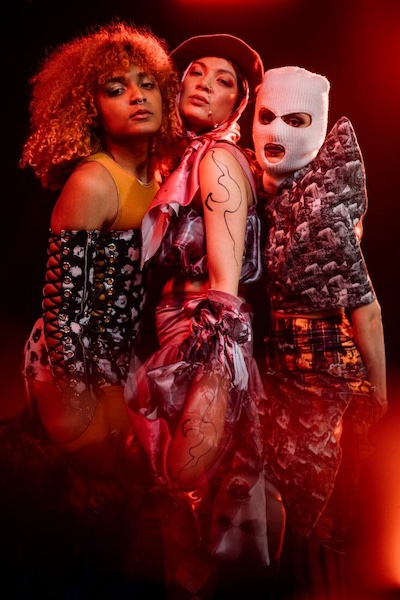
Sophie Plöttner and Lisa-Marie Brodka from HSNR even show their collection
Sophie Plöttner and Lisa-Marie Brodka from HSNR even show their collection "DEAR JAUNUS" at the Best Graduates Show of Neo.Fashion in Berlin © 2024 HSNR


More News from Hochschule Niederrhein (HSNR)

More News on Research & Development

#Research & Development

Sustainable athletic wear made from bio-based Polyethylene

Conventional sports textiles made from petroleum-based synthetic fibres are to be replaced in the future by sustainable, bio-based, cooling textiles. Polyethylene, previously used mainly in the packaging industry, is thus qualified for use in textiles and, as a bio-based drop-in solution, offers a cost-effective, sustainable alternative for the future.

#Research & Development

Innovation center for textile circular economy inaugurated

Just over eight months after the foundation stone was laid, the new Innovation Center for Textile Circular Economy was officially inaugurated today at TITK Rudolstadt. Thuringia's Minister President Mario Voigt, TITK Director Benjamin Redlingshöfer, and other guests of honor cut the ribbon to the modern building complex and viewed the premises, which are now ready for occupancy. The “DICE – Demonstration and Innovation Center for Textile Circular Economy” is TITK's largest single investment to date. The Free State of Thuringia supported the total cost of €11.5 million with €8 million in GRW and FTI funding.

#Research & Development

Sustainable design of Geosynthetics and roof underlayments made from recyclates

Is it possible to recover plastic recyclates from previously unused waste streams in order to produce high-quality fibers and films? How can bio-based polymer fibers be manufactured so as to allow adjustable biodegradability? These are the questions being addressed by researchers from the Fraunhofer Cluster of Excellence Circular Plastics Economy CCPE in the Zirk-Tex project.

#Research & Development

India, ITA and innovation – enhanced cooperation in research, implementation and bilateral projects such as hydrogen mobility

The Indian Consul General, Dr Shuchita Kishore, visited the Institut für Textiltechnik (ITA) of RWTH Aachen University on 15 December to inspect the joint project between the ITA, the Indian Institute of Technology (IIT) Bombay and industrial partners from India and Germany and to tour the ITA.

Latest News

#Fabrics

MUNICH FABRIC START: Between Attitude and Sensuality

The future begins where we reimagine it. After seasons of restraint, Spring.Summer 27 marks a conscious counter-trend: optimism, sensuality, and creative freedom are replacing pragmatism and neutrality. Physical presence and individuality are regaining importance – as a response to uncertainty, exhaustion, and algorithmic predictability. The overarching theme of PLEASURE stands for fashion as an emotional space, as an expression of attitude and cultural reflection. Colours, surfaces, and materials become vehicles for self-confidence and joie de vivre.

#Denim

organIQ seek: smart alternative to potassium permanganate

CHT Group announces new technical findings within its organIQ seek platform that significantly advance the transition toward permanganate-free denim bleaching. Through extensive industrial testing and application research, CHT confirms that organIQ seek can now be used with remarkable effectiveness as a substitute for potassium permanganate in spray bleach, while remaining aligned with sustainability expectations and cost realities in the European market. At the COLOMBIATEX in Medellín as well as at the Exintex in Puebla and the Kingpins Show in Amsterdam the CHT Group will present organIQ seek as an alternative to potassium permanganate.

#Functional Fabrics

PERFORMANCE DAYS: Focus topic shifts to the beginning of the value chain

Following the last Focus Topic in October 2025, which placed Textile-to-Textile Recycling at its core, PERFORMANCE DAYS continues to drive the conversation around circularity – this time with an expanded and more upstream perspective. The upcoming Focus Topic, “Textile to Textile: The Role of Collectors and Sorters,” presented during the spring edition on March 18–19, will spotlight one of the most essential yet often overlooked components of a functioning circular textile system: the efficient collection and sorting of post-consumer textiles.

#Knitting & Hosiery

Proven performance, optimised costs – the new RE 6 EL

Nowadays textile companies increasingly need to produce small production runs and respond to market changes with instantaneous pattern changes in order to operate profitably – meaning they require machines that offer maximum flexibility, reliability and cost efficiency. KARL MAYER understands the challenges of the market and is launching its new RE 6 EL. The Raschel machine offers the core strengths of the classic RSE 6 EL and essentially the same performance parameters, but has been further cost-optimised largely due to local production advantages. This makes the newcomer an efficiency champion in production, especially when it comes to frequent pattern changes.

TOP