[pageLogInLogOut]

#Research & Development

PhD student receives Peter Dornier Foundation Prize for new findings on reducing noise and surface heat in aircraft and space capsules
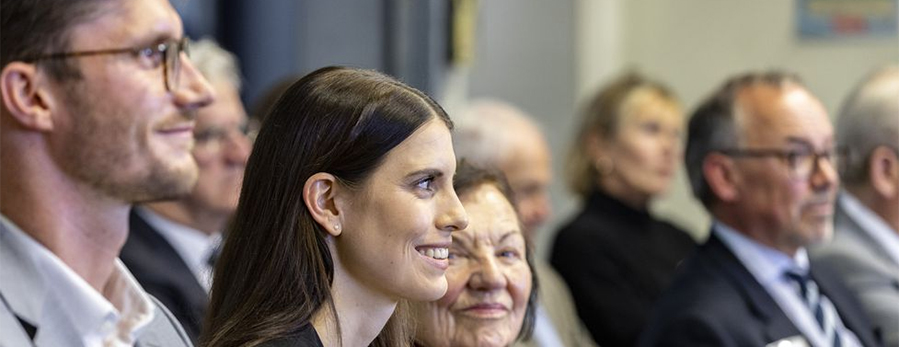
Prize winner of the Peter Dornier Foundation Prize endowed with 5,000 euros Lara De Broeck (left) together with Foundation Chair Maja Dornier (right) © 2023 Lindauer DORNIER
The scientist Lara De Broeck has been honoured with the Peter Dornier Foundation Prize 2023. The PhD student from TU Darmstadt is awarded the prize for her work investigating the influence of the surface structures of aircraft and spacecraft on their noise emission and surface temperature. Her findings could help to reduce the noise of aircraft and the high surface temperatures of space capsules when re-entering the Earth's atmosphere.

When an object moves through the air, a physical phenomenon called boundary layer flow occurs close to its surface. It appears on the wings of aircraft as well as on the outer walls of space capsules on re-entry into the Earth's atmosphere; it also forms on the surface of wind turbine blades, cars and trains. "The boundary layer flow is only a thin area, but it is crucial for many flow phenomena," explains Lara De Broeck. The young scientist at the Chair of Fluid Dynamics at TU Darmstadt studies such flow phenomena in boundary layer flow. Her research also deals with the question of how the surface properties of aircraft and space capsules affect boundary layer flow.
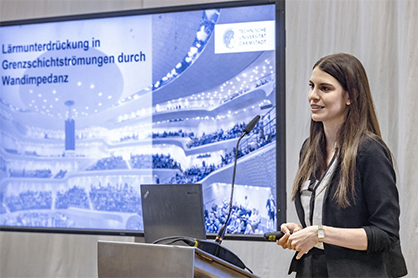
Prize winner Lara De Broeck presenting her Master's thesis © 2023 Lindauer DORNIER


For her work on the influence of surface structures on boundary layer flow and how these can be used specifically to reduce noise and friction in aircraft and spacecraft, PhD student De Broeck received the Peter Dornier Foundation Prize 2023 at the end of October. The jury of the prize, which is endowed with 5,000 euros, thus honoured the 31-year-old's Master's thesis entitled "Noise suppression in boundary layer flows through optimised acoustic wall impedance". During her acceptance speech at the technical centre of the Lindau DORNIER in front of around 100 invited guests, award winner De Broeck said: "I am truly honoured and very pleased that the jury of the Peter Dornier Foundation Prize has awarded an analytical fundamental work like mine."

Analytical preparatory work for aerospace companies?

In her Master's thesis, De Broeck was able to derive "for the first time" an analytical equation for the mentioned problem description, explains her doctoral supervisor Prof. Dr.-Ing. Martin Oberlack from TU Darmstadt. According to De Broeck, her analytical calculations could provide fundamental insights into how aerospace companies in the future can design, for example, the inner walls of aircraft turbines or the outer walls of space shuttles in such a way that acoustic and thermal disturbances in the boundary layer flow are even better damped. "This could reduce the noise and frictional resistance of aircraft, space capsules and other high-speed vehicles" says De Broeck.

Noise protection was an important topic for founder Peter Dornier

?In her laudatory speech, the Chairwoman of the Peter Dornier Foundation, Maja Dornier, said that De Broeck's Master's thesis deals with a topic that was very close to the heart of the foundation’s founder, Peter Dornier (1917-2002): "Pleasant sounds were important to him throughout his life - this included classical music in his study as well as questions of noise protection in the construction of new aircraft and weaving machines." For the mechanical engineer and aircraft designer, who founded the machine and plant manufacturer Lindauer DORNIER in 1950 and led it successfully for many decades, questions of acoustic quality in the design of new aircraft, machines and plants were of great importance. As early as the 1950s, when the family-owned company DORNIER had just entered the weaving machine manufacturing business, Peter Dornier designed the "encapsulated" weaving machine. Because at that time it could be as noisy in a weaving mill as on the tarmac of an airport, he wanted to protect the operating personnel from the machine noise with the idea of an encapsulated – i.e. housed – weaving machine. DORNIER, today Germany's largest weaving machine manufacturer, later realised the encapsulated weaving machine together with a world-leading weaving mill in Italy.


Award-winning work could improve heat protection of space capsules?

The findings from De Broeck's Master's thesis could also help in the future to reduce the frictional resistance on the surface of space capsules during re-entry into the atmosphere and thus reduce surface heating. In spaceflight, re-entry into the Earth's atmosphere is considered an extremely critical phase. Here, the capsules reach speeds of up to 30,000 kilometres per hour. The outside temperatures rise to over 2500 degrees Celsius. By comparison: lava is 700 to 1200 degrees Celsius hot.

To withstand these temperatures, the space capsules are equipped with special heat protection tiles. These are often made of glass fibre composites, which are also produced on DORNIER air-jet and rapier weaving machines. "If it is possible to adapt the surface structures of space capsules in such a way that they generate less friction and thus less surface heating, material could be saved on the heat protection tiles," De Broeck explained. How this can be achieved motivated her to write her Master's thesis, De Broeck said, because such a weight saving could increase the payload of space capsules. Interesting side note: The parachutes on which space capsules glide safely to earth are also woven on DORNIER weaving machines.

Famous equations from mathematics as basis for Master's thesis

?For the calculations in her Master's thesis, which was awarded the Peter Dornier Foundation Prize, De Broeck also uses simplifications of the famous Navier-Stokes equations. These equations, named after the mathematicians Claude Louis Navier and George Stokes, serve to describe flows and are among the most important equations in fluid mechanics. They are used in calculations for the aerodynamics of aircraft as well as for weather and climate forecasts. Moreover, they are among the so-called "millennium problems" – seven unsolved mathematical puzzles for whose solution the Clay Mathematics Institute offered a prize of one million dollars each in the year 2000.
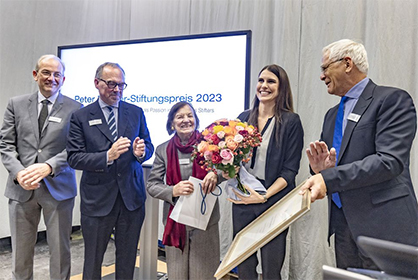
Peter Dornier Foundation Award 2023 ceremony – Prof. Dr.-Ing. habil. Martin Oberlack (supervisor), Peter D. Dornier (foundation board), Maja Dornier (chairwoman of the foundation board), Lara De Brock (winner), Prof. Dr. Wolf Mutschler (foundation board) © 2023 Lindauer DORNIER


De Broeck, who committed herself privately to helping refugees and schoolchildren during her studies, also attracted interest with her work at the renowned Stanford University. The young scientist was invited there for a research stay co-financed by NASA. According to De Broeck, participants were pleased to be able to complement their own research work with De Broeck's analytical calculations. "It was great to meet leading experts in the field of fluid dynamics and turbulence research whose books you normally only read in your studies," reported De Broeck in a relaxed atmosphere after the award ceremony.

The Peter Dornier Foundation Prize

The idea of the Peter Dornier Foundation Prize goes back to Peter Dornier (1917-2002), founder of Lindauer DORNIER GmbH. Since 2021, the prize has been awarded annually for outstanding scientific work by young people in the fields of textile technology, film stretching technology and composites as well as aviation. Funding medical research is just as much a part of the foundation's purpose as supporting hospices for a self-determined and dignified life until the end.

More News from TEXDATA International

#Recycling / Circular Economy

textile.4U publishes special edition “Top 100 Textile Recycling Companies 2025”

With a comprehensive 176-page special edition, textile.4U is dedicating its latest issue entirely to one of the most dynamic and influential topics in today’s textile industry: textile recycling. The new issue, published exclusively in high-quality print, presents the Top 100 textile recycling companies researched and selected by TexData – organizations that already play a key role in the transition to circular textiles or are expected to have a significant impact in the near future.

#Recycling / Circular Economy

Responsible Textile Recovery Act of 2024 signed by Governor

Senator Josh Newman (D-Fullerton) is proud to announce that Senate Bill 707 (SB 707), the Responsible Textile Recovery Act of 2024, has been signed into law by the Governor of California, Gavin Newsom. This groundbreaking legislation establishes the country’s first Extended Producer Responsibility (EPR) textile recycling program, marking a significant step forward in the state’s efforts to combat waste and promote sustainability.

#Textiles & Apparel / Garment

Modtissimo promotes sustainability with 28 coordinates in the Green Circle

Modtissimo is proving more and more to be a textile and clothing show that delivers the latest innovations in the area of sustainability, with the iTechStyle Green Circle being the main showcase for companies' creations. In this 60+4 edition, taking place on 12 and 13 September, 28 coordinates will be exhibited in a section organised by CITEVE and curated by Paulo Gomes.

#Europe

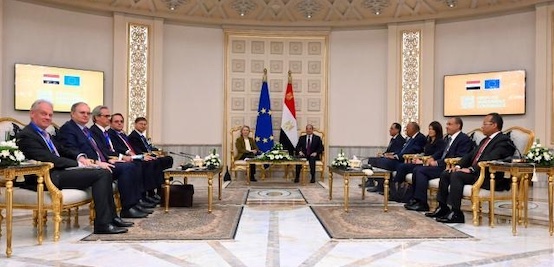
The EU and Egypt team up to mobilise private sector investments at Investment Conference and sign a Memorandum of Understanding underpinning €1 billion in macro-financial assistance for Egypt

At the EU-Egypt Investment Conference, co-organised by the EU and the Government of Egypt on 29-30 June, the EU and Egypt are teaming up to intensify private sector investments in Egypt. They are also signing a Memorandum of Understanding (MoU) for the disbursement to Egypt of up to €1 billion in Macro-Financial Assistance.

More News on Research & Development

#Research & Development

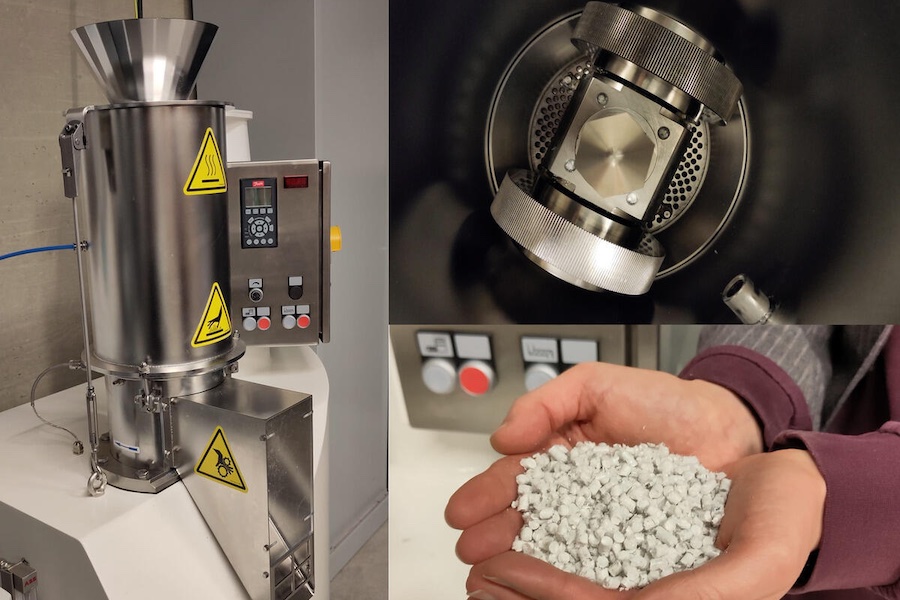
Pellet press enables thermomechanical textile recycling on a pilot scale at ITA

Since the end of 2025, the technical centre of the Institut für Textiltechnik (ITA) of RWTH Aachen University has been equipped with a pellet press from the manufacturer Amandus Kahl GmbH & Co. KG, Reinbek, Germany. This press can efficiently compact shredded synthetic textiles at a throughput of up to 25 kg/h and process them into pellets with a diameter of 4 mm.

#Composites

STFI at JEC

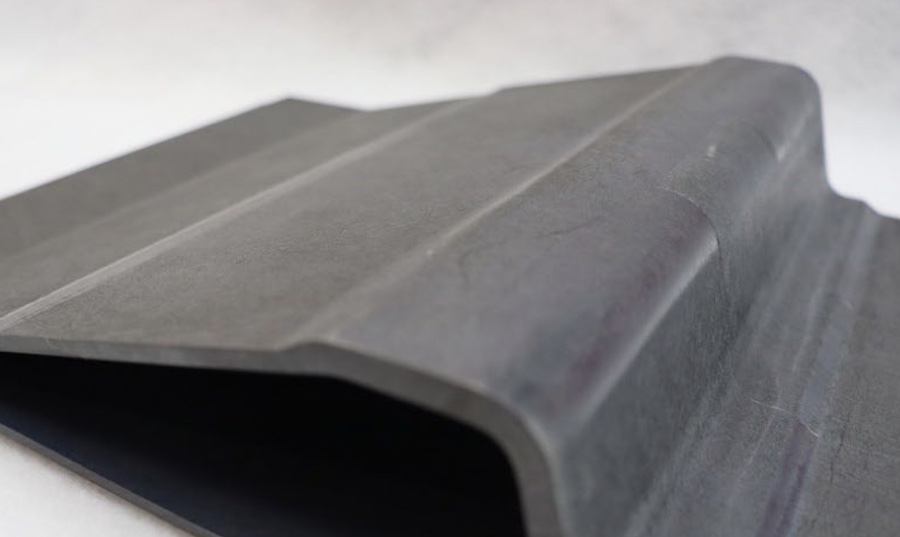
The Sächsisches Textilforschungsinstitut e.V. (STFI) will present composites for aviation made from recycled carbon fibres and natural fibres, as well as printed lightweight elements for surface heating in electric vehicles at JEC World in Paris.

#Research & Development

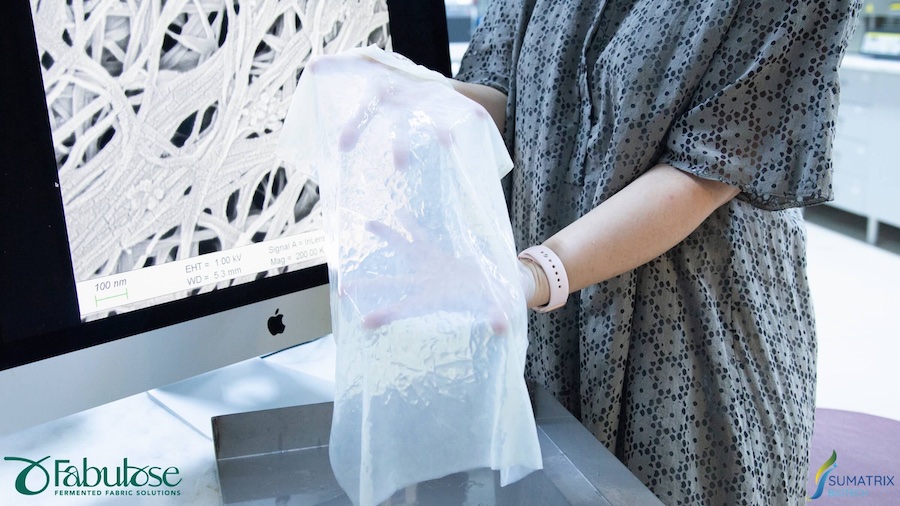
Fabolose: Fabricating vegan and circular leather alternatives from bio-tech-derived cellulose

Fabulose is an EU funded project coordinated by the German Institutes of Textile and Fiber Research (DITF). Its consortium consists of leading research institutes, biotech innovators, and industry stakeholders who aim to create high-performance, biobased and recyclable leather-like fabrics, using efficient biotech production routes for bacterial cellulose, cyanophycin and bacterial pigments

#Research & Development

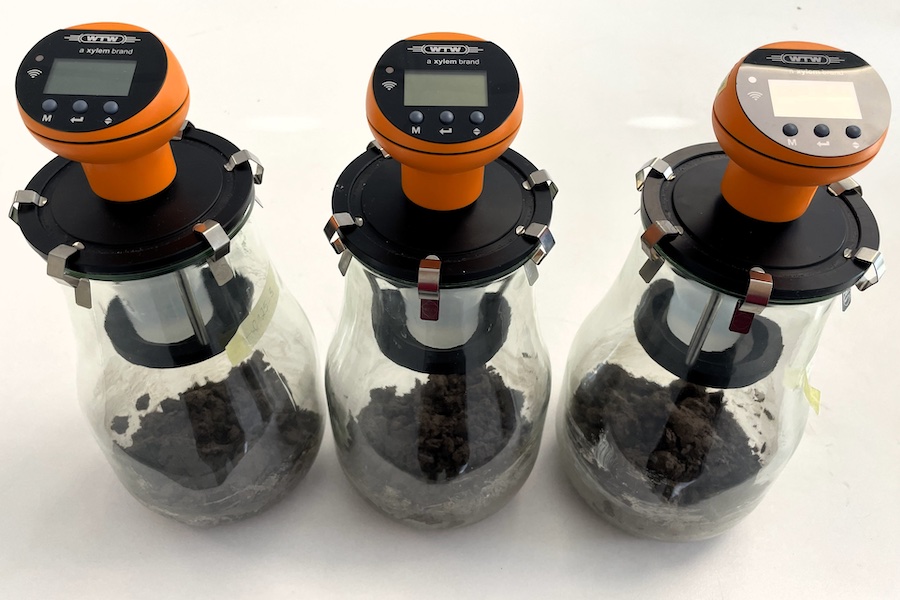
New DIN SPEC assesses environmental impact of textile fragments in soil

Textile products made from synthetic fibres, finished fabrics or dyed materials release fibre fragments into the environment at every stage of their life cycle. With the new DIN SPEC 19296, Hohenstein has developed a standardised testing method to analyse how these fragments behave in soil under natural conditions. Until now, little was known about their environmental behaviour or potential ecological effects once released.

Latest News

#Composites

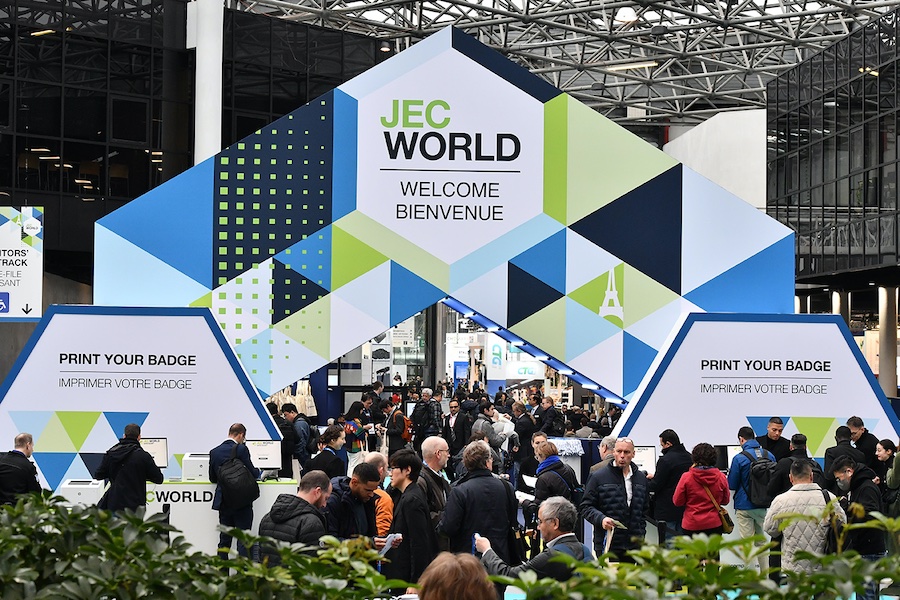
JEC World 2026 returns with an unprecedented content program

Recognized worldwide as the leading trade exhibition for composite materials and their applications, JEC World returns on March 10-12, 2026, at Paris Nord Villepinte as the most ambitious edition to date, in line with its motto “Pushing the limits”. As the must-attend event for the composites industry, JEC World will offer an unprecedented program, blending conferences, markets insights, technical sessions, awards, and above all, a unique experience and invaluable connections.

#Raw Materials

Beyond the wardrobe – innovative cotton takes the spotlight

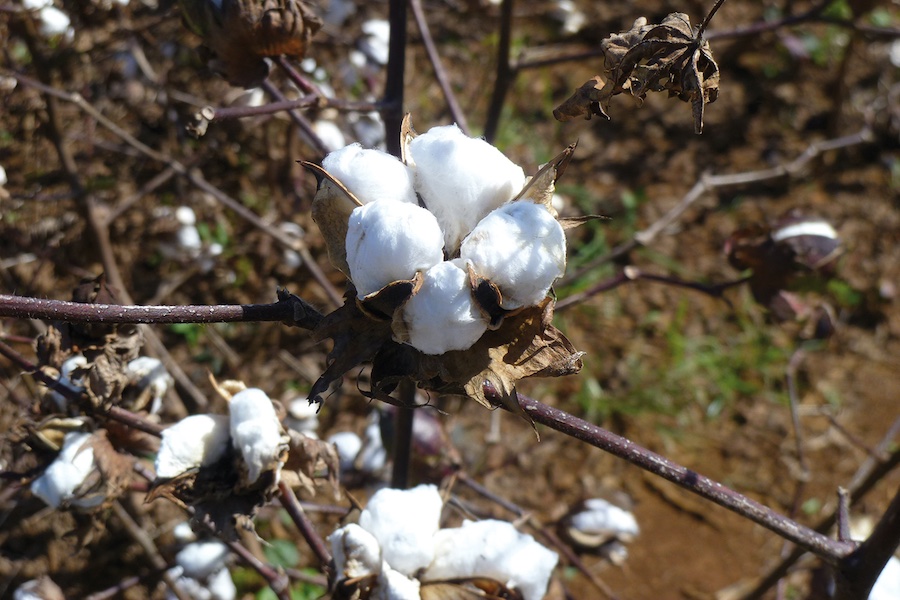
Cotton can do more – a lot more. Cutting-edge textiles and high-tech products made from 100% cotton prove just how powerfully performance and sustainability can come together. That very surge of innovation is front and centre at the 38th Bremen Cotton Conference, taking place March 25–27, 2026, at Bremen’s Parliament on the historic market square – culminating in a bold and dedicated closing session on Friday. In the spotlight: performance upgrades for pure cotton, smart strategies for circular textile waste solutions, and pioneering concepts for demanding technical applications. From natural fibre–reinforced composites to highly effective flame-retardant solutions, cotton steps out of the closet and shows the future potential woven into every fibre.

#Digital Printing

Keeping print inclusive: Empowering women in the print industry

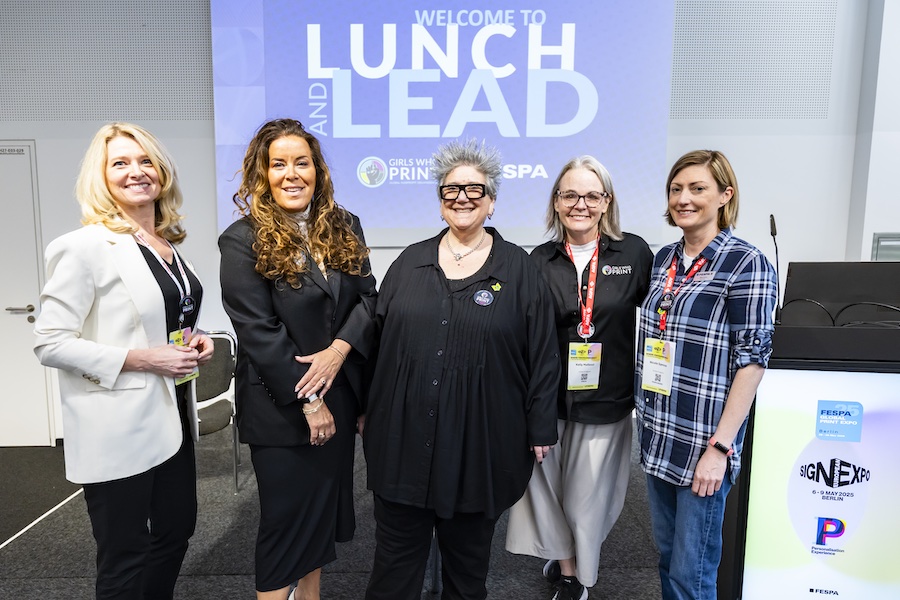
Across all industries, cultivating a diverse and inclusive workplace is increasingly recognised as valuable and essential to long-term success. However, despite the print industry’s significant advancements in technology and innovation, visible representation of women remains limited. As the sector grapples with low recruitment, it’s important to challenge outdated perceptions. Creating real change, however, requires collective effort - no single company can do it alone.

#Texprocess 2026

Texprocess 2026: market overview for strategic future investments

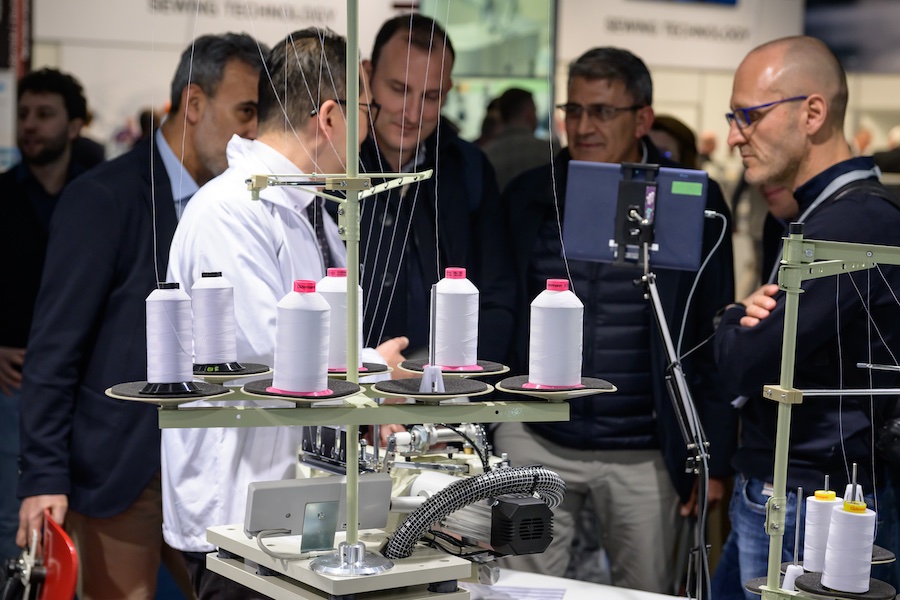
At Texprocess 2026, 200 exhibitors from 28 countries will be represented. In a challenging market environment, the leading trade fair is a constant and reflects progress in textile processing – driven by automation, digitalisation and AI. In addition, international start-ups present their ideas and meet partners from industry and research. Techtextil takes place in parallel with an optimised hall layout.

TOP