[pageLogInLogOut]

#Research & Development

SABIC celebrates 10th Anniversary of its Technology Center in Shanghai with first Innovation Day

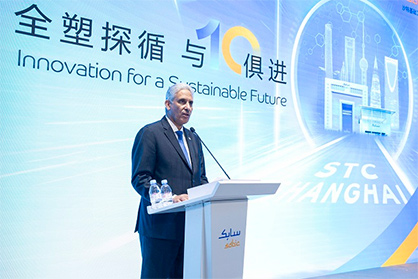
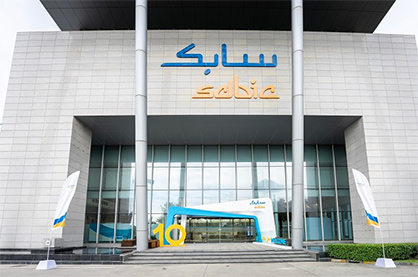
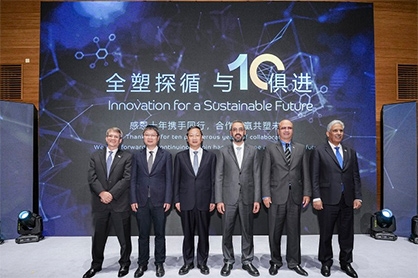
SABIC, a global leader in diversified chemicals, yesterday celebrated the 10th anniversary of the SABIC Technology Center in Shanghai (STC Shanghai) by holding the site’s first-ever Innovation Day.

SABIC Chairman Khalid Hashim Al-Dabbagh and SABIC CEO Abdulrahman Al-Fageeh celebrated this remarkable milestone with his excellency Abdulrahman Bin Ahmed Hamdan Al-Harbi, Ambassador of the Kingdom of Saudi Arabia to China; Zhu Zhisong, Member of Standing Committee of CPC Shanghai, Secretary of CPC Pudong New Area Committee; Peng Song, Executive Deputy Director of Shanghai Science and Technology Innovation Promotion Office; Wu Qiang, Deputy Governor of Shanghai Pudong New Area, along with SABIC executive committee, customers, and business partners. 
© 2023 Sabic
© 2023 Sabic


“Multinational corporations would diligently work with others across different industries and in different countries to build up a portfolio of innovative solutions that can turn challenges into opportunities,” said Al-Fageeh. “One of the most active fronts in our campaign for innovation is right here, at the STC Shanghai. SABIC looks forward to strengthening its in-country relationships and remains firmly committed to fostering mutually beneficial economic growth in and through China.”

Established in 2013 as one of the key regional hubs and 19 global technology centers, STC Shanghai is a key part of SABIC’s global innovation network. Today, the center has 20 laboratories with three focus areas including Analytical Science, EMT (extrusion, molding & testing) and Application Technology & Industry Solutions. Over 500 employees work at the center, including more than 170 scientists, who focus on helping customers address challenges across focused segments such as automotive, building and construction, packaging, electrical and electronics, healthcare, personal hygiene and energy transition. Leveraging value-chain collaboration and partnerships with renowned universities and research institutes in China, STC Shanghai also helps drive in-depth integration between industry and academia to further support China’s high-level, innovation-driven development.


In addition to being a key source of collaborative innovation, STC Shanghai has also played an important role in SABIC’s engagement with the local community. In 2017, SABIC launched its River Conservation Program, drawing on STC Shanghai’s expertise to help improve the local community’s natural ecosystem. Over the past decade, SABIC has held several Open-to-Public (OTP) Days and ‘Lights of Our Future’ activities at the center. These events, which were made possible by SABIC local employees volunteering over 9,000 hours to provide public education services on sustainability topics, reached a total of 11,840 students from 42 local schools in Shanghai.
© 2023 Sabic
© 2023 Sabic


Innovation is the foundation on which SABIC has built its success and the core driving force of its development in China for almost 40 years. It is through innovation that SABIC has successfully delivered rapid growth and expanded its network in China to include not only the STC Shanghai but also two joint ventures and three compounding plants with operations in 17 cities. Through its ongoing focus on market-facing innovation marked by the 10th anniversary of the STC Shanghai, SABIC remains firmly committed to expanding its presence in China, contributing to the country’s high-quality development, and supporting the strategic alignment between Saudi Arabia’s Vision 2030 and China’s Belt and Road Initiative.
© 2023 Sabic
© 2023 Sabic


More News from SABIC

More News on Research & Development

#Research & Development

Catching heart disease early with AI-based sensor system

It slips on like a normal vest: Fraunhofer IZM has created a smart sensor system in cooperation with the Charité and the Technical University of Berlin. The vest records a vast array of cardiovascular parameters, which an AI-based system uses to support medical diagnostics and spot potentially dangerous developments.

#Research & Development

Panty liners prevent bacterial vaginosis

Worldwide, almost one third of women of childbearing age suffer from bacterial vaginosis. This is when the sensitive microbiome of the vagina becomes unbalanced. Such a disorder of the vaginal flora can cause urogenital infections, abscesses on the ovaries or fallopian tubes or premature births. This significantly increases the risk of infertility in women and of contracting a sexually transmitted disease or HIV.

#Research & Development

Soft interfaces: Textile-integrated light switches, made possible by printable Liquid Metal Ink

A gentle tap on the knitted lampshade is enough to switch on the light. The lamp developed by Fraunhofer IZM in cooperation with WINT Design Lab works with a revolutionary conductive ink. Visitors can find out more and try the lamp themselves at the Berlin Science Week on November 1st and 2nd.

#Research & Development

Aachen Summer School: Strengthening German-Korean cooperation in 4D and robotics

The Aachen Summer School has established itself as an important platform for promoting cooperation between RWTH Aachen University and Seoul National University. The focus is on practice-oriented research projects in the field of 4D and robotics technologies, which have been successfully implemented for years at the Institut für Textiltechnik of RWTH Aachen University.

Latest News

#ITMA Asia + CITME Singapore 2025

Innovation and customer proximity – KARL MAYER’s clear focus makes an impression

ITMA ASIA in Singapore was a resounding success for KARL MAYER, exceeding all expectations. The company welcomed visitors from 39 countries and held around 570 expert discussions. Most guests came from India, followed by China, Indonesia and Pakistan. The exchange with them was both well-founded and targeted. Conversation topics ranged from investment projects and new technologies to opportunities for cooperation and business expansion.

#Recycling / Circular Economy

Nanollose creates the world’s first wearable fashion garment made from liquid waste

Australian-based biomaterial technology company Nanollose Ltd (ASX: NC6) has created the world’s first wearable garment using the company’s eco-friendly Tree-Free Rayon fibre (NullarborTM), sourced from sustainable coconut waste.

#ITMA Asia + CITME Singapore 2025

Singapore edition of ITMA ASIA + CITME makes successful presentation

The region’s leading textile and garment technology exhibition, ITMA ASIA made a successful return to Singapore after two presentations in 2001 and 2005.

#Natural Fibers

ICAC to collaborate with Uzbekistan and Bizpando on regenerative agriculture

The Government of Uzbekistan has allocated 55,000 hectares of land to implement a regenerative agriculture program for cotton as part of a collaborative project with the International Cotton Advisory Committee (ICAC) and Bizpando, a company with a a blockchain-based internet platform designed to ensure supply chain compliance.

TOP