[pageLogInLogOut]

#Research & Development

Project updates from AATCC research committees

AATCC is an international standards organization, following the Principles for the Development of International Standards, Guides and Recommendations defined by the World Trade Organization (WTO). The first of these principles is Transparency—keeping members and the industry informed of standards-related projects. The second is Openness—interested parties are welcome to participate in all aspects of the standard development process.

AATCC research committees meet at least twice per year to develop and update textile standards, plan educational events, and share information. The meetings are free, open to all, and held in a hybrid format to allow both in-person and remote participation. For those who cannot attend, AATCC publishes a status report on all open projects. The latest report is now available for view or download at www.aatcc.org/standards/#updates. A few projects are also highlighted here. To get involved, register for the upcoming series of meetings at www.aatcc.org/research.

AATCC Fall Research Committee Meetings

November 7-9

Research Triangle Park & virtual (Teams)

http://www.aatcc.org/research


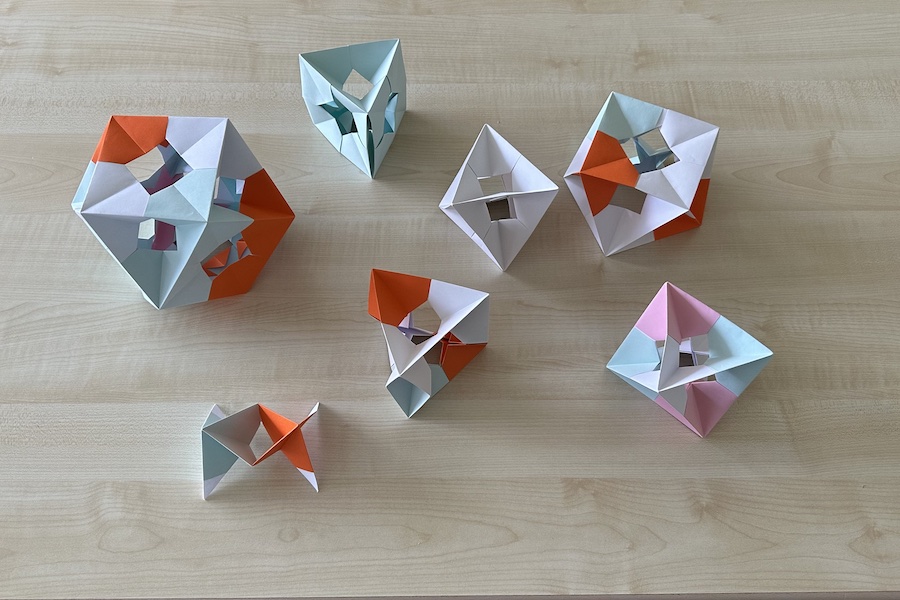
Hand, Haptics, Touch & Tactile

© 2023 AATCC
© 2023 AATCC


The way a fabric feels is critical to many end uses. AATCC committee RA89 Hand Evaluation helps translate a subjective feeling to a quantifiable test result for valid comparisons and decision making. The committee has several current projects including terminology, modifying a procedure to incorporate a wet condition and instrumental evaluation, and development of a new test method. Members of the committee are also planning a Digital Lab exploring haptics and hand.


Save the dates!

November 8: RA89 Committee Meeting

December 13-14: Haptics Digital Lab

http://www.aatcc.org/calendar


Water Repellency for Today’s Fabrics

© 2023 AATCC
© 2023 AATCC


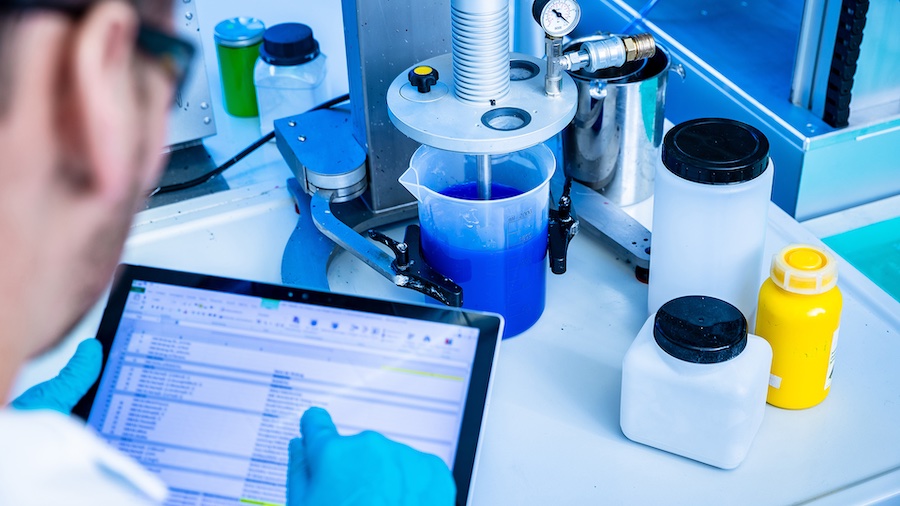
AATCC committee RA63 Water Resistance oversees a range of standards for evaluation water repellence and resistance of textiles. One of its iconic methods is the AATCC TM22 Spray Test. Simple, quick, and inexpensive, the test has been used to evaluate repellency for more than 80 years. But there is always room for improvement! The committee is considering options to more clearly define a “tap” and provide alternate evaluation metrics. Proposals also include suggestions for differentiating highly-repellent fabrics based on research at a member lab.

Other Projects

Research committees address everything from color to conductance. There are even committees devoted to emerging issues and correlating lab results to end use performance. Visit the AATCC website to see what’s in process and attend the upcoming meeting to suggest new projects.

Take the Lead!

AATCC research committees are a great place to learn AND to share your expertise. Consider volunteering to lead a task group, chair a committee, or take notes as secretary. All provide great leadership experience for you and ensure standards work continues to benefit the whole industry and the consumers who use textile products. To volunteer or learn more about the available roles, contact AATCC Technical Director Erika Simmons at simmonse@aatcc.org.


More News from American Association of Textile Chemists and Colorists

#Associations

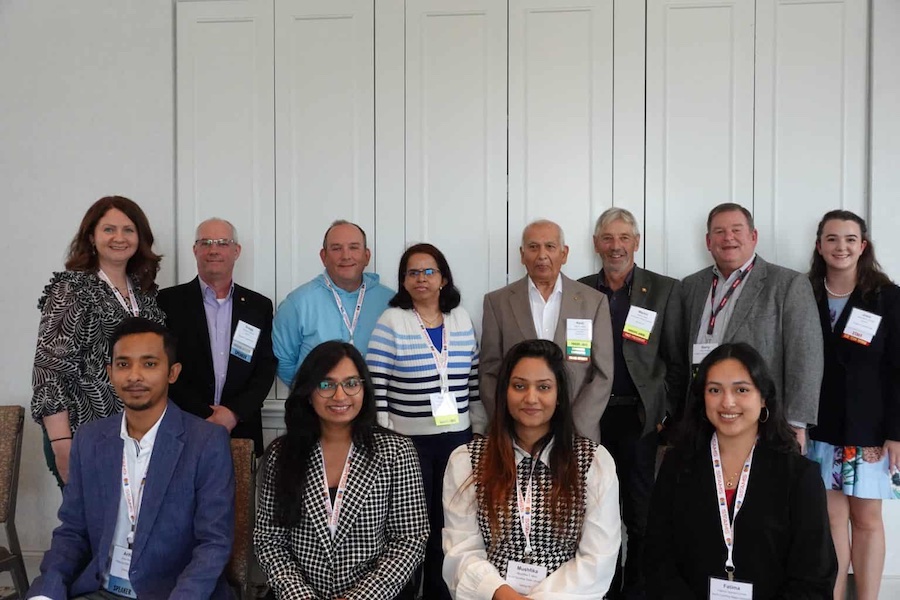
AATCC announces 2025 Herman & Myrtle Goldstein Graduate Student Paper Competition winners

The American Association of Textile Chemists and Colorists (AATCC) recognized the winners of the 2025 Herman & Myrtle Goldstein Graduate Student Paper Competition. Founded in 1982 to give student members the chance to conduct and present original research, the competition was renamed in 1994 in honor of Herman and Myrtle Goldstein, following their US$60,000 endowment. Their gift is a lasting remembrance of their dedication to young people in the textile industry.

#Research & Development

New funding available for textile research

The AATCC Foundation Student Research Support Grant Program provides financial assistance for undergraduate and graduate students pursuing textile-related projects. Students may submit proposals now for funding to be awarded January 2026. Applications must be submitted by October 1, 2025, to be considered.

#Recycling / Circular Economy

AATCC’s Circularity Conference approaches as organization continues 2025 Sustainable Textile Event series

The American Association of Textile Chemists and Colorists (AATCC) announces that registration is closing soon for its highly anticipated Circularity Conference, continuing this year’s sustainability event series that has delivered significant value to industry professionals.

#Associations

AATCC Textile Standards adopted by Colombian and Sri Lankan Governments

AATCC test methods and procedures are international standards, meeting the criteria set forth by the World Trade Organization and used around the globe. The standards gain additional recognition through Memoranda of Understanding with Colombia and Sri Lanka.

More News on Research & Development

#Research & Development

Bio-based fibers with good flame retardancy

Fibers made from bio-based plastics reduce dependence on fossil raw materials and promote the circular economy. The covalent bonding of flame-retardant additives can open the way for these fibers to enter the mass market.

#Research & Development

Exchange data between textile companies openly, securely and cost-effectively without a central platform – ITA makes it possible

The Institut für Textiltechnik (ITA) of RWTH Aachen University has launched a new demonstrator for an open and secure data space in the textile industry at the Digital Innovation Centre Europe (DICE). For the first time, the demonstrator shows directly and clearly how companies can share their data securely with each other without the need for a central platform. Data exchange is based on shared, freely usable technical foundations.

#Research & Development

Sustainable athletic wear made from bio-based Polyethylene

Conventional sports textiles made from petroleum-based synthetic fibres are to be replaced in the future by sustainable, bio-based, cooling textiles. Polyethylene, previously used mainly in the packaging industry, is thus qualified for use in textiles and, as a bio-based drop-in solution, offers a cost-effective, sustainable alternative for the future.

#Research & Development

Innovation center for textile circular economy inaugurated

Just over eight months after the foundation stone was laid, the new Innovation Center for Textile Circular Economy was officially inaugurated today at TITK Rudolstadt. Thuringia's Minister President Mario Voigt, TITK Director Benjamin Redlingshöfer, and other guests of honor cut the ribbon to the modern building complex and viewed the premises, which are now ready for occupancy. The “DICE – Demonstration and Innovation Center for Textile Circular Economy” is TITK's largest single investment to date. The Free State of Thuringia supported the total cost of €11.5 million with €8 million in GRW and FTI funding.

Latest News

#Dyeing, Drying, Finishing

Orthopac RVMC-20 plus: German Engineering for Smarter Weft Straightening

In times of rising cost pressure and growing quality demands, textile producers worldwide are searching for solutions that combine precision, efficiency, and sustainability. With its latest innovation, the Orthopac RVMC-20 plus, Mahlo once again demonstrates the strength of German engineering: improving proven technology to meet today’s challenges.

#Knitting & Hosiery

KARL MAYER and Lenzing partner to advance warp knitting with scalable cellulose fiber solutions

The Lenzing Group, a leading supplier of regenerated cellulosic fibers for the textile and nonwovens industries, together with KARL MAYER, the global market leader in warp knitting machines and warp preparation systems, debut a joint innovation project during Premiere Vision, Paris.

#Textile chemistry

RUDOLF gets the exclusive global distribution rights for Sanitized® textile technologies

With effect from today, RUDOLF officially assumes exclusive global distribution rights for Sanitized® textile technologies from SANITIZED AG. This is the next milestone in the strategic collaboration announced in 2025, with the partnership between the two companies now fully implemented and expanded worldwide.

#Europe

ICAC to support European Commission on pending PEF legislation

The International Cotton Advisory Committee (ICAC) is proud to announce that it has been included as a member of the European Commission’s Technical Advisory Board (TAB) on the Product Environmental Footprint methodology. The Commission developed the Product Environmental Footprint (PEF) to assess and communicate the life cycle environmental performance of products and organizations.

TOP