[pageLogInLogOut]

#Research & Development

Research cooperation on sustainable biomaterials
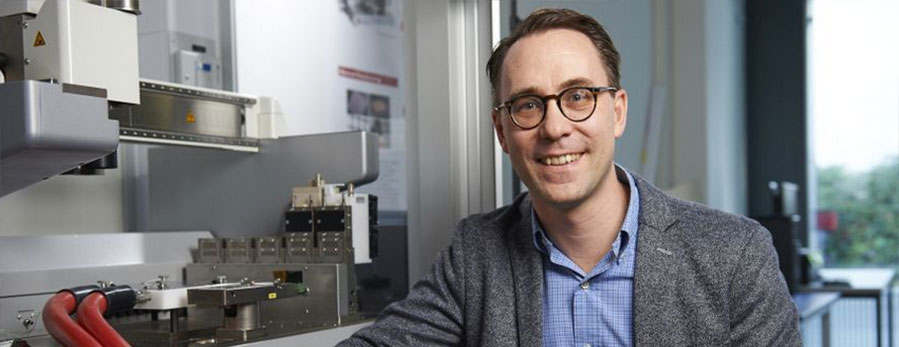
Gustav Nyström, head of Empa's Cellulose & Wood Materials laboratory. Image: Empa
With the signing of a statement of cooperation, the BioProducts Institute at the University of British Columbia (BPI) and Empa are celebrating a new partnership to promote innovation and collaboration, furthering joint developments in the field of biobased solutions.

The BioProducts Institute is situated in Vancouver (Canada) and operates four research themes, which might be complementary to the research acitvities at Empa: 1. Biocatalytic transformation and engineering of biomass, Bio-nanoparticle enabled materials, Bio-based polymers and carbon materials and Biorefinery & Biofuels systems.

Empa joins Boreal Alliance

With this new cooperation agreement, Empa and BPI will seek to share best practices through knowledge exchange, co-involvement in scholarly meetings, fora, and conferences, and provide reciprocal access to research infrastructure and develop bilateral funding opportunities. The partnership will further advance Europe-Canada research collaboration in the sustainable use of renewable resources, building on the successes of prior exchanges. Empa will also join the Boreal Alliance, a transnational initiative co-founded by FinnCERES and BPI to aggregate research from nations along the Boreal belt to optimally utilize the forest resource and advance prosperity and well-being in balance with sustainable development.

Conference in Switzerland 2022

"Global collaboration platforms such as the Boreal Alliance has the potential to significantly accelerate innovation for the new bioeconomy. We at Empa are excited to take this next step and collaborate with UBC and BPI. Together we will act to advance biomaterials research, stimulate technology transfer and to educate new talents in the field. A joint conference is planned in Switzerland in May 2022 and will provide opportunities for a high level, in-depth sharing of knowledge and the nucleation of new research ideas for the future," says Gustav Nyström, head of Empa's Cellulose & Wood Materials laboratory.



Image: Empa
Image: Empa


“We are extremely excited to begin our partnership with Empa,” says Orlando Rojas, BPI Scientific Director. “BPI and Empa already entered in planning efforts dating back to two years ago, and now is the time to take action and our members are looking forward to starting new collaborations between the two institutions. The signing of this statement of cooperation will have a great visibility and will  catalyze our efforts in research and development. With the Alliance being formed with Switzerland, Finland and Sweden, we are creating the largest cluster of research in the forest-based bioeconomy. Our planned program will incentivize interactions and innovations to open new routes for biomass valorization in next generation bioproducts.”



More News from TEXDATA International

#ITM 2026

ITM 2026: The new geography of textile production

New production hubs are emerging across North Africa and Central Asia, while Türkiye is accelerating its transformation toward higher-value, technology-driven and more sustainable textile manufacturing.

#Research & Development

“Production is a product”

From technical textiles and AI-driven robotics to the limitations of textile circularity: Professor Dr Thomas Gries looks back on more than two decades of development at ITA Aachen. In the interview, he explains why production technology remains a decisive success factor, discusses international collaborations and innovation ecosystems, and shares his views on the transformation of production landscapes and the challenges facing an increasingly regulated industry.

#Knitting & Hosiery

“We need to move away from the price trap and return to a value-driven mindset.”

With its new Textile Innovation Center, KARL MAYER is sending a strong signal for innovation, collaboration, and the future of textile applications. In this interview, Karl Josef Mayer discusses new opportunities in warp knitting, the processing of staple fibres, recycling, the changing role of machinery manufacturers, and why the textile industry must once again focus more strongly on the value of textiles. by Oliver Schmidt

#Associations

“Innovation, resilience and international experience remain the great strengths of the Swiss textile machinery industry”

Geopolitical uncertainty, growing competitive pressure from China, new free trade agreements and the shift towards a circular economy are currently reshaping the global textile industry. In this interview, Cornelia Buchwalder discusses the current mood within the Swiss textile machinery sector, the industry’s distinctive innovative strength, new market opportunities in India and Asia, and the technological trends that could shape the upcoming trade fair cycle leading up to ITMA 2027.

More News on Research & Development

#Research & Development

TCLF: Resilient value chains in times of crises

The textiles, clothing, leather and footwear (TCLF) industry was at the centre of the webinar “Resilient value chains in times of crises”, which took place on 28 April 2026. Global supply chains continue to face increasing pressure, raw material dependencies are growing and economic uncertainties are affecting the entire sector.

#Research & Development

Textile climate control system in workwear – exhibition at the 2026 SME Innovation Day!

Conventional protective workwear often reaches its limits during strenuous physical activity. In particular, the transport of sweat and excess body heat poses a problem. The German Institutes of Textile and Fiber Research (DITF) conducted research on flow-optimized, air-conducting textile structures that enable targeted climate control directly on the body. These structures can be integrated straight into protective work garments. The textile climate control system supports the body’s natural thermoregulation. This contributes to improved workplace safety and comfort.

#Research & Development

Elastic yarns to become more recyclable and environmentally friendly in future

On 29 April 2026, ITA student Tobias Dickmeiß was awarded a sponsorship prize by the Wilhelm Lorch-Stiftung for his innovative approach, to replacing conventional elastane with elastic yarns made from thermoplastic copolyester elastomers (TPC). Thanks to their thermoplastic nature and compatibility with typical polyesters used in the textile industry, elastic TPC yarns offer improved recyclability. Furthermore, the use of the melt-spinning process in yarn production eliminates the need for solvents that are harmful to the environment and human health.

#Research & Development

Walter Reiners Foundation Prize awarded to three ITA graduates

Sabina Dann, Lukas Balon and Annegret Storm from the Institut für Textiltechnik (ITA) of RWTH Aachen University were awarded the Walter Reiners Foundation Prize by the German Engineering Federation (VDMA) for their master’s and bachelor’s theses. Peter Dornier, Chairman of the Walter Reiners Foundation, presented the awards during Techtextil at the VDMA stand in Frankfurt am Main, Germany.

Latest News

#Spinning

Barmag and Hitech Automation enter into partnership for an auto-doff system for texturing machines

Barmag (Suzhou) Technology Co., Ltd. and Hitech Automation Solutions PVT LTD. of Surat, India, have agreed to an exclusive partnership to jointly market Hitech’s Doffmatic automation solution for Barmag’s proven manual eFK texturing machines. In many texturing facilities, manual doffing processes remain heavily operator-dependent – resulting in issues such as increased scrap, inconsistent quality, and limited productivity.

#ITM 2026

Uster’s new Recycling Opening Index guides spinners to the perfect blend

Uster AFIS 6 now offers the key data for better decisions when blending recycled fibers. Process control is decisive in determining the quality and economic outcome. The new R Recycling Module of AFIS 6 introduces the Recycling Opening Index (ROI), so spinners can optimize their circularity credentials. It was officially launched at ITM 2026 in Istanbul, Türkiye.

#HIGHTEX 2026

The heart of the technical textiles and nonwovens world will beat in Istanbul

Only 1 day remains until HIGHTEX 2026 International Technical Textiles and Nonwovens Exhibition opens its doors. Bringing together manufacturers, technology developers, investors, and industry professionals from around the world, HIGHTEX 2026 is preparing to showcase the innovations shaping the future of the industry. As the countdown to this major event continues, Istanbul is once again getting ready to become the meeting point of the global technical textiles industry.

#Man-Made Fibers

Grasim Industries announces fresh investment of ₹3094 Crore to expand Lyocell capacity

Grasim Industries Limited, the flagship company of the Aditya Birla Group and a global leader in cellulosic fibres, today announced an investment of ₹3,094 crore, for Phase II Lyocell capacity of 110K TPA at Harihar, Karnataka. This expansion will consist of 2 lines of 55K TPA (150 Tons per day) each. The first line is expected to be commissioned by 2028, and the second line is expected to be commissioned by 2030.

TOP