[pageLogInLogOut]

#Research & Development

Hohenstein tests according to European guidelines for community masks
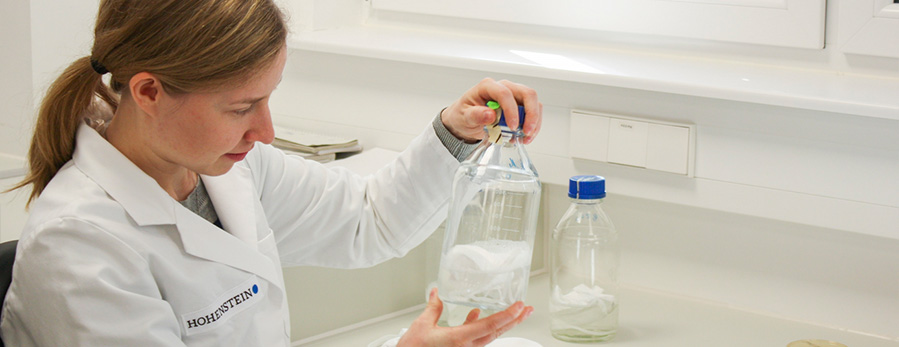
Standardized test procedures at Hohenstein provide information as to whether everyday masks are sufficiently breathable and have sufficient filter performance. © Hohenstein
Testing service provider and research partner, Hohenstein now tests according to the first European guideline for community masks, the CEN Workshop Agreement (CWA) 17553:2020. Hohenstein had already taken a big step towards safety and functionality with the introduction of its quality label for Tested Community Masks. The new "Community Face Coverings-Guide to minimum requirements, methods of testing and use" sets minimum requirements for design, performance evaluation, labelling and packaging of both reusable and disposable masks.

Community masks are important in containing the spread of the coronavirus, SARS-CoV-2. But: to fulfill their function, they must meet certain requirements. The objective of the standard is to support manufacturers of masks who have switched production to non-medical, everyday masks. This will provide them with assistance regarding the requirements for such masks, which must also meet the legal requirements for textiles and satisfy certain functional demands. 

Uniform product quality and durability standards across Europe are particularly important for containing the spread across borders. Clear product information helps consumers rely on the safety of community masks. The guideline can therefore also serve as a marketing aid for suppliers in international competition.
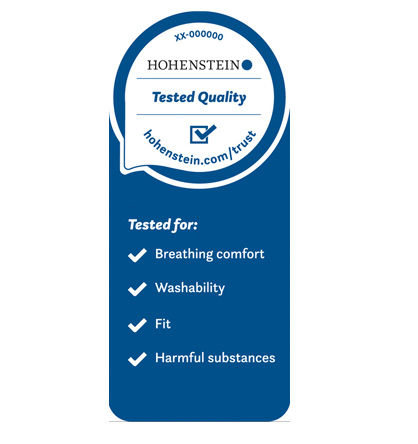
The Hohenstein Quality Label for Tested Community Masks makes the quality and durability of the products visible. © Hohenstein


Standardized test procedures at Hohenstein provide information as to whether everyday masks have sufficient breathability and filter performance. Other quality parameters include washability, fit and safety from harmful substances. Hohenstein also checks compliance with legal requirements and proper labelling and use instructions.

Manufacturers of everyday masks can also earn the Hohenstein Quality Label for Tested Community Masks by proving product performance and certifying to STANDARD 100 by OEKO-TEX®.

Find detailed information here: http://www.hohenstein.com/cwa-standard and http://www.hohenstein.com/hql-community-masks



More News from Hohenstein Institute

#Research & Development

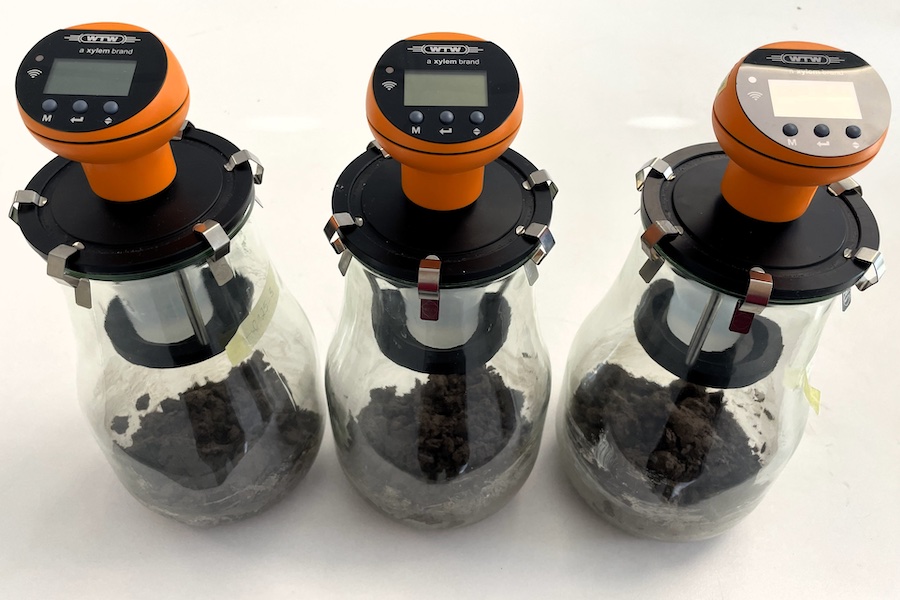
New DIN SPEC assesses environmental impact of textile fragments in soil

Textile products made from synthetic fibres, finished fabrics or dyed materials release fibre fragments into the environment at every stage of their life cycle. With the new DIN SPEC 19296, Hohenstein has developed a standardised testing method to analyse how these fragments behave in soil under natural conditions. Until now, little was known about their environmental behaviour or potential ecological effects once released.

#Research & Development

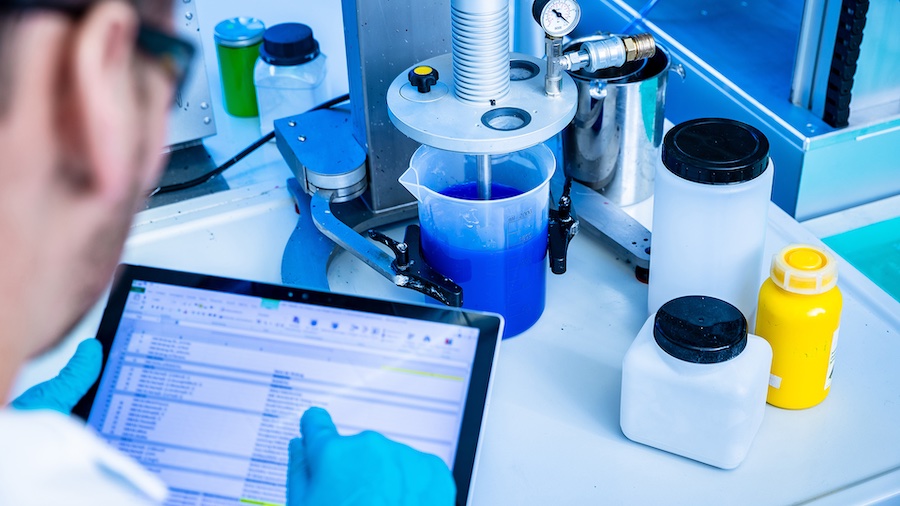
Testing and research laboratory ensures safe and more sustainable products worldwide

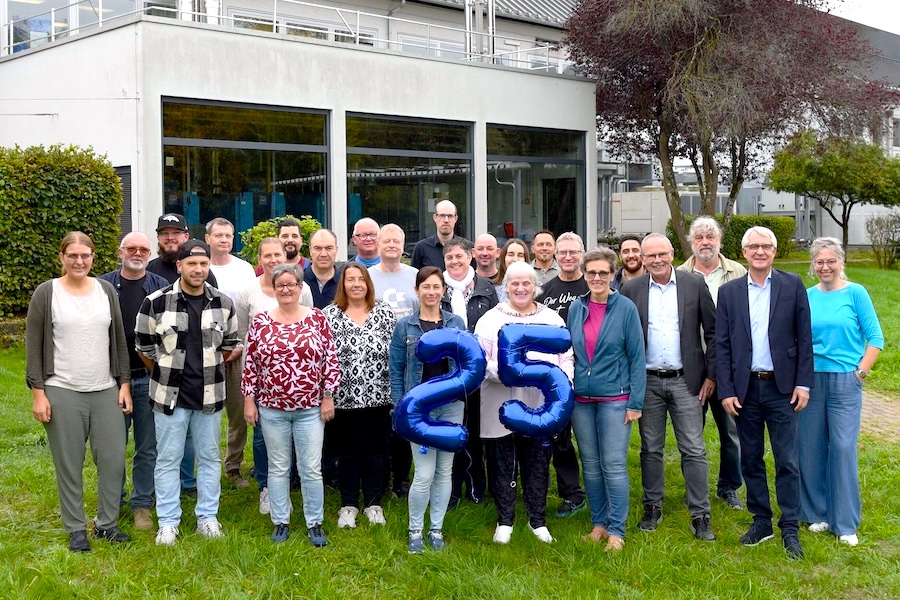
For 80 years, Hohenstein has stood for independent testing, scientific expertise and practical solutions. Today, the testing and research service provider supports manufacturers and brands worldwide in making textiles, hardlines and medical devices safe, more sustainable and market-ready – thereby building trust among consumers. With an international presence and interdisciplinary expertise, Hohenstein supports its customers from production through to market launch, helping them navigate an environment of growing regulatory and societal demands.

#Research & Development

A smarter way to verified Chemical Compliance

Hohenstein and GoBlu Drive Innovation in Sustainable Supply Chain Management As regulatory demands, customer expectations, and sustainability goals continue to grow, the ability to manage chemical compliance and data across complex supply chains has become critical. Hohenstein and The BHive® by GoBlu are initiating a strategic partnership to enhance chemical management in the textile sector. The collaboration delivers more than just a service – it provides an integrated, future-ready solution for brands, manufacturers and suppliers seeking trusted chemical management and credible sustainability.

#Research & Development

Hohenstein achieves GLP Certification for Medical Device Testing

Since the middle of July, the testing service provider Hohenstein has been certified to conduct medical device testing in accordance with the internationally recognised Good Laboratory Practice (GLP) standard. This certification comprehensively covers chemical, physical and biological safety testing of medical devices.

More News on Research & Development

#Composites

More affordable, environmentally friendly hydrogen pressure tanks at ITA-JEC booth

As a highlight of the JEC, the Institut für Textiltechnik (ITA) of RWTH Aachen University will be presenting hydrogen pressure tanks manufactured using multifilament winding processes at the NRW joint booth in Hall 5, Stand G65.

#Research & Development

Pioneer of the first hour: Michael Carus steps down after more than 30 years from nova-Institute’s Management

After more than three decades at the helm, founder and CEO Michael Carus is set to step down as head of the Renewable Carbon division on 1 March 2026. Lars Börger as the new CEO, will take over this key position of the nova-Institute together with COO Linda Engel, while Carus will remain with the research and consulting company as a senior advisor and shareholder. This change takes place after a one-year transition phase, as planned.

#Man-Made Fibers

Toray develops AURLIST™ polyester filament fiber with luxurious luster and ultra-fine structure

Toray Industries has developed AURLIST™, a new polyester filament fiber designed to combine luxurious luster, soft loft and a subtle fibrillated surface texture. The company primarily targets applications in women’s apparel such as tops, bottoms and dresses.

#Sustainability

The nova-Institute establishes new Renewable Feedstock Department to lay the groundwork for industrial defossilisation

The transition from fossil-based to renewable carbon – sourced from biomass, CO₂ utilisation and recycling – is the cornerstone of a climate-neutral chemical industry. The nova-Institute’s new department is dedicated to providing the essential data, analyses and strategic roadmaps required to secure a reliable future feedstock supply and make this transition a commercial and ecological reality.

Latest News

#Composites

Kordsa showcases its global expertise in material technologies at JEC World 2026

Kordsa, a subsidiary of Sabancı Holding, shared its global expertise in material technologies with participants at JEC World 2026, held in Paris. The company’s solutions developed for a wide range of industries—particularly aviation, energy, and automotive—stood out among its key innovations at the exhibition. Throughout the event, Kordsa also presented its vision for sustainable growth and its strategic transformation in composite technologies to international stakeholders.

#HIGHTEX 2026

The global meeting point of the technical Textiles and nonwoven industry: HIGHTEX 2026

One of the world’s most prestigious technical textiles and nonwoven exhibitions, the HIGHTEX 2026 International Technical Textiles and Nonwoven Exhibition, is preparing to open its doors to industry professionals at the Tüyap Fair and Congress Center in Istanbul between June 9–13, 2026. Bringing together manufacturers, technology developers, and global buyers from all around the world in the field of technical textiles, HIGHTEX 2026 will be an important platform showcasing the sector’s innovative solutions and paving the way for new collaborations.

#Texprocess 2026

Texprocess 2026: Automation, digitalisation and AI reshape textile processing

Investment decisions in textile processing have become increasingly complex. Rising energy prices, labour shortages and geopolitical uncertainties are forcing companies to prioritise technologies that deliver measurable improvements in efficiency and process stability. This applies not only to apparel production, but also to the processing of technical textiles and high-performance materials. Modernisation projects are therefore being evaluated more selectively – but the pressure to upgrade production systems continues to grow. Texprocess 2026 reflects this tension between cautious investment behaviour and increasing technological demand.

#Techtextil 2026

Smart sensors, smart savings - Reducing energy and cost in textile finishing

As energy prices, sustainability requirements and quality expectations continue to rise, manufacturers of technical textiles face increasing pressure to optimize efficiency while ensuring process reliability. At the same time, skilled labor shortages require production systems that are intuitive, automated and easy to manage. PLEVA addresses these challenges with robust, maintenance-friendly sensor technologies combined with intelligent process control.

TOP