[pageLogInLogOut]

#Research & Development

Know-how improves a company’s profile
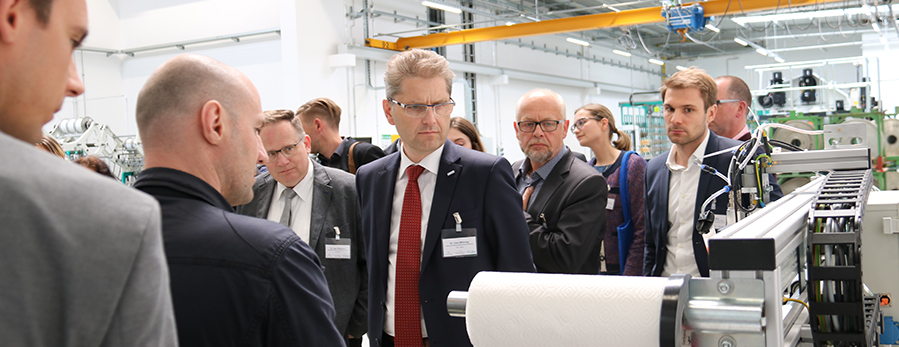
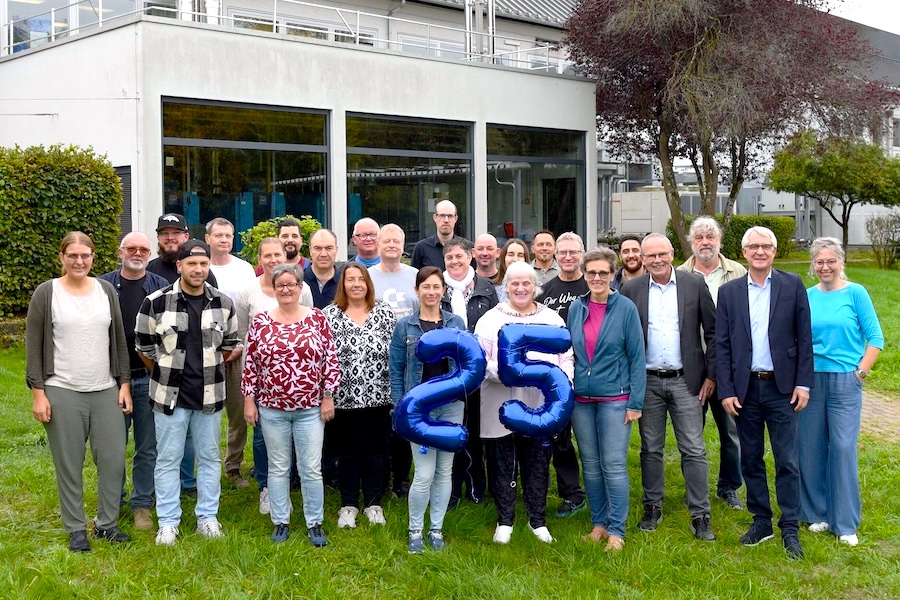
Review TITV Workshop (c) 2019 KARL MAYER
The second workshop, “Additive manufacturing for the textile industry”, showed once again that looking beyond the boundaries of technology creates synergist effects and generates ideas for new products. This series of events was begun successfully in January 2018 and was continued on 13 May 2019.

Second workshop entitled, “Additive manufacturing for the textile industry”, brought all of KARL MAYER’s technologies together on 13.05.2019 

The next event was again organised by the Textilforschungsinstitut Thüringen-Vogtland e.V., TITV (Textile Research Institute Thuringia-Vogtland) and held at KARL MAYER in Obertshausen. “We see real potential in the new technologies. As one of the leading, global textile machinery manufacturers, we believe, therefore, that we have a responsibility to promote their development,” said Arno Gärtner, the CEO of KARL MAYER, in his welcoming address. Opportunities have opened up in the areas of design, construction and product characteristics especially, as well as by shortening the value-added processes and bringing them closer to the consumer.

Roughly 80 guests were keen to learn more about the opportunities on offer. They came from companies involved in conventional warp knitting, textile machine building, filament production and the manufacture of 3D printers, as well as from institutes and universities. The guests also included users of textiles and 3D printing processes. The extensive programme of papers certainly gave them their money’s worth. The nine speakers were experts in industry and research, and presented papers on process, machine and materials technology used in 3D printing, and also showed the results of research into end-uses.


During the workshop, KARL MAYER also presented its new TEXTILE MAKERSPACE. Like the workshop, the aim of this innovations platform is to bring together the two worlds of additive manufacturing and the textile industry – a goal that was achieved perfectly on 13 May. The guests listened with great interest to the words of Michael Kieren, the chief organiser of the TEXTILE MAKERSPACE, who spoke on the opportunities and initial results of this new platform for pioneering companies. In particular, these include the customised incorporation of electrically conductive yarns on the warp knitting machine, and the 3D printing of warp-knitted textiles.

“In particular, 3D printing is an area in which many companies have already been actively engaged to some extent,” says Michael Kieren, when speaking about the conversations he had had with participants of the workshop in the TEXTILE MAKERSPACE. “Most of their ideas have been directed at products with a unique selling point, but could be transformed just by using suitable technologies.” KARL MAYER would be involved in this process as an expert partner.

More News from Karl Mayer Textilmaschinen AG

More News on Research & Development

#Research & Development

Textile cascade filter for removing microplastics from wastewater

Microplastics are now found almost everywhere, even in remote regions of Antarctica. They enter the human body through the food chain. Studies indicate that microplastics may have negative effects on the human health.

#Research & Development

Fraunhofer IAP paves the way for "Green" carbon fibers

A new pilot plant in Guben is set to enable the production of bio-based carbon fibers. The plant is part of the Carbon Lab Factory Lausitz and will make an important contribution to the transformation of the Lausitz region—from a traditionally raw material- and basic industry-oriented region to a hub for innovative high-performance materials. The German federal government and the state of Brandenburg are providing the Fraunhofer Institute for Applied Polymer Research IAP with 53.3 million euros for this purpose.

#Research & Development

Hof University develops sustainable textile coating for the fashion of tomorrow from mushrooms

Clothing is often treated as disposable: T-shirts for events, general merchandise, or short-term campaigns frequently end up in the trash after only a few uses. This is particularly problematic given that their production still largely relies on fossil-based materials. This is precisely where a new research project at Hof University of Applied Sciences comes in.

#Research & Development

Textilfabrik 7.0 launched: Mönchengladbach becomes a real-world lab for sustainable textile production

With the official kick-off event of the Textilfabrik 7.0 (T7), a major transformation project for the German textile and apparel industry has been launched in the Monforts Quarter in Mönchengladbach. At the “Textile Roundtable,” an event format organized by the Zukunftsagentur Rheinisches Revier, representatives from industry, research, politics, and the regional economy came together to jointly lay the foundation for CO₂-neutral, circular, and economically viable textile production in Germany.

Latest News

#Raw Materials

New study shows low environmental impact by Cotton made in Africa Organic Cotton from Tanzania

Today, the Aid by Trade Foundation (AbTF) is announcing the results of a comprehensive life-cycle analysis (LCA) for cotton produced in Tanzania under the Cotton made in Africa Organic (CmiA Organic) standard. The study emphasises the small ecological footprint of CmiA Organic verified cotton. This can largely be traced back to the absence of synthetic pesticides, artificial fertilisers, and artificial irrigation. Consequently, CmiA Organic cotton can help the textile industry meet regulatory requirements as well as science-based targets. The results also show that the consequences of climate change threaten the livelihoods of these cotton farmers, even though the type of agriculture they practise barely contributes to climate change.

#Raw Materials

Better Cotton Initiative strengthens regenerative focus in standard update

The Better Cotton Initiative (BCI) has strengthened the regenerative focus of its field-level standard with the launch of a new version of its Principles & Criteria (P&C), which marks the next step in the organisation’s journey to becoming a regenerative standards system.

#Man-Made Fibers

Selenis and Kintra Fibers partner to scale 100% bio-based synthetic fiber technology

Selenis, a leading global specialty polyester manufacturer, today announced a strategic manufacturing partnership with materials science company Kintra Fibers to scale Kintra’s patented fiber-grade PBS resin - a 100% bio-based and biodegradable material designed for textile applications.

#Functional Fabrics

PERFORMANCE DAYS proves its relevance as the industry’s key meeting point

Held on March 18–19, 2026, PERFORMANCE DAYS once again confirmed its position as a leading international platform for functional textiles. A total of 3.366 trade visitors and around 560 exhibitors gathered in Munich, with the event already kicking off successfully on DAY 0, which received highly positive feedback for its interactive format. Despite challenging conditions caused by the public transport strike in Munich, the event saw strong attendance and a consistently high level of activity across both exhibition days.

TOP