[pageLogInLogOut]

#Recycling / Circular Economy

Responsible Textile Recovery Act of 2024 signed by Governor

Senator Josh Newman (D-Fullerton) is proud to announce that Senate Bill 707 (SB 707), the Responsible Textile Recovery Act of 2024, has been signed into law by the Governor of California, Gavin Newsom. This groundbreaking legislation establishes the country’s first Extended Producer Responsibility (EPR) textile recycling program, marking a significant step forward in the state’s efforts to combat waste and promote sustainability.

Under its provisions, SB 707 creates a framework for producers and other participants in the value chain to take responsibility for the entire lifecycle of their products and textiles, including repair, recycling, and reuse of garments and fibers. Once implemented, SB 707 will not only reduce the amount of textiles sent to landfills but will also support the development of upcycling and recycling across California and help address the environmental impacts of “fast fashion” and the “throwaway culture” it has abetted.

“I’m very proud to see SB 707 signed into law. It will have a major positive impact on California’s environment and communities. SB 707 isn’t just about recycling; it’s about transforming the way we think about textile waste,” said Senator Newman. “The framework created by SB 707 will create new opportunities for every Californian to participate in a more sustainable future. By 2030, convenient drop-off locations for used textiles across the state will provide everyone with a free and simple way to be part of the solution. California is again at the forefront of innovation, proving we can lead the way in creating a circular and sustainable textile economy that benefits everyone.”

The fashion industry has been identified as a top industrial polluter, accounting for approximately 10% of global carbon emissions. As textiles decompose in landfills, they emit methane gas and leach dyes and chemicals into the soil and groundwater, further contributing to environmental decay.

The rise of “fast fashion,” or the marketing and sale of low-cost, low-quality garments that fall out of vogue with increasing speed, is a major contributor to these devastating trends. In 2021, approximately 1.2 million tons of textiles were disposed of in California. Despite 95% of textiles being reusable or recyclable, only 15% are currently recycled or reused.

“The industry really showed up for the stakeholder process to make the final version as impactful as possible. We’ve seen brands and associations endorse the bill for a more equitable solution to a systematic problem,” said Joanne Brasch, Director of Advocacy from the California Product Stewardship Council. “The program will incentivize producers to adopt less wasteful production and greener designs.”

Since its introduction last year, SB 707 has been subject to extensive stakeholder engagement. This collaborative process has resulted in dozens of improvements as the result of hundreds of hours of stakeholder meetings with a diverse coalition, including environmental organizations, industry leaders, and community groups.

Over the course of the legislative process, the bill has received widespread support, a testament to its importance and potential impact. This support includes the California Product Stewardship Council (CPSC), IKEA, Goodwill, Sierra Club California, Everlane, Reformation, Boardriders, Republic Services, as well as numerous local governments, agencies, and sanitation districts.

What others are saying:

“At IKEA, we have an ambition to become a circular business by 2030. To achieve this, we must partner with policymakers to support efforts in creating more circular systems for textiles and other products,” said Mardi Ditze, IKEA U.S. Sustainability Manager. “We applaud Senator Newman for leading a collaborative process with industry stakeholders on SB 707 and support efforts to increase textile circularity in California and across the U.S.”

“Threadhaus appreciates Senator Newman’s leadership, along with CPSC, to create better funding for clothing repair and upcycling. The EPR funds will support upcoming designers and upcyclers using post-consumer materials in new, innovative products.”

“Textile recycling is a growing industry domestically, creating jobs and reviving manufacturing in areas near recycling facilities,” said Peter Majeranowski, CEO of Circ, Inc., a leading textile recycler. “We’ve seen the fashion industry really step up to adopt fibers and yarns with lower impacts. Circ thanks Senator Newman for leading in California to incentive funding for textile recycling.”

"The City of San Jose is pleased to see SB 707 signed by Governor Newsom, as it provides a permanent program for local government to find a solution for textile waste. Thank you to Senator Newman and bill sponsors, CPSC, for leadership on this important topic."




More News from TEXDATA International

#ITM 2026

ITM 2026: The new geography of textile production

New production hubs are emerging across North Africa and Central Asia, while Türkiye is accelerating its transformation toward higher-value, technology-driven and more sustainable textile manufacturing.

#Research & Development

“Production is a product”

From technical textiles and AI-driven robotics to the limitations of textile circularity: Professor Dr Thomas Gries looks back on more than two decades of development at ITA Aachen. In the interview, he explains why production technology remains a decisive success factor, discusses international collaborations and innovation ecosystems, and shares his views on the transformation of production landscapes and the challenges facing an increasingly regulated industry.

#Knitting & Hosiery

“We need to move away from the price trap and return to a value-driven mindset.”

With its new Textile Innovation Center, KARL MAYER is sending a strong signal for innovation, collaboration, and the future of textile applications. In this interview, Karl Josef Mayer discusses new opportunities in warp knitting, the processing of staple fibres, recycling, the changing role of machinery manufacturers, and why the textile industry must once again focus more strongly on the value of textiles. by Oliver Schmidt

#Associations

“Innovation, resilience and international experience remain the great strengths of the Swiss textile machinery industry”

Geopolitical uncertainty, growing competitive pressure from China, new free trade agreements and the shift towards a circular economy are currently reshaping the global textile industry. In this interview, Cornelia Buchwalder discusses the current mood within the Swiss textile machinery sector, the industry’s distinctive innovative strength, new market opportunities in India and Asia, and the technological trends that could shape the upcoming trade fair cycle leading up to ITMA 2027.

More News on Recycling / Circular Economy

#Recycling / Circular Economy

Countdown to Textiles Recycling Expo 2026: Brussels prepares for Europe’s textile recycling gathering

With only two weeks remaining until the start of the second edition of the Textiles Recycling Expo 2026, preparations are entering the final phase. The exhibition and conference, dedicated exclusively to textile recycling and circularity, will take place on 24–25 June 2026 at Brussels Expo and is expected to attract stakeholders from across the textile recycling value chain.

#Recycled Fibers

Indorama Ventures enables brands to scale circular textiles through proven, traceable supply chains

Indorama Ventures, a global leader in recycled polyester staple fibers and filament yarns, will exhibit at Textiles Recycling Expo in Brussels on June 24–25. At the event, the company will show how brands and textile manufacturers can build traceable, circular textile supply chains by working with proven partners who deliver recycled materials on an industrial scale.

#Recycled Fibers

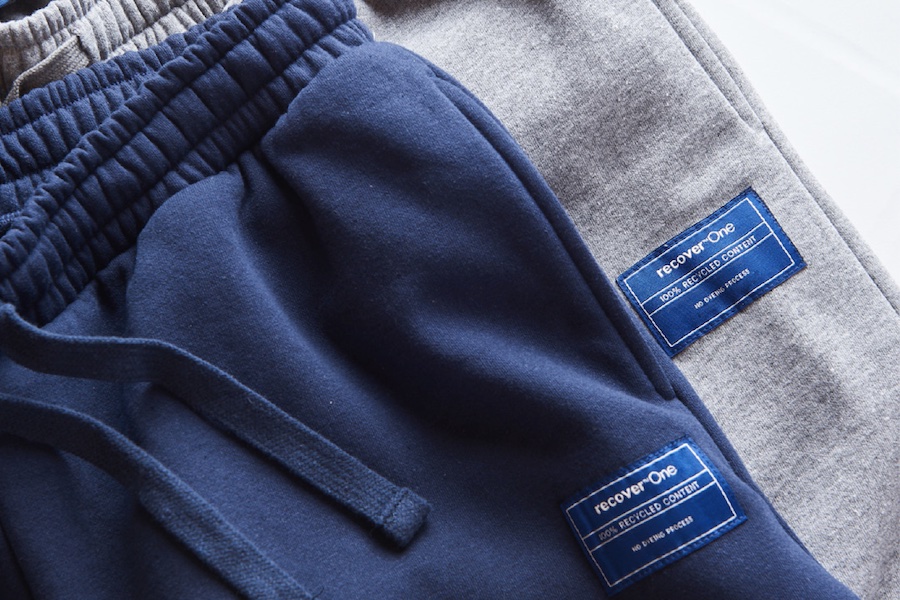
RECOVER™ launches Recover™ Yarns to accelerate recycled cotton uptake

Recover™, a leading materials science company and one of the world’s largest producers of recycled cotton fiber, today announces the launch of Recover™ Yarns, a curated portfolio of ready-to-use yarn solutions designed to accelerate the adoption of recycled cotton across the apparel supply chain.

#ITM 2026

Uster’s new Recycling Opening Index guides spinners to the perfect blend

Uster AFIS 6 now offers the key data for better decisions when blending recycled fibers. Process control is decisive in determining the quality and economic outcome. The new R Recycling Module of AFIS 6 introduces the Recycling Opening Index (ROI), so spinners can optimize their circularity credentials. It was officially launched at ITM 2026 in Istanbul, Türkiye.

Latest News

#Associations

Keeping products moving with Swedish automation at FILTECH 2026

At FILTECH 2026, taking place in Cologne from June 30th to July 2nd, members of TMAS – the Swedish textile machinery association – will highlight how the country’s engineering expertise is enabling filtration manufacturers to increase productivity, improve traceability and reduce dependence on labour-intensive manual processes.

#ITM 2026

Global Mmeeting of textile technologies, ITM 2026, attracts great interest

ITM 2026, one of the world's most prestigious organizations in the field of textile technologies, opened its doors with the participation of over 1,000 companies and company representatives from 59 countries, as well as thousands of professional visitors from nearly 100 country. Attracting thousands of international visitors on its first day, ITM 2026 once again demonstrated its status as a global meeting point for the textile industry with its advanced technologies on display, newly established business connections, and record-breaking international participation.

#Spinning

Barmag and Hitech Automation enter into partnership for an auto-doff system for texturing machines

Barmag (Suzhou) Technology Co., Ltd. and Hitech Automation Solutions PVT LTD. of Surat, India, have agreed to an exclusive partnership to jointly market Hitech’s Doffmatic automation solution for Barmag’s proven manual eFK texturing machines. In many texturing facilities, manual doffing processes remain heavily operator-dependent – resulting in issues such as increased scrap, inconsistent quality, and limited productivity.

#HIGHTEX 2026

The heart of the technical textiles and nonwovens world will beat in Istanbul

Only 1 day remains until HIGHTEX 2026 International Technical Textiles and Nonwovens Exhibition opens its doors. Bringing together manufacturers, technology developers, investors, and industry professionals from around the world, HIGHTEX 2026 is preparing to showcase the innovations shaping the future of the industry. As the countdown to this major event continues, Istanbul is once again getting ready to become the meeting point of the global technical textiles industry.

TOP