[pageLogInLogOut]

#Recycling / Circular Economy

EURATEX and partners launch the new Horizon Europe innovation project on circular & sustainable textiles
© 2022 CISUTAC / EURATEX
Launched today, the new Horizon Europe project CISUTAC will support the transition to a circular and sustainable textile sector. Launched today, the new Horizon Europe project CISUTAC will support the transition to a circular and sustainable textile sector. As part of a consortium of 27 partners working on the project, EURATEX will work towards facilitating the Circular Economy transition.

While the production and consumption of textile products continue to grow, so does the impact on the environment caused by a lack of reuse, repair and recycle of materials. Quality, durability, and recyclability are often not being set as priorities in the design and manufacturing of garments (EU Strategy for Sustainable and Circular Textiles, March 2022).

CISUTAC aims to remove current bottlenecks in order to increase textile circularity in Europe. The objective is to minimise the sector’s total environmental impact by developing new, sustainable and integrated large-scale European value chains.

The project will include most parts of the textile sector: comprising the 2 groups of fibres that represent almost 90% of all textile fibres (polyester and cotton/cellulose), and focusing on products from 3 sub-sectors experiencing most circularity bottlenecks (fashion garments, sports and outdoor goods, and workwear).

CISUTAC will follow an holistic approach covering the technical, sectoral and socio-economic aspects, and will perform 3 pilot phases to demonstrate the feasibility and value of:

  • Repair and disassembling
  • Sorting (for reuse and recycling)
  • Circular garments through fibre-to-fibre recycling and design for circularity


To realise these pilots, the consortium partners will:

  • Develop semi-automated workstations
  • Analyse infrastructure and material flows
  • Digitally enhance sorting operations (for reuse and recycling)
  • Raise awareness among consumers and the textile industry


As part of the CISUTAC consortium, EURATEX will facilitate the Circular Economy transition, liaise with other projects & initiatives, support the development of training and education material, including masterclasses and MOOC, raise awareness in Europe of the environmental impact of textile and provide input for policy, standardisation and certification to facilitate the transition to the Circular Economy.


More information on the CISUTAC project on its website:

http://www.cisutac.eu

EURATEX main contact: Cristina Gatti (cristina.gatti@euratex.eu)

More News from European Apparel and Textile Confederation (EURATEX)

#Europe

Antwerp Declaration community urges EU leaders to deliver emergency measures as Europe’s competitiveness crisis deepens

EURATEX, representing the European textile and fashion industry, joins the Antwerp Declaration Community’s call on EU Heads of State and Government to adopt emergency measures that restore industrial competitiveness and deliver tangible results for Europe’s manufacturing base in 2026.

#Europe

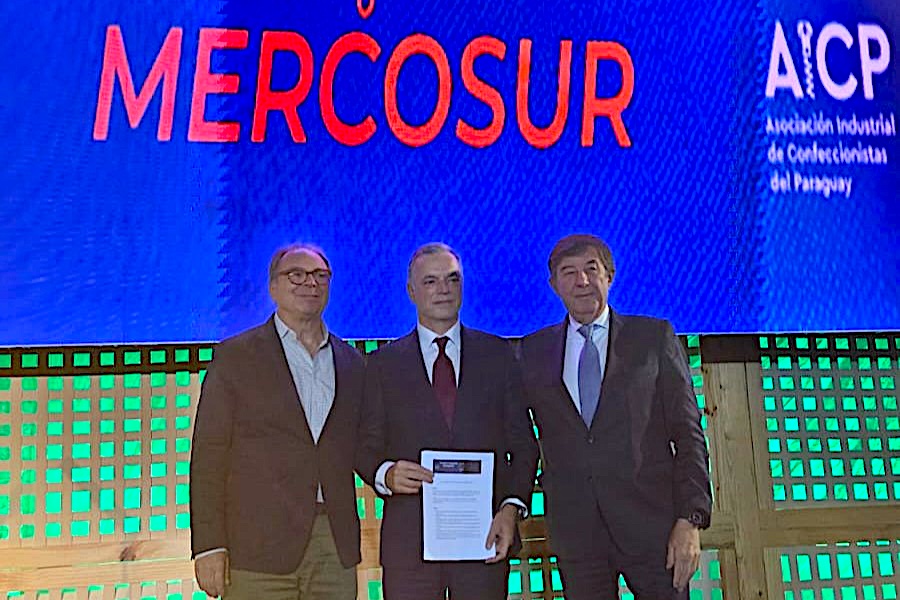
FITA, ABIT and EURATEX underline strategic importance of Mercosur – EU Partnership Agreement for the textile and apparel industry

The Argentine Textile Industry Federation (FITA), the Brazilian Textile and Apparel Industry Association (ABIT), and the European Apparel and Textile Confederation (EURATEX) continue to monitor the process of internalizing the Mercosur-European Union Partnership Agreement. This agreement is essential for the competitiveness of our industries, on both sides of the Atlantic.

#Associations

Industry associations warn against state-run EPR models in the EU

European industry associations, led by Euratex, have raised concerns over a growing trend in several EU Member States to introduce state-run Producer Responsibility Organisations (PROs) within Extended Producer Responsibility (EPR) schemes.

#Associations

European business associations celebrate the signature of the EU-Mercosur FTA

The 17th January marks a historic milestone with the signing of the EU-Mercosur Trade Agreement, creating the biggest trading block in the world. European business – represented by more than 28 associations across a wide range of sectors – warmly welcomes this signature. It sends a strong and timely signal that the EU remains open and is committed to rules-based global trade. In a time of global uncertainty, this agreement is a key growth booster.

More News on Recycling / Circular Economy

Latest News

#Textiles & Apparel / Garment

VIATT 2026 to debut German Pavilion, strengthening European participation alongside key Asian textile hubs

Vietnam’s textile and garment sector continues to be a major contributor to the country’s economic growth, with export revenues expected to reach USD 46 billion in 2025, a 5.6% increase from 2024 . From 26 – 28 February, the Vietnam International Trade Fair for Apparel, Textiles and Textile Technologies (VIATT) is set to contribute to economic growth opportunities by accelerating digital transformation and green transition across the entire textile value chain. The upcoming edition will respond to the rising demand for advanced technologies and sustainable materials with the introduction of the German Pavilion, alongside strong exhibitor participation from key Asian sectors, as well as several high-profile fringe events.

#Sustainability

Ying McGuire becomes new CEO of Cascale

Cascale today announced the appointment of Ying McGuire as Chief Executive Officer, effective June 1, 2026.

#Technical Textiles

Sustainable, lightweight, and sound absorbing: Polyester-based front trunk solution for BEVs

As car manufacturers look to further reduce their carbon footprint, Autoneum has developed an innovative front trunk solution for battery electric vehicles (BEVs), made entirely from polyester-based textile. The Ultra-Silent Frunk offers significant weight reduction, improved acoustic and thermal insulation, and uses up to 70 percent recycled material, supporting sustainable and efficient vehicle design. Autoneum, global technology leader in acoustic and thermal management for vehicles, has already received orders for the new frunk from three major OEMs in Asia and Europe to be built in three BEV models. Series production for two BEVs has been underway in China and Germany since last year.

#Raw Materials

Modern testing methods for raw cotton

The 38th International Cotton Conference Bremen will take place from 25 to 27 March 2026 at the Bremen Parliament. This conference has traditionally stood for in-depth expertise and international exchange. The program will focus on technical innovations, market trends, and regulatory frameworks across the entire value chain – from agriculture to the circular economy. With high-profile speakers, the conference is regarded as the key meeting point for the global cotton industry. Today’s focus: Cotton quality and testing methods.

TOP