[pageLogInLogOut]

#Recycling / Circular Economy

Successful industrial scale viscose filament yarn production from 100 percent Circulose®

In collaboration with the leading Chinese viscose filament yarn producer Yibin Hiest Fiber Limited Corporation, Renewcell has successfully used 100 percent Circulose® dissolving pulp in industrial scale viscose filament yarn production. While viscose staple fibers made with Circulose® have been commercially available since 2019, the filament development opens up additional product segments for 100 percent Circulose® fibers in activewear, as a substitute for polyester filament, and in luxury as a substitute for silk.

Yibin Hiest Fiber Limited Corporation (‘Yibin’), a CanopyStyle “Green Shirt” ranked viscose staple fiber and viscose filament yarn producer based in China, has verified Circulose® pulp for use at a 100 percent concentration in industrial scale viscose filament yarn production. The quality of the yarn produced from 100 percent Circulose® by Yibin in December 2021 exceeds “Superior Grade” according to Chinese National Standards of GB/T 13758-2008. This marks the first known industrial scale production of virgin quality viscose filament yarn made from 100 percent recycled textiles. The new commercial partnership with Yibin has been facilitated by Renewcell’s exclusive trading partner Ekman Group.

Patrik Lundström, CEO Renewcell — Photo: Alexander Donka


"Our partnership with Renewcell and Ekman is an exciting and giant step,” commented Deng Min, President of Yibin Grace Group Co. Ltd. and Yibin Hiest Fiber Limited Corporation. “Circulose® filament yarn made from 100% recycled textile waste is a significant addition to our Made in Green product portfolio. There is a clearly increasing consciousness for more sustainable material in textile industry. I am convinced that by combining our expertise and knowledge, we will reduce carbon footprint and accelerate progress towards our ambitious goal of making fashion a closed loop.”


The development follows on the successful lab scale production of 100 percent Circulose® filament yarn in collaboration with the German research institute Fraunhofer in 2020.
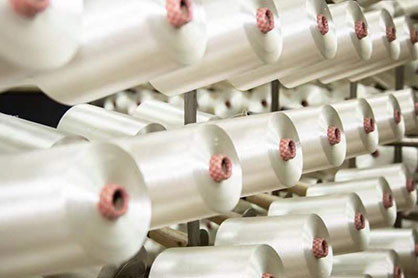
100 percent Circulose® viscose filament yarn spools — Photo: Yibin Hiest Fiber Limited Corporation


“I am delighted to expand the commercial Circulose® portfolio to include filament yarn. I am also impressed by Yibin’s innovation capacity and look forward to deepening our collaboration and start shipping Circulose® filament yarn to brand partners in 2022. In Renewcell’s endeavor to make fashion circular, we will keep working together with leading partners to prove the usefulness of Circulose® in different textile applications” comments Patrik Lundström, CEO of Renewcell.
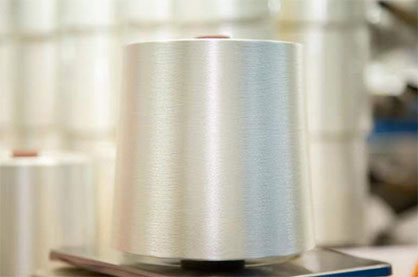

100 percent Circulose® viscose filament yarn — Photo: Yibin Hiest Fiber Limited Corporation


More News from TEXDATA International

#ITM 2026

ITM 2026: The new geography of textile production

New production hubs are emerging across North Africa and Central Asia, while Türkiye is accelerating its transformation toward higher-value, technology-driven and more sustainable textile manufacturing.

#Research & Development

“Production is a product”

From technical textiles and AI-driven robotics to the limitations of textile circularity: Professor Dr Thomas Gries looks back on more than two decades of development at ITA Aachen. In the interview, he explains why production technology remains a decisive success factor, discusses international collaborations and innovation ecosystems, and shares his views on the transformation of production landscapes and the challenges facing an increasingly regulated industry.

#Knitting & Hosiery

“We need to move away from the price trap and return to a value-driven mindset.”

With its new Textile Innovation Center, KARL MAYER is sending a strong signal for innovation, collaboration, and the future of textile applications. In this interview, Karl Josef Mayer discusses new opportunities in warp knitting, the processing of staple fibres, recycling, the changing role of machinery manufacturers, and why the textile industry must once again focus more strongly on the value of textiles. by Oliver Schmidt

#Associations

“Innovation, resilience and international experience remain the great strengths of the Swiss textile machinery industry”

Geopolitical uncertainty, growing competitive pressure from China, new free trade agreements and the shift towards a circular economy are currently reshaping the global textile industry. In this interview, Cornelia Buchwalder discusses the current mood within the Swiss textile machinery sector, the industry’s distinctive innovative strength, new market opportunities in India and Asia, and the technological trends that could shape the upcoming trade fair cycle leading up to ITMA 2027.

More News on Recycling / Circular Economy

#Recycling / Circular Economy

Mesdan to showcase laboratory-scale textile recycling solutions at Textiles Recycling Expo 2026

At Stand 2235 during the Textiles Recycling Expo 2026 in Brussels, Mesdan will present laboratory solutions designed to support the development and evaluation of textile-to-textile recycling processes.

#Recycled Fibers

Carbios and Wankai postpone startup of China’s first PET biorecycling plant to 2028

The industrial deployment of enzymatic PET recycling in Asia is progressing, but at a slower pace than initially planned. French recycling technology company Carbios and its Chinese partner Wankai New Materials have announced that the commissioning of their planned PET biorecycling facility in Haining, Zhejiang Province, has been postponed and is now expected in the first half of 2028.

#Sustainability

Closing the Footwear Loop reveals challenges and opportunities for circular footwear

The footwear industry faces one of the most complex circularity challenges in the fashion sector. A new Phase 1 report from the Fashion for Good initiative Closing the Footwear Loop, developed together with Circle Economy, provides new insights into the composition, condition and recycling potential of post-consumer footwear waste.

#Recycling / Circular Economy

Textiles Recycling Expo 2026 to spotlight the companies turning textile circularity into industrial reality

As the textile industry faces mounting pressure to scale circular solutions, improve recycling infrastructure, and respond to evolving regulation, Textiles Recycling Expo 2026 will bring together the organisations leading that transformation in practice.

Latest News

TOP