[pageLogInLogOut]

#Recycling / Circular Economy

ANDRITZ to supply textile recycling system to Renewcell, Sweden
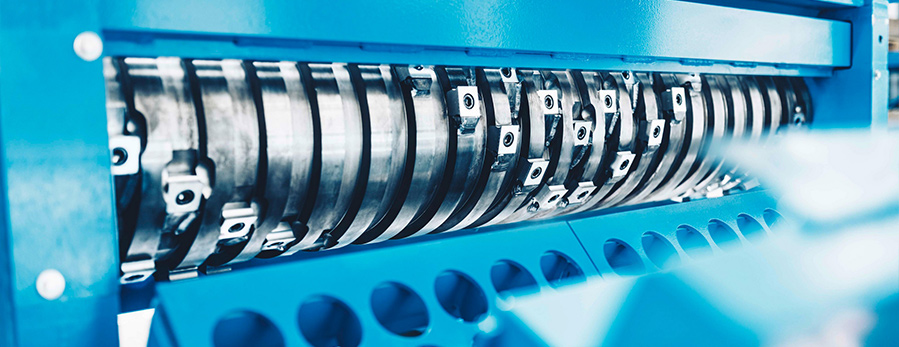
ADuro shredder technology equipped with innovative cutting systems © ANDRITZ
International technology Group ANDRITZ has received an order from Renewcell to supply textile recycling equipment to its greenfield recycling plant in Sundsvall, Sweden.

Start-up of the plant is scheduled for the first half of 2022.

Core elements of the new recycling system will be ANDRITZ ADuro shredders, which will shred used textiles in only one shredding step. With unique capabilities, the ADuro shredders cut the incoming material uniformly and cleanly while enabling a very high throughput. In the subsequent separation stages, contaminants like buttons and zippers will be removed from the shredded textiles. Renewcell uses this pre-treated material to produce a pure, natural dissolving pulp made from 100% recycled textiles.

In addition, the scope of supply includes additional key pieces of equipment. With the state-of-the-art equipment from ANDRITZ, up to 60,000 tons of used textiles per year can be handled in the new recycling plant.


Since 2016 Renewcell has cooperated with ANDRITZ to develop its process in its test plant in Kristinehamn, Sweden, convincing the company of the high performance and quality of ANDRITZ technology in processing challenging materials such as textiles.

Renewcell, headquartered in Stockholm, Sweden, was founded in 2012 and is specialized in the recycling of textiles. The recycling technology employed by Renewcell dissolves used cotton and other cellulose fibers and transforms them into a new raw material, the so called Circulose® pulp, which is further used to make biodegradable virgin quality viscose or lyocell textile fibers for the fashion industry.

More News from TEXDATA International

#ITM 2026

ITM 2026: The new geography of textile production

New production hubs are emerging across North Africa and Central Asia, while Türkiye is accelerating its transformation toward higher-value, technology-driven and more sustainable textile manufacturing.

#Research & Development

“Production is a product”

From technical textiles and AI-driven robotics to the limitations of textile circularity: Professor Dr Thomas Gries looks back on more than two decades of development at ITA Aachen. In the interview, he explains why production technology remains a decisive success factor, discusses international collaborations and innovation ecosystems, and shares his views on the transformation of production landscapes and the challenges facing an increasingly regulated industry.

#Knitting & Hosiery

“We need to move away from the price trap and return to a value-driven mindset.”

With its new Textile Innovation Center, KARL MAYER is sending a strong signal for innovation, collaboration, and the future of textile applications. In this interview, Karl Josef Mayer discusses new opportunities in warp knitting, the processing of staple fibres, recycling, the changing role of machinery manufacturers, and why the textile industry must once again focus more strongly on the value of textiles. by Oliver Schmidt

#Associations

“Innovation, resilience and international experience remain the great strengths of the Swiss textile machinery industry”

Geopolitical uncertainty, growing competitive pressure from China, new free trade agreements and the shift towards a circular economy are currently reshaping the global textile industry. In this interview, Cornelia Buchwalder discusses the current mood within the Swiss textile machinery sector, the industry’s distinctive innovative strength, new market opportunities in India and Asia, and the technological trends that could shape the upcoming trade fair cycle leading up to ITMA 2027.

More News on Recycling / Circular Economy

#Recycling / Circular Economy

Managed workwear services are providing a blueprint for the circular textile economy

Managed workwear service providers are demonstrating how commercial success and circularity can go hand in hand by extending garment lifespans through repair, laundering, reuse and recycling, according to “Managed workwear services—a circular textile economy ahead of the game”, a new 14‑page report from the global business information company Textiles Intelligence.

#Recycling / Circular Economy

Eco-design as the foundation of circular textiles

Based on the results of an extensive European analysis, the Erasmus+ project Skills4Circularity is currently developing three practice-based training modules covering recycling technologies, eco-design for the circular economy and sustainable manufacturing. This was preceded by a comprehensive company survey and a joint analysis conducted by the project partners under the leadership of IVGT. The results show that the greatest challenges lie not so much in a lack of technology as in skills gaps.

#Recycled Fibers

Usha Yarns secures growth equity investment from Fullerton Carbon Action Fund

Usha Yarns Limited (“Usha Yarns”), a producer of high-quality recycled yarns with advanced, well established production processes, announced a growth equity investment from the Fullerton Carbon Action Fund (“Fullerton”), a private equity strategy managed by Fullerton Fund Management that backs established mid-market companies across Emerging Asia to accelerate decarbonisation.

#Recycling / Circular Economy

German 'ZOLL' turns end-of-life uniforms into valuable raw materials

Together with CWS Workwear, the German Customs Administration is extending the life cycle of service uniforms through reuse, recycling and material recovery, demonstrating how circular economy principles can be successfully implemented in the public sector while delivering significant savings.

Latest News

#Functional Fabrics

PERFORMANCE DAYS announces new focus topic & forums for October 2026

With its upcoming October 13–14, 2026 edition, PERFORMANCE DAYS is placing the spotlight on one of the textile industry’s most important transformations: “Bio-Based Materials – From Fiber to Fabric”, a two-part Focus Topic exploring the future of bio-based innovation across the textile value chain. Part 1, presented in October 2026, will focus on fibers and next-generation material developments, while Part 2 at the March 2027 edition will shift the perspective toward dyeing, finishing, additives, and processing technologies.

#Nonwoven machines

MENANG rapidly resumes production with new ANDRITZ airlay line after major fire

MENANG, a Malaysian manufacturer of nonwoven automotive components, has resumed production after a major fire severely damaged its airlay line in mid-March 2026. A new airlay line supplied by ANDRITZ enabled production to restart within only four months.

#Exhibitions & Events

Febratex 2026 to be the largest edition of the leading textile trade fair in the Americas with 10 exhibition halls

Febratex 2026 will be the largest edition in the history of the leading textile trade fair in the Americas. Dedicated to the textile and apparel manufacturing industries, the event will take place from August 18–21, 2026, in Blumenau, Santa Catarina, Brazil, with a strong focus on technology, sustainability, and business generation.

#Raw Materials

Cotton Brazil Dialogues field trip brings international stakeholders closer to Brazil’s cotton production chain

How do you build trust across the global textile value chain? By opening the farm gates. This is the principle behind the Cotton Brazil Dialogues. At the end of July, the programme welcomed its first group of international participants for a five-day immersion into Brazilian cotton production, combining field visits with technical workshops to showcase the quality, sustainability, innovation and traceability behind one of the world’s leading cotton origins.

TOP