[pageLogInLogOut]

#Recycling / Circular Economy

SABIC and plastic energy set to start construction of pioneering advanced recycling unit to increase production of certified CIRCULAR POLYMERS

In another significant contribution towards the development of a circular economy for plastics, SABIC and Plastic Energy are set to commence construction on the first commercial unit to produce its flagship certified circular polymers, part of the TRUCIRCLE™ portfolio, which are made from the upcycling of mixed and used plastic.
  • SABIC and Plastic Energy are set to start construction of world’s first commercial unit to significantly upscale production of certified circular polymers derived from used plastic
  • The engineering and construction stage brings this pioneering project one step closer to beginning operations in Geleen, The Netherlands
  • Project demonstrates Plastic Energy and SABIC’s ongoing commitment to drive towards a circular economy for plastics by increasing the availability of more sustainable products

SABIC, a global leader in diversified chemicals, along with partner Plastic Energy, a pioneer in chemical plastics recycling, are set to start the engineering and construction phase for the unit, which will be based in Geleen, the Netherlands and is expected to become operational in the second half of 2022. The project will be realized under a 50-50 joint venture called SPEAR (SABIC Plastic Energy Advanced Recycling BV) and is being executed with a Top Sector Energy Subsidy from the Ministry of Economic Affairs in the Netherlands.

As part of the project’s market foundation stage, SABIC has worked together with Plastic Energy and leading customers and converters to produce and commercialise certified circular polymers since early 2019. The new unit will enable SABIC to significantly upscale the production of certified circular polymers to provide customers with greater access to sustainable materials which have been recycled, repurposed and produced in a way that can help protect our planet’s natural resources, whilst acting as a drop-in solution.

‘Advancements in this pioneering project take us one step closer to driving the change needed to become a circular global industry,’ said Fahad Al Swailem, Vice President, PE & Sales at SABIC. ‘We have overcome significant external, global challenges to reach this important milestone and remain fully committed to closing the loop on used plastic. We are continuing to collaborate on an unprecedented level with our partners upstream and downstream to achieve this.’


‘It has been an exciting journey in making our vision of building advanced recycling plants come to life, and we are delighted to announce the construction of this new facility with SABIC,’ said Carlos Monreal, Founder and CEO of Plastic Energy. ‘We have worked jointly with SABIC towards our common goal of making plastics more sustainable and moving towards a more circular economy for plastics.”
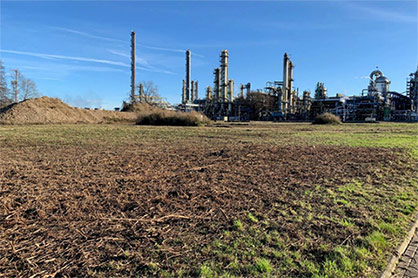
Site of the new advanced recycling unit ready for construction in Geleen, The Netherlands..  © 2021 Sabic
Site of the new advanced recycling unit ready for construction in Geleen, The Netherlands.. © 2021 Sabic


SABIC’s certified circular polymers are produced using Plastic Energy’s advanced recycling technology to convert low quality, mixed, and used plastic, otherwise destined for incineration or landfill, into TACOIL. The TACOIL produced in the new commercial unit will be used by SABIC in their production process as an alternative to traditional fossil materials to create new circular polymers.

The circular polymers form part of SABIC’s TRUCIRCLE portfolio and services for circular innovations. Launched in 2019, the TRUCIRCLE portfolio is a considerable milestone on the journey towards closing the loop and creating a circular economy for plastics and intends to provide manufacturers with access to more sustainable materials. The TRUCIRCLE portfolio spans design for recyclability, mechanically recycled products, certified circular products from feedstock recycling of used plastic and certified renewables products from bio-based feedstock.



More News from TEXDATA International

#Texprocess 2026

Texprocess 2026: Automation, digitalisation and AI redefine textile processing

Making investment decisions in textile processing has become significantly more demanding. Increasing energy costs, a shortage of skilled labour and ongoing geopolitical uncertainties are compelling companies to focus on technologies that deliver clear gains in efficiency and process reliability. This applies equally to apparel manufacturing and to the processing of technical textiles and high-performance materials. As a result, modernisation initiatives are assessed more carefully – even as the need to upgrade production systems continues to intensify.

#Techtextil 2026

Techtextil 2026: Between innovation pressure & market reality

From 21 to 24 April 2026, Techtextil in Frankfurt am Main will once again become the central meeting point for the international technical textiles and nonwovens industry. Running in parallel, Texprocess will focus on the industrial implementation of textile processing technologies as the leading platform in this field. Together, the two trade fairs form a closely integrated presentation and working platform along the entire textile value chain – from material development to finished applications.

#Techtextil 2026

Between geopolitical pressure and industrial resilience

In this interview, Dr. Janpeter Horn (VDMA) discusses the current challenges facing textile machinery manufacturers, shaped by geopolitical tensions, regulatory developments and subdued investment. He also outlines why innovation strength, integrated solutions and strategic positioning remain key to global competitiveness.

#Texprocess 2026

Between investment restraint and modernization pressure

Texprocess 2026 takes place in a complex market environment shaped by uncertainty and innovation pressure. In this interview, Elgar Straub (VDMA) explains why the trade fair is particularly relevant this year and which technologies are driving efficiency and competitiveness.

More News on Recycling / Circular Economy

#Recycling / Circular Economy

Solving the Feedstock Gap: Unlocking Post-consumer Feedstocks for Textile-to-Textile Recycling in Europe

Fashion for Good launches Project FAE (Feedstock Activation Europe) to develop the sorting and pre-processing infrastructure needed to channel non-rewearable post-consumer textiles into textile-to-textile (T2T) recycling at scale. The project is a practical response to one of the most pressing problems in textile circularity: making post-consumer waste a viable, commercially competitive raw material for recyclers.

#Techtextil 2026

BASF at Techtextil 2026: Helping to shape the future of the textile industry with tangible solutions

At the leading international trade fair for technical textiles and nonwovens from April 21 to 24, 2026 at the Messe Frankfurt, BASF will present numerous solutions and new projects in the textile sector to customers and partners at booth B 68 in hall 11.0. The focus is on product innovations and future-oriented technologies.

#Recycled Fibers

RE&UP partners with Madewell and ISKO on textile-to-textile denim capsule

RE&UP Recycling Technologies is accelerating the shift toward a closed-loop textile economy through a collaboration with American denim brand Madewell and global fabric manufacturer ISKO. By transforming approximately 20,000 pairs of post-consumer jeans into recycled feedstock for a textile-to-textile denim capsule, RE&UP demonstrates the commercial viability of circular systems in the denim sector.

#Recycled Fibers

Syre and JEPLAN Announce Strategic Partnership to Accelerate Textile-to-Textile Recycling

JEPLAN, INC. the Japanese pioneer developing and operating chemical recycling technologies for circularity in packaging and textiles, and Syre, the textile impact company on a mission to hyperscale textile-to-textile recycling, announced today a strategic partnership. Together, the companies aim to extensively accelerate the timeline towards commercialization of next generation textile-to-textile polyester recycling technology.

Latest News

#Heimtextil 2027

Heimtextil celebrates Milan Design Week honoring partnerships with Patricia Urquiola and Alcova Milano

Heimtextil is represented at Milan Design Week with its strong design partners Patricia Urquiola and Alcova. At Villa Pestarini, the leading trade fair spotlighted its dynamic collaborations with acclaimed designer Patricia Urquiola and Alcova Milano.

#Texprocess 2026

Kornit Digital expands digital production into footwear and technical textiles with Presto MAX PLUS

Kornit Digital (NASDAQ: KRNT) (“Kornit” or the “Company”), a global pioneer in sustainable, on-demand digital fashion and textile production, today unveiled the Kornit Presto MAX PLUS, a new roll-to-roll system expanding digital manufacturing into footwear, automotive interiors, military camouflage, high-performance sportswear, and high-end furnishings. Debuting at Texprocess 2026 in Frankfurt, Presto MAX PLUS enables entirely new applications for on-demand textile production.

#Textile processing

NATULON® zipper series surpasses 50% of YKK’s global zipper sales

YKK Corporation (Headquarters: Chiyoda-ku, Tokyo; President: Koichi Matsushima; hereafter, YKK) announces that the global sales share of its NATULON® zipper series—zippers that incorporate recycled materials—has exceeded 50%.

#Smart Textiles

Covestro, FILK Freiberg, and OUT e.V. develop flexible, conductive polymer smart textile system

As the smart textiles market continues to grow across healthcare, personal protection, sportswear, and automotive applications, developers are seeking new ways to integrate electronic functionality directly into textiles, without the rigidity and complexity of conventional wiring. To address this challenge, FILK Freiberg Institute, an independent research institution with expertise in polymer coatings for textile applications, collaborated with Optotransmitter-Umweltschutz-Technologie (OUT) e.V. The joint project, funded under the German Industrielle Gemeinschaftsforschung (IGF) program of the Bundesministerium für Wirtschaft und Energie (BMWE), focused on developing flexible, conductive polymer surfaces for next-generation smart textiles.

TOP