[pageLogInLogOut]

#Recycling / Circular Economy

Borealis receives European Investment Bank loan for development of circular economy solutions for plastics
© 2020 Borealis
The European Investment Bank (EIB) and Borealis have successfully closed a benchmark financing agreement that supports the Borealis research, development and innovation (RDI) programme in the circular economy sphere. The EIB will provide a EUR 250 million loan supporting Borealis’ multi-year investment programme in the area of plastics circularity, in line with its objectives to support innovation, climate action and sustainability.
  • EIB grants EUR 250 million in funding for Borealis’ research, development and innovation (RDI) programme
  • Loan to boost Borealis research and development efforts in propelling the industry towards plastics circularity
  • Borealis corporate sustainability strategy in close alignment with goals of European Green Deal and EU Plastics Strategy

The loan enables Borealis to intensify the at its Innovation Centres in Austria, Sweden and Finland. Polyolefins produced by Borealis are used in a wide range of applications in consumer products, packaging, power transmission cabling, and industrial and construction materials. 
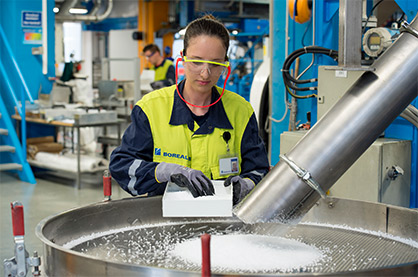
Borealis employee working on large compounding line in Linz, Austria © 2020 Borealis


As a leading provider of innovative polyolefins solutions, Borealis aims to make its own core business more circular. The circular economy is one of three key areas in the new Borealis 2035 Group Strategy which was announced earlier this year. Borealis has been at the forefront of industry efforts to accelerate the transformation to a circular economy of plastics. Its proprietary Borstar®, Borlink™ and Borceed ™ technologies have recently been enriched by ™, an evolving technology that enables the production of high-quality recycled polyolefins (rPOs), and ™, a portfolio of circular polyolefins produced with renewable feedstock derived entirely from waste and residue streams. Borealis has already begun working with value chain partners in recent years to develop and launch innovative, value-adding circular solutions in a variety of industries, including energy, automotive and consumer packaging. Borealis also aims to integrate an ever larger share of recycled plastics in its products.


The European Investment Bank (EIB) is the long-term lending institution of the European Union and owned by its Member States. It provides long-term capital and advisory support for sound investments that contribute towards EU policy goals. The European Investment Bank Group is one of the largest public supporters of innovation in the European Union. Since 2000, the Group has invested over EUR 210 billion in innovation and skills in the European Union and beyond in order to advance innovation and address the social and economic challenges of today and tomorrow. To help tackle climate change, the EIB Group will also aim to support EUR 1 trillion of investments in climate action and environmental sustainability in the critical decade from 2021 to 2030. This also includes circular economy projects. Over the past five years (2015-2019), the EIB has provided around EUR 2.5 billion in loans to co-finance more than 100 circular projects, and stands ready to do more to help meet the lending needs of the circular economy transition.
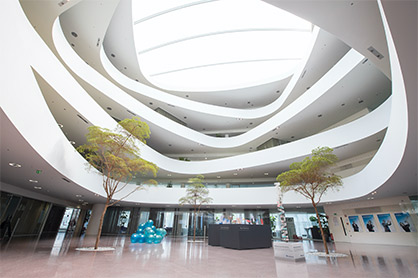
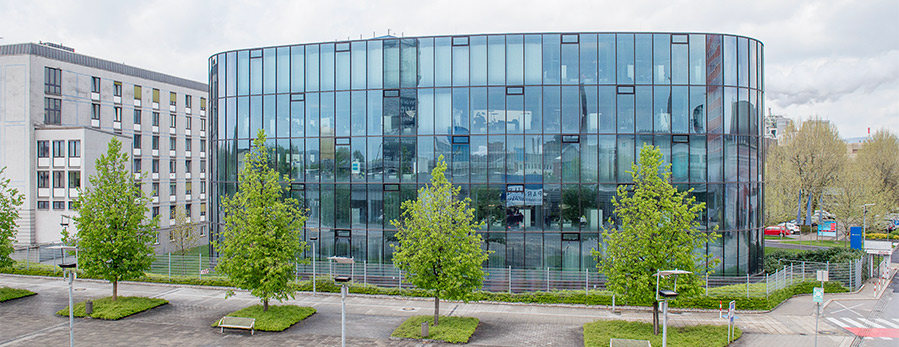
Borealis Innovation Headquarters Atrium Showroom in Linz, Austria © 2020 Borealis


“We are exceedingly pleased to be able to boost our research and innovation activities in Europe thanks to the EIB,” says Alfred Stern, Borealis CEO. “It is good to have strong partners who share our belief in the importance of re-inventing for more sustainable living.”

“The promotion of circular solutions in the polyolefins industry is aligned with our goals to accelerate the transition to a circular economy, including for plastics, and to support cutting-edge innovation,” explains Ambroise Fayolle, EIB Vice-President.“We are happy to continue and intensify our collaboration with Borealis AG by signing our largest transaction together so far. As the EU’s climate bank, we are eager to support private sector partners that are committed to environmental sustainability.”
More News from TEXDATA International

#Texprocess 2026

Texprocess 2026: Automation, digitalisation and AI redefine textile processing

Making investment decisions in textile processing has become significantly more demanding. Increasing energy costs, a shortage of skilled labour and ongoing geopolitical uncertainties are compelling companies to focus on technologies that deliver clear gains in efficiency and process reliability. This applies equally to apparel manufacturing and to the processing of technical textiles and high-performance materials. As a result, modernisation initiatives are assessed more carefully – even as the need to upgrade production systems continues to intensify.

#Techtextil 2026

Techtextil 2026: Between innovation pressure & market reality

From 21 to 24 April 2026, Techtextil in Frankfurt am Main will once again become the central meeting point for the international technical textiles and nonwovens industry. Running in parallel, Texprocess will focus on the industrial implementation of textile processing technologies as the leading platform in this field. Together, the two trade fairs form a closely integrated presentation and working platform along the entire textile value chain – from material development to finished applications.

#Techtextil 2026

Between geopolitical pressure and industrial resilience

In this interview, Dr. Janpeter Horn (VDMA) discusses the current challenges facing textile machinery manufacturers, shaped by geopolitical tensions, regulatory developments and subdued investment. He also outlines why innovation strength, integrated solutions and strategic positioning remain key to global competitiveness.

#Texprocess 2026

Between investment restraint and modernization pressure

Texprocess 2026 takes place in a complex market environment shaped by uncertainty and innovation pressure. In this interview, Elgar Straub (VDMA) explains why the trade fair is particularly relevant this year and which technologies are driving efficiency and competitiveness.

More News on Recycling / Circular Economy

#ITM 2026

BB Engineering unveils new, patented “Val-uePack” spin pack at ITM

At the upcoming ITM in Istanbul, taking place June 9–13 at the Tüyap Fair Convention and Congress Center in Hall 7, Booth 702B, BB Engineering will once again be represented at a joint booth with its parent company, Barmag, and its representative, Tekstil Servis. The German machine manufacturer will show-case its expertise in man-made fiber and recycling technology, presenting its entire product portfolio, which includes compo-nents such as extruders and filters, as well as complete sys-tems for spinning synthetic fibers, air-texturing, and PET recy-cling.

#Recycled Fibers

Syre expands partnership with Target to advance next-generation recycled materials at scale

Advancing next-generation materials to support scalable circular solutions across global retail Stockholm, May 2026 — Syre, the textile impact company hyperscaling textile-to-textile recycling today announced an expanded collaboration with Target to accelerate the adoption of next-generation recycled materials across retail at scale.

#Recycling / Circular Economy

Project REWEAR investigates diverse economies of rewear as a global practice of circularity

Every year, European households discard millions of tonnes of clothing. Around a quarter of what gets separately collected is exported, much of it classified as rewearable. A significant share ends up in markets like Kantamanto in Accra, Ghana, where an estimated 15 million garments arrive every week. New research published today reveals what happens when that clothing arrives.

#Recycling / Circular Economy

RE&UP contributes to Global Fashion Summit 2026 circularity discussion

RE&UP contributed to the global conversation on textile circularity at Global Fashion Summit 2026 in Copenhagen, where Fatih Konukoğlu, Chairman of RE&UP and Vice Chairman of Sanko Holding, took part in both the keynote session “The New Rules” and the panel discussion “A Reckoning and Renewal for Circular Horizons”, alongside leaders from H&M Group, Looper Textile Co. and Sourcing Journal.

Latest News

#INDEX 2026

“We clearly see that reliability, flexibility, service and total cost of ownership are becoming increasingly important again.”

The nonwovens industry continues to face a challenging market environment. Nevertheless, AUTEFA Solutions reports successful projects, new line sales and growing demand for energy-efficient and flexible solutions. In this interview, André Imhof of AUTEFA Solutions talks about competitiveness against Chinese suppliers, new service and recycling concepts, the growing importance of application development and the opportunities created by countercyclical investments.

#INDEX 2026

“Needle punching technology is more universal and sustainable than ever!”

Needle punching technology was long regarded as a rather traditional and comparatively slow technology within the nonwovens industry. In this interview, Johann Philipp Dilo explains why needle punching is more relevant than ever today – ranging from energy efficiency and resource conservation to hygiene applications, new machine concepts and design-oriented nonwoven solutions.

#Research & Development

Textile climate control system in workwear – exhibition at the 2026 SME Innovation Day!

Conventional protective workwear often reaches its limits during strenuous physical activity. In particular, the transport of sweat and excess body heat poses a problem. The German Institutes of Textile and Fiber Research (DITF) conducted research on flow-optimized, air-conducting textile structures that enable targeted climate control directly on the body. These structures can be integrated straight into protective work garments. The textile climate control system supports the body’s natural thermoregulation. This contributes to improved workplace safety and comfort.

#Nonwovens

PET spunbond from China – EDANA welcomes imposition of provisional anti-dumping measures

On 13 May 2026, after eight months of investigation, the European Commission imposed provisional anti-dumping duties of 45.6-50.0% on imports of PET spunbond from China. EDANA welcomes this expression of the Commission’s clear determination to protect EU industries from the unfair trade practices of Chinese producers.

TOP