[pageLogInLogOut]

#Recycling / Circular Economy

Fashion for Good launches Cotton Reloop Matrix Project to unlock commercial scale for recycled cotton
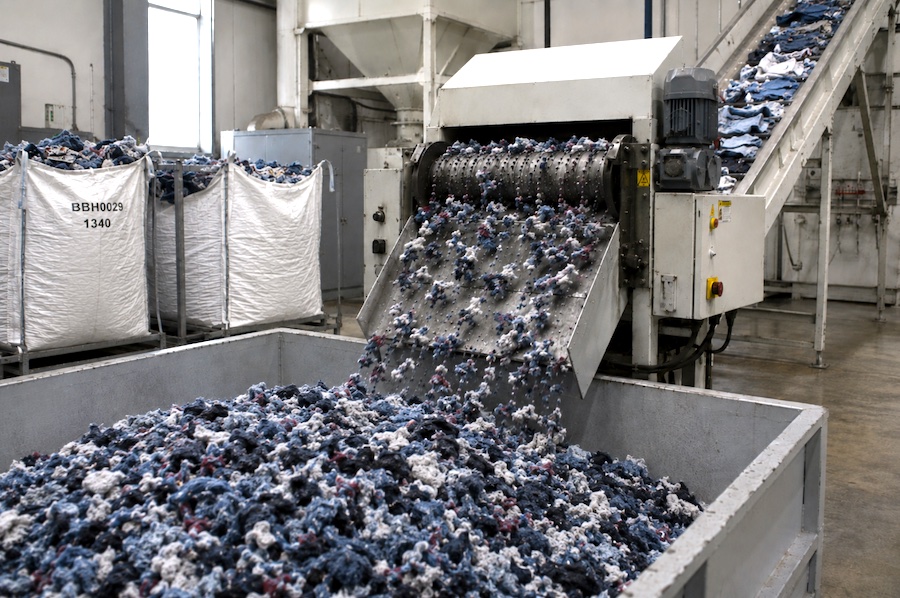
Photo: AI-generated (ChatGPT)
Fashion for Good today announces the launch of the Cotton Reloop Matrix Project, a cross-industry initiative that will map and physically validate the quality of commercially available recycled cotton yarns against brand specifications, giving the industry a data-backed overview of how quality, price, and recycled content intersect. The project is convened with Fashion for Good partners Arvind, BESTSELLER, C&A, Interloop, Reformation, and Shahi, together with ecosystem partner Uster.

Cotton accounts for 19% of global fibre production and is a core part of the material mix. Although alternative recycling pathways exist to utilise cotton-rich textile waste feedstock, they do not produce a cotton output. Therefore, mechanical recycling is a crucial pathway to utilise waste and create recycled cotton yarns and fabrics.

Through the mechanical recycling process, textile waste is shredded and re-opened into loose fibres that can be respun into yarn. However, shredding shortens and weakens the fibres, so only 45 to 50% of the input survives as usable material. The rest is lost as short fibres and processing waste, and because the surviving fibres are shorter than virgin cotton, spinners can only blend a limited share back into new yarn. In practice, that caps most yarns at around 10% recycled content: any higher and the fabric isn't durable enough for commercial use. While recyclers have available capacities, integrating a meaningful percentage of recycled cotton remains complex for brands navigating trade-offs around quality and price.

Testing happens in isolation, with recyclers and brands working from separate data sets, and no shared reference comparison to close the gap between them. Alongside this, brands often evaluate recycled blends against 100% virgin cotton standards, which makes for a challenging comparison for recycled cotton. To help unlock greater market adoption, the industry must shift its focus from virgin parity to fit for purpose, matching the realistic performance profile of recycled fibres to appropriate product applications while utilising targeted quality augmentation pathways where higher performance is required.

Katrin Ley, Managing Director at Fashion for Good, highlights the need for a common evidence base: “Recycled cotton has been talked about as a scale-ready solution for years, but the industry has been working from fragmented data and siloed testing. This project is about closing that gap with hard evidence. By plotting real recycler capabilities against real brand quality targets, and by co-developing the operational standards to support them, we can move recycled cotton from a case-by-case experiment to a category the industry can actually plan around.”

Nikki Player, Senior Director of Raw Materials at Reformation, sees the shared evidence base as an opportunity to increase recycled cotton content: “Recycled cotton isn't new to us: it's a fiber we've worked with for years. What's been limiting is the ability to scale to higher blend percentages without compromising fabric quality or hand-feel. What this project offers is a shared reference point where brands and recyclers work from the same evidence. We hope this opens the door to greater scalability and uptake over time.”

The Cotton Reloop Matrix Project is convened with a coalition spanning the cotton value chain: Fashion for Good partners BESTSELLER, C&A, Reformation, Interloop as manufacturing partner, Arvind, and Shahi as advisors to the project; and ecosystem partner Uster, whose spinning and yarn-testing expertise underpins the physical validation phase.

The Cotton Reloop Matrix Project works in two parallel tracks.

First, Fashion for Good maps what recyclers can produce today against what brands need, across knit and woven categories. The result is a Quality Matrix that shows, at a glance, where recycled cotton is ready for commercial use and where targeted innovation can extend its reach.

Second, the project moves from the map to the mill. Selected recyclers, in collaboration with the project partners, will produce 10 demonstrator fabrics and run five quality augmentation trials in real production conditions, generating a Trade-off Analysis that shows how recycled content, price and quality shape one another.

Best practices from these trials will be captured in a universal, open-source spinning Standard Operating Procedure (SOP), designed to support consistent manufacturing across global supply chains. The project closes with the Roadmap for Cotton Circularity, an industry-facing report setting out the data infrastructure needed to scale recycled cotton adoption across product categories and regions.

Sources: Textile Exchange (2025), Materials Market Report 2025, 18 September 2025; Anas, M. S., Faheem, M., & Mikučionienė, D. (2025), “Challenges and limitations in recycling of post-consumer cotton denim waste into new textiles”, Journal of Natural Fibers, 22(1), 2570080.


More News from Fashion for Good

#Recycled Fibers

C&A and Zalando join Altag® Fiber Club to accelerate adoption of agricultural waste-based fibres

Fashion for Good and AltMat announced today that C&A and Zalando have joined the Altag® Fiber Club as its first brand signatories, marking a critical commercial milestone in the journey to mainstream adoption of next-generation fibres derived from agricultural waste.

#Sustainability

Wendy Woods named Chair of the Fashion for Good BV Board

Fashion for Good is pleased to welcome Wendy Woods as its new board chair, succeeding Jill Beraud as of 1 September 2026, who had led the board since 2022.

#Textile chemistry

Fashion for Good launches DW(O)R-X to navigate the emerging landscape of PFAS-free finishes

Fashion for Good announced the launch of Project DW(O)R-X, a collaborative initiative designed to benchmark PFAS alternative durable water- and oil-repellent (DW(O)R) chemistries. Responding to growing market demand for alternatives to PFAS‑based finishes, the project aims to generate reliable, comparable data that can support informed sourcing decisions and the assessment of emerging chemistries.

#Sustainability

Closing the Footwear Loop reveals challenges and opportunities for circular footwear

The footwear industry faces one of the most complex circularity challenges in the fashion sector. A new Phase 1 report from the Fashion for Good initiative Closing the Footwear Loop, developed together with Circle Economy, provides new insights into the composition, condition and recycling potential of post-consumer footwear waste.

More News on Recycling / Circular Economy

#Recycled Fibers

Recover and SUPIMA partner to develop recycled Pima cotton fibers and yarns

Recover and SUPIMA have partnered to turn waste from SUPIMA cotton production into a new line of recycled fibers and yarns. The collaboration will explore how recycled American-grown Pima cotton can be used in a wider range of yarns and garments for the premium market.

#Recycling / Circular Economy

ReSpin founder Åsa Strandberg receives Innovation Champion of the Year 2026 award

Åsa Strandberg, founder and CEO of Swedish textile recycling company ReSpin AB, has been named Innovation Champion of the Year 2026. The award recognises her development of RespinJenny, a patented technology designed to recycle textile waste into new, high-quality fibres without using water, chemicals or additional virgin raw materials. The distinction was presented by the Olle Oscarsson Foundation and Axera Inkubator at Guldgalan in Sweden.

#Recycling / Circular Economy

Circulose resumes recycling of discarded cotton textiles and appoints interim CEO

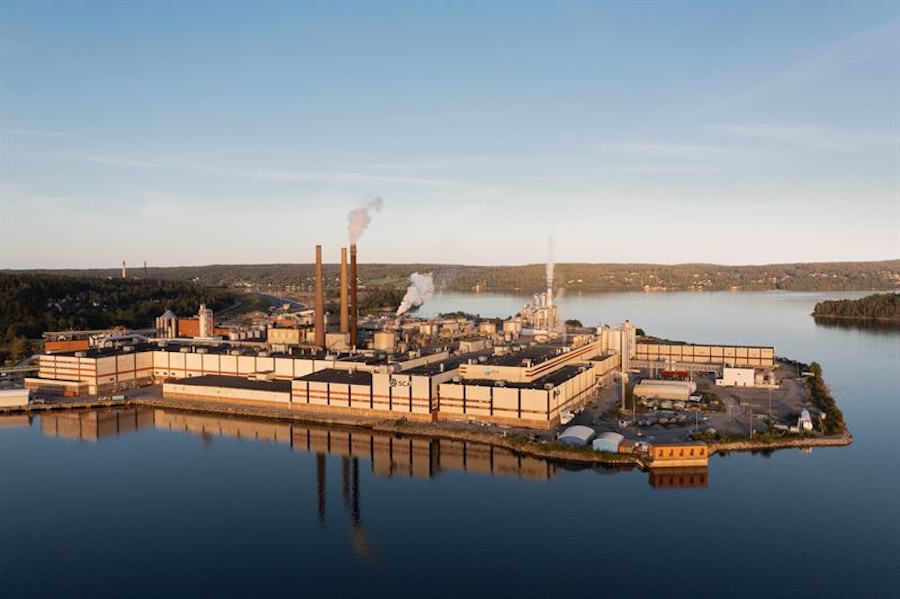
Circulose today announced its restart of commercial-scale production plant at Ortviken in Sundsvall, Sweden, marking a significant step in scaling next-generation materials for the global fashion industry. The Ortviken plant is the world’s first commercial-scale chemical textile recycling facility. Its restart demonstrates that the fashion industry is seeking ways to scale proven solutions that move beyond pilots and into commercial production.

#Recycled Fibers

Reju expands textile-to-textile recycling network with six international fabric manufacturers

Reju, a textile-to-textile regeneration company, is expanding its industrial network through collaborations with six fabric manufacturers in Europe and the Americas. The initiative aims to accelerate the integration of regenerated polyester into textile manufacturing and support the development of finished fabrics for commercial applications.

Latest News

#ITMA Asia + CITME 2026

VDMA: German textile machinery manufacturers see signs of recovery as China remains a key market

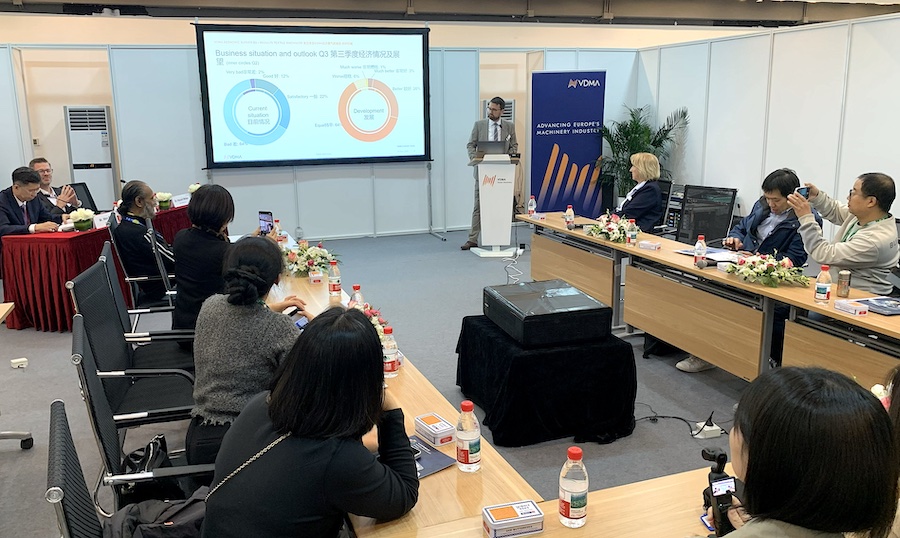
Strong German participation at ITMA ASIA + CITME 2026 underscores China's importance for the textile machinery industry, while business surveys point to improving prospects for 2027.

#ITMA Asia + CITME 2026

ITMA ASIA + CITME 2026 opens in Shanghai, showcasing intelligent and sustainable textile manufacturing

ITMA ASIA + CITME 2026 opened today at the National Exhibition and Convention Center in Shanghai, bringing the global textile machinery industry together from 20 to 24 November.

#Associations

Christoph René Holler to succeed Uwe Mazura as managing director of textil+mode

Christoph René Holler will take over as managing director of textil+mode, the German textile and fashion industry confederation, on 1 January 2027. He succeeds Uwe Mazura, who has led the association for 13 years and will remain in charge of collective bargaining policy through the next round of negotiations before retiring.

#Heimtextil 2027

Heimtextil and The Florentin showcase the role of textiles in hotel design

Heimtextil has partnered with Frankfurt hotel The Florentin by Althoff Collection for its new Interior.Architecture.Hospitality campaign. The collaboration will give architects, interior designers and other contract-sector professionals a closer look at how textiles were used in the hotel. The two studios behind the project will discuss their work at Heimtextil on 14 January 2027 in Hall 4.1.

TOP