[pageLogInLogOut]
TRÜTZSCHLER SPINNING - THE NEW CARD

#Industry 4.0 / Digitalization

White House reduces production planning time by up to 80% with Coats Digital’s FastReactPlan
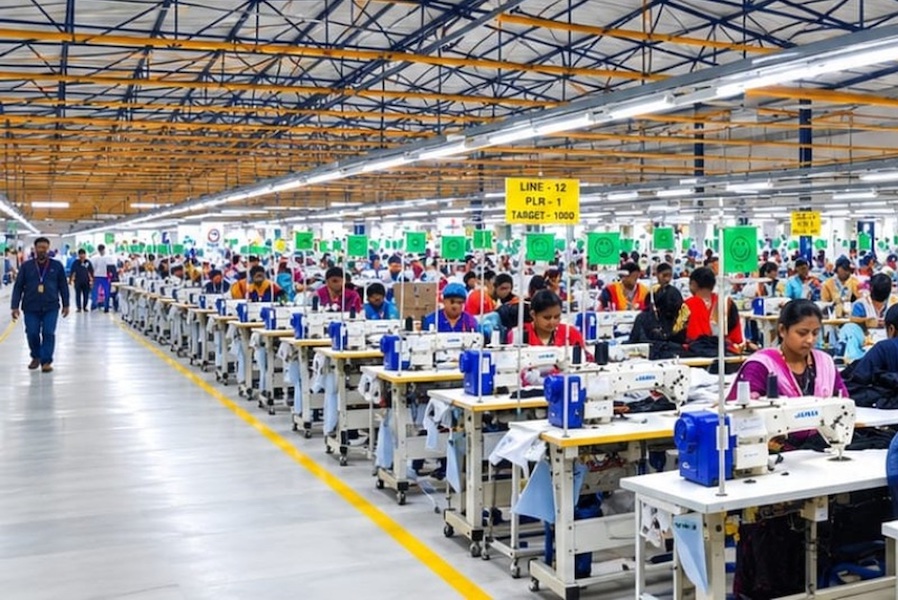
A view of White House’s extensive garment manufacturing facilities in India. The company operates approximately 1,800 sewing machines across five production units and has a monthly capacity of around 800,000 garments. © 2026 Coats Digital
Indian garment manufacturer White House has reduced its production planning cycle by 60–80% following the implementation of Coats Digital’s FastReactPlan software. The integrated planning solution provides greater visibility across production, capacity and material requirements while supporting faster decision-making and improved delivery performance.

Coats Digital has announced the successful implementation of its FastReactPlan production planning solution at White House, a vertically integrated Indian garment manufacturer. By consolidating production, capacity, order, material and pre-production information into a centralised planning environment, the company has significantly reduced planning times and improved coordination across its manufacturing operations.

Founded in 1962 and headquartered in Chennai, White House employs approximately 4,000 people and operates 1,800 sewing machines across five manufacturing units. With a production capacity of around 800,000 garments per month and annual turnover of approximately USD 65 million, the company supplies international fashion brands including Ralph Lauren, GANT, Marco Polo and Timberland.

Its vertically integrated operations cover knitting, fabric dyeing, garment dyeing, printing, embroidery and sewing.

Replacing fragmented planning processes

Before implementing FastReactPlan, White House relied heavily on spreadsheets, emails and information distributed across different departments and locations.

This limited visibility of available production capacity, order progress and pre-production activities, making it difficult to respond quickly to changing customer requirements and accurately assess delivery commitments.

Mohamed Mohsyn, Director at White House, describes the previous challenges: “Our planning process was heavily dependent on manual work, with Excel sheets, emails and information spread across different locations. We had limited visibility of our forward capacity and pre-production status, while lead times were often based on experience and historical records. This made it difficult to respond quickly to customer requests, make accurate commitments and manage changes effectively. We needed a more reliable and consistent way of planning across the business.”

FastReactPlan was introduced to establish a more consistent and integrated planning process across the company.

Connected to White House's existing ERP system, the software brings together production planning, capacity management, order scheduling, material requirements, pre-production tracking and delivery planning.

This provides planning teams with a consolidated view of current orders, available capacity, production requirements and the status of materials and approvals.

Planning cycle reduced by 60–80%

According to Coats Digital, the implementation has reduced White House's production planning cycle by 60–80%, significantly shortening the time required to prepare, review and update production schedules.

The improved visibility enables planners to identify capacity constraints and potential production bottlenecks earlier, allowing corrective measures to be taken before they disrupt manufacturing schedules.

The software also provides greater transparency regarding fabric availability, trims, approvals and other pre-production requirements.

As a result, planning, merchandising, sourcing, production and logistics teams can coordinate their activities using consistent information and respond more quickly when production priorities change.

Coats Digital reports that the improvements have also contributed to significantly better on-time delivery performance, although no specific delivery performance figures were provided.

Ilias Agridiotis, CEO at White House, comments on the operational changes: “Fast React Plan has proved a real game changer for us. We can now plan much faster and we have a clear understanding of what is happening across the whole business. The improved coordination between teams has given us greater control of our production and more confidence in the commitments we make to customers.”

Integrated planning for apparel manufacturing

FastReactPlan forms part of Coats Digital's Manufacturing Solution Suite and is designed for apparel, textile and footwear manufacturers.

The software integrates capacity planning, material requirements and critical path management into a single platform to support more accurate production scheduling, improved resource utilisation and shorter lead times.

By connecting planning information across departments, the system is intended to help manufacturers manage increasingly complex production environments and changing customer requirements.

Roshan Rakesh Srivastava, Customer Success Manager at Coats Digital, highlights the importance of connected planning systems: “The apparel industry is facing a future where change and uncertainty are becoming the norm. Manufacturers that can respond quickly to shifting customer requirements, production constraints and market conditions will be better placed to stay competitive. White House is a strong example of how embracing connected, technology-driven planning can give manufacturers the agility and control they need to navigate that future with confidence.”


More News from

#India ITME 2026

India’s textile industry: Current position, growth targets and industrial development

With ambitious export targets, major investments in manufacturing infrastructure and new international trade agreements, India is pursuing a comprehensive development strategy for its textile and apparel industry. An overview of the industry’s current position, government initiatives, progress achieved and challenges ahead.

#Weaving

“A complex design is only useful if the machine can reproduce it consistently”

Andreas Schnabel, Head of R&D for Technical Weaving Systems at Stäubli, discusses how 3D weaving can create textile reinforcements tailored to the loads within a composite component, where near-net-shape weaving can reduce processing steps and material waste, and what it takes to produce complex structures reliably and economically. He also explains how manufacturers can adapt Stäubli’s modular TF weaving platforms to new applications and how the company’s centre of excellence in Bayreuth supports the transition from research to industrial production.

#India ITME 2026

India ITME 2026: Textile technology meets India's investment ambitions

With ambitious growth targets, government incentive programmes and industrial development initiatives already underway, India is preparing for the next stage of its textile transformation. Against this backdrop, the 12th India ITME, taking place in Greater Noida from 4 to 9 December 2026, arrives at a particularly important moment for machinery manufacturers and textile producers alike.

#ITMA Asia + CITME 2026

ITMA ASIA + CITME 2026: Shanghai prepares for a record edition

With record demand for exhibition space, a strong presence of international technology suppliers and growing interest in automation and intelligent manufacturing, ITMA ASIA + CITME 2026 will provide an important overview of technological developments in the world’s largest textile producing region.

More News on Industry 4.0 / Digitalization

#Industry 4.0 / Digitalization

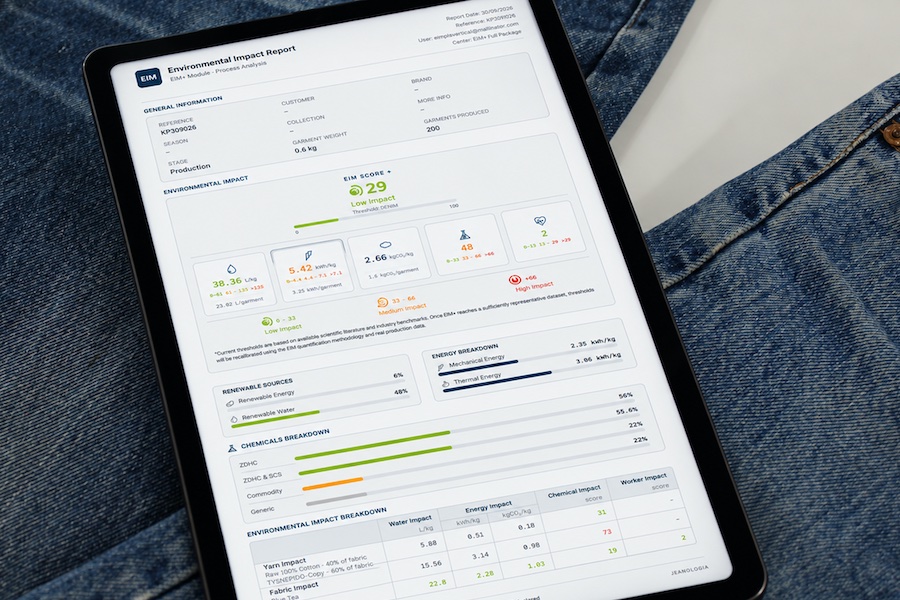
Jeanologia and BCome connect factory data with Life Cycle Assessment and Digital Product Passports

A new white paper by EIM by Jeanologia and BCome demonstrates how primary environmental data from denim finishing processes can be integrated into a garment's Life Cycle Assessment (LCA) and prepared for use in a Digital Product Passport (DPP). A comparative case study highlights significant improvements at the production stage while also showing how these translate into the environmental performance of the finished garment.

#Industry 4.0 / Digitalization

Jeanologia presents expanded EIM platform and COMMON GROUND collection at Kingpins Amsterdam

Jeanologia is presenting two approaches to textile product development at Kingpins Amsterdam on October 14–15: measuring the environmental impact of textile production and exploring new creative possibilities through garment finishing technologies.

#Software

UNIFEQ Europe adopts Coats Digital’s GSDCost and AI-powered GSDQuest to support rapid growth

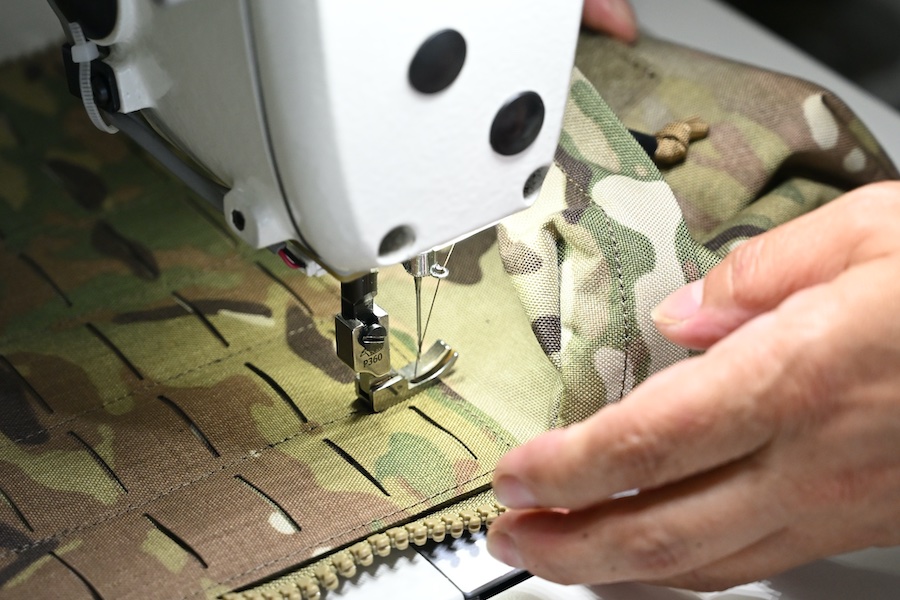
Coats Digital is pleased to announce that rapidly growing Polish defence and uniform manufacturer UNIFEQ Europe Sp. z o.o. has invested in its award-winning GSDCost solution together with its AI-powered GSDQuest platform to establish a consistent approach to garment costing, improve sewing-floor productivity and accelerate labour costing for tenders and new products.

#Industry 4.0 / Digitalization

EIM evolves into a new Environmental Intelligence to measure the impact of textile production

¿Do we really know the environmental impact behind a garment? Answering this question remains one of the textile industry’s major challenges. Garment production involves multiple stages, from yarn and fabric to final finishing, carried out by different players across the supply chain. Accesing reliable data from each process, connecting it and establishing a common language are essential to understanding a product’s true impact.

Latest News

#ITMA Asia + CITME 2026

Saurer showcases flexible spinning solutions from bale to yarn at ITMA ASIA + CITME 2026

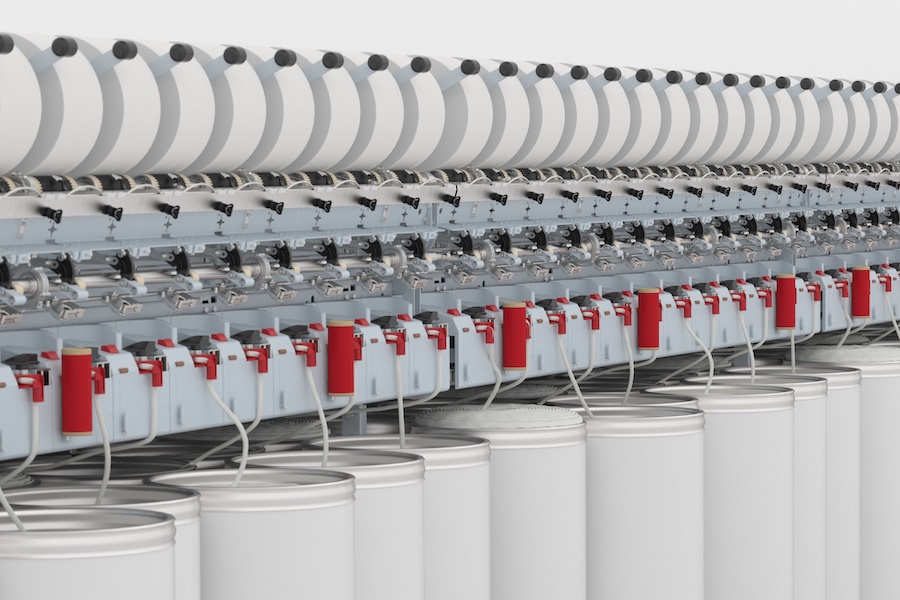
At ITMA ASIA + CITME 2026 in Shanghai, Saurer will demonstrate how its advanced technologies enable maximum flexibility across the entire spinning process, from bale to yarn and twisting. Visitors to hall 6.1, booth A58, can explore solutions designed to optimise production, improve efficiency and help mills respond quickly to changing market demands. Saurer's experts will be available to discuss individual production challenges and tailored solutions.

#India ITME 2026

Uster to present novel solutions at India ITME 2026

Tackling contamination is a critical quality target in yarn production – and Uster now enables spinners to make the right choices for optimized profitability, with top technology, precise data and integrated analysis across the entire process. The new Uster Contamination Control solution and latest Uster Vision Shield 3i put spinners in command of contaminant removal, ensuring yarn quality, minimizing waste and protecting profits. These exciting developments – and even more news – will be featured at India ITME 2026.

#Nonwovens

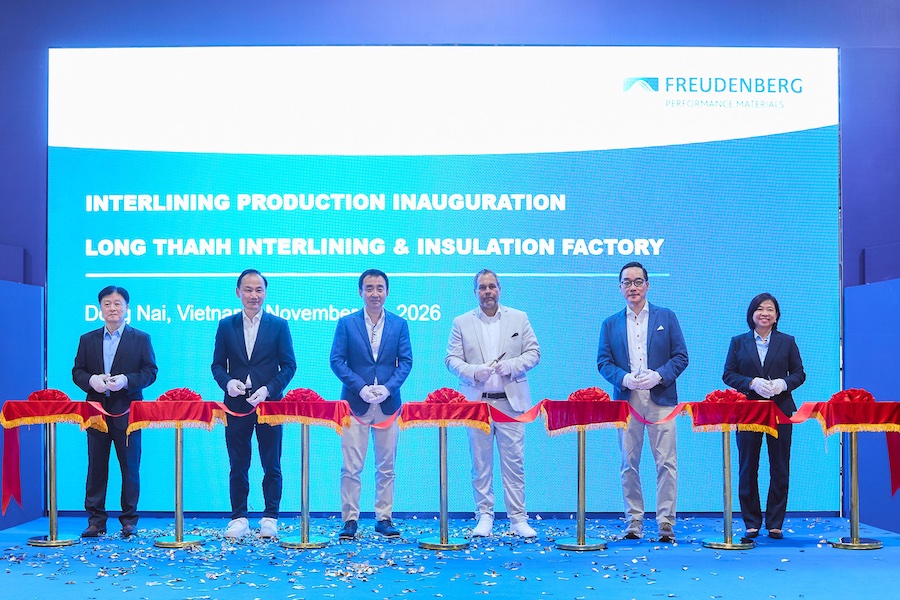
Freudenberg Performance Materials brings interlining production to Vietnam for faster regional supply

Freudenberg Performance Materials Apparel (Freudenberg Apparel) has expanded its manufacturing capabilities in Vietnam with local apparel interlining production at its factory in Long Thanh, Dong Nai. Apparel brands and manufacturers in Southeast Asia can now source both interlinings and comfortemp® thermal insulation from Vietnam, benefiting from shorter lead times, improved supply responsiveness, and consistent quality standards across Freudenberg Apparel’s regional manufacturing network.

#EU Textile Strategy

EURATEX and Egyptian industry groups sign textile cooperation agreement

The European Apparel and Textile Confederation (EURATEX) has signed a memorandum of understanding with the Apparel Export Council of Egypt (AEC), the Textile Export Council of Egypt (TEC) and the Egyptian Exporters Association (EXPOLINK). The agreement sets out plans to help Egyptian manufacturers prepare for EU sustainability requirements, promote investment and strengthen ties between European and Egyptian textile and clothing companies.

TRÜTZSCHLER SPINNING - FROM WASTE TO VALUE
TOP