[pageLogInLogOut]

#Recycling / Circular Economy

Versatility of Naia™ Renew featured at Première Vision Paris 2025
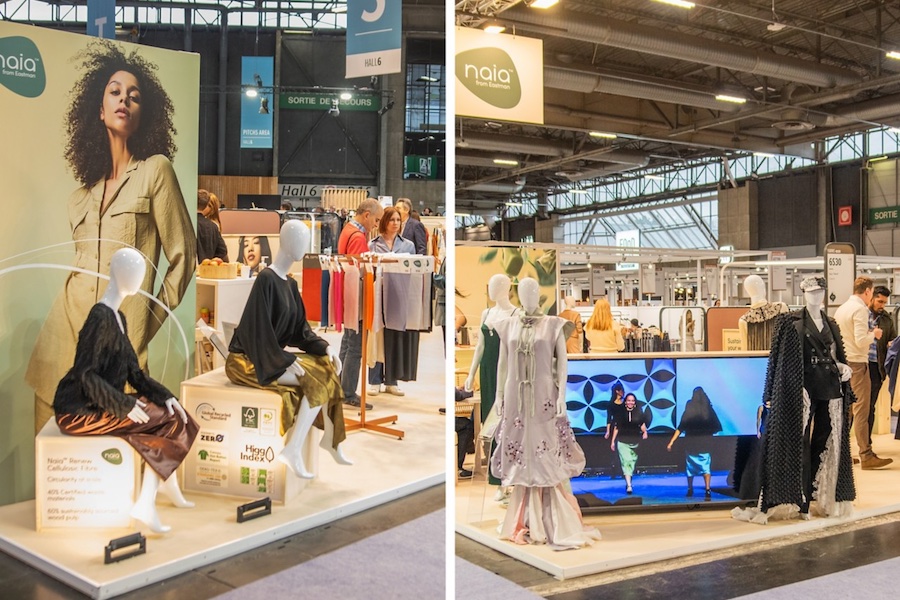
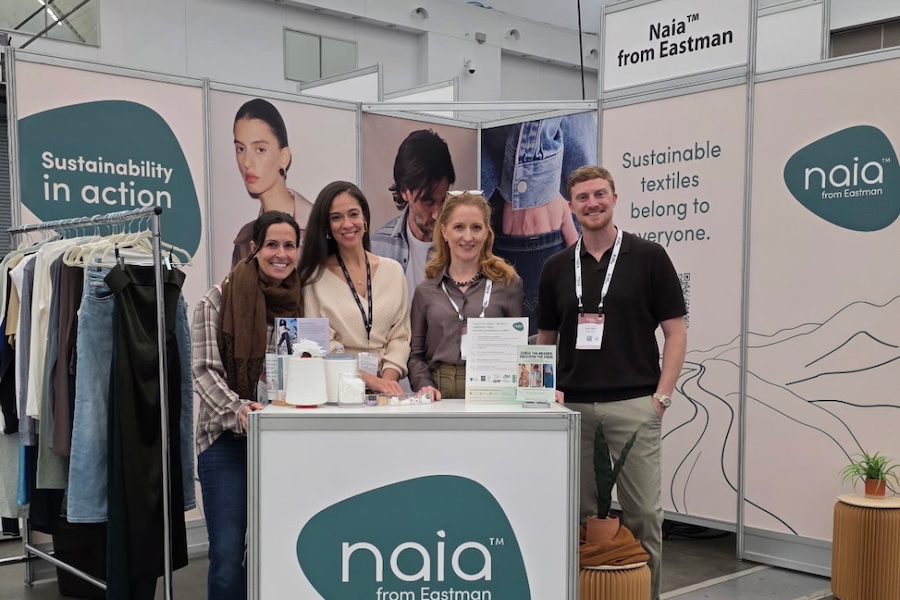
The versatility of Eastman Naia™ Renew staple fiber was spotlighted at Première Vision Paris in mid-February. The curated display featured a diverse array of fabrics and garments developed in collaboration with various partners and brands.
Naia™ booth in PV Paris 2025 fully demonstrates the variability and diversity of Naia™ fabrics © 2025 Eastman


Visitors explored Naia™ Renew collections showcasing the fiber’s sustainability and ability to enhance both performance and aesthetic appeal across a variety of applications, including woven, knitted and blended fabrics. These styles offer performance benefits such as durability, quick-drying properties, skin-friendly softness and superior comfort. 

“Première Vision Paris provided a key platform for Eastman Naia™ to connect with designers, brands and innovators,” said Ruth Farrell, general manager of Eastman’s textiles division. “We welcomed the opportunity to share the responsible vision of Naia™ to create sustainable style for everyone.”

Farrell participated in a panel discussion, “How savoir-faire is reinventing the living world,” that explored innovative, bioengineered and biobased materials. Panelists discussed lab-grown alternatives reshaping fashion’s relationship with nature. 

“The potential of Naia™ fibers is already inspiring brands worldwide,” Farrell said. “This is evident in the numerous commercial garments and market-ready applications that were on display, showcasing how Naia™ has become a staple in shops and wardrobes everywhere.” 

Naia™ Renew partners with leading European mills that were also highlighted at Première Vision Paris. These mills bring advanced textile expertise and sustainability initiatives to the table. 

“These collaborations support the shift toward nearshoring,” Farrell explained. “This approach helps reduce lead times, streamline logistics and minimize transportation-related emissions, ultimately lowering the overall environmental footprint. Furthermore, these partnerships ensure Naia™ Renew staple fibers are integrated into high-quality fabrics that meet the demands of today’s fashion industry, paving the way for a more sustainable future.” 

Two featured partners at Première Vision included Riopele from Portugal and Pakipek from Turkey. Riopele has adopted Naia™ Renew fiber to create sustainable spun yarns and high-performance fabrics, while Pakipek integrates the fiber into its environmentally responsible womenswear textiles. 

“This partnership with Eastman represents a significant milestone in our commitment to sustainability,” said Angela Telles, product manager from Riopele. “It demonstrates how companies from diverse backgrounds can collaborate to create a more circular future.” 

“Through our collaboration with Eastman, Pakipek utilizes acetate yarn to produce staple fiber products that offer exceptional softness and enhanced sustainability,” said Serkan Bükümcü board member of Pakipek. “This innovative blend delivers superior comfort while supporting eco-friendly practices. We take pride in contributing to a more sustainable future for a better world.” 
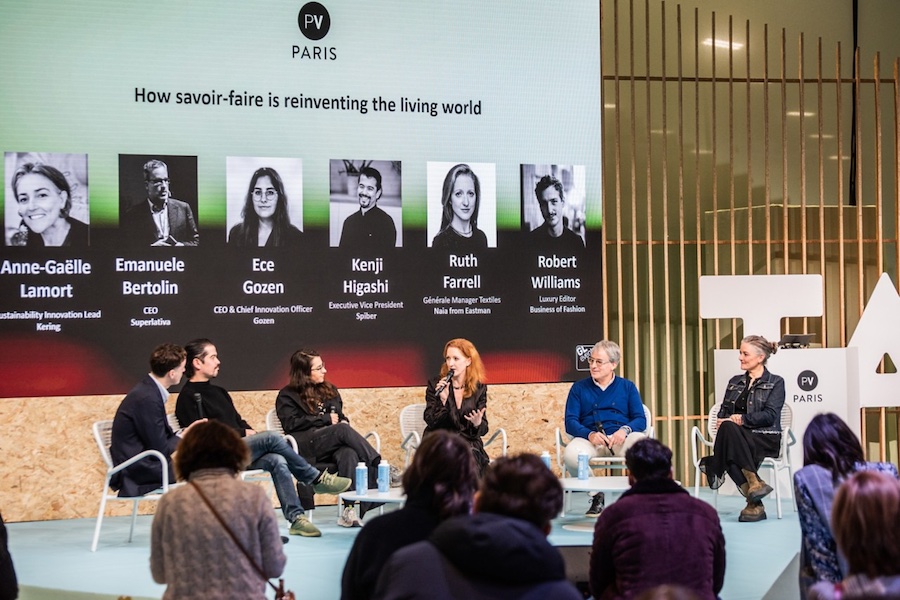
Ruth Farrell joined the panel discussion on “How savoir-faire is reinventing the living world” to share the innovation of NaiaTM fiber © 2025 Eastman


Riopele from Portugal and Pakipek from Turkey have adopted Naia™ Renew staple fiber to create sustainable spun yarns and high-performance fabrics © 2025 Eastman


More News from Eastman

#Recycled Fibers

Eastman Naia™ highlights circularity and responsible sourcing at Textile Exchange 2026

Scaling sustainable practices across businesses, supply chains and landscapes is one of the defining challenges facing the textile industry. At the 2026 Textile Exchange Conference, held October 12–16 in Vancouver under the theme “The Implementation Era,” Eastman Naia™ showcased how its commitments to circularity, responsible sourcing and forest conservation translate into practical action.

#Recycled Fibers

Eastman Naia™ brings versatility to Kingpins Amsterdam

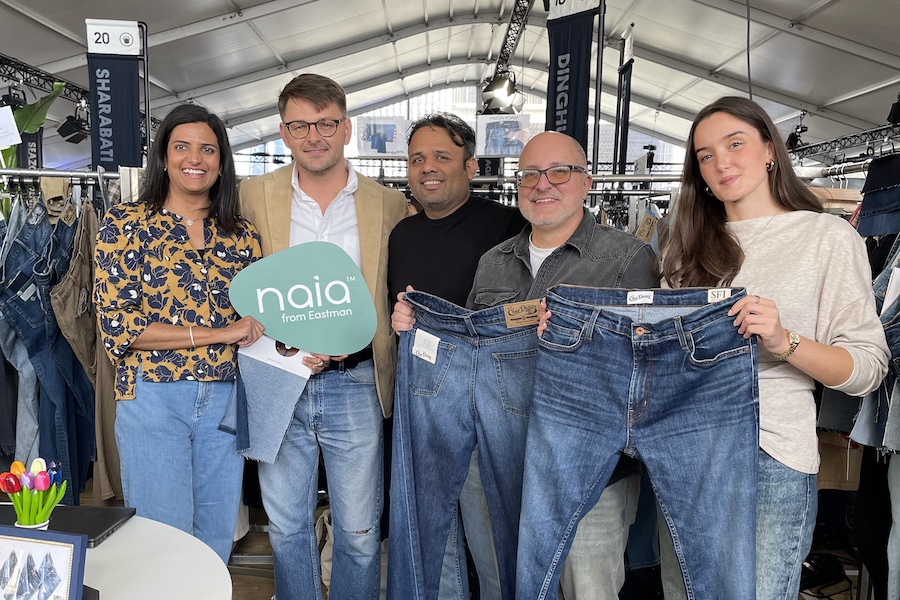
Denim continues to evolve, responding to changing consumer expectations for comfort, adaptability and functionality across different styles, occasions and seasons. At Kingpins Amsterdam, taking place October 14–15, Eastman Naia™ highlights how the versatility of Naia™ Renew staple fiber can help manufacturers address different denim needs through thoughtful fiber blending, while preserving the distinctive character of denim.

#Recycled Fibers

Naia™ from Eastman strengthens western hemisphere textile connections at Apparel Sourcing Show Guatemala

As brands and retailers explore more diversified and responsive sourcing networks, the Naia™ brand from Eastman is strengthening its engagement with the textile and apparel value chain across the western hemisphere. From August 18–20, the company will participate for the first time in Apparel Sourcing Show Guatemala, a regional meeting point for apparel sourcing, manufacturing and nearshoring.

#Man-Made Fibers

Eastman Naia™ brings the SEEDS theme to life at PREFACE LA

Eastman Naia™ is participating in PREFACE LA, taking place July 29–30, to present applications of its filament yarn and staple fiber across fashion and denim.

More News on Recycling / Circular Economy

#Recycling / Circular Economy

IVGT presents initial findings from the Erasmus+ project Skills4Circularity

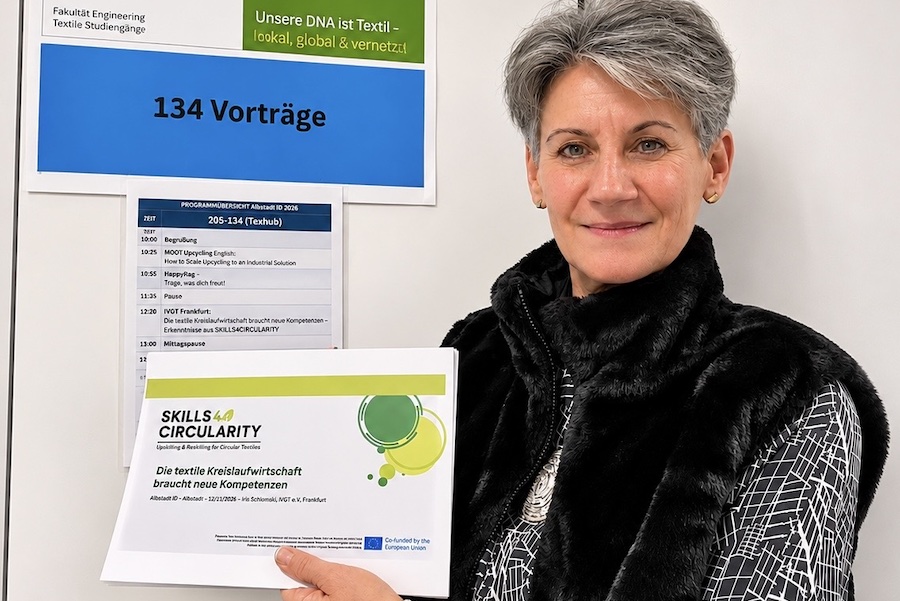
At Albstadt ID 2026, hosted by Albstadt-Sigmaringen University of Applied Sciences, IVGT project manager Iris Schlomski presented initial findings from Skills4Circularity on 12 November 2026. She opened her presentation with an estimate from the European Environment Agency: the EU generated around seven million tonnes of textile waste in 2022. The Erasmus+ project brings together 21 partners from twelve countries to identify the skills textile and clothing professionals need to design more durable products, use fewer resources in production and recover fibres after use.

#Recycling / Circular Economy

DITF establishes CYCLOTEXUM recycling center to advance mechanical and solvent-based textile recycling

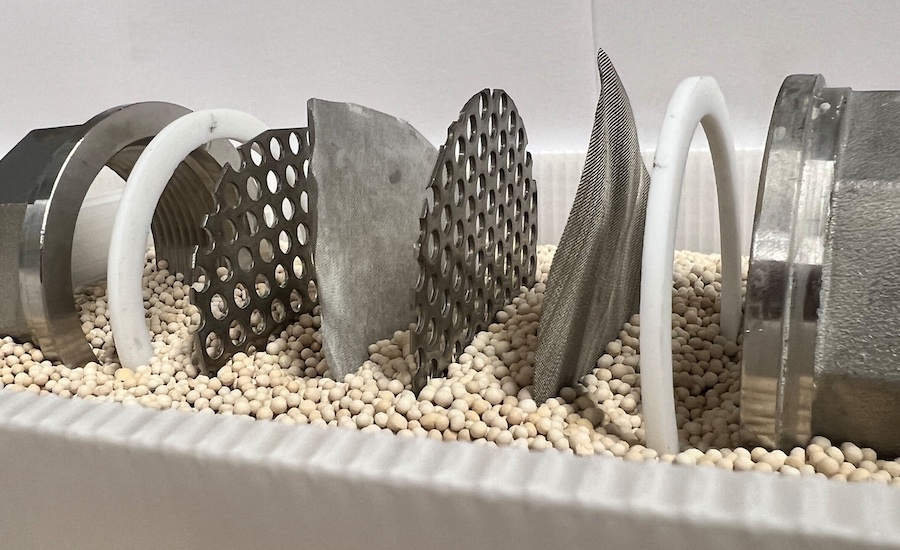
As part of the CYCLOTEXUM research project, the German Institutes of Textile and Fiber Research Denkendorf (DITF) established the CYCLOTEXUM recycling center. There, in collaboration with industry partners, the center develops application-oriented solutions for mechanical and solvent-based recycling processes. The technologies developed make a significant contribution along the textile value chain toward the efficient use of textile resources in the future and the transition of production in the German textile sector to a circular economy. The project was funded by the Ministry for the Environment, Climate and Energy Sector of the State of Baden-Württemberg.

#Recycled Fibers

Recover and SUPIMA partner to develop recycled Pima cotton fibers and yarns

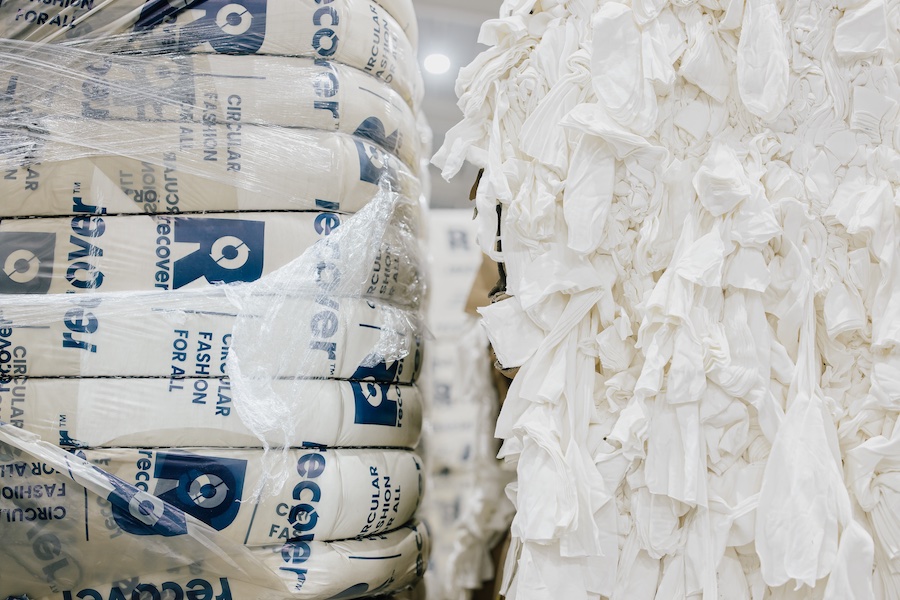
Recover and SUPIMA have partnered to turn waste from SUPIMA cotton production into a new line of recycled fibers and yarns. The collaboration will explore how recycled American-grown Pima cotton can be used in a wider range of yarns and garments for the premium market.

#Recycling / Circular Economy

ReSpin founder Åsa Strandberg receives Innovation Champion of the Year 2026 award

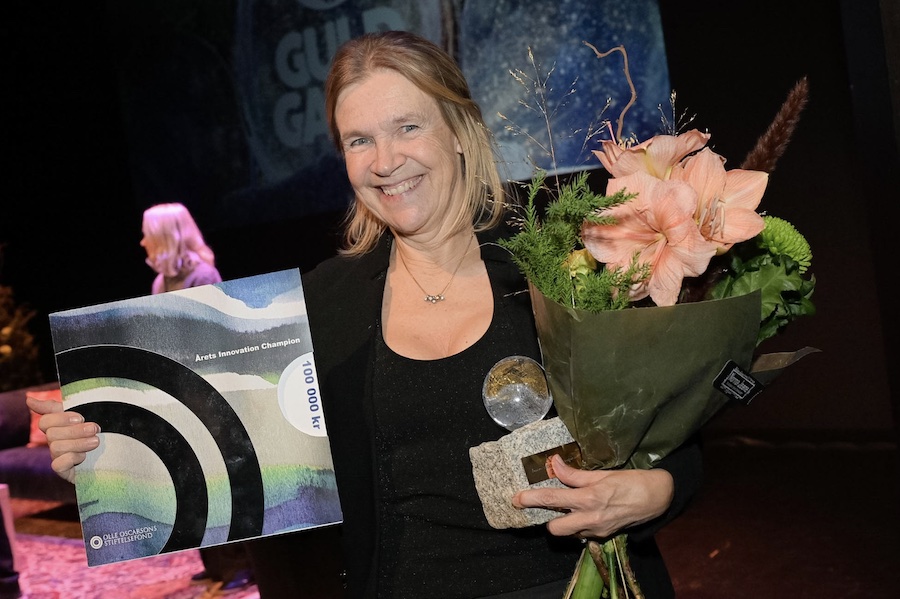
Åsa Strandberg, founder and CEO of Swedish textile recycling company ReSpin AB, has been named Innovation Champion of the Year 2026. The award recognises her development of RespinJenny, a patented technology designed to recycle textile waste into new, high-quality fibres without using water, chemicals or additional virgin raw materials. The distinction was presented by the Olle Oscarsson Foundation and Axera Inkubator at Guldgalan in Sweden.

Latest News

#Spinning

Alexander Hoffmann to succeed Klaus Schäfer and Wolfgang Imping as managing director of BB Engineering

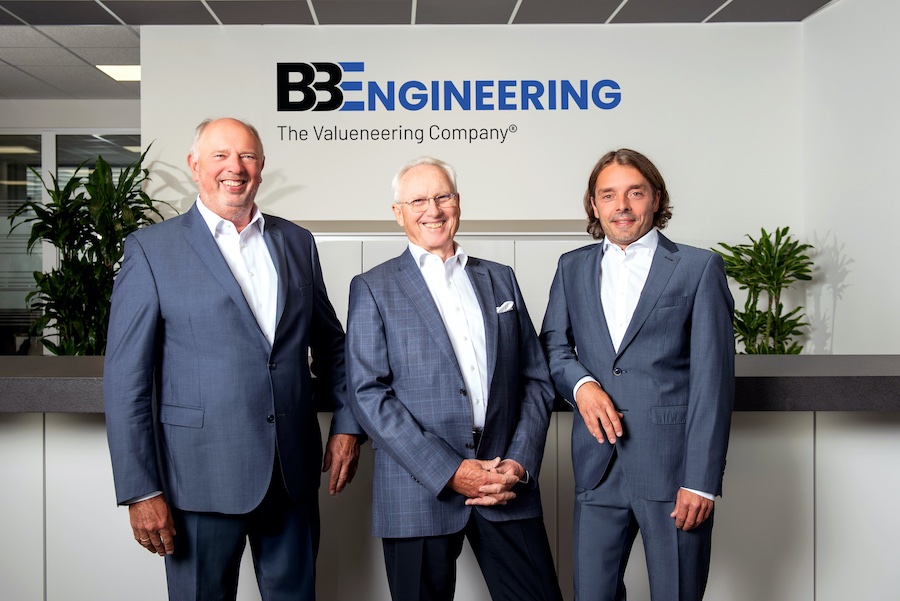
Starting January 1, 2027, Alexander Hoffmann will take over as managing director of BB Engineering GmbH, a German manufacturer of machinery and equipment for the plastics and textile industries. He succeeds Dr.-Ing. Dr. h.c. Klaus Schäfer and Wolfgang Imping, who will both retire at the end of 2026.

#Raw Materials

Cotton Brazil strengthens ties between Brazilian growers and the international textile industry at ITMA ASIA 2026

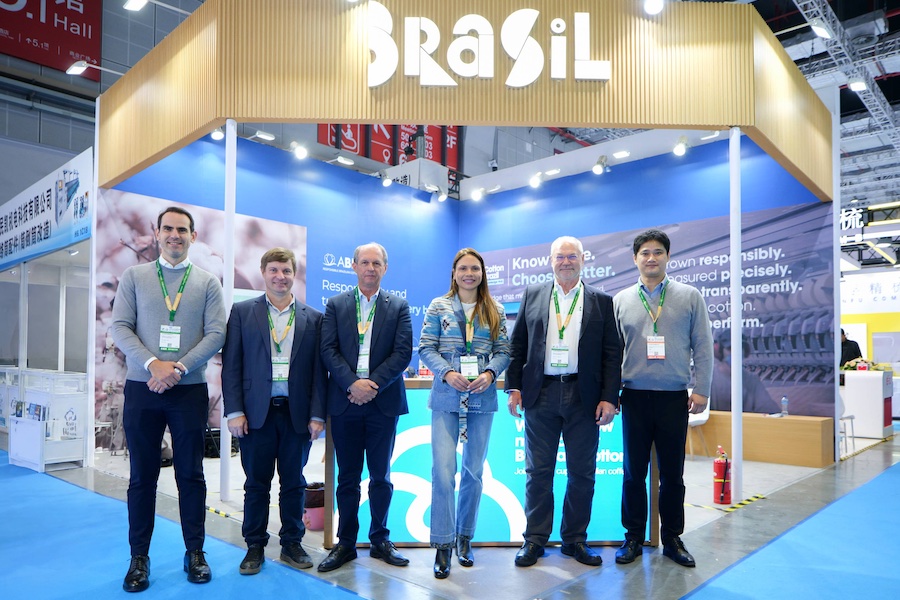
Cotton Brazil's participation in ITMA ASIA + CITME 2026 in Shanghai highlighted responsible production, traceability, fibre quality and technical knowledge sharing as key differentiators of Brazilian cotton. Strengthening relationships between Brazilian cotton growers and the international textile industry was a central objective of the initiative at the exhibition, which took place from November 20 to 24.

#India ITME 2026

Itema demonstrates weaving versatility for apparel, suiting and sarees at India ITME 2026

At India ITME 2026, taking place from December 4 to 9 in Greater Noida, Itema will present three weaving machines configured for specific requirements of the Indian textile industry. Visitors to Hall 15, Stand G9 will see an A9500EVO air-jet weaving machine and two R9500EVO rapier weaving machines producing fabrics for apparel, suiting and sarees.

#India ITME 2026

Groz-Beckert targets energy efficiency, productivity and process reliability across six textile technology sectors at India ITME 2026

At India ITME 2026 in Greater Noida from 4 to 9 December, Groz-Beckert will present its latest innovations across all six product areas – Knitting, Weaving, Nonwovens, Sewing, Tufting and Spinning. At Hall 14, Booth B6, the German textile technology specialist will showcase advanced components, systems, services and digital solutions designed to improve energy efficiency, productivity, process reliability and textile quality while addressing the increasingly diverse requirements of modern textile manufacturing.

TOP