[pageLogInLogOut]

#Recycling / Circular Economy

Worn Again Technologies joins pivotal alliance to advance a circular, waste-free textile future

Worn Again Technologies, a pioneer in the true circular economy for textiles, has announced its membership of the newly formed Alliance of Textile Chemical Recyclers (ACTR). Spearheaded by Accelerating Circularity, this partnership aligns perfectly with Worn Again Technologies’ mission to repurpose waste materials back into the supply chain, signaling a shift away from the old-fashioned linear textile industry.

The ACTR aims to provide the textile industry with accurate information on textile chemical recycling through a unified voice. The association aims to meet these goals through educational, outreach and engagement opportunities, with the first step being the introduction of a dictionary of common terms to educate the industry on the chemical recycling of textiles.

Collaborating with other leaders in the field, Worn Again Technologies and its fellow members are committed to delivering sustainable initiatives. These include advocating for chemical recycling solutions to reduce the volume of textile waste directed to landfills and incinerators, ensuring a supply of sustainably sourced, circular materials and assisting brands and retailers in reducing their CO2 footprints.

Worn Again Technologies is at the forefront of the creation of a sustainable textiles industry with its chemical recycling technologies. A testament to this commitment is the development of its state-of-the-art textile recycling demo plant in Winterthur, Switzerland. This facility, designed to divert up to 1,000 tons of textiles annually from incineration, showcases its closed-loop chemical recycling technology aligning with ACTR’s goal to drive awareness about how this process can benefit the textile industry.


“We formed this collective to move chemical recycling technology forward, share common definitions, and address policies in a collaborative way to maximize the elimination of textile waste to landfills and incineration” explained Karla Magruder, Founder and President of Accelerating Circularity. “Chemical recycling technology has many benefits, including quality more similar to virgin fiber and the ability to recycle multiple times.”

Erik Koep, CEO at Worn Again Technologies, commented: “Becoming a member of the ACTR underscores our commitment to revolutionizing the textile industry. The potential of chemical recycling is vast, promising end products with quality akin to virgin fibers and the opportunity for further reuse. As leading experts in the chemical recycling of textiles, we bring technical know-how that will help drive impactful outreach activities across the industry. Together, we’re not just imagining a world without textile waste, we’re actively helping to build it.”

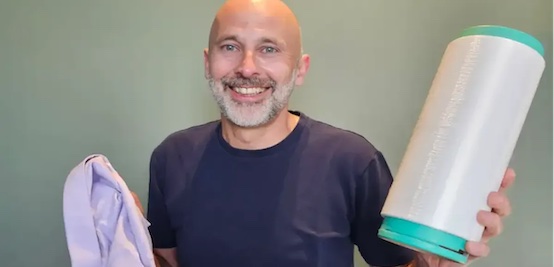

More News from Worn Again

More News on Recycling / Circular Economy

#Europe

New EU rules to stop the destruction of unsold clothes and shoes

The European Commission today (Feb 9) adopted new measures under the Ecodesign for Sustainable Products Regulation (ESPR) to prevent the destruction of unsold apparel, clothing, accessories and footwear.

#Recycling / Circular Economy

Sahil Kaushik appointed CEO of Infinited Fiber as the company advances a phased path to commercial scale

Infinited Fiber has appointed Sahil Kaushik as Chief Executive Officer. Kaushik has served as Acting CEO alongside his role as Chief Operating Officer and will continue to oversee operations until a new COO is appointed.

#Recycling / Circular Economy

trinamiX with new management

BASF is examining strategic options for its subsidiary trinamiX GmbH. trinamiX specializes in biometric imaging and mobile material analysis. These activities are not part of BASF’s core business, on which the company is focusing as part of the implementation of its new strategy.

#Recycling / Circular Economy

Reju announces site selection for first U.S. industrial sized facility regeneration hub in Rochester, New York

Reju, the textile-to-textile regeneration company, today announced it has selected the site for its first U.S.-based industrial facility marking a significant milestone in its efforts to scale globally. This future Regeneration Hub will be in Rochester, New York, reinforcing Reju’s commitment to the adoption of circular textile system across key regions worldwide.

Latest News

#Sustainability

Ying McGuire becomes new CEO of Cascale

Cascale today announced the appointment of Ying McGuire as Chief Executive Officer, effective June 1, 2026.

#Technical Textiles

Sustainable, lightweight, and sound absorbing: Polyester-based front trunk solution for BEVs

As car manufacturers look to further reduce their carbon footprint, Autoneum has developed an innovative front trunk solution for battery electric vehicles (BEVs), made entirely from polyester-based textile. The Ultra-Silent Frunk offers significant weight reduction, improved acoustic and thermal insulation, and uses up to 70 percent recycled material, supporting sustainable and efficient vehicle design. Autoneum, global technology leader in acoustic and thermal management for vehicles, has already received orders for the new frunk from three major OEMs in Asia and Europe to be built in three BEV models. Series production for two BEVs has been underway in China and Germany since last year.

#Raw Materials

Modern testing methods for raw cotton

The 38th International Cotton Conference Bremen will take place from 25 to 27 March 2026 at the Bremen Parliament. This conference has traditionally stood for in-depth expertise and international exchange. The program will focus on technical innovations, market trends, and regulatory frameworks across the entire value chain – from agriculture to the circular economy. With high-profile speakers, the conference is regarded as the key meeting point for the global cotton industry. Today’s focus: Cotton quality and testing methods.

#Spinning

Rieter responds to higher raw material prices

Global political and economic developments have been leading to rising raw material and energy costs for some time. The textile machinery industry is also affected by this trend. Rieter machines and components consist to a large extent of steel, copper, aluminum and electronics. These materials in particular have seen higher demand and higher prices in recent months.

TOP