[pageLogInLogOut]

#Raw Materials

Dr N Vigneshwaran is named 2026 ICAC Researcher of the Year

The International Cotton Advisory Committee (ICAC) is pleased to announce the selection of Dr N Vigneshwaran, Principal Scientist and Head of the Chemical and Biochemical Processing Division at the ICAR–Central Institute for Research on Cotton Technology (ICAR-CIRCOT), Mumbai, India, as the ICAC Researcher of the Year 2026.

Dr Vigneshwaran is a distinguished cotton scientist with academic qualifications in Agriculture, Agricultural Microbiology, Biomedical Engineering, and Operations Management. He has emerged as a global leader in nanotechnological innovations for cotton cultivation, processing, textiles, and biomass utilization. His pioneering research spans nanocellulose from cotton linters and stalks, nanofinishing of cotton textiles, nanofertilizers, biohydrogen production from cotton biomass, and value-added applications of cotton residues.

Over the past two decades, Dr Vigneshwaran has developed several breakthrough technologies that have had significant scientific and industrial impact. His nano-silver and nano-zinc oxide finishing technologies for cotton fabrics impart more than 99% antibacterial activity and UPF 50+ ultraviolet protection with wash durability of up to 20 cycles, and have been licensed for commercial production. He also led the development of energy-efficient nanocellulose production technologies from cotton linters and comber noil, reducing energy consumption by more than 50%. Under his leadership, India’s first pilot plant for nanocellulose production from cotton biomass, with a capacity of 10 kg per 8-hour shift, has been operational since 2015. Additional innovations include specialty-grade paper production from cotton comber noil blended with banana fibre and antimicrobial technologies licensed to the Bank Note Paper Mill, Mysuru, India.

Dr Vigneshwaran’s scientific contributions are reflected in more than 35 high-impact cotton-related research papers published in leading international journals. Several of his publications have achieved exceptional global recognition, with individual papers receiving more than 700, 650, 360, 340, and 250 citations, respectively. He has also authored or co-authored 11 books and book chapters published by internationally renowned publishers including Elsevier, Springer, CRC Press, Wiley-VCH, Woodhead Publishing, and Nova Science Publishers. His innovations are protected through four granted Indian patents covering microbial synthesis of silver nanoparticles, production of cellulose nanoparticles, nanocellulose manufacturing technologies, and novel nanosulphur production methods.

His outstanding achievements have earned numerous national and international honors. Nationally, he is a Fellow of the National Academy of Agricultural Sciences (NAAS) and a Fellow of the Textile Association (India). He has received the Sajjan Gupta-Konark Memorial Award, AMI Young Scientist Award, MRSI Prize, DOGRA Educational Endowment Award, and several technology commercialization awards. Internationally, he received the prestigious ICRA-Asia Young Scientist Innovation Award (2019), the NASI-Scopus Young Scientist Award (2014), recognition for a Top-Cited Elsevier Paper, and has been listed continuously among Stanford University and Elsevier’s World’s Top 2% Scientists from 2020 to 2025.

Through his innovative research, successful technology commercialization, scholarly excellence, and leadership in cotton nanotechnology, Dr Vigneshwaran has made exceptional contributions to advancing the scientific, industrial, and sustainability dimensions of the global cotton sector. His work has expanded opportunities for value addition in cotton, strengthened the competitiveness of cotton-based industries, and demonstrated the transformative potential of advanced technologies in creating a more sustainable future for cotton.

The ICAC Researcher of the Year Award is among the highest international recognitions in cotton research. It honors scientists whose research has made outstanding and lasting contributions to cotton science, technology, sustainability, productivity, and value addition. Dr Vigneshwaran exemplifies these ideals through a career marked by innovation, scientific excellence, and tangible impact on the global cotton community.

More News from International Cotton Advisory Committee (ICAC)

#Raw Materials

Global cotton production projected to outpace consumption, but risks remain

Global cotton production is projected to reach 26.2 million tonnes in the 2026/27 season, marginally outpacing estimated consumption of 25.9 million tonnes. However, early-season production risks — including weather volatility and pest pressures — could narrow that buffer as the crop progresses, according to the September 2026 issue of Cotton This Month, published by the International Cotton Advisory Committee (ICAC).

#Natural Fibers

Global garment trade nears USD 550 billion as competition intensifies

The global garment industry has undergone a dramatic transformation over the past two decades, with knit and woven garments together accounting for nearly 60% of world textile exports in 2025, according to the August 2026 issue of The Textiles Observer, a free publication from the International Cotton Advisory Committee (ICAC).

#Raw Materials

ICAC International Seminar in Taipei to explore strategic synergies across the textile supply chain

The International Cotton Advisory Committee (ICAC) — together with the Taiwan Textile Federation (TTF), under the guidance of the Ministry of Economic Affairs and the Ministry of Foreign Affairs of Taiwan — will bring international cotton and textile leaders together in Taipei on September 10 for the ICAC International Seminar 2026.

#Raw Materials

World Cotton Day 2026 to bring global cotton and textile community to Tashkent on October 7

The Government of Uzbekistan and the International Cotton Advisory Committee (ICAC) will host the official World Cotton Day 2026 Partners Conference at the Hyatt Regency in Tashkent, Uzbekistan, on October 7.

More News on Raw Materials

#Raw Materials

Cotton Brazil Dialogues 2026 concludes with 50 international participants immersed in Brazilian cotton production

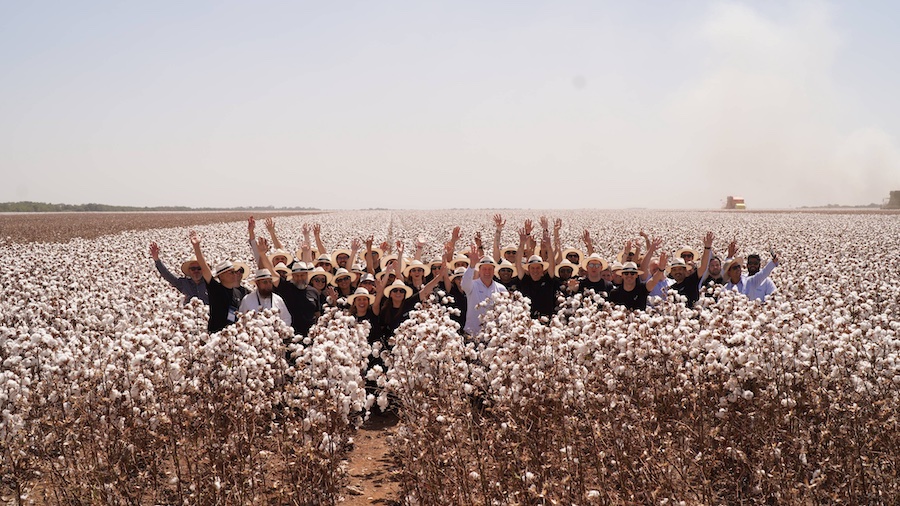
The Cotton Brazil Dialogues concludes its 2026 edition after a series of technical visits to farms, cotton gins and reference centers, as well as workshops focused on Brazilian cotton production. A total of 50 participants from 14 countries took part in the field trips. The initiative is led by the Brazilian Association of Cotton Growers (Abrapa) and the National Association of Cotton Exporters (Anea), with support from the Brazilian Trade and Investment Promotion Agency (ApexBrasil).

#Raw Materials

Brazil sets new cotton export record and consolidates global leadership

Brazil ended the 2025/26 commercial year with a new record, consolidating its position as the world’s largest cotton exporter. Between August 2025 and July 2026, the country shipped 3,373,941 tonnes of the fiber, 19% more than in the previous cycle, and reached record revenue of US$5.3 billion. The result represents a milestone in Brazil’s expansion in the international market and reinforces the country’s role as a strategic supplier to the global textile industry.

#Raw Materials

Better Cotton Initiative partners with Avalo in AI plant breeding for climate-resilient cotton

The Better Cotton Initiative (BCI) has partnered with agriculture solutions company Avalo, whose platform accelerates the speed at which plants with key resiliency traits may be developed.

#Raw Materials

Aid by Trade Foundation presents annual report for 2025: Market position and impact of sustainably verified natural fibres strengthened

Despite global supply chain challenges, the Aid by Trade Foundation (AbTF) was able to further expand its international role in promoting sustainably verified natural fibres in 2025. In doing so, the foundation remains true to its fundamental approach of leveraging market forces. Last year, it generated total revenues of EUR 7.8 million; this included EUR 6.7 million collected through the successful marketing of four standards: Cotton made in Africa (CmiA), CmiA Organic, The Good Cashmere Standard (GCS), and the Regenerative Cotton Standard (RCS). AbTF invested the resulting income in projects aiming to protect biodiversity, support women, increase transparency in the textile supply chain, and implement its verification system.

Latest News

#Weaving

Lindauer DORNIER GmbH welcomes new apprentices and dual-study students

For 22 new “DORNIER Talents”, these days mark the beginning of a new chapter at Lindauer DORNIER. For the family-owned company, in-house training is a key pillar in developing skilled professionals and retaining them within the company for the long term.

#Research & Development

Novel flame-retardant and recyclable fiber-reinforced composite

Airplanes and passenger trains must meet strict safety requirements, including fire safety standards. This calls for materials that are flame-retardant, lightweight, robust, and scalable. Empa researchers, in collaboration with their industry partner Elantas, have now succeeded for the first time in making such a material – a composite – fully recyclable.

#Composites

WHILL selects Teijin’s tough, lightweight Carbon Fiber Composite for new last-mile mobility

Teijin Limited announced today that WHILL Inc., a global leader in inclusive mobility technology, has selected Sereebo® P CFP series, a carbon fiber-reinforced thermoplastic (CFRTP) material, for key structural components of the upcoming WHILL Model C Lite. Sereebo® P CFP series provides high strength, light weight, design flexibility and system cost advantages to the Model C Lite, which is a battery powered, single-seat, last-mile device. This new model combines maneuverability with light weight and one-handed folding to ensure ease of handling and operation.

#Textile chemistry

ZymoChem secures $4 million in renewed federal funding to advance U.S. biomanufacturing of critical materials and their supply chains

ZymoChem, the specialty chemicals company dedicated to bringing decarbonization, sustainability, and supply chain resiliency to the chemical industry through innovative biological manufacturing, today announced the resumption and expansion of its federal research portfolio. The company has been notified that previously paused work under a $5 million U.S. Department of Energy (DOE) program is officially back on, to be joined by continuing collaborations with three of the nation's premier national laboratories.

TOP