[pageLogInLogOut]

#Natural Fibers

Alliance of European Flax-Linen & Hemp announces positive outlook for 2024 flax harvest

The Alliance of European Flax-Linen & Hemp is pleased to announce a positive outlook for the 2024 flax harvest. As the flax pulling period commences, the industry is optimistic due to favorable weather conditions that provide an ideal context for the upcoming harvest.

Alliance of European Flax-Linen & Hemp’s latest estimates predict average straw yields of 6-7 tons per hectare for spring flax, a significant milestone that has not been seen since 2019. While winter flax, cultivated on 30,000 hectares for this harvest, shows slightly lower performance with the overall prospects remaining strong. Flax straw, the raw material for fibre extraction during scutching, is expected to be abundant.

The area under cultivation for European Flax™ is projected to reach at least 180,000 hectares for both spring and winter flax combined, the highest since 2020. This expansion suggests that the European sector is poised to achieve record level yields of flax straw, the building block for premium flax fibres for composite applications, in a single harvest.

Whilst the exact amount of flax fibre to be extracted from this volume remains undetermined at this stage, the retting process, set to occur in the summer, will provide more detailed production output data.

Scutching of the current harvest is scheduled to begin in Autumn 2024 in French, Belgian and Dutch factories.
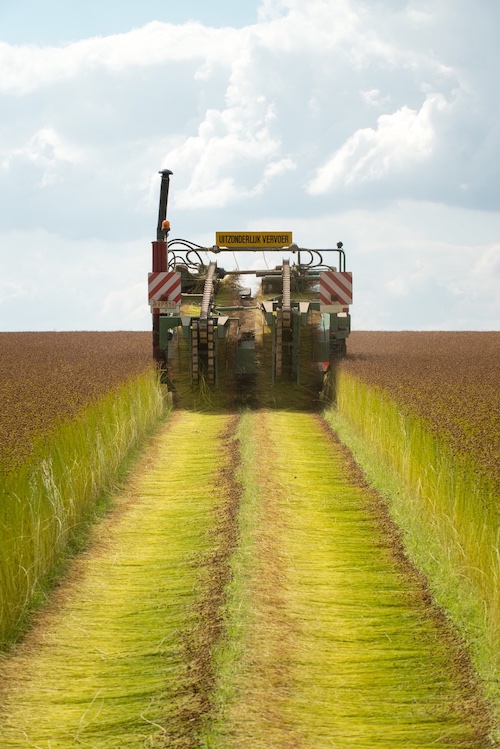

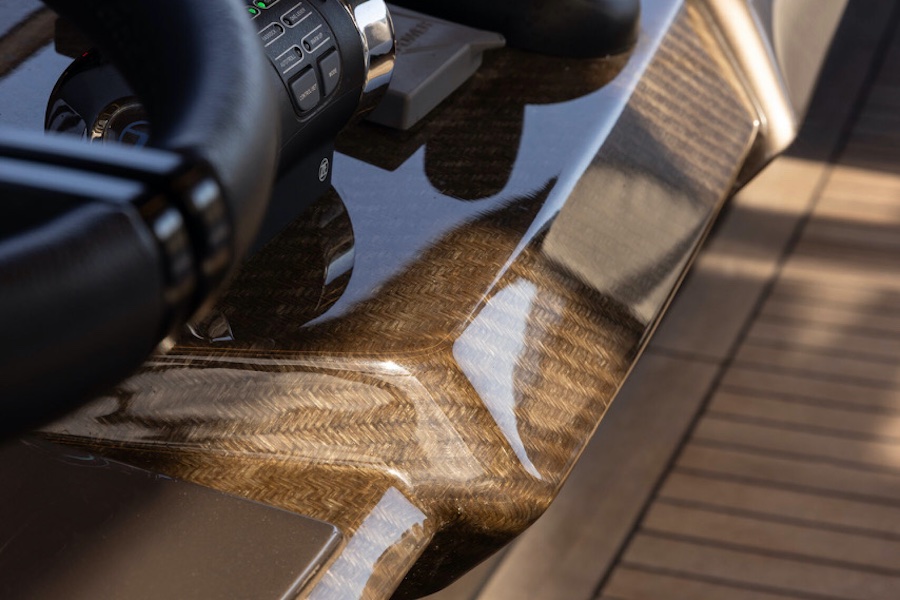
Flax pulling period begins with optimism with harvest on track to meet market demand  © 2024 Alliance of European Flax-Linen & Hemp
Flax pulling period begins with optimism with harvest on track to meet market demand © 2024 Alliance of European Flax-Linen & Hemp


More News from Alliance of European Flax-Linen & Hemp

#Composites

Alliance for European Flax-Linen & Hemp expands bio-materials presence at JEC World 2026

The Alliance for European Flax-Linen & Hemp is pleased to announce its participation at JEC World 2026, featuring a significantly expanded presence and an enhanced offering for the global composites industry.

#Natural Fibers

Alliance for European Flax-Linen & Hemp expands technical capabilities with addition of CIRCULAR STRUCTURES

The Alliance for European Flax-Linen & Hemp is pleased to welcome CIRCULAR STRUCTURES, a Bremen-based platform for sustainable material development and product incubation, to its Technical Section. This addition further enhances the Alliance’s mission to accelerate the industrial adoption of European-grown flax and hemp fibres in high-performance composite applications.

#Sustainability

Groundbreaking architectural projects using natural fibres

Paris, May 19 2025 : The Alliance for European Flax-Linen & Hemp is proud to spotlight a growing wave of innovative architectural and civil engineering applications featuring flax and hemp fibres. As the global construction industry turns toward sustainable solutions, flax and hemp are emerging as high-performance, low-impact alternatives for a new generation of bio-based architecture.

#Composites

Alliance for European Flax-Linen & Hemp host Natural Fibre Composites Village at JEC World 2025

The Alliance for European Flax-Linen & Hemp will host a Natural Fibre Village at JEC World 2025 that will showcase the activities of the Alliance and nine of its members in a 250m2 area dedicated to natural fibre composites. Partnering with the JEC Group, the Alliance will lead the European flax and hemp industry exhibit where Bcomp, Demgy, Depestele, Eco-Technilin, Flipts en Dobbels, Libeco, Norafin, Safilin and Terre de Lin and, for the first time, Linificio e Canapificio Nazionale SRL, will all exhibit a wide range of flax and hemp raw materials and composite products.

More News on Natural Fibers

#Raw Materials

New study shows low environmental impact by Cotton made in Africa Organic Cotton from Tanzania

Today, the Aid by Trade Foundation (AbTF) is announcing the results of a comprehensive life-cycle analysis (LCA) for cotton produced in Tanzania under the Cotton made in Africa Organic (CmiA Organic) standard. The study emphasises the small ecological footprint of CmiA Organic verified cotton. This can largely be traced back to the absence of synthetic pesticides, artificial fertilisers, and artificial irrigation. Consequently, CmiA Organic cotton can help the textile industry meet regulatory requirements as well as science-based targets. The results also show that the consequences of climate change threaten the livelihoods of these cotton farmers, even though the type of agriculture they practise barely contributes to climate change.

#Raw Materials

Better Cotton Initiative strengthens regenerative focus in standard update

The Better Cotton Initiative (BCI) has strengthened the regenerative focus of its field-level standard with the launch of a new version of its Principles & Criteria (P&C), which marks the next step in the organisation’s journey to becoming a regenerative standards system.

#Natural Fibers

Global Standard gGmbH launches second public consultation for GRTS Draft 2 for the textile industry (1–30 April 2026)

Global Standard gGmbH is pleased to announce the release of Draft 2 of the Global Responsible Textile Standard (GRTS) for its second public consultation. The consultation will be open from 1 April 2026 to 30 April 2026, inviting stakeholders across the textile and apparel value chain to provide input and contribute to the further development of this new Standard.

#Raw Materials

Global production expected to decline in 2026/27 as policy shifts and weak demand reshape trade

Early projections for the 2026/27 season indicate that global cotton lint production will decline by 4% to 24.9 million tonnes, while world consumption is expected to remain stable at approximately 25 million tonnes, according to the April 2026 issue of Cotton This Month.

Latest News

#Texprocess 2026

Texprocess 2026: Automation, digitalisation and AI redefine textile processing

Making investment decisions in textile processing has become significantly more demanding. Increasing energy costs, a shortage of skilled labour and ongoing geopolitical uncertainties are compelling companies to focus on technologies that deliver clear gains in efficiency and process reliability. This applies equally to apparel manufacturing and to the processing of technical textiles and high-performance materials. As a result, modernisation initiatives are assessed more carefully – even as the need to upgrade production systems continues to intensify.

#Techtextil 2026

VDMA members at Techtextil: Smart technologies for technical textiles

At Techtextil 2026 in Frankfurt, the members of VDMA Textile Machinery underline their key role as global technology leaders for technical textiles and textile processing. With a strong presence of more than 50 members they will highlight how engineering excellence, innovation strength and sustainability expertise from Germany and Europe are shaping the future of the textile industry. Seven companies will be present at the VDMA group stand in the centre of hall 12.0.

#Techtextil 2026

Techtextil 2026: Between innovation pressure & market reality

From 21 to 24 April 2026, Techtextil in Frankfurt am Main will once again become the central meeting point for the international technical textiles and nonwovens industry. Running in parallel, Texprocess will focus on the industrial implementation of textile processing technologies as the leading platform in this field. Together, the two trade fairs form a closely integrated presentation and working platform along the entire textile value chain – from material development to finished applications.

#Techtextil 2026

Between geopolitical pressure and industrial resilience

In this interview, Dr. Janpeter Horn (VDMA) discusses the current challenges facing textile machinery manufacturers, shaped by geopolitical tensions, regulatory developments and subdued investment. He also outlines why innovation strength, integrated solutions and strategic positioning remain key to global competitiveness.

TOP