[pageLogInLogOut]

#Raw Materials

U.S. Cotton Trust Protocol welcomes Macy’s, Inc. as member

© 2023 U.S. Cotton Trust Protocol
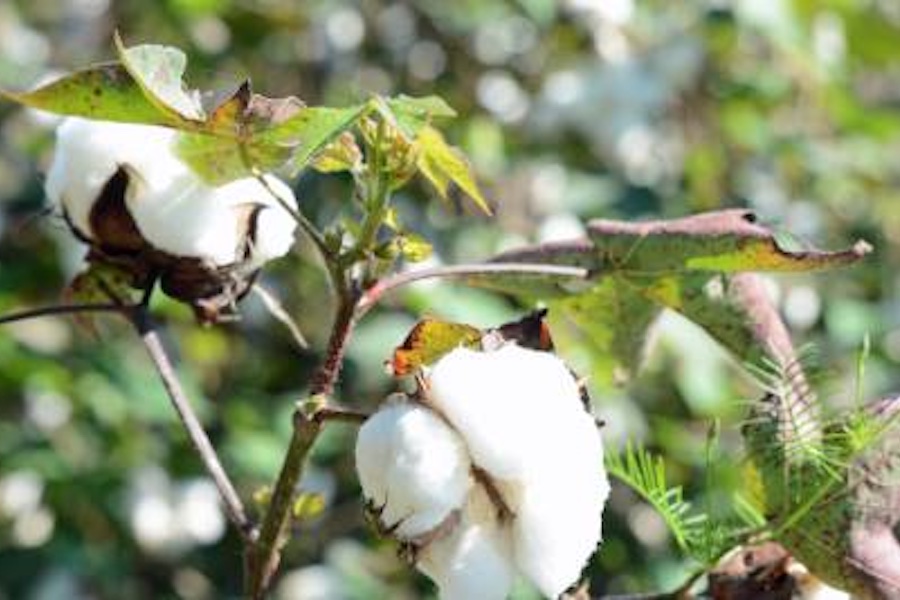
The U.S. Cotton Trust Protocol (“Trust Protocol”) is pleased to announce the membership of Macy’s, Inc. The company represents more than 700 store locations nationwide across three our iconic nameplates, including Macy’s, Bloomingdale’s and Bluemercury.

Trust Protocol membership will bolster Macy’s efforts in sourcing cotton sustainably, driving positive social and environmental change within the cotton industry and enhancing transparency throughout its supply chain.

Macy’s, Inc. has taken significant steps towards embedding sustainability into its business through its social purpose platform, Mission Every One, which aims to help create a more equitable and sustainable future for all. Notably, in 2022, Macy’s, Inc. released its private brand cotton policy, pledging to source 100% preferred materials in Macy’s private brands products managed by the Macy’s sourcing team by 2030. This commitment now includes sourcing U.S. Cotton and Protocol Cotton, which is grown and harvested on Trust Protocol growers’ farms and recorded in the Protocol Consumption Management Solution – which tracks cotton through the supply chain, ensuring transparency and accountability.

“Through our social purpose platform, Mission Every One, our business is aligned with a framework that aims to create a more equitable and sustainable future for our people, communities and planet. This work has fueled our commitments and we are embedding sustainability across our global value chain, focused on caring for people and managing our environmental impact.” said Keelin Evans, VP Sustainability, Macy’s Inc. “In 2022 we released our private brand cotton policy and we’re already making great progress. We expect that more than half of cotton products within our private brand products managed by the Macy’s sourcing team will be sustainably sourced by the end of 2023. Our Trust Protocol membership will support and accelerate these efforts to meet our 2030 ambitions by helping us to better trace our supply chain and demonstrate the progress we’re making toward meeting our environmental targets.”


The Trust Protocol is the only sustainable cotton program which combines quantifiable, verifiable goals and measurement with driving continuous improvement in six key sustainability metrics – land use, soil carbon, water management, soil loss, greenhouse gas emissions, and energy efficiency. The Trust Protocol integrates these sustainability metrics from Field to Market’s Fieldprint® Platform, enabling enrolled growers to measure the environmental impacts of their operation and identify opportunities for continuous improvement.

“We’re pleased to be working with Macy’s, Inc. – an iconic American brand – to help them better understand the supply chain of their private brand products,” said Dr. Gary Adams, President of the U.S. Cotton Trust Protocol. “Our blockchain-enabled value chain transparency will deliver Macy’s, Inc. the assurance it needs to evidence its responsible sourcing practices and demonstrate progress towards environmental targets.”

The Trust Protocol is aligned with the UN Sustainable Development Goals, recognized by Textile Exchange and Forum for the Future, and part of the Sustainable Apparel Coalition, Cotton 2025 Sustainable Cotton Challenge, Cotton 2040, and Cotton Up initiatives. It has also been recognized and published in the Map, recognized as a standard for sustainable cotton by the Partnership for Sustainable Textiles, and confirmed as an ISEAL Community Member. To learn more about The Trust Protocol, visit TrustUSCotton.org.




More News from TEXDATA International

#Texprocess 2026

Texprocess 2026: Automation, digitalisation and AI redefine textile processing

Making investment decisions in textile processing has become significantly more demanding. Increasing energy costs, a shortage of skilled labour and ongoing geopolitical uncertainties are compelling companies to focus on technologies that deliver clear gains in efficiency and process reliability. This applies equally to apparel manufacturing and to the processing of technical textiles and high-performance materials. As a result, modernisation initiatives are assessed more carefully – even as the need to upgrade production systems continues to intensify.

#Techtextil 2026

Techtextil 2026: Between innovation pressure & market reality

From 21 to 24 April 2026, Techtextil in Frankfurt am Main will once again become the central meeting point for the international technical textiles and nonwovens industry. Running in parallel, Texprocess will focus on the industrial implementation of textile processing technologies as the leading platform in this field. Together, the two trade fairs form a closely integrated presentation and working platform along the entire textile value chain – from material development to finished applications.

#Techtextil 2026

Between geopolitical pressure and industrial resilience

In this interview, Dr. Janpeter Horn (VDMA) discusses the current challenges facing textile machinery manufacturers, shaped by geopolitical tensions, regulatory developments and subdued investment. He also outlines why innovation strength, integrated solutions and strategic positioning remain key to global competitiveness.

#Texprocess 2026

Between investment restraint and modernization pressure

Texprocess 2026 takes place in a complex market environment shaped by uncertainty and innovation pressure. In this interview, Elgar Straub (VDMA) explains why the trade fair is particularly relevant this year and which technologies are driving efficiency and competitiveness.

More News on Raw Materials

#Raw Materials

China projected to increase cotton production, yields, and imports in 2026/27

World cotton production in the 2026/27 season is projected at 25.9 million tonnes, exceeding global consumption of 25.2 million tonnes, according to the May 2026 issue of Cotton This Month. That means both production and consumption are expected to remain close to current season levels, while global cotton trade is projected to decline by 2.7% to approximately 9.6-9.7 million tonnes.

#Raw Materials

ICAC launches Carbon Credits Initiative to deliver new income streams to cotton farmers

The International Cotton Advisory Committee (ICAC) has announced a new initiative designed to unlock additional income streams for cotton farmers through participation in carbon credit markets, linking sustainable production practices directly to financial returns.

#Raw Materials

ECCO introduces first shoe featuring innovative protein-based fibre

ECCO, in partnership with Spinnova, announces the launch of the limited edition ECCO BIOM® 720, a first-of-its-kind shoe utilising an often overlooked leather by-product, transformed into a protein-based fibre. The fibres are produced using patented technology that advances material innovation while reducing waste and supporting full resource use across the leather and textile industry.

#Raw Materials

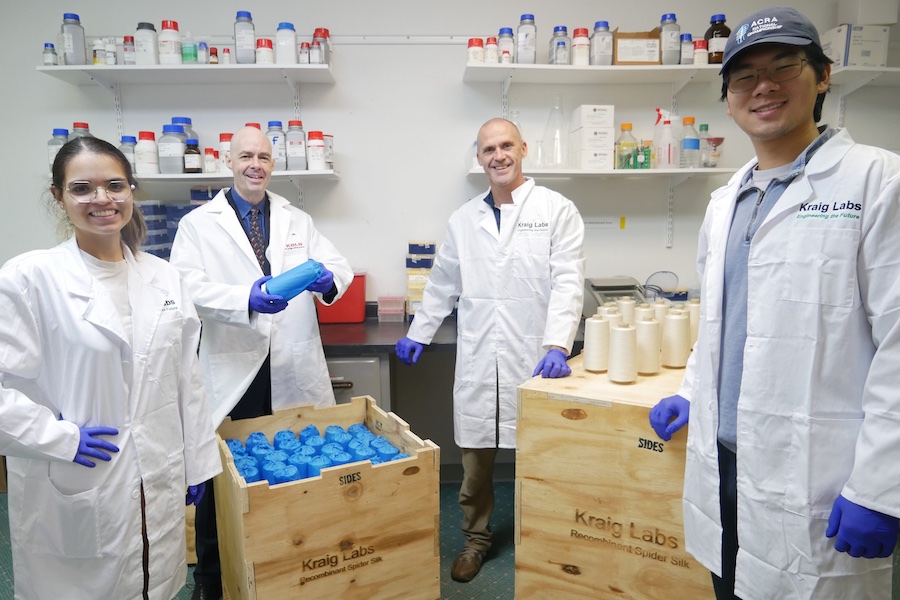
Kraig Biocraft Laboratories reports major progress converting record-setting spider silk cocoon production into reeled silk

Kraig Biocraft Laboratories, Inc. (OTCQB: KBLB) (“the Company”, “Kraig Labs”, or “Kraig’s”), a world leader in spider silk technology*, today announced significant progress in the processing of its recently produced recombinant spider silk cocoons into reeled silk.

Latest News

#INDEX 2026

“We clearly see that reliability, flexibility, service and total cost of ownership are becoming increasingly important again.”

The nonwovens industry continues to face a challenging market environment. Nevertheless, AUTEFA Solutions reports successful projects, new line sales and growing demand for energy-efficient and flexible solutions. In this interview, André Imhof of AUTEFA Solutions talks about competitiveness against Chinese suppliers, new service and recycling concepts, the growing importance of application development and the opportunities created by countercyclical investments.

#INDEX 2026

“Needle punching technology is more universal and sustainable than ever!”

Needle punching technology was long regarded as a rather traditional and comparatively slow technology within the nonwovens industry. In this interview, Johann Philipp Dilo explains why needle punching is more relevant than ever today – ranging from energy efficiency and resource conservation to hygiene applications, new machine concepts and design-oriented nonwoven solutions.

#Research & Development

Textile climate control system in workwear – exhibition at the 2026 SME Innovation Day!

Conventional protective workwear often reaches its limits during strenuous physical activity. In particular, the transport of sweat and excess body heat poses a problem. The German Institutes of Textile and Fiber Research (DITF) conducted research on flow-optimized, air-conducting textile structures that enable targeted climate control directly on the body. These structures can be integrated straight into protective work garments. The textile climate control system supports the body’s natural thermoregulation. This contributes to improved workplace safety and comfort.

#Nonwovens

PET spunbond from China – EDANA welcomes imposition of provisional anti-dumping measures

On 13 May 2026, after eight months of investigation, the European Commission imposed provisional anti-dumping duties of 45.6-50.0% on imports of PET spunbond from China. EDANA welcomes this expression of the Commission’s clear determination to protect EU industries from the unfair trade practices of Chinese producers.

TOP