[pageLogInLogOut]

#Raw Materials

Better Cotton launches programme in Uzbekistan after several years of piloting

© 2023 Better Cotton
Better Cotton is pleased to confirm the launch of a Better Cotton Programme in Uzbekistan. As the sixth largest cotton producer globally, this programme brings them one step closer to their vision of a world where sustainable cotton is the norm.

Uzbekistan’s cotton sector has come a long way in recent times. After years of well-documented issues of systemic forced labour, the Uzbek government, International Labour Organization (ILO), Cotton Campaign, civil society institutions and human rights activists have been successful in driving state-led labour reforms in the Uzbek cotton industry. As a result, Uzbekistan has successfully eliminated systemic child labour and forced labour in its cotton sector, according to recent ILO findings.

Driving more progress across the Uzbek cotton sector

Building on this success, Better Cotton believes that commercial incentives can help ensure that the newly privatised cotton sector continues to reform and meet international standards. The Better Cotton Programme in Uzbekistan has the potential to provide that incentive by linking cotton farmers to international markets and supporting them to continuously improve their practices.

Through implementation of the Better Cotton Standard System, Better Cotton will provide robust and credible decent work monitoring systems that can demonstrate impact and results made on the ground. Better Cotton will also introduce physical traceability, under which cotton from licensed farms will be fully segregated and traced through the supply chain. Any licensed Better Cotton from Uzbekistan will, at the present time, not be sold via the mass balance chain of custody.

"Better Cotton exists to work in contexts with both environmental and social challenges. Uzbekistan’s cotton sector, government and the farms themselves have made enormous progress, and we are looking forward to building on this multi-stakeholder engagement and to drive further positive change across the sector", says Better Cotton CEO Alan McClay.


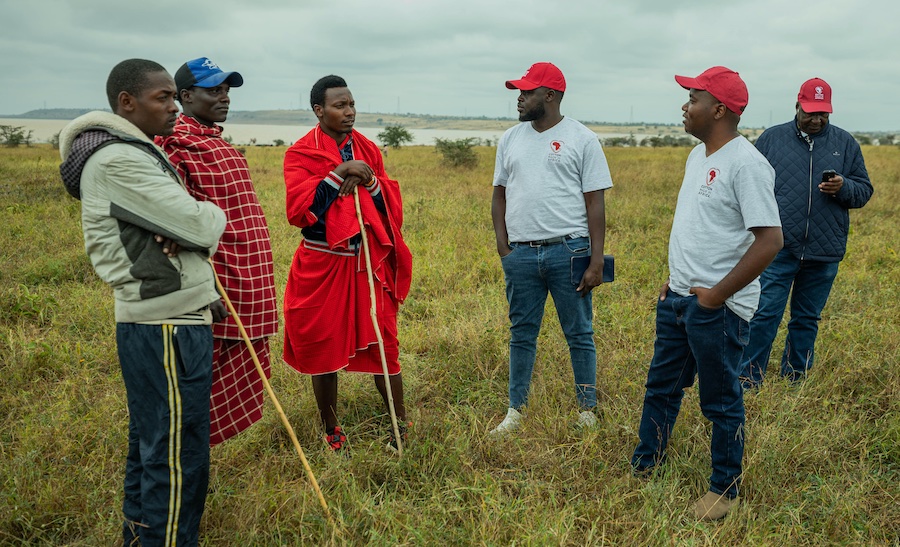
The Participating Farms

The International Finance Corporation and GIZ began piloting implementation of the Better Cotton Principles and Criteria in Uzbekistan in 2017. The pilots provided a strong entry point for our programme, with 12 large farms already benefiting from significant training, six of which have maintained participation. These are the same six farms now participating in the programme during the 2022-23 cotton season. All the farms were assessed against the Better Cotton Principles and Criteria by trained and approved third-party verifiers.

Farms with manual picking received additional decent work monitoring visits that focused on extensive worker and community interviews, along with management interviews and documentation reviews. This additional decent work monitoring looked specifically at labour risks due to the country’s past challenges. In total, nearly 600 workers, management and community leaders, local authorities, and other stakeholders (including civil society actors) were interviewed as part of our decent work monitoring. The findings of these third-party verification visits and the decent work monitoring were documented and discussed with technical labour experts and contributed to our enhanced assurance activities, which confirmed that no systemic forced labour was present on any of the farms. Like in all other Better Cotton countries, not all participating farms received a license this season. Better Cotton will continue to support both the farms that received licenses as well as those who were denied licenses through our capacity building efforts so that they can continuously improve their practices, and are equipped to meet the core requirements of the Standard moving forward.

Looking Ahead

As they begin their work in Uzbekistan, they focus on several key areas where progress still needs to be made. These include the effective introduction of trade unions and the appropriate use of workers' contracts. Better Cotton is encouraged by the progress made so far, but expects that their journey ahead will not be without challenges. Thanks to a solid foundation, strong partnerships and the commitment of all stakeholders, they intend to succeed together.

They concluded by stating that they look forward to supporting the continuous improvement of Uzbekistan's cotton production.




More News from TEXDATA International

#Techtextil 2026

Textile Chemicals & Dyes: Innovation in Textile Chemistry moves into focus at Techtextil 2026

From PFAS-free finishes and water-saving dyeing technologies to advanced coatings and recycling-compatible formulations, innovation in textile chemistry is accelerating across the industry. Reflecting this development, Techtextil 2026 introduces Textile Chemicals & Dyes as a dedicated product segment, highlighting the growing role of chemical solutions in shaping the next generation of technical textiles.

#Recycling / Circular Economy

textile.4U publishes special edition “Top 100 Textile Recycling Companies 2025”

With a comprehensive 176-page special edition, textile.4U is dedicating its latest issue entirely to one of the most dynamic and influential topics in today’s textile industry: textile recycling. The new issue, published exclusively in high-quality print, presents the Top 100 textile recycling companies researched and selected by TexData – organizations that already play a key role in the transition to circular textiles or are expected to have a significant impact in the near future.

#Recycling / Circular Economy

Responsible Textile Recovery Act of 2024 signed by Governor

Senator Josh Newman (D-Fullerton) is proud to announce that Senate Bill 707 (SB 707), the Responsible Textile Recovery Act of 2024, has been signed into law by the Governor of California, Gavin Newsom. This groundbreaking legislation establishes the country’s first Extended Producer Responsibility (EPR) textile recycling program, marking a significant step forward in the state’s efforts to combat waste and promote sustainability.

#Textiles & Apparel / Garment

Modtissimo promotes sustainability with 28 coordinates in the Green Circle

Modtissimo is proving more and more to be a textile and clothing show that delivers the latest innovations in the area of sustainability, with the iTechStyle Green Circle being the main showcase for companies' creations. In this 60+4 edition, taking place on 12 and 13 September, 28 coordinates will be exhibited in a section organised by CITEVE and curated by Paulo Gomes.

More News on Raw Materials

#Raw Materials

Lenzing Group positions bio‑based materials as a strategic asset for Europe’s economic security

The Lenzing Group, a leading supplier of regenerated cellulose fibers for the textile and nonwovens industries, hosted a high‑level roundtable in Brussels to discuss how bio‑based materials can strengthen Europe’s economic security and support the shift toward a fossil‑free future. Organized in cooperation with Euractiv, the event brought together representatives of the European Commission, the UK Mission to the EU, academia, civil society, and industry.

#Natural Fibers

Beyond Cotton: Natural Fibres in the Spotlight at the Bremen Cotton Conference - Branded by DNFI

Climate targets, fragile supply chains, and rising regulatory requirements are fundamentally changing the perspective of the textile industry - the focus is increasingly shifting toward the base material. Not only cotton, but natural fibres are gaining significant importance: they stand out not only because of their outstanding functional properties, but also because they make a valuable contribution to the bioeconomy and responsible product development.

#Raw Materials

International Women’s Day: Cotton made in Africa strengthens equality for women through targeted investments

On the occasion of International Women’s Day—which will be observed on 8 March under the motto “Rights. Justice. Action. For ALL Women and Girls”—the Aid by Trade Foundation (AbTF), which is responsible for Cotton made in Africa® (CmiA), underlines its long-standing and ongoing commitment to the equality of women in African cotton production areas.

#Raw Materials

ICAC projects slight decline in production, relative stability for consumption

Global cotton production is projected to decline by 4% in the 2026/27 season to 24.8 million tonnes, while consumption is expected to remain relatively steady at 25.0 million tonnes, according to the March 2026 edition of Cotton This Month.

Latest News

#INDEX 2026

EDANA unveils nominees for INDEX™26 Awards: Highlighting the next generation of nonwoven excellence

EDANA is proud to unveil the highly anticipated nominees for the INDEX™26 Awards, the nonwoven industry’s highest accolade for technical and sustainable excellence. Out of a record-breaking field of entries, these finalists represent the cutting edge of material science—from bio-based hygiene fibers and PFAS-free protective textiles to revolutionary water-filtration machinery. Each nominee has been selected by a jury of industry experts for their ability to solve critical global challenges, including the transition to a circular economy and the pursuit of enhanced consumer performance.

#Textiles & Apparel / Garment

Coats to showcase innovative reinforcement and filler materials for leather goods and accessories at APLF 2026

Coats, a world-class Tier 2 manufacturer and trusted partner for the apparel and footwear industries, will be promoting four advanced materials from its ‘Lifestyle Solutions’ portfolio at APLF 2026 in Hong Kong in March. Each innovation has been specifically engineered to help luxury and premium brands elevate the craft, durability, sustainability and creative expression required in the manufacturing of handbags, purses, and other high-end designer accessories.

#Textiles & Apparel / Garment

Design, innovation and sustainability propel VIATT 2026’s expanding role in ASEAN textile sourcing

At its third edition, the Vietnam International Trade Fair for Apparel, Textiles, and Textile Technologies (VIATT) further reinforced its role as a key sourcing and business platform for ASEAN’s textile industry. The three-day fair welcomed over 17,000 visits from 54 countries and regions, and featured over 460 exhibitors from 21 countries and regions across 18,000 sqm. The 2026 edition was marked by the introduction of new international pavilions and zones, broadening the fair’s sourcing scope across new geographies and product categories. The fringe programme, headlined by the debut Trend Forum, further distinguished VIATT as the region’s most integrated textile trade platform – uniquely spanning the entire value chain.

#Nonwovens

Sandler turns financial stability into a catalyst for shaping the future

The Sandler Group has presented its financial figures for the past fiscal year (01/01/2025-12/31/2025). Like previous years, the year 2025 was also marked by industry-wide structural challenges and geopolitical uncertainties. Turnover was virtually stable at EUR 321 million (2024: EUR 326 million). High energy costs continue to weigh heavily on profitability. The number of employees was 975 (2024: 980). The family-owned company, which was founded in 1879 and has been run by the fifth generation since August 2025, continues to invest millions in its Schwarzenbach site despite the high production costs in Germany. As part of the long-term corporate strategy, the management team is focusing on strict cost management, further development of the product portfolio, and greater efficiency in production and administrative processes. The company does not expect a market recovery in 2026 and 2027.

TOP