[pageLogInLogOut]

#Raw Materials

Plastic from cotton, outdoor from cotton, fluorescent cotton, cotton in 3-D design

For the first time in its history, the International Cotton Conference will take place on 17 and 18 March in the form of a hybrid edition, with a virtual focus. However, even in the virtual world, the topics remain relevant for the textile supply chain. Registration is already open – participants can secure the attractive Early Bird price until 22 February. To the registration: https://cotton-conference-bremen.de/registration/

Cotton – Useful Beyond Your Imagination: Cotton can make plastic, it can do outdoor, it can be fluorescent and in 3D-design.

A highly exciting session will deal with alternative uses of the renewable natural fibre in innovative products with a high utility value. The session will take place on Thursday, 18 March 2021 at 12:30 (GMT+1) in the Technical Track.

The use of cotton goes far beyond household textiles and clothing. In the session ‘Innovative Textile and Technical Products’, four examples make it clear that the use of the biodegradable raw material cotton has grown impressively. In fact, thanks to its intelligent properties, cotton can also be found in technical products or in smart textiles.

 Michael Jänecke, Director of Brand Management Technical Textiles & Textile Processing at Messe Frankfurt, will lead the session with his extensive market experience. Among other things, he has been responsible for the organisation of the leading international trade fairs ‘Techtextil’ and ‘Texprocess’ for many years.

Case Study 1: Fluorescent, Super-magnetic and Water-repellent Cotton
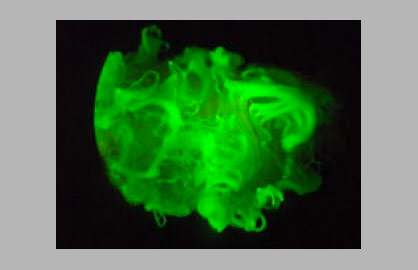
Fluorescent Cotton, © Filipe Natalio/ Universität Halle-Wittenberg


Dr Filipe Natalio is a senior staff member and researcher at the Weizmann Institute for Science in Rehovot, Israel, working for the Plant and Environmental Research Department, affiliated with the Kimmel Centre for Archaeological Science. He presents the results of his work under the theme of ‘Raw Material Agriculture: Breeding Cotton with Unique Functions’, in which cotton can be equipped with fluorescent, super-magnetic and water-repellent properties. This is brought about biologically through the implementation of a specially developed glucose molecule in cotton. The development has the potential to be used in large formats in cotton-based functional materials and textiles.

Case Study 2: Cotton, not Plastic

Dr Noureddine Abidi is Professor and Director of the Fibres and Biopolymers Research Institute (FBRI) at Texas Tech University, USA. There he developed a process in which cotton is processed in such a way that it can be used as an alternative to plastic. This can also use short fibres or fibre residues that are not suitable for higher-quality processing. The resulting cellulose-based bioplastics are biodegradable. Bio-based plastics have a wide variety of commercial applications, including shopping bags, agricultural land coverings, bio-plastic packaging, and other single-use items. As a conceivable low-cost alternative to petroleum-based plastics, this innovation offers a way of reducing the amount of plastic in the environment.


Case Study 3: Innovative Padding and Fabrics for Furnishings and Outdoor
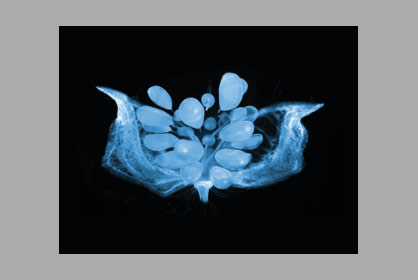
CT-Picture of a Cotton Boll – Deep Insights into Cotton © FIBRE/ MAPEX/ University Bremen*


In a double lecture, Matthias Boehme and Daniel Odermatt present innovative textiles for the interior design and outdoor sectors. Matthias Boehme is the owner of the Textile Solutions & Consulting agency in Bremen. He presents product ideas for padding for use in furniture from the German nonwoven and composite manufacturer Norafin Industries in Mildenau. These are not made from oil-based synthetic fibres, but from cotton and other bio-based natural fibres and are used in home textiles (e.g., wallpaper) or for functional components for technical textiles and for clothing development.

Daniel Odermatt is Division Manager at fabric manufacturer Stotz & Co. AG, Zurich, Switzerland. The company is known for developing highly functional cotton fabrics. For example, extra-long staple fibres are softly spun and twisted and then woven in the highest possible density. The result is a dense all-weather fabric with natural properties and maximum comfort. The material is rainproof, completely windproof and equipped with a breathability that can only be achieved using natural materials.

Case Study 4: 3D Cotton-Linen Fabric for the Treatment of Skin Diseases

Dr Iwona Frydrych from the University of Technology in ?ód?, Poland, is a professor at the Faculty of Material Development and Textile Design. Her topic is the support of the medical treatment of skin diseases using a 3D-design for clothing made of cotton-linen blends. Microcapsules with proven skin-soothing plant substances are applied to the material. The material treated in this way has direct contact with the skin. The content of the microcapsules is released by body heat and moisture. According to studies, this leads to relief from skin complaints.

We will continue to report on the other contents of the cotton conference in our press releases. The current conference news and programme details can also be found on the conference website. We look forward to active media coverage. Interview requests in advance are processed as quickly as possible. We are already inviting journalists to the conference and accreditations are possible at any time via the conference website https://cotton-conference-bremen.de/press/.

* When using the computed tomography image, please use the following copyright information: © FIBRE/ MAPEX/ University Bremen

More News from Bremer Baumwollbörse

#Natural Fibers

Modern testing methods for raw cotton

The 38th International Cotton Conference Bremen will take place from 25 to 27 March 2026 at the Bremen Parliament. This conference has traditionally stood for in-depth expertise and international exchange. The program will focus on technical innovations, market trends, and regulatory frameworks across the entire value chain – from agriculture to the circular economy. With high-profile speakers, the conference is regarded as the key meeting point for the global cotton industry. Today’s focus: Cotton quality and testing methods.

#Natural Fibers

38th International Cotton Conference Bremen: Let´s Talk about Cotton!

The 38th International Cotton Conference Bremen, to be held on 25-27 March 2026 in Bremen’s parliament building on market square, once again sends a powerful signal for professional excellence and international dialogue. The focus is on the latest market trends and technical innovations throughout the entire value chain – from agriculture and quality assurance to processing and the circular economy. With its high-calibre speakers, the conference remains an indispensable forum for anyone involved in shaping the cotton industry scientifically, technically, or economically.

#Natural Fibers

38th International Cotton Conference Bremen launches registration and unveils key topics

Participants can now register online for the 38th International Cotton Conference Bremen, which will be held on 25-27 March 2026 at the Haus der Bürgerschaft parliament building on market square. All visitors can look forward to a high-calibre conference programme, numerous additional meetings and a valuable exchange of knowledge and information. The comprehensive range of topics covering the entire value chain will provide practical expertise, address current developments, answer key industry questions, and provide new impetus for the future.

#Natural Fibers

151st General Assembly of the Bremen Cotton Exchange

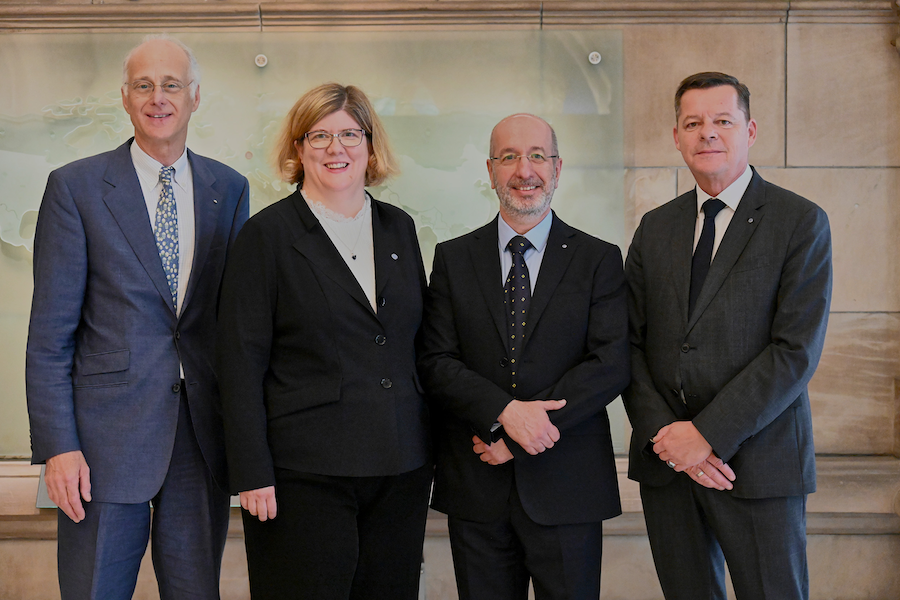
Economic change and personnel decisions were the dominant themes on the agenda of the Annual General Assembly of the Bremen Cotton Exchange on 26 June 2025. During the meeting, the new Executive Committee and Board of Directors of the raw material association, which is now almost 153 years old, were elected. Fritz. A. Grobien will take over as President.

More News on Raw Materials

#Raw Materials

Better Cotton Initiative opens enrollment in the US with promising opportunities for producers

Producer enrollment for the US Program of the Better Cotton Initiative (BCI) is open until May 15 for the 2026-2027 season. With over 2,600 members spanning the cotton supply chain and more than 11,000 users of its Better Cotton Platform (BCP) as of 2025, BCI’s standard is implemented in 15 countries and covers one fifth of global cotton production.

#Natural Fibers

Human Rights Day: Cotton made in Africa reinforces its commitment to ensuring respect for human rights in cotton production

The sustainable cotton standard Cotton made in Africa (CmiA) has always focussed on respect for human rights, including by prohibiting child labour and discrimination. With the new version of the CmiA standard coming into force, AbTF raises requirements for due diligence in the areas of human rights and risk management.

#Research & Development

How innovations drive BASF’s success

“Innovation has always been part of BASF’s DNA. Especially in these volatile times, it is crucial to leverage our innovative strength to develop competitive solutions that differentiate us as a company in our markets and give us a competitive edge,” said Dr. Stephan Kothrade, Member of the Board of Executive Directors of BASF and Chief Technology Officer, at the company’s Research Press Briefing held today. To achieve this, BASF implemented its “Winning Ways” strategy about a year ago with the clear goal of becoming the preferred chemical company to enable its customers’ green transformation.

#Natural Fibers

ICAC to collaborate with Uzbekistan and Bizpando on regenerative agriculture

The Government of Uzbekistan has allocated 55,000 hectares of land to implement a regenerative agriculture program for cotton as part of a collaborative project with the International Cotton Advisory Committee (ICAC) and Bizpando, a company with a a blockchain-based internet platform designed to ensure supply chain compliance.

Latest News

#Digital Printing

Epson launches SureColor G9000: high-production Direct-To-Film printer delivering greater productivity and reliability

Epson today announces the launch of the SureColor G9000, a new high-production Direct-To-Film (DTFilm) printer designed to meet growing global demand for flexible and efficient textile transfer printing. Expanding Epson’s DTFilm line-up alongside the SC-G6000, the SC-G9000 introduces enhanced speed, reliability and ease of maintenance for commercial garment decorators and textile producers.

#Nonwoven machines

Three ANDRITZ spunlace lines start operating at Alar Silk Road New Materials in China

Alar Silk Road New Materials and ANDRITZ have successfully commissioned three spunlace lines in crosslapped configuration at Alar’s facility in Aral City, Xinjiang, China.

#Knitting & Hosiery

SHIMA SEIKI to exhibit at GMMSA Expo India

Leading Japanese computerized flat knitting technologist SHIMA SEIKI MFG., LTD. of Wakayama, Japan, together with its Indian sales representative Universal MEP Projects & Engineering Services, Ltd., will participate in the upcoming Garments Machinery Manufacturers & Suppliers Association (GMMSA) Expo India 2026 exhibition to be held in Ludhiana, India next month. Through its lineup at GMMSA, SHIMA SEIKI aims to further strengthen its presence within the Indian market with an exhibit that caters to diverse needs, consisting of seam-free WHOLEGARMENT® knitting technology as well as a brand-new shaping machine with high productivity and excellent cost performance.

#Research & Development

Bio-based fibers with good flame retardancy

Fibers made from bio-based plastics reduce dependence on fossil raw materials and promote the circular economy. The covalent bonding of flame-retardant additives can open the way for these fibers to enter the mass market.

TOP