[pageLogInLogOut]

#Raw Materials

Central panel discussion: Circular Economy – The Future

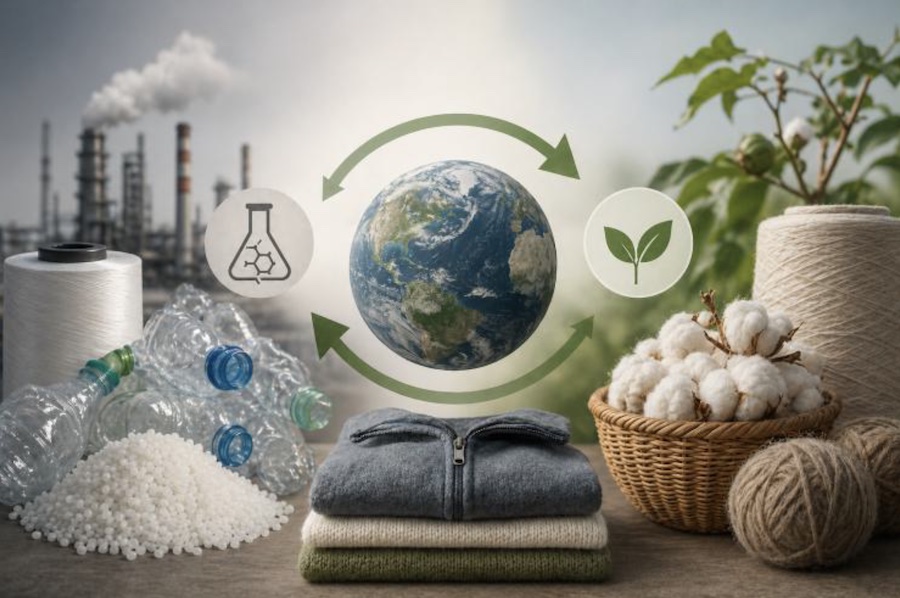
The “Circular Economy” will be one of the most widely discussed industry subjects at the upcoming International Cotton Conference in Bremen. In essence, the conference deals with the lifecycle of the natural, renewable raw material cotton in the sense of a circular economy. Following a “cradle to cradle” process, the cycle begins with its natural origin and runs through various processing stations before it is then returned to its biological origin.

Panel discussion with top-class participants

There will be a two-hour central panel discussion of the conference led by Simon Ferrigno from Derby, UK. Simon Ferrigno is a well-known specialist in sustainable and organic production systems, author and contributor to various specialist publications.

His discussion partners include Rainer Hengstmann, owner of the consultancy firm Go4More Global from Erlangen, Germany. He believes that any business activity will perform poorly if it disregards the principles of transparency and sustainability. This is due to the high level of market networking and changing regulatory scenarios. From this perspective, it is time to rethink existing business models.

Kjersti Kviseth, Jar, Norway, is the owner of the 2025 design agency. She specialises in lifecycle design and has developed principles for circular design. Here, issues such as upcycling and recycling play a major role. In 2019, she won the Ispo EcoAward for her work.

Rolf Heimann is Chairman of the Hessnatur Foundation, Berlin, Germany and has been active in textile ecology for more than 20 years. He has developed environmentally friendly and biodegradable dying systems and coatings for textiles. The mail order and retail company Hessnatur has been one of the pioneers in the market for sustainable cotton and woollen textiles since it was founded in 1976.

Mary Ankeny is Vice President, Product Development & Implementation Operation at Cotton Incorporated, Cary NC, USA. Among other things, Cotton Incorporated deals with research questions concerning the biodegradability of cotton and other fibres, as well as with the subject of ‘cotton’s next life’ outside of the classic clothing supply chain.

Ernst Grimmelt is Managing Partner of spinner and weaver Velener Textil in Velen, Germany. Two years ago, his company developed a product branded as ‘Wecycled’, in which processed production residues from the spinning and weaving mill are converted back into individual fibres. With the addition of fresh cotton, they can be turned into high quality yarns and fabrics. The result is that leftovers are no longer disposed of unused but processed into new products.


Ecological and economic benefits put to the test

The aim of the panel discussion is to draw a picture of the current situation of the circular economy. In addition to the ecological benefits, it will also question the economic viability of processes. Advantages and disadvantages should become clear. In the context of recycling, chemical and mechanical processes for the production of new products and questions about the biodegradability of fibres and textile products will be discussed. Here, it remains to be stated that cotton, like all cellulose fibres, can be added to the biological cycle without any difficulty due to its rapid biodegradability.

About the International Cotton Conference

The International Cotton Conference Bremen begins for trade visitors on Wednesday, 25 March 2020. The opening keynotes from qualified speakers will deal with the status quo and the challenges of the industry. The subsequent, thematically structured sessions are characterised by top class lectures on industry-related questions along the supply chain. The topic of circular economy and the consideration of the life cycle of cotton, viewed from different perspectives, is a thread running through the programme.

Up to 500 participants from all continents are expected to attend the Cotton Conference, with research and practice equally represented. The 35th International Cotton Conference forms the core of the Bremen Cotton Week. This includes meetings of the various cotton and textile trade associations, as well as the “Sustain” conference, which is taking place in cooperation with the newspaper “Weser-Kurier”. This year “Sustain” will focus on future issues of the retail trade and its importance for the vitality of inner cities.

The current conference news and programme details can also be viewed on the conference website. 

(https://cotton-conference-bremen.de).


More News from Bremer Baumwollbörse

#Raw Materials

A Powerful Opening: Global thought leaders launch the International Cotton Conference Bremen

The International Cotton Conference Bremen will open on 25 March 2026 in the Parliament building of the Free Hanseatic City of Bremen with a keynote session of exceptional calibre. Distinguished international experts will set the stage for the conference by offering incisive perspectives on the most pressing challenges and the defining trends shaping the future of the global cotton trade. Their insights will span a broad spectrum — from geopolitically driven disruptions affecting global supply chains to the opportunities emerging from innovation-led agriculture capable of supporting a growing world population. Together, these opening keynotes will frame the dialogue of the conference, highlighting both the complexity of today’s market environment and the pathways toward a resilient and forward-looking cotton sector.

#Natural Fibers

Beyond Cotton: Natural Fibres in the Spotlight at the Bremen Cotton Conference - Branded by DNFI

Climate targets, fragile supply chains, and rising regulatory requirements are fundamentally changing the perspective of the textile industry - the focus is increasingly shifting toward the base material. Not only cotton, but natural fibres are gaining significant importance: they stand out not only because of their outstanding functional properties, but also because they make a valuable contribution to the bioeconomy and responsible product development.

#Raw Materials

Beyond the wardrobe – innovative cotton takes the spotlight

Cotton can do more – a lot more. Cutting-edge textiles and high-tech products made from 100% cotton prove just how powerfully performance and sustainability can come together. That very surge of innovation is front and centre at the 38th Bremen Cotton Conference, taking place March 25–27, 2026, at Bremen’s Parliament on the historic market square – culminating in a bold and dedicated closing session on Friday. In the spotlight: performance upgrades for pure cotton, smart strategies for circular textile waste solutions, and pioneering concepts for demanding technical applications. From natural fibre–reinforced composites to highly effective flame-retardant solutions, cotton steps out of the closet and shows the future potential woven into every fibre.

#Raw Materials

Modern testing methods for raw cotton

The 38th International Cotton Conference Bremen will take place from 25 to 27 March 2026 at the Bremen Parliament. This conference has traditionally stood for in-depth expertise and international exchange. The program will focus on technical innovations, market trends, and regulatory frameworks across the entire value chain – from agriculture to the circular economy. With high-profile speakers, the conference is regarded as the key meeting point for the global cotton industry. Today’s focus: Cotton quality and testing methods.

More News on Raw Materials

#Raw Materials

New study shows low environmental impact by Cotton made in Africa Organic Cotton from Tanzania

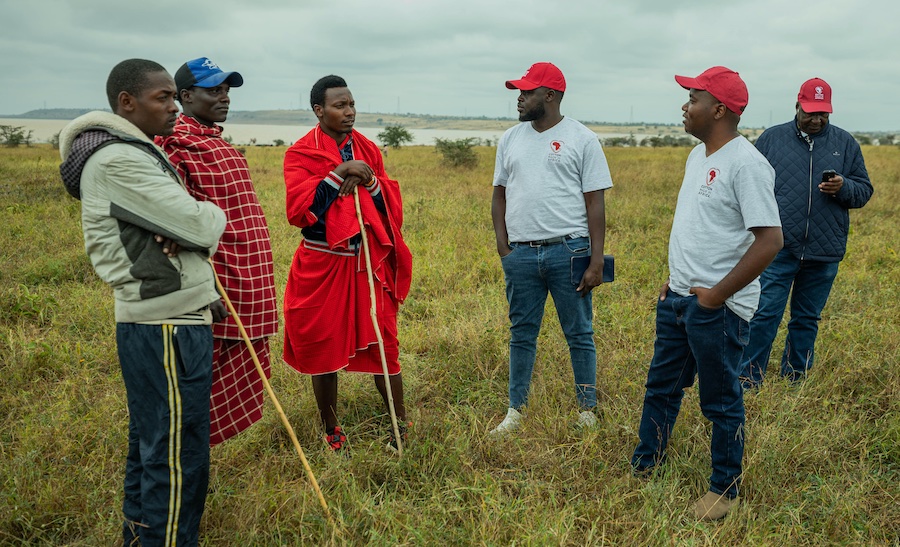
Today, the Aid by Trade Foundation (AbTF) is announcing the results of a comprehensive life-cycle analysis (LCA) for cotton produced in Tanzania under the Cotton made in Africa Organic (CmiA Organic) standard. The study emphasises the small ecological footprint of CmiA Organic verified cotton. This can largely be traced back to the absence of synthetic pesticides, artificial fertilisers, and artificial irrigation. Consequently, CmiA Organic cotton can help the textile industry meet regulatory requirements as well as science-based targets. The results also show that the consequences of climate change threaten the livelihoods of these cotton farmers, even though the type of agriculture they practise barely contributes to climate change.

#Raw Materials

Better Cotton Initiative strengthens regenerative focus in standard update

The Better Cotton Initiative (BCI) has strengthened the regenerative focus of its field-level standard with the launch of a new version of its Principles & Criteria (P&C), which marks the next step in the organisation’s journey to becoming a regenerative standards system.

#Raw Materials

Global production expected to decline in 2026/27 as policy shifts and weak demand reshape trade

Early projections for the 2026/27 season indicate that global cotton lint production will decline by 4% to 24.9 million tonnes, while world consumption is expected to remain stable at approximately 25 million tonnes, according to the April 2026 issue of Cotton This Month.

#Raw Materials

Textile Exchange publishes cotton Life Cycle Assessment study to strengthen impact data

Textile Exchange has published the first in a series of seven Life Cycle Assessment (LCA) studies designed to improve the quality and robustness of environmental impact data for raw material production across the fashion, textile, and apparel industry. The first LCA study focuses on cotton and addresses critical data gaps and methodology variability through new high-quality data across key producing countries. The study includes organic, regenerative, recycled, and country averages for conventional cotton production systems, providing a clearer picture of the associated environmental impact.

Latest News

#Man-Made Fibers

Selenis and Kintra Fibers partner to scale 100% bio-based synthetic fiber technology

Selenis, a leading global specialty polyester manufacturer, today announced a strategic manufacturing partnership with materials science company Kintra Fibers to scale Kintra’s patented fiber-grade PBS resin - a 100% bio-based and biodegradable material designed for textile applications.

#Functional Fabrics

PERFORMANCE DAYS proves its relevance as the industry’s key meeting point

Held on March 18–19, 2026, PERFORMANCE DAYS once again confirmed its position as a leading international platform for functional textiles. A total of 3.366 trade visitors and around 560 exhibitors gathered in Munich, with the event already kicking off successfully on DAY 0, which received highly positive feedback for its interactive format. Despite challenging conditions caused by the public transport strike in Munich, the event saw strong attendance and a consistently high level of activity across both exhibition days.

#Recycling / Circular Economy

Reju secures €135 Million in Dutch NIKI Funding for industrial-scale textile-to-textile regeneration hub at Chemelot Industrial Park, the Netherlands

Reju™, the progressive textile-to-textile regeneration company, has been awarded €135 million in funding under the Netherlands’ Nationale Investeringsregeling Klimaatprojecten Industrie (NIKI) program. The funding will support Reju’s planned industrial-scale Regeneration Hub at Chemelot Industrial Park in Sittard-Geleen, covering both the investment phase and ongoing operations, and represents a critical milestone on the path toward final investment decision.

#Techtextil 2026

TTL showcases nonwoven and needlefelt solutions at Techtextil 2026

Technische Textilien Lörrach GmbH & Co. KG (TTL), part of the Yanpai Group, will present its latest nonwoven and needlefelt solutions for industrial applications at Techtextil 2026 in Frankfurt.

TOP